
As I analyze the development of China’s electric car sector, it becomes evident that financing innovation is crucial for sustaining growth and overcoming inherent challenges. The China EV market has shown remarkable potential, yet many enterprises struggle with comprehensive cost management, particularly during equipment investment phases. Without lifecycle cost planning, firms are vulnerable to fluctuations in raw material and labor costs, leading to financial instability and even bankruptcy for some. In this context, I believe that exploring融资创新 (financing innovation) is essential to unlock the industry’s advantages and ensure long-term viability.
From my perspective, the financing advantages of the China EV industry are substantial, despite its early development stage and incomplete technological systems. The rapid advancement and widespread application of lithium battery technology, for instance, have significantly enhanced the power performance of electric cars, meeting daily transportation needs effectively. Moreover, the use of new materials in manufacturing these vehicles helps reduce carbon dioxide emissions, offering a transformative impact compared to traditional automobiles. Data suggests that a 10% reduction in vehicle manufacturing weight can improve fuel utilization by approximately 8%, underscoring the high value of electric car technologies. This potential makes the sector highly attractive for investment, as it promises substantial returns driven by innovation and environmental benefits.
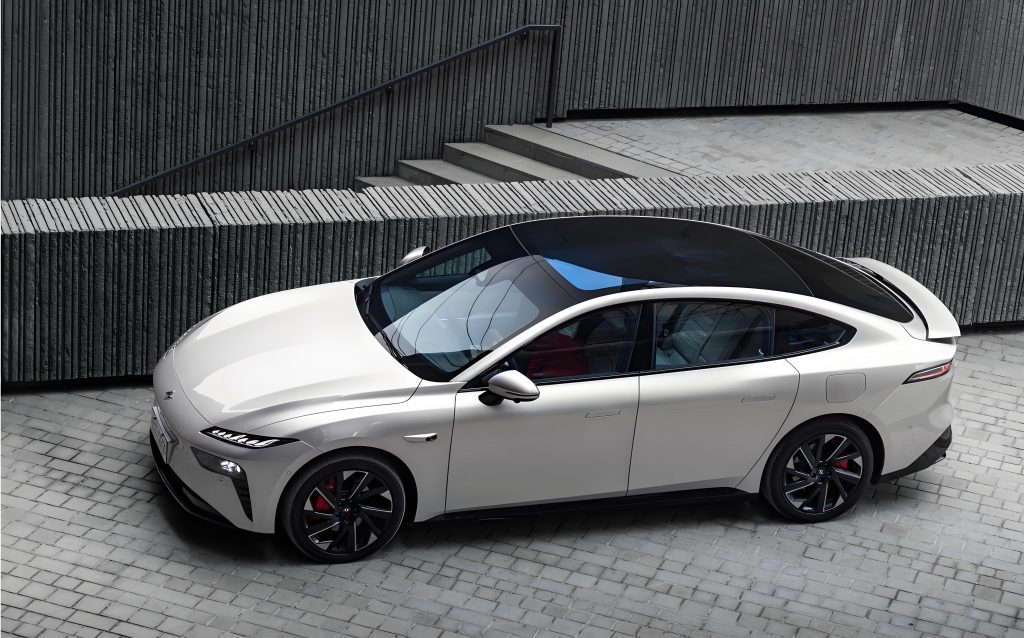
In terms of internal and external financing forms, I observe that the China EV industry holds distinct advantages. According to the pecking order theory, firms should prioritize internal financing—such as undistributed profits and surplus funds—for investment activities. This approach aligns with the need for continuous innovation in electric car production. However, external financing remains vital, primarily through debt and equity channels. Debt financing, in particular, facilitates innovation in technical equipment and production levels. The diversity of external funding sources, including bank loans, government subsidies, and contributions from social organizations and the public, provides a robust foundation for growth. For example, government support through subsidies encourages firms to invest in R&D, creating a U-shaped relationship between investment and development in the China EV sector.
To better illustrate the financing modes, I have summarized key approaches in the table below. This analysis highlights how different models cater to various segments of the electric car industry, from large suppliers to smaller entities.
| Financing Mode | Key Features | Applicability to China EV Industry |
|---|---|---|
| Large Supplier Financing | Utilizes “confirming warehouse” models, efficient bank interactions, and承兑汇票 (acceptance bills). | Ideal for major players like battery manufacturers, providing ample funds and reducing inventory pressure. |
| Small and Medium Supplier Financing | Includes抵押融资 (mortgage financing),转让融资 (transfer financing), and流动化融资 (liquidity financing). | Addresses information asymmetry and capital shortages, optimizing资金使用 (fund utilization) for smaller firms. |
Despite these opportunities, I have identified several issues in the financing models of the China EV industry. Traditional channels, such as bank commercial loans or product pre-sales, remain dominant, limiting diversification. This restriction can hinder the development of a robust production supply chain for electric cars. For instance,单一的贷款模式 (single loan models) often fail to cover the entire supply chain, reducing overall efficiency. Additionally,融资风险 (financing risks) are prevalent, necessitating robust risk management frameworks that address ESG factors—environmental, social, and governance aspects. As I delve deeper, it is clear that without innovation, these challenges could stifle growth in the China EV market.
To quantify some of these risks, I propose a simple formula for assessing融资均衡性 (financing equilibrium):
$$ F_{eq} = \frac{I_{internal}}{I_{external}} $$
where \( F_{eq} \) represents the financing equilibrium ratio, \( I_{internal} \) denotes internal investment, and \( I_{external} \) signifies external investment. A balanced approach, where \( F_{eq} \approx 1 \), can mitigate risks and promote sustainable innovation in electric car production.
In my view, the innovation paths for financing development in the China EV industry must be multifaceted. First, improving股权分布 (equity distribution) is critical. By reducing the concentration of state-owned shares and adjusting registered capital based on market conditions, firms can foster a more open and legally supervised environment. This not only resolves融资难题 (financing difficulties) but also maintains momentum for continuous innovation. Second, enhancing盈利能力 (profitability) through better governance structures and股权分置改革 (equity division reforms) can attract external investments. For example, unifying equity returns, supervision, and decision-making can optimize operations and boost economic performance in electric car manufacturing.
Third, increasing创新科研投入 (innovation and R&D investment) is paramount. In the China EV sector, technology serves as the primary driver of productivity. I recommend that firms allocate substantial resources to R&D, leveraging high-risk investments that correlate positively with融资行为 (financing activities). A formula to estimate the impact of R&D on融资能力 (financing capability) could be:
$$ C_{fin} = \alpha \cdot R_{inv} + \beta \cdot T_{adv} $$
where \( C_{fin} \) is financing capability, \( R_{inv} \) represents R&D investment, \( T_{adv} \) denotes technological advancement, and \( \alpha \) and \( \beta \) are coefficients specific to the electric car industry. By integrating big data, AI, cloud computing, and blockchain, firms can accumulate供应链金融数据 (supply chain financial data) and develop risk assessment models for融资创新 (financing innovation).
Fourth, establishing a制造供应链融资信用风险防范体系 (supply chain financing credit risk prevention system) is essential. Given the high-risk, high-investment nature of electric car projects, such systems can mitigate融资约束 (financing constraints). Local governments, for instance, can implement loan interest subsidy policies to accelerate投融资发展 (investment and financing development). The involvement of regulatory bodies like the China Securities Regulatory Commission can further broaden融资渠道 (financing channels) and introduce tailored financial products.
Fifth, I advocate for the creation of融资创新模型 (financing innovation models). These models can use regression algorithms to verify the balance and reliability of internal and external financing. For example, a simplified model might be:
$$ I_{total} = \gamma \cdot F_{internal} + \delta \cdot F_{external} + \epsilon $$
where \( I_{total} \) is total innovation input, \( F_{internal} \) and \( F_{external} \) are internal and external financing, respectively, and \( \gamma \), \( \delta \), and \( \epsilon \) are parameters. This approach helps firms manage cash flow stability, reducing the reluctance to innovate due to external equity risks in the China EV industry.
Sixth, national policy support plays a pivotal role. As the government encourages the development of electric cars through subsidies and incentives, firms can leverage these to研发高精尖技术 (develop cutting-edge technologies). This alignment with national goals, such as achieving technological overtaking of developed countries, fosters a conducive environment for融资创新 (financing innovation).
To summarize the key financing metrics, I have compiled a table below that outlines critical indicators for the China EV industry, based on my analysis.
| Metric | Description | Impact on Electric Car Development |
|---|---|---|
| Internal Financing Ratio | Proportion of funds from retained earnings. | Enhances innovation capacity and reduces dependency on external sources. |
| External Financing Diversity | Variety of sources like loans, equity, and subsidies. | Supports supply chain integration and risk mitigation in China EV projects. |
| R&D Investment Level | Amount allocated to research and development. | Directly correlates with technological advancements and market competitiveness. |
| Risk Control Index | Measure of effectiveness in managing ESG risks. | Ensures sustainable growth and attracts investors to the electric car sector. |
In conclusion, as I reflect on the future of China’s electric car industry, it is clear that financing innovation is intertwined with high uncertainties and risks due to substantial investments. However, by adopting the paths I have outlined—such as optimizing equity structures, boosting profitability, increasing R&D, and leveraging policy support—the sector can overcome融资困难 (financing difficulties). This will enable firms to engage in robust technological and economic validation activities, ultimately achieving a dual harvest of innovation and economic benefits. The journey ahead for the China EV market is challenging, but with sustained融资创新 (financing innovation), it holds the promise of global leadership and environmental sustainability.