
In recent years, as global energy consumption intensifies and climate conditions deteriorate, the development and utilization of new energy vehicles have become pivotal for advancing socioeconomic progress. As an expert in this field, I have observed that new energy vehicles, with their environmentally friendly, clean, and renewable characteristics, have sparked extensive discussions on innovative energy technologies. The replacement of traditional vehicles by new energy alternatives is an emerging trend, and their widespread adoption plays a significant role in reducing vehicular emissions. However, the efficient utilization of power battery systems in these vehicles involves numerous challenges, such as influences from efficiency, environmental factors, and costs during operation. Therefore, I believe that strengthening the analysis of these systems and their thermal management is crucial. In this article, I will delve into the thermal management and optimization of EV power battery systems, focusing on the advancements and challenges in China EV battery technologies. Through this exploration, I aim to provide insights that enhance the performance and sustainability of these systems.
The thermal management of EV power battery systems is a complex yet essential aspect that ensures optimal performance and longevity. From my perspective, a well-designed thermal management system monitors and regulates the temperature of battery packs to prevent issues like overheating or excessive cooling. This involves several core functional elements: temperature monitoring using sensors to detect subtle changes, cooling mechanisms to rapidly lower temperatures when needed, thermal management strategies that adapt to collected data, integration and control that adjust parameters such as coolant flow or fan speed, and fault diagnosis to identify and address potential failures. I have found that these components work synergistically to maintain battery groups within an optimal temperature range, thereby extending their lifespan and improving overall efficiency. For instance, in China EV battery applications, where demands for power intensity and storage capacity are high, thermal management must be tailored to specific vehicle requirements and usage scenarios. This customization is vital for ensuring safety and maximizing the utility of EV power battery systems in diverse environments.
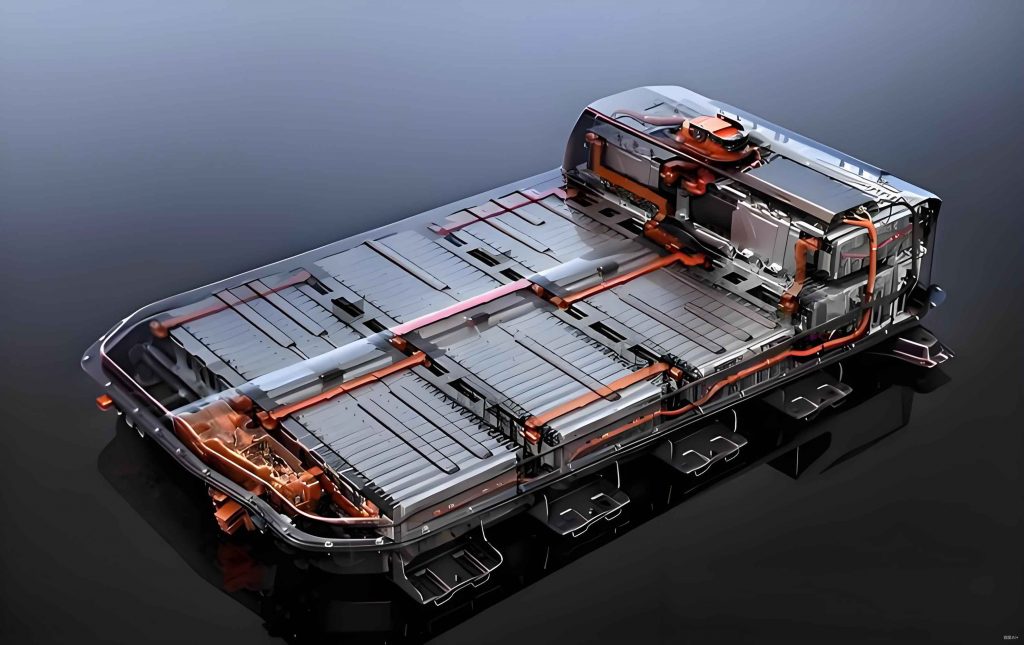
To better understand the composition of thermal management systems, I have compiled a detailed breakdown based on my research and experience. These systems typically consist of multiple modules that collaborate to achieve efficient heat control. The heat source module identifies the origins of heat generation, such as during charging or discharging cycles. The heat transfer module establishes effective pathways for heat dissipation, while the cooling/heating module executes temperature regulation by adjusting to thermal variations. Additionally, the temperature monitoring and control module acts as the system’s brain, utilizing sensors to continuously assess conditions and trigger safety protocols when thresholds are exceeded. In the context of China EV battery development, manufacturers often design these systems with a focus on performance specifications, such as those for passenger vehicles that require high power output and energy density. I have observed that this approach not only enhances reliability but also addresses the unique challenges posed by different driving conditions, ultimately contributing to the broader adoption of EV power battery technologies.
| Module | Function | Examples in China EV Battery Applications |
|---|---|---|
| Heat Source | Identifies origins of heat generation | Battery cells during fast charging |
| Heat Transfer | Creates pathways for heat dissipation | Use of thermal conductive materials |
| Cooling/Heating | Executes temperature regulation | Adjustable coolant systems |
| Temperature Control | Monitors and triggers safety measures | Smart sensors and algorithms |
The evolution of EV power battery technology has been remarkable, particularly in China, where innovations in materials and design have propelled the industry forward. In my analysis, I have seen how the adoption of composite materials, nanomaterials, and solid-state electrolytes has significantly improved battery performance, including energy density and cycle life. However, these advancements bring forth thermal management challenges, as batteries generate substantial heat during operation. If not managed effectively, this can lead to reduced efficiency and safety hazards. Therefore, I emphasize the importance of robust thermal management systems that not only control temperature but also optimize energy use. For example, in China EV battery systems, intelligent battery management systems employ algorithms and data analytics to achieve cell balancing, which enhances overall vehicle performance and range. I believe that continued research in this area is essential for overcoming limitations and fostering the growth of EV power battery applications worldwide.
From a technical standpoint, the performance of EV power battery systems can be modeled using various equations. One fundamental formula I often use is the energy balance equation, which describes how heat is generated and dissipated in a battery cell:
$$ \frac{dQ}{dt} = I^2 R – h A (T – T_{\text{env}}) $$
where \( \frac{dQ}{dt} \) represents the rate of heat generation, \( I \) is the current, \( R \) is the internal resistance, \( h \) is the heat transfer coefficient, \( A \) is the surface area, \( T \) is the battery temperature, and \( T_{\text{env}} \) is the environmental temperature. This equation highlights the critical role of thermal management in maintaining stability, especially for China EV battery systems that operate under varying conditions. Additionally, the efficiency of a battery can be expressed as:
$$ \eta = \frac{E_{\text{out}}}{E_{\text{in}}} \times 100\% $$
where \( \eta \) is efficiency, \( E_{\text{out}} \) is the energy output, and \( E_{\text{in}} \) is the energy input. In practical terms, optimizing these parameters through thermal management can lead to significant improvements in the longevity and reliability of EV power battery systems.
Despite the progress, several issues persist in the thermal management of EV power battery systems. Based on my observations, temperature imbalance is a primary concern, where variations among individual cells within a battery pack can lead to localized hotspots and reduced overall lifespan. This is particularly problematic in China EV battery configurations, where high-density packing amplifies thermal gradients. Another challenge is balancing cooling system efficiency with energy consumption. Effective cooling mechanisms, such as liquid cooling or forced air systems, are necessary to regulate temperature but often increase the vehicle’s overall energy draw. I have encountered situations where this trade-off becomes critical in extreme climates; for instance, in summer heat or winter cold, thermal management systems must respond swiftly to prevent overheating or freezing, which can compromise battery performance and safety.
| Issue | Description | Impact on China EV Battery |
|---|---|---|
| Temperature Imbalance | Uneven heat distribution among cells | Reduced cycle life and safety risks |
| Cooling System能耗 | High energy consumption of cooling mechanisms | Decreased overall vehicle efficiency |
| Environmental Adaptability | Difficulty in extreme temperatures | Limited performance in varied climates |
To address these problems, I propose several optimization strategies centered on thermal management design and intelligent control technologies. For temperature imbalance, improving the layout of thermal management systems can promote uniform coolant flow across all cells. In my work, I have advocated for the use of advanced thermal conductive materials, such as graphene or phase change materials, which enhance heat dissipation and reduce thermal resistance. The heat conduction can be described by Fourier’s law:
$$ q = -k \nabla T $$
where \( q \) is the heat flux, \( k \) is the thermal conductivity, and \( \nabla T \) is the temperature gradient. By maximizing \( k \), we can achieve more efficient heat transfer in EV power battery systems. Furthermore, embedding smart temperature control technologies, such as integrated controllers and machine learning algorithms, allows for real-time monitoring and predictive adjustments. For example, in China EV battery applications, these systems can analyze driving patterns and external conditions to optimize coolant flow or fan speed, thereby minimizing energy consumption while maintaining thermal stability.
In terms of cooling system and energy balance, I have explored adaptive strategies that dynamically adjust based on operational demands. One approach involves using variable speed pumps and fans that modulate their activity according to temperature sensors’ data. The energy consumption of such systems can be modeled as:
$$ P_{\text{cool}} = f(V, \Delta T) $$
where \( P_{\text{cool}} \) is the power consumed by the cooling system, \( V \) is the volumetric flow rate of coolant, and \( \Delta T \) is the temperature difference. By optimizing this function through algorithmic control, we can achieve a balance that enhances the overall efficiency of EV power battery systems. Additionally, incorporating regenerative cooling techniques, where waste heat is repurposed for other vehicle functions, can further reduce energy losses. I have seen promising results in China EV battery prototypes that employ these methods, leading to extended range and improved sustainability.
| Technique | Description | Benefits for China EV Battery |
|---|---|---|
| Advanced Materials | Use of high-conductivity materials | Improved heat dissipation and safety |
| Smart Control Systems | AI-based monitoring and adjustment | Reduced energy consumption and adaptability |
| Adaptive Cooling | Dynamic flow and speed control | Enhanced efficiency in extreme conditions |
Looking ahead, I am optimistic about the future of EV power battery systems, especially with the ongoing innovations in thermal management. In China, the maturation of carbon emission trading markets and increasing emphasis on sustainable projects have accelerated the adoption of new energy vehicles. From my perspective, addressing thermal management challenges through optimized designs and intelligent technologies will not only improve performance but also contribute to global efforts in reducing carbon footprints. I encourage continued collaboration between researchers and manufacturers to refine these systems, ensuring that EV power battery technologies remain at the forefront of the automotive industry’s evolution.
In conclusion, the thermal management of EV power battery systems is a critical area that demands ongoing attention and innovation. Through my analysis, I have highlighted the importance of temperature control, the challenges of imbalance and energy consumption, and the potential of optimization measures. By implementing advanced materials and smart technologies, we can overcome these hurdles and enhance the reliability, safety, and efficiency of China EV battery applications. As the world moves towards a greener future, I believe that robust thermal management will play a pivotal role in the widespread success of electric vehicles, ultimately driving socioeconomic development and environmental sustainability.