
As the adoption of battery electric cars continues to surge globally, charging stations have become critical infrastructure, and their electrical safety is paramount for vehicle operation and human life. I have dedicated significant research to constructing a systematic safety assurance framework. This article, from my first-person perspective as a safety engineering researcher, delves into the core elements: stable power transmission, reliable charging equipment operation, precise risk management, and effective intelligent protection technologies. Each component, from architecture construction to risk prevention and technological empowerment, is indispensable. Exploring these key areas not only provides technical support for charging station construction but also fortifies the foundation for industry safety development.
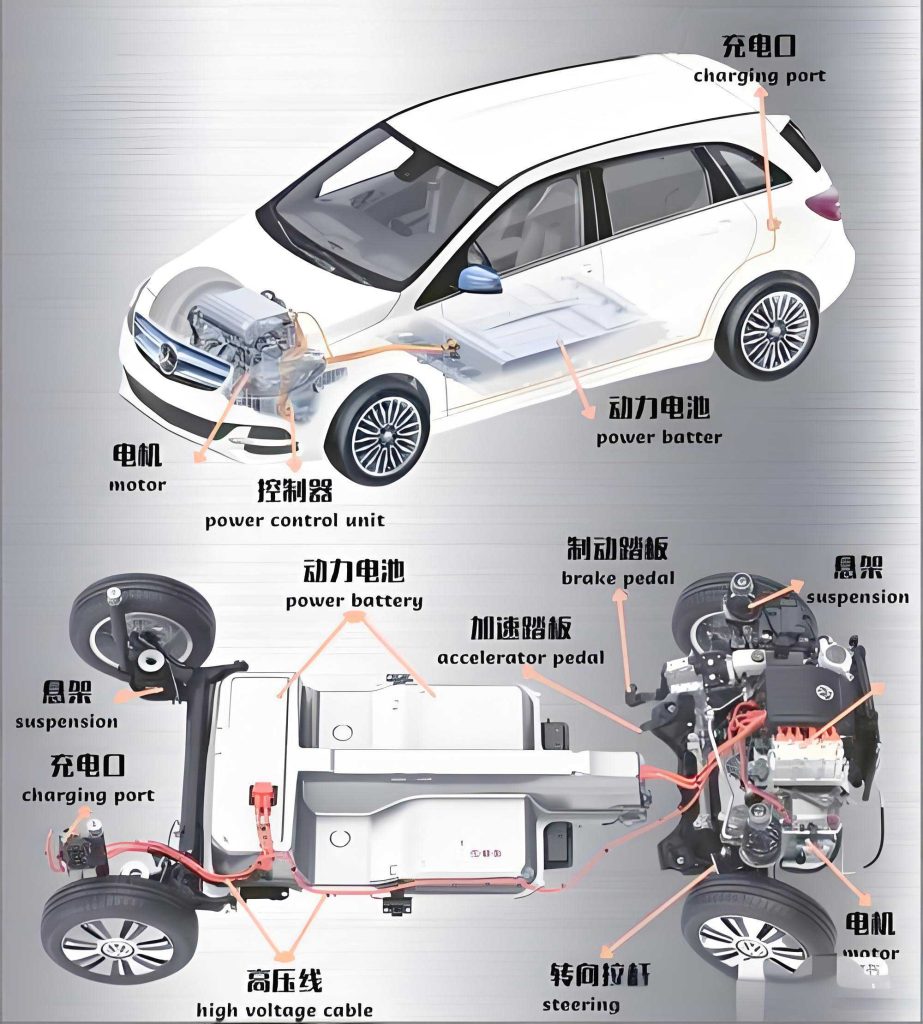
The proliferation of battery electric cars demands a robust charging ecosystem. I believe that a comprehensive electrical safety architecture is the backbone of this ecosystem. My analysis begins with the design of the electrical system safety architecture, which encompasses four interconnected subsystems: the power supply system, charging equipment, monitoring system, and distribution system. For the power supply system, external lines often use high-voltage transmission lines at 10kV or above. Selecting these lines requires meticulous consideration of the charging station’s load demand, supply distance, and line transmission characteristics. The load demand, primarily determined by the number and type of battery electric cars served, dictates the current-carrying capacity. To ensure stability and minimize losses, the conductor cross-sectional area must be calculated precisely. For fast-charging stations catering to battery electric cars with high-capacity batteries, larger cross-section cables are essential. The fundamental relationship can be expressed using the formula for voltage drop in a single-phase AC system (simplified for illustration): $$V_d \approx \frac{2 \times I \times L \times (\rho \cos \phi + x \sin \phi)}{A}$$ where \(V_d\) is the voltage drop, \(I\) is the load current, \(L\) is the line length, \(\rho\) is the conductor resistivity, \(x\) is the inductive reactance per unit length, \(\cos \phi\) is the power factor, and \(A\) is the conductor cross-sectional area. Ensuring \(V_d\) remains within acceptable limits (e.g., below 5%) is critical for the efficient charging of every battery electric car.
| Transformer Type | Key Monitoring Parameter | Warning Threshold | Action Threshold | Safety Standard Reference |
|---|---|---|---|---|
| Oil-immersed | Oil Temperature | 85°C | Alarm at 85°C; further action required | IEEE C57.91 |
| Dry-type | Winding Temperature | 130°C | Start forced cooling at 130°C; trip at 155°C | IEC 60076-11 |
| Both Types | Insulation Resistance | Trend decrease below baseline | Value below 1 MΩ (for low-voltage side to ground) requires immediate investigation | ANSI/NETA MTS-2019 |
Inside the station, the transformer is the heart of conversion. I recommend continuous monitoring. For oil-immersed transformers, temperature sensors are vital; a rise above 85°C should trigger an alert. For dry-type transformers, winding temperature is critical; exceeding 130°C should activate cooling, and crossing 155°C must initiate a shutdown. Regular insulation resistance tests, following the formula $$R_{insulation} = \frac{V_{test}}{I_{leakage}}$$ where \(V_{test}\) is the applied DC test voltage and \(I_{leakage}\) is the measured leakage current, ensure integrity and prevent breakdowns that could disrupt service for battery electric cars.
Charging equipment safety is directly tied to the user experience of every battery electric car owner. I classify charging equipment into two main types with distinct safety designs. Alternating Current (AC) charging piles, typically with output power up to 7kW, are common for overnight charging of personal battery electric cars. Their internal circuits must have robust overcurrent protection. The protection should act within 0.1s when the current exceeds 120% of the rated value, governed by a time-current characteristic curve. This can be modeled by an inverse-time relationship: $$t_{trip} = k \times \left(\frac{I}{I_{rated}}\right)^{-\alpha}$$ where \(t_{trip}\) is the trip time, \(I\) is the measured current, \(I_{rated}\) is the rated current, and \(k\) and \(\alpha\) are constants specific to the protection device. Leakage protection is equally crucial, with a threshold of 30mA. Direct Current (DC) charging piles, with power outputs reaching 120kW or more for rapid charging of commercial battery electric cars, require additional focus on thermal management of power modules. Each module should have independent cooling and temperature sensing. The heat dissipation can be described by Newton’s law of cooling: $$\frac{dT}{dt} = -h \times A \times (T – T_{ambient})$$ where \(T\) is the module temperature, \(t\) is time, \(h\) is the heat transfer coefficient, \(A\) is the surface area, and \(T_{ambient}\) is ambient temperature. Control algorithms adjust fan speed or reduce power output to maintain \(T < 80°C\). The charging interface must adhere to strict national standards (like CCS or CHAdeMO for battery electric cars) to prevent overheating from poor contact.
| Equipment Type | Primary Protection | Typical Threshold | Response Time | Key Application for Battery Electric Car |
|---|---|---|---|---|
| AC Charging Pile | Overcurrent Protection | 1.2 x I_rated | < 0.1s | Slow charging for personal battery electric cars |
| AC Charging Pile | Leakage Protection (RCD) | 30 mA residual current | < 0.1s | Personnel safety during AC charging |
| DC Charging Pile | Module Thermal Protection | Stage 1: 60°C; Stage 2: 80°C | Varies with cooling system | Preventing module failure during fast charging of battery electric cars |
| DC Charging Pile | Output Voltage/Current Control | Within ±0.5% of set point | Milliseconds | Ensuring battery health of the connected battery electric car |
The monitoring system acts as the nervous system. In my design, high-precision sensors are deployed. Voltage sensor accuracy should be within 0.5%, and current sensor accuracy within 1%. Data transmission employs secure protocols like Modbus TCP/IP with encryption (e.g., AES-256) to prevent tampering, crucial for protecting the charging history and data of battery electric cars. Remote control commands are managed through a multi-level permission system. Fault diagnosis utilizes algorithms that analyze real-time data streams. For instance, a sudden current spike \( \Delta I \) coinciding with a temperature rise \( \Delta T \) at a specific connector could indicate a fault, triggering an alarm. A simple anomaly detection can be based on statistical process control limits: $$ \text{Alarm if } |X_t – \mu| > 3\sigma $$ where \(X_t\) is the current measurement at time \(t\), and \(\mu\) and \(\sigma\) are the historical mean and standard deviation of normal operating current for that specific charger when serving a typical battery electric car.
Regarding the distribution system, the switchgear is critical. I specify circuit breakers with high short-circuit breaking capacity, often 50kA or more for main switches. The required breaking capacity \(I_{cu}\) can be derived from the prospective short-circuit current \(I_{k}\) at the point of installation: $$I_{cu} \ge I_{k} = \frac{V_{phase}}{\sqrt{Z_{source}^2 + Z_{cable}^2}}$$ where \(Z_{source}\) is the source impedance and \(Z_{cable}\) is the cable impedance upstream. Cable management in trays ensures fill ratios below 40% for proper heat dissipation, calculated as: $$\text{Fill Ratio} = \frac{\sum (A_{cable})}{A_{tray}} \times 100\% < 40\%$$ where \(A_{cable}\) is the cross-sectional area of each cable and \(A_{tray}\) is the internal cross-sectional area of the tray. Grounding using a TN-S system with resistance \(R_g \le 4\Omega\) is non-negotiable for safety. The touch voltage \(V_t\) in a fault condition must be limited: $$V_t = I_{fault} \times R_g \le V_{safe} (e.g., 50V AC)$$ where \(I_{fault}\) is the ground fault current.
My work extends beyond design to establishing a dynamic risk grading and control mechanism. Risk identification for a facility serving numerous battery electric cars involves cataloging threats: lightning strikes on overhead lines in stormy regions, transformer insulation aging, charging pile component degradation, sensor failures, and cable overloads. For risk assessment, I employ a quantitative matrix. The risk level \(RL\) is often calculated as: $$RL = P \times S$$ where \(P\) is the probability (rated 1-5) and \(S\) is the severity of consequences (rated 1-5). This generates a risk score from 1 to 25.
| Hazardous Element | Probability (P) 1=Very Low, 5=Very High |
Severity (S) 1=Negligible, 5=Catastrophic |
Risk Level (PxS) | Proposed Action Level |
|---|---|---|---|---|
| HV Line Fault in Multi-storm Area (no backup) | 3 | 4 (Prolonged outage for many battery electric cars) | 12 | High – Immediate mitigation required |
| AC Charger Component Aging | 2 | 3 (Single battery electric car charging failure, equipment damage) | 6 | Medium – Scheduled maintenance |
| Minor Data Packet Error in Monitoring | 4 | 2 (Temporary data loss) | 8 | Medium – Optimization required |
| Corrosion on Cable Tray in Harsh Environment | 1 | 5 (Potential fire, safety hazard) | 5 | Low/Medium – Long-term monitoring |
For high-risk items like transformer insulation degradation, my control measures are immediate: shutdown, replace oil/parts, and install enhanced monitoring with temperature checks every 2 hours. For medium risks, like aging AC charger components, I implement monthly inspection schedules and design optimizations. For low risks, such as communication errors, I upgrade cabling and enforce monthly connection checks, targeting a bit error rate below \(5 \times 10^{-4}\). The mechanism is continuously optimized. When new fast-charging technology for the latest battery electric car models is introduced, I analyze new risks like protocol incompatibility, which can be modeled as a state mismatch: $$ \text{Compatibility Fault if } (V_{car\_req}, I_{car\_req}) \notin \text{Set}(V_{charger\_cap}, I_{charger\_cap}) $$ I also integrate advanced online monitoring, like distributed fiber optic temperature sensing, which allows dynamic risk re-grading based on real-time data feeds.
The application of intelligent monitoring and protection technology represents the final layer of defense in my safety paradigm for battery electric car infrastructure. Comprehensive deployment involves sensors with extreme precision: current sensors with 0.1% accuracy and thermal resistors with ±0.5°C tolerance. The data from these sensors, such as the instantaneous current \(i(t)\) and temperature \(T(t)\), form time-series datasets. For insulation monitoring, I use regular tests with insulation resistance testers. The dielectric strength is implied by the resistance value, and a drop below 1 MΩ signals a potential leakage path, which for a 400V system could imply a leakage current \(I_{leak}\) given by Ohm’s law: $$I_{leak} \approx \frac{400V}{R_{insulation}}$$ which must be kept far below the 30mA safety threshold.
Protection technologies are applied in depth. For overcurrent protection, I select circuit breakers with specific time-current curves. The energy let-through \(I^2t\) is a critical parameter for protecting cables and equipment downstream: $$I^2t = \int_{0}^{t_{clear}} i^2(t) dt$$ where \(t_{clear}\) is the clearing time. A breaker with a lower \(I^2t\) rating offers better protection. For residual current protection, devices are set at 30mA with a maximum break time of 0.1s as per IEC 61008. For lightning protection, surge protective devices (SPDs) with a nominal discharge current \(I_n\) of 10kA or higher are installed. The required voltage protection level \(U_p\) must be below the withstand voltage of the connected equipment for battery electric car chargers: $$U_p \le U_{w} – \text{Margin}$$ where \(U_w\) is the equipment’s impulse withstand voltage.
| Protection Function | Device Type | Key Parameter & Formula | Typical Setting | Role in Protecting Battery Electric Car Assets |
|---|---|---|---|---|
| Overcurrent & Short-circuit | Molded Case Circuit Breaker (MCCB) | Short-circuit breaking capacity \(I_{cu}\) Thermal-magnetic trip characteristic: \(t(I) = f(I/I_r)\) |
\(I_{cu} \ge 50kA\); \(I_r = 100A\) | Prevents wiring fires, protects charger power electronics |
| Earth Leakage | Residual Current Device (RCD) | Residual operating current \(I_{\Delta n}\) Tripping time \(t_{\Delta}\) |
\(I_{\Delta n} = 30mA\); \(t_{\Delta} < 0.1s\) | Prevents electric shock to personnel and ground fault currents |
| Surge/ Lightning | Type 1/2 SPD | Voltage protection level \(U_p\) Nominal discharge current \(I_n\) |
\(U_p < 1.5kV\); \(I_n = 20kA\) (8/20µs wave) | Protects sensitive charger control boards from transients |
| Thermal Overload | Temperature Controller with RTD | Setpoints \(T_{warn}\), \(T_{trip}\) Proportional-Integral-Derivative (PID) control: \(u(t) = K_p e(t) + K_i \int e(t)dt + K_d \frac{de(t)}{dt}\) |
\(T_{warn}=60°C\), \(T_{trip}=80°C\) | Prevents overheating of DC charger power modules |
Integration and synergy are where the intelligence truly manifests. I architect systems where data from sensors is transmitted via industrial Ethernet to a central SCADA system. Edge computing nodes pre-process data to reduce latency and bandwidth. For example, an edge device might compute a moving average \(\bar{X}_k\) of temperature over a window of \(n\) samples: $$\bar{X}_k = \frac{1}{n} \sum_{i=k-n+1}^{k} T_i$$ and only send an alert if \(\bar{X}_k\) exceeds a threshold. In the control center, machine learning algorithms can correlate data. A simple correlation between current \(I\) and temperature \(T\) at a charger can be checked using the Pearson correlation coefficient \(r\) computed over a time window: $$r_{I,T} = \frac{\sum_{i=1}^{n} (I_i – \bar{I})(T_i – \bar{T})}{\sqrt{\sum_{i=1}^{n} (I_i – \bar{I})^2 \sum_{i=1}^{n} (T_i – \bar{T})^2}}$$ A value of \(r\) approaching +1 might indicate a normal load-temperature relationship, while a sudden decoupling could signal a fault. Upon detecting an anomaly, the system automatically issues commands to the protection layer, such as tripping a breaker or throttling charging power for the affected battery electric car, creating a closed-loop safety system.
In conclusion, the electrical safety of charging stations for battery electric cars is a multidimensional systems engineering challenge. My approach, detailed in this article, weaves together a scientifically designed safety architecture, a dynamically managed risk control mechanism, and deeply applied intelligent monitoring and protection technologies. These layers are interdependent and mutually reinforcing, collectively building a resilient safety barrier. This integrated framework ensures the reliable and safe operation of charging infrastructure, which is fundamental to supporting the widespread adoption and daily use of battery electric cars. Continuous evolution, incorporating lessons from operation and advancements in technology for battery electric cars, will keep this safety paradigm robust against future challenges.