
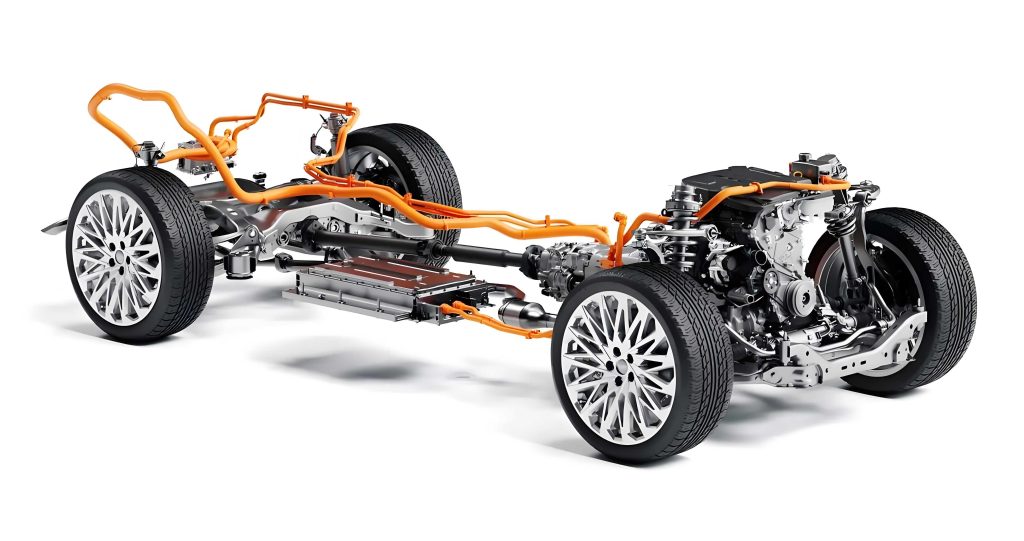
Idle operation represents a significant portion of a vehicle’s operational time, especially in congested urban environments. For any vehicle, the vibrational characteristics during idle have a profound impact on the subjective comfort perceived by drivers and passengers. A modern hybrid car presents a unique set of challenges in this regard, particularly the Plug-in Hybrid Electric Vehicle (PHEV). Unlike a conventional internal combustion engine (ICE) vehicle where the idle is managed with a small load to maintain auxiliary systems, a PHEV often features a distinct “pure idle” mode. In this mode, the engine runs with minimal or no electrical generation load, primarily to keep itself ready or to maintain minimal system functions. This nearly unloaded condition, often at a lower rotational speed to optimize fuel consumption and noise, places stringent demands on combustion stability. It is within this specific operational envelope of the hybrid car that a particularly annoying phenomenon can manifest: low-frequency, intermittent idle shake. This shake is characterized not by a constant, steady vibration, but by a fluctuation in amplitude at low frequencies, creating a sensation that the vehicle occasionally “shudders” or “surges” at rest. The human body is highly sensitive to such low-frequency, unsteady vibrations, making them a primary source of customer complaint and a critical target for refinement in the development of a premium hybrid car.
The automotive vehicle is an immensely complex system comprising numerous sources of vibration and noise excitation. These excitations propagate through multiple structural and airborne paths before reaching the response points where they are perceived, such as the steering wheel, seat, and floorpan. Along these transfer paths, structural attenuation and amplification occur. Therefore, while path modifications can mitigate issues, the most fundamental and effective solution for reducing vibration at the response point is to optimize the excitation source itself. In the case of a PHEV’s pure idle shake, the primary excitation source is unequivocally the internal combustion engine operating under its most sensitive low-load conditions. Consequently, the investigative focus must center on understanding and refining the engine’s behavior in this unique hybrid car operating state.
Quantifying Intermittency: The Fitful Index
Traditional vibration analysis heavily relies on metrics like overall level or frequency spectrum calculated over a period of time (e.g., Power Spectral Density – PSD). These are excellent for characterizing steady-state vibrations. However, they inherently average the data over the measurement period, thereby obscuring any time-varying characteristics. A vibration that fluctuates wildly in amplitude and one that is perfectly steady could yield a similar average level or spectrum. To effectively diagnose and track improvements for an *intermittent* shake, a metric that captures this variability is essential.
We propose the “Fitful Index” (FI), a dedicated metric to quantify the intermittent nature of a vibration signal within a specific frequency band of interest. The calculation procedure is methodical and is outlined below:
- Data Acquisition: Acquire the time-domain acceleration signal, $a(t)$, from a relevant vehicle response point (e.g., seat rail, steering column) over a sufficiently long duration (typically 60 seconds or more) to capture multiple episodes of the intermittent event.
- Frequency Band Isolation: Apply a band-pass filter to $a(t)$ to isolate the frequency band where the intermittent shake is subjectively perceived or objectively identified. If the problematic frequency is $f_0$, a filter with passband $f_0 \pm \Delta f$ (e.g., $\Delta f = 3 \text{ Hz}$) is used, resulting in the filtered signal $F\\{a(t)\\}$.
- Envelope Extraction: Extract the envelope of the filtered signal, $Env[F\\{a(t)\\}]$. The envelope tracks the instantaneous amplitude of the oscillatory signal, effectively mapping the “loudness” or intensity of the vibration over time. This step transforms the oscillatory signal into a lower-frequency signal representing the amplitude modulation.
- Intermittency Calculation: The Fitful Index is defined as the standard deviation of this envelope signal. It quantifies the degree of fluctuation in the vibration amplitude.
$$ FI = \sigma\\{ Env[F\\{a(t)\\}] \\} $$
where $\sigma$ denotes the standard deviation operator. A higher FI indicates greater intermittency (larger amplitude swings), while an FI approaching zero suggests a steady vibration.
This metric provides a single, objective number that correlates well with the subjective perception of “fitfulness” or “unevenness” in idle shake, making it an invaluable tool for benchmarking and tracking optimization progress in hybrid car development.
Problem Identification and Source Path Correlation
The investigation into the low-frequency intermittent idle shake of the subject hybrid car began with comprehensive testing. The primary response point was the driver’s seat rail (vertical direction), as this location directly transmits vibration to the occupant. Crucially, to trace the root cause, measurements were taken not only at the response but also at the suspected source. Accelerometers were mounted on the engine block (at a strategic location sensitive to combustion forces), and the engine’s instantaneous crankshaft speed (RPM) was simultaneously recorded using a high-resolution encoder. All data channels were synchronized using a multi-channel data acquisition system. Testing was conducted with the vehicle in its pure idle mode, at normal operating temperature, and with all ancillary loads (like the cooling fan) confirmed to be off to ensure a consistent test condition.
The time-domain data from the seat rail clearly showed periods of high vibration amplitude interspersed with periods of relative calm. Applying the Fitful Index calculation to this data for the troublesome frequency band around 10 Hz yielded an initial value of $FI = 0.01 \text{ m/s}^2$. This objectively confirmed the presence of significant intermittency.
The next step involved a detailed time-frequency analysis. Techniques like the Short-Time Fourier Transform (STFT) were employed to visualize how the frequency content of the signals evolved over time. The resulting spectrograms were revealing:
- Vehicle Response (Seat Rail): Showed clear, intermittent bursts of energy centered at approximately 10 Hz.
- Engine Block Vibration: Exhibited nearly identical intermittent bursts at the same 10 Hz frequency, and critically, these bursts occurred at precisely the same moments in time as those on the seat rail.
- Engine Speed Fluctuation: The instantaneous RPM signal displayed a distinct, correlated “wobble” or fluctuation pattern that was also intermittent and time-synchronized with the vibration bursts.
This high degree of temporal and frequency-domain correlation is a strong indicator of a direct cause-and-effect relationship. The analysis led to a clear conclusion: the intermittent shake felt inside the cabin of this hybrid car was directly caused by an intermittent excitation originating from the engine. The engine was not running smoothly; it was experiencing periods of unstable combustion or torque generation, manifesting as speed fluctuations and block vibrations, which were then transmitted through the mounts and body structure to the occupant. This focused the investigation squarely on the engine’s combustion stability during the unique low-load idle condition of the hybrid car.
Deep Dive Analysis: Engine Combustion Stability
Combustion stability refers to the cycle-to-cycle consistency of the combustion process inside an engine’s cylinders. In stable operation, each combustion event releases a very similar amount of energy. Under unstable conditions, significant variation occurs, leading to uneven torque output on the crankshaft, which is the fundamental source of the speed fluctuations and vibration we observed. The most authoritative way to assess combustion stability is through in-cylinder pressure analysis.
For this study, piezoelectric pressure transducers were installed in each cylinder of the engine. Synchronized pressure data and crankshaft position data were recorded over several hundred consecutive engine cycles during the problematic pure idle condition. From the cylinder pressure trace $p(\theta)$, where $\theta$ is the crankshaft angle, a key metric is calculated for each cycle: the Indicated Mean Effective Pressure (IMEP). IMEP represents the theoretical average pressure that, if acted on the piston during the power stroke, would produce the same net work output as the actual cycle.
For a four-stroke engine, the net IMEP for a cycle is calculated as:
$$ \text{IMEP} = \frac{1}{V_d} \left( \oint_{\text{cycle}} p \ dV \right) $$
where $V_d$ is the displacement volume of the cylinder. In practice, this closed integral is computed from the sampled $p(\theta)$ data and the known cylinder volume geometry $V(\theta)$.
With IMEP values calculated for a large number of consecutive cycles (e.g., 300 cycles per cylinder), statistical analysis reveals stability. Two standard metrics are used:
- Coefficient of Variation of IMEP (COVIMEP): This is the ratio of the standard deviation of the IMEP sample set to its mean value, expressed as a percentage. It is the primary measure of cyclic dispersion.
$$ \text{COV}_{\text{IMEP}} = \frac{\sigma(\text{IMEP})}{\mu(\text{IMEP})} \times 100\% $$ - Lowest Normalized Value (LNV): This metric identifies the worst-performing cycle in the sample set, normalized by the mean. It highlights extreme misfires or partial burns that are particularly detrimental to smoothness.
$$ \text{LNV} = \frac{\min(\text{IMEP})}{\mu(\text{IMEP})} \times 100\% $$
Industry experience and literature suggest that for a smooth idle, COVIMEP should typically be below 5-10%, and LNV should be above 75-80%. The analysis of the baseline hybrid car data revealed a starkly different picture, as summarized in the table below.
| Cylinder | Mean IMEP [bar] | Std Dev IMEP [bar] | COVIMEP [%] | Min IMEP [bar] | LNV [%] |
|---|---|---|---|---|---|
| #1 | 2.85 | 0.51 | 17.9 | 1.45 | 50.9 |
| #2 | 2.91 | 0.48 | 16.5 | 1.61 | 55.3 |
| #3 | 2.79 | 0.55 | 19.7 | 1.32 | 47.3 |
| #4 | 2.88 | 0.53 | 18.4 | 1.52 | 52.8 |
| Overall | 2.86 | 0.52* | ~18.1 | 1.32 | ~46.2 |
*Average standard deviation across cylinders for illustration.
The data is conclusive: the engine in its baseline calibration exhibited poor combustion stability during the PHEV pure idle. The COV values were nearly double the acceptable threshold, and the LNV values were critically low, indicating the occurrence of very weak combustion cycles. These “poor” cycles directly cause sudden dips in crankshaft torque, leading to the observed speed fluctuations (often in the 10 Hz range, which relates to the engine’s rotational inertia and control system response). This torsional excitation is then transmitted as vibration. The intermittency arises from the stochastic nature of cycle-to-cycle variation; occasionally, several weak cycles occur in succession, creating a palpable shudder in the hybrid car.
Optimization Strategy: Combustion Stabilization via VVT Tuning
Having identified poor combustion stability as the root cause, the optimization goal was clear: improve the consistency and robustness of the combustion process at the challenging low-load, low-speed idle condition specific to this hybrid car. Combustion is governed by the “triangle” of air, fuel, and spark. For a port-fuel injected engine at idle, the mixture preparation and the in-cylinder motion of the air-fuel charge (turbulence and swirl) are paramount. This is where Variable Valve Timing (VVT) becomes a powerful calibration tool.
VVT systems allow for the dynamic adjustment of intake and/or exhaust valve opening and closing events. By shifting these events relative to the piston motion and crankshaft position, engineers can significantly alter the engine’s breathing characteristics. Key parameters influenced include:
- Effective Compression Ratio: Late intake valve closing (LIVC) can reduce the effective compression ratio, lowering pumping work and knock tendency, but it can also reduce thermal efficiency and charge motion if overdone.
- Internal Exhaust Gas Recirculation (iEGR): Valve overlap (the period when both intake and exhaust valves are open) can be adjusted to trap inert exhaust gases in the cylinder. A small, controlled amount of iEGR can slow the combustion rate and improve stability, but excessive overlap leads to poor combustion and misfires.
- Charge Motion: Valve timing can influence the swirl and tumble patterns of the incoming air, which affect the mixing and flame propagation speed.
In the baseline calibration of this engine, the exhaust camshaft phaser was positioned at a relatively early timing of -40° (relative to a defined reference). Analysis suggested this setting, in combination with the intake timing, might be creating suboptimal in-cylinder conditions—potentially excessive dilution or poor charge motion—for the unique ultra-low load point of the hybrid car pure idle. The hypothesis was that retarding the exhaust valve closing event (i.e., moving the exhaust phaser towards a less advanced position) could alter the residual gas fraction and mixing, thereby stabilizing combustion.
A calibrated change was implemented, shifting the exhaust VVT angle from -40° to -20°. This modification was targeted specifically at the engine operating point corresponding to the PHEV pure idle mode. The effects were immediately evaluated through repeat combustion pressure analysis.
Results and Verification of Optimization
The impact of the VVT adjustment on combustion stability was quantitatively significant, as shown in the comparative table below.
| Condition | Avg. COVIMEP [%] | Avg. LNV [%] | Comment |
|---|---|---|---|
| Baseline (Exh. VVT = -40°) | ~18.1 | ~46.2 | Poor stability, weak cycles present. |
| Optimized (Exh. VVT = -20°) | ~7.8 | ~82.5 | Stability within acceptable targets. |
The COVIMEP was reduced by more than 50%, falling well within the smooth idle target range. More importantly, the LNV improved dramatically from a critical 46% to a robust 82.5%, indicating the elimination of the severe weak cycles that were the direct cause of the intermittent shake. This fundamental improvement at the source—the engine’s combustion process—was expected to translate directly to reduced vibration in the vehicle cabin.
Subsequent vehicle-level vibration testing confirmed this. The time-frequency analysis of the seat rail vibration showed a stark reduction in the intermittent 10 Hz energy bursts. The vibration became more constant and lower in amplitude. Recalculating the Fitful Index for the same 10 Hz frequency band provided an objective measure of success:
$$ FI_{\text{optimized}} = 0.006 \text{ m/s}^2 $$
Comparing this to the baseline value:
$$ FI_{\text{baseline}} = 0.01 \text{ m/s}^2 $$
The improvement represents a **40% reduction** in the Fitful Index ($(0.01 – 0.006) / 0.01 = 0.4$). Subjectively, evaluators reported the elimination of the noticeable, annoying shudder. The idle quality was perceived as smooth and consistent, achieving the primary comfort target for this operating mode of the hybrid car.
Conclusion and Broader Implications for Hybrid Car Development
This detailed investigation into low-frequency intermittent idle shake in a Plug-in Hybrid Electric Vehicle successfully followed a classic NVH problem-solving methodology: define the problem objectively, identify the source and path, analyze the root-cause mechanism, implement a targeted countermeasure, and verify the improvement both objectively and subjectively. The introduction of the Fitful Index provided a crucial quantitative tool for characterizing the non-steady nature of the problem, which standard spectral averages failed to capture.
The core finding was that the uncomfortable intermittent shake perceived in the cabin was a direct result of poor engine combustion stability during the unique, nearly-no-load “pure idle” condition. This instability, quantified by high COVIMEP and low LNV values from in-cylinder pressure data, caused irregular crankshaft torque output, manifesting as speed fluctuations and engine block vibration. By leveraging the flexibility of the Variable Valve Timing system—a key technology in modern efficient engines—and recalibrating the exhaust cam phasing specifically for this low-load point, the in-cylinder conditions were optimized. This resulted in dramatically improved combustion consistency, which effectively eliminated the source of the intermittent excitation.
The 40% reduction in the Fitful Index and the positive subjective assessment confirmed the effectiveness of the optimization. This case study underscores a critical aspect of hybrid car development: the internal combustion engine must be meticulously calibrated not only for traditional high-load and driving cycles but also for the novel, low-load operating points introduced by hybrid-electrification strategies. Achieving refinement in all modes is essential for delivering the seamless, premium driving experience expected from advanced hybrid car platforms. The approach outlined here—combining targeted metrics, source-path-receiver analysis, and fundamental combustion diagnostics—provides a robust framework for solving similar NVH challenges in the evolving landscape of electrified vehicles.