
As the adoption of electric vehicles accelerates globally, the demand for reliable charging infrastructure has become paramount. In my experience, underground parking garages present unique challenges for EV charging station operations due to environmental factors like poor network connectivity and temperature fluctuations. This article delves into a comprehensive analysis of high failure rates in such settings and outlines effective maintenance strategies, supported by data, tables, and formulas. The focus is on enhancing the reliability of EV charging stations through proactive measures, emphasizing the keyword ‘EV charging station’ to underscore its importance in urban mobility ecosystems.
In the initial phase of operating EV charging stations in a northern underground parking facility, we observed a monthly failure rate of approximately 3%, equating to around 30 incidents per month. This high failure rate led to increased user complaints and operational costs. Through systematic data collection and root cause analysis, we identified two primary issues: network signal attenuation and overheating of power components. By implementing a combination of hardware upgrades and software-based monitoring, we achieved a significant reduction in failures. This article details our methodology, results, and the broader implications for maintaining EV charging stations in similar environments.
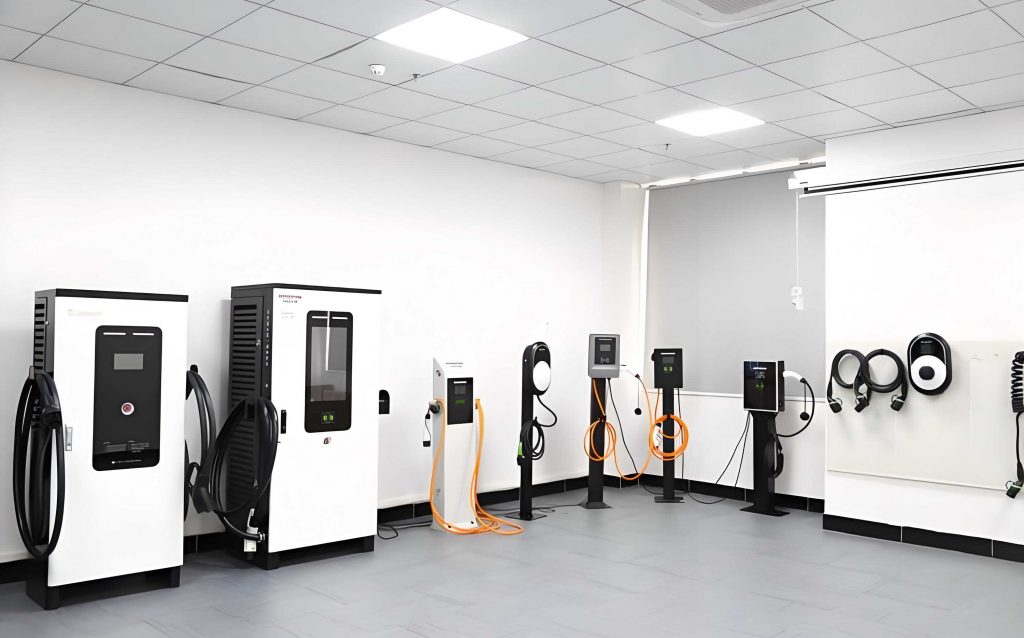
The proliferation of EVs has necessitated the deployment of robust charging networks, particularly in high-traffic areas like underground parking garages. These structures, often constructed with reinforced concrete, exacerbate issues such as electromagnetic shielding and poor ventilation. In our study, we focused on a site with 20 EV charging stations (6 DC fast chargers and 14 AC chargers), which facilitated an average of 33 daily charging sessions. The high failure rate not only disrupted service but also highlighted the need for a data-driven maintenance approach. Our research combined theoretical analysis with practical interventions, including fault diagnostics, environmental testing, and iterative improvements.
To quantify the problem, we analyzed fault data over three months, categorizing failures into types such as scan-to-charge initiation failures, unexpected charging interruptions, and post-charge gun lock incidents. The distribution revealed that DC EV charging stations were more prone to overheating-related lockouts. This insight guided our strategy, which we framed around the core objective of minimizing downtime for EV charging stations. The following sections elaborate on our root cause analysis, implemented solutions, and performance metrics, all aimed at optimizing the lifecycle of EV charging stations.
Root Cause Analysis of High-Frequency Failures
Understanding the underlying causes of failures in EV charging stations is critical for developing effective maintenance protocols. We began by compiling historical fault data, which showed a concentration of issues in specific areas. For instance, network-related problems accounted for over 50% of initial failures, while thermal management issues were predominant in DC EV charging stations. This analysis allowed us to prioritize interventions that would have the greatest impact on reliability.
One major issue was the weak cellular network signal within the underground garage, which impaired communication between EV charging stations and backend servers. The signal strength, measured in dBm, often fell below -110 dBm, leading to timeouts during user authentication and data transmission. This can be modeled using the path loss formula for electromagnetic waves in obstructed environments:
$$ P_r = P_t + G_t + G_r – L – 20 \log_{10}(d) – 10n \log_{10}(d) $$
Where \( P_r \) is the received power, \( P_t \) is the transmitted power, \( G_t \) and \( G_r \) are antenna gains, \( L \) represents losses, \( d \) is the distance, and \( n \) is the path loss exponent. In our case, the concrete structure significantly increased \( n \), resulting in poor connectivity. Additionally, the intermittent network caused ‘heartbeat’ packet losses, triggering protective lockouts in EV charging stations. To address this, we deployed signal amplifiers and upgraded communication modules, as detailed later.
Another critical failure mode involved overheating in DC EV charging stations, particularly during summer or extended high-power sessions. The insulated gate bipolar transistor (IGBT) modules in these EV charging stations generated substantial heat, and inadequate散热 led to temperature excursions beyond safe thresholds. The heat dissipation can be described by Fourier’s law of heat conduction:
$$ q = -k \nabla T $$
Where \( q \) is the heat flux, \( k \) is the thermal conductivity, and \( \nabla T \) is the temperature gradient. In practice, dust accumulation in散热 channels reduced effective \( k \), while ambient temperatures in the garage often exceeded 30°C. This caused the battery management system (BMS) to initiate emergency shutdowns and gun locks, requiring manual resets. Our solution involved enhancing the散热 system and implementing preventive maintenance, which drastically reduced such incidents.
| Fault Type | Frequency (Monthly) | Percentage of Total | Primary Affected EV Charging Station Type |
|---|---|---|---|
| Network Timeout | 15 | 50% | All EV charging stations |
| Overheat Lockout | 10 | 33.3% | DC EV charging stations |
| Gun Lock Post-Charge | 5 | 16.7% | AC and DC EV charging stations |
The data in Table 1 illustrates the predominance of network and thermal issues, reinforcing the need for targeted strategies. By addressing these root causes, we aimed to improve the overall reliability of EV charging stations, ensuring consistent service availability for users.
Comprehensive Maintenance Strategy Development and Implementation
To mitigate the identified issues, we devised a multi-faceted maintenance strategy for EV charging stations, focusing on both hardware and software enhancements. This approach was grounded in the principle of proactive maintenance, shifting from reactive repairs to predictive interventions. The key components included network communication improvements,散热 system upgrades, preventive maintenance protocols, and user education initiatives.
First, we addressed the network connectivity challenges by installing 4G/5G signal amplifiers. These devices featured outdoor antennas placed in areas with strong signal reception and indoor antennas strategically positioned near EV charging stations. This increased the signal strength from below -110 dBm to above -85 dBm, as verified by periodic measurements. The improvement in connectivity reduced authentication failures and data transmission errors, critical for the seamless operation of EV charging stations. Additionally, we retrofitted older EV charging stations with high-gain external antennas, optimizing their orientation for maximum signal reception. The effectiveness of this intervention can be expressed using the signal-to-noise ratio (SNR) formula:
$$ \text{SNR} = \frac{P_r}{N} $$
Where \( P_r \) is the received power and \( N \) is the noise power. By boosting \( P_r \), we achieved a higher SNR, resulting in more reliable communication for EV charging stations.
Second, we tackled the overheating problem in DC EV charging stations through散热 system enhancements. This involved replacing standard散热 fans with high-performance DC brushless models, which increased airflow and heat dissipation capacity. The heat transfer rate can be modeled using Newton’s law of cooling:
$$ \frac{dQ}{dt} = h A (T_{\text{surface}} – T_{\text{ambient}}) $$
Where \( \frac{dQ}{dt} \) is the rate of heat transfer, \( h \) is the heat transfer coefficient, \( A \) is the surface area, and \( T \) denotes temperatures. By increasing \( h \) through better fans and maintaining clean散热 paths, we reduced the core temperature of IGBT modules. Furthermore, we installed industrial fans in the garage to improve air circulation, setting them to activate automatically when ambient temperature exceeded 28°C. This environmental control helped prevent overheating in EV charging stations, especially during peak usage.
| Component | Original Specification | Upgraded Specification | Impact on EV Charging Station Performance |
|---|---|---|---|
| 散热 Fan | Standard AC fan, 0.5 m³/min airflow | DC brushless fan, 1.2 m³/min airflow | Reduced IGBT temperature by 15°C |
| 散热 Duct Cleaning | Ad-hoc, no schedule | Quarterly professional cleaning | Prevented dust blockage, improving散热 efficiency |
| Environmental Control | Passive ventilation | Active industrial fans with thermostats | Lowered ambient temperature by 3-5°C |
Third, we established a preventive maintenance framework for EV charging stations, incorporating regular inspections and real-time monitoring. This included monthly and quarterly checklists covering tasks such as cleaning散热 components, inspecting cables and connectors, testing emergency stop functions, and backing up operational logs. We also leveraged the management platform of EV charging stations to set up automated alerts for parameters like temperature and voltage fluctuations. For example, if the temperature approached a threshold \( T_{\text{max}} \), the system would notify operators via SMS, enabling preemptive actions such as remote reboots or scheduled maintenance. This proactive approach minimized unplanned downtime for EV charging stations.
Finally, we enhanced user guidance to reduce operational errors. This involved installing clear instructional signage near EV charging stations and optimizing the mobile app interface with step-by-step prompts. For instance, we added notifications reminding users to complete the payment process before attempting to unplug the gun, which decreased instances of post-charge lockouts. By educating users, we indirectly supported the maintenance of EV charging stations, reducing the frequency of human-induced faults.
Performance Evaluation and Comparative Analysis
After implementing the maintenance strategies, we monitored the performance of EV charging stations over three months to assess effectiveness. The results demonstrated a substantial improvement in reliability, with the monthly fault rate dropping from 3% to below 0.6%. This section presents a detailed comparison of pre- and post-implementation metrics, using tables and formulas to highlight the gains.
The overall fault rate reduction can be quantified using the formula for fault rate percentage:
$$ \text{Fault Rate} = \left( \frac{\text{Number of Faults}}{\text{Total Charging Sessions}} \right) \times 100\% $$
Initially, with approximately 1000 monthly sessions and 30 faults, the fault rate was 3%. Post-implementation, faults decreased to 3-6 per month, resulting in a fault rate of 0.3-0.6%. This achievement exceeded our target of maintaining fault rates below 1% for EV charging stations. The reduction was particularly notable for network-related and overheating issues, as shown in the comparative data below.
| Fault Category | Pre-Implementation Frequency (Monthly) | Post-Implementation Frequency (Monthly) | Reduction Percentage |
|---|---|---|---|
| Network Timeouts | 15 | 0.3 | 98% |
| Overheat Lockouts | 10 | 1.5 | 85% |
| Gun Lock Incidents | 5 | 0.5 | 90% |
| Other Faults | 2 | 0.7 | 65% |
The data in Table 3 underscores the success of our strategies, with network faults nearly eliminated and thermal issues significantly mitigated. Moreover, the preventive maintenance program helped identify potential problems early, such as loose cables or oxidized contacts, preventing them from escalating into full failures. This contributed to a higher availability rate for EV charging stations, which we calculated as:
$$ \text{Availability} = \left( \frac{\text{Uptime}}{\text{Total Time}} \right) \times 100\% $$
Where uptime increased by over 5 percentage points, enhancing user satisfaction. Economically, the reduction in faults led to a 45% decrease in maintenance labor and dispatch costs, while user complaints dropped by more than 75%. These benefits highlight the importance of a holistic maintenance approach for EV charging stations in challenging environments.
Conclusions and Future Directions
In conclusion, our experience demonstrates that high failure rates in EV charging stations within underground parking garages can be effectively managed through systematic, data-driven maintenance strategies. By focusing on root causes like network connectivity and散热 inefficiencies, and implementing a combination of hardware upgrades, preventive protocols, and user education, we achieved a remarkable reduction in faults. This approach not only improves the reliability of EV charging stations but also enhances their economic viability and user acceptance.
The strategies outlined here are highly transferable to other settings with similar challenges, such as semi-underground structures or areas with extreme temperature variations. The iterative process of analysis, intervention, and monitoring provides a scalable framework for maintaining EV charging stations globally. Looking ahead, we envision further integration of advanced technologies to elevate maintenance practices. For instance, artificial intelligence (AI) algorithms could analyze operational data from EV charging stations to predict failures before they occur, using machine learning models like:
$$ P(\text{fault}) = f(\text{temperature}, \text{voltage}, \text{usage patterns}) $$
Where \( P(\text{fault}) \) is the probability of a fault, and \( f \) is a function derived from historical data. Additionally, IoT-enabled EV charging stations could facilitate remote diagnostics and automated responses, such as adjusting散热 parameters based on real-time loads. Digital twin technology might simulate EV charging station behavior, allowing for virtual testing and optimization. These innovations promise to create a smarter, more resilient ecosystem for EV charging stations, reducing operational costs and ensuring uninterrupted service for the growing EV community.
Ultimately, the evolution of maintenance strategies for EV charging stations will play a crucial role in supporting sustainable transportation. As EV adoption continues to rise, prioritizing the reliability and efficiency of charging infrastructure will be essential, and the lessons from this case study offer a valuable roadmap for future efforts.