
As an analyst in the field of energy storage, I have been closely monitoring the rapid evolution of solid state battery technology. Solid state batteries represent a transformative advancement over traditional lithium-ion batteries, offering superior safety, higher energy density, and broader operational temperature ranges. In this comprehensive article, I will delve into the technical aspects, global patent landscape, and industrial trends surrounding solid state batteries, drawing on extensive data and research. The growing emphasis on electric vehicles and renewable energy storage has accelerated innovation in this domain, making it crucial to understand the current state and future directions of solid state battery development. Throughout this discussion, I will highlight key challenges, material innovations, and strategic patent filings that shape the industry.
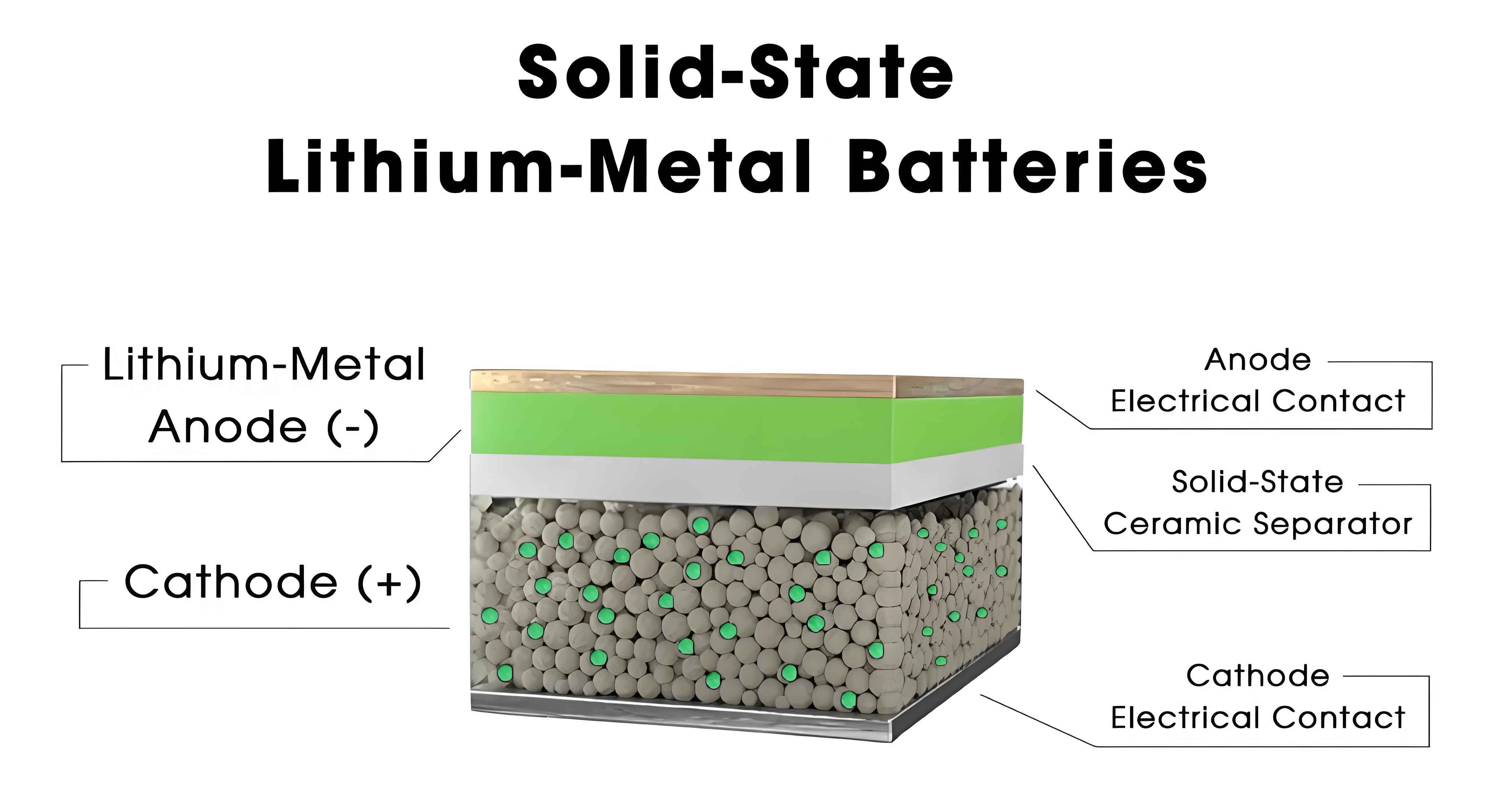
Solid state batteries operate on principles similar to conventional lithium-ion batteries, where lithium ions move between the anode and cathode during charge and discharge cycles. However, the fundamental difference lies in the use of a solid electrolyte instead of a liquid one. This solid electrolyte not only facilitates ion conduction but also enhances safety by reducing risks of leakage and thermal runaway. The working mechanism can be summarized by the following half-reactions during discharge:
At the anode: $$ \text{Li} \rightarrow \text{Li}^+ + e^- $$
At the cathode: $$ \text{Li}^+ + e^- + \text{Host} \rightarrow \text{Li-Host} $$
The overall reaction involves the migration of Li+ ions through the solid electrolyte, driven by the electric field. The ionic conductivity of the solid electrolyte, denoted as σ, is a critical parameter and can be expressed as: $$ \sigma = n \cdot e \cdot \mu $$ where n is the charge carrier concentration, e is the elementary charge, and μ is the mobility of ions. In ideal solid state batteries, σ should approach or exceed that of liquid electrolytes, but current materials often fall short, leading to challenges in power density and charging rates.
The material systems for solid state batteries are diverse, primarily categorized into inorganic solid electrolytes and polymer solid electrolytes. Inorganic types include oxides and sulfides, while polymer electrolytes consist of polymer matrices complexed with lithium salts. Each category has distinct advantages and limitations. For instance, sulfide-based solid electrolytes typically exhibit higher ionic conductivity but may suffer from instability in air, whereas oxide-based ones offer better stability but lower conductivity. Polymer electrolytes, such as those using PEO (polyethylene oxide), provide flexibility but often require elevated temperatures for optimal performance. The following table summarizes key properties of these solid electrolyte materials:
| Material Type | Example Compounds | Ionic Conductivity (S/cm) | Advantages | Disadvantages |
|---|---|---|---|---|
| Oxide Solid Electrolytes | LLZO (Li7La3Zr2O12), LATP | 10^{-4} to 10^{-3} | High stability, good mechanical strength | Brittle, high interfacial resistance |
| Sulfide Solid Electrolytes | LPS (Li3PS4), LGPS | 10^{-3} to 10^{-2} | High conductivity, soft texture | Hydroscopic, poor air stability |
| Polymer Solid Electrolytes | PEO-LiTFSI | 10^{-5} to 10^{-4} | Flexible, easy processing | Low conductivity at room temperature |
Manufacturing processes for solid state batteries share similarities with traditional lithium-ion batteries but involve additional steps to ensure proper solid-solid interfaces. Key stages include material synthesis for electrodes and solid electrolytes, electrode fabrication through coating or pressing, cell assembly by stacking layers, and final encapsulation and testing. However, the production of solid state batteries faces hurdles such as the need for controlled atmospheres for sulfide handling and high-pressure sintering for oxides, which increase costs. The energy density of solid state batteries can be estimated using the formula: $$ E_d = \frac{V \cdot C}{m} $$ where E_d is the energy density in Wh/kg, V is the average voltage, C is the capacity in Ah, and m is the mass. With advancements, solid state batteries aim for E_d values up to 500 Wh/kg, significantly higher than the 200–300 Wh/kg of liquid lithium-ion batteries.
Several technical challenges impede the widespread adoption of solid state batteries. First, the ionic conductivity of solid electrolytes is often lower than that of liquids, typically by 2–3 orders of magnitude, which can be modeled by the Arrhenius equation: $$ \sigma = \sigma_0 \exp\left(-\frac{E_a}{kT}\right) $$ where E_a is the activation energy, k is Boltzmann’s constant, and T is temperature. This results in reduced charge-discharge rates. Second, the solid-solid interfaces between electrodes and electrolytes lead to high interfacial resistance, causing capacity fade and efficiency losses. Third, the growth of lithium dendrites remains a concern, as they can penetrate solid electrolytes, leading to short circuits. Although solid electrolytes have higher mechanical strength, the critical current density for dendrite suppression can be described as: $$ J_c = \frac{2\sigma \gamma}{e L} $$ where γ is the surface energy and L is the thickness. Finally, material costs and manufacturing complexities, such as the need for thin-film deposition or hot pressing, contribute to higher overall expenses compared to conventional batteries.
In my analysis of global patent trends for solid state batteries, I have observed a significant increase in patent filings over the past two decades. Using data from sources like incoPat, I compiled patent applications from 2005 to 2023, totaling over 19,000 records. The annual patent application trends reveal a steady growth phase from 2005 to 2010, followed by accelerated growth from 2011 to 2015, and a surge from 2016 to 2020, peaking in recent years. This reflects the rising global interest and investment in solid state battery technology. The table below summarizes the global patent application trends for solid state batteries:
| Year Range | Patent Applications | Growth Phase |
|---|---|---|
| 2005–2010 | Approximately 600 | Slow and steady |
| 2011–2015 | Around 2,400 | Accelerated |
| 2016–2020 | Over 10,000 | Surge |
| 2021–2023 | Approximately 6,500 (partial data) | Stable growth |
The distribution of patents across different solid electrolyte technologies shows that polymer-based solid state batteries have the highest number of filings, followed by sulfide and oxide types. This aligns with the ongoing research efforts to overcome material limitations. For instance, polymer solid electrolytes have seen continuous innovation due to their processability, while sulfide solid electrolytes are gaining traction for their high conductivity. The following table details the patent counts for mainstream solid electrolyte technologies up to 2023:
| Technology | Patent Applications (Cumulative) | Notable Trends |
|---|---|---|
| Polymer Solid Electrolytes | Over 1,500 | Early focus, stable growth |
| Sulfide Solid Electrolytes | Approximately 1,200 | Rapid increase since 2017 |
| Oxide Solid Electrolytes | Around 800 | Steady rise post-2014 |
Geographically, the patent landscape for solid state batteries is dominated by China, Japan, the United States, and South Korea, which together account for about 80% of global filings. China leads with the highest number of patents, indicating strong governmental and industrial support. Japan follows, with a long history of research, particularly in sulfide electrolytes. The United States and South Korea also show substantial activity, driven by their automotive and electronics industries. This distribution underscores the strategic importance of solid state batteries in national energy policies. The table below highlights the geographic distribution of solid state battery patents:
| Country/Region | Patent Applications | Percentage of Global Total |
|---|---|---|
| China | Over 7,000 | Approximately 40% |
| Japan | Around 3,800 | About 20% |
| United States | Over 3,100 | Roughly 16% |
| South Korea | Over 1,600 | Nearly 8% |
| Others | Under 1,000 | Remaining 16% |
Major global patent applicants are predominantly corporations from Japan and South Korea, with Toyota leading by a significant margin. Other key players include Murata Manufacturing, Hyundai, LG Chem, and Samsung. These entities focus on various aspects of solid state batteries, such as electrolyte composition, cell design, and manufacturing processes. For example, Toyota has extensive patents on sulfide-based solid electrolytes and cell stacking techniques, while LG emphasizes polymer systems. The concentration of patents among a few companies highlights the competitive nature of the solid state battery market. The following table lists the top global applicants and their patent counts:
| Applicant | Patent Applications | Primary Focus Areas |
|---|---|---|
| Toyota | Over 2,900 | Sulfide electrolytes, cell integration |
| Murata Manufacturing | Over 600 | Oxide and polymer systems |
| Hyundai | Over 600 | Cell design, interface engineering |
| LG Chem | Over 400 | Polymer electrolytes, manufacturing |
| Samsung | Over 200 | Sulfide electrolytes, safety features |
In my examination of China’s solid state battery patent landscape, I have noted a similar upward trend in applications, mirroring global patterns. From 2005 to 2010, filings were low but increased steadily from 2011 to 2015, and surged from 2016 onward, with over 1,000 applications annually in recent years. This growth is fueled by national policies and investments in new energy vehicles. The key applicants in China include a mix of companies, universities, and research institutes, such as Honeycomb Energy, Harbin Institute of Technology, and the Institute of Physics at the Chinese Academy of Sciences. This diversity indicates a collaborative ecosystem aimed at overcoming technical barriers. The table below outlines the top patent applicants in China for solid state batteries:
| Applicant | Patent Applications | Type |
|---|---|---|
| Honeycomb Energy | Over 190 | Company |
| Harbin Institute of Technology | Over 110 | University |
| WeiLan New Energy | Over 100 | Company |
| Institute of Physics, CAS | Over 80 | Research Institute |
| Zhejiang Fengli New Energy | Over 70 | Company |
Industrial policies worldwide have played a crucial role in advancing solid state battery technology. In China, initiatives like the New Energy Vehicle Industry Development Plan (2021–2035) and the Carbon Peak Action Plan before 2030 emphasize research and industrialization of solid state batteries. Japan’s Battery Industry Strategy targets full commercialization of all-solid-state batteries by 2030, while the U.S. National Blueprint for Lithium Batteries aims for cost reductions and high energy densities. South Korea’s K-Battery Development Strategy supports tax incentives for research, and Europe’s Solid-State Battery Technology Roadmap 2035+ outlines targets for energy density improvements. These policies create a favorable environment for innovation and commercialization of solid state batteries.
Looking ahead, the future of solid state batteries hinges on addressing key technical challenges and scaling up production. Composite solid electrolytes, which combine inorganic and polymer materials, offer promise for achieving higher ionic conductivity and better mechanical properties. The effective conductivity of such composites can be approximated using models like the Maxwell-Garnett equation: $$ \sigma_{\text{eff}} = \sigma_m \frac{1 + 2\phi(\sigma_i – \sigma_m)/(\sigma_i + 2\sigma_m)}{1 – \phi(\sigma_i – \sigma_m)/(\sigma_i + 2\sigma_m)} $$ where σ_eff is the effective conductivity, σ_m is the matrix conductivity, σ_i is the inclusion conductivity, and φ is the volume fraction. Additionally, advancements in interface engineering, such as the use of buffer layers, could reduce resistance and enhance cycle life. The ongoing patent activity suggests that solid state batteries will continue to evolve, with potential breakthroughs in material science and manufacturing techniques driving commercialization. As I conclude this analysis, it is clear that solid state batteries represent a pivotal technology for the future of energy storage, with significant implications for electric vehicles and grid storage systems. The collaborative efforts between industry, academia, and governments will be essential in realizing the full potential of solid state batteries and overcoming the existing hurdles.