
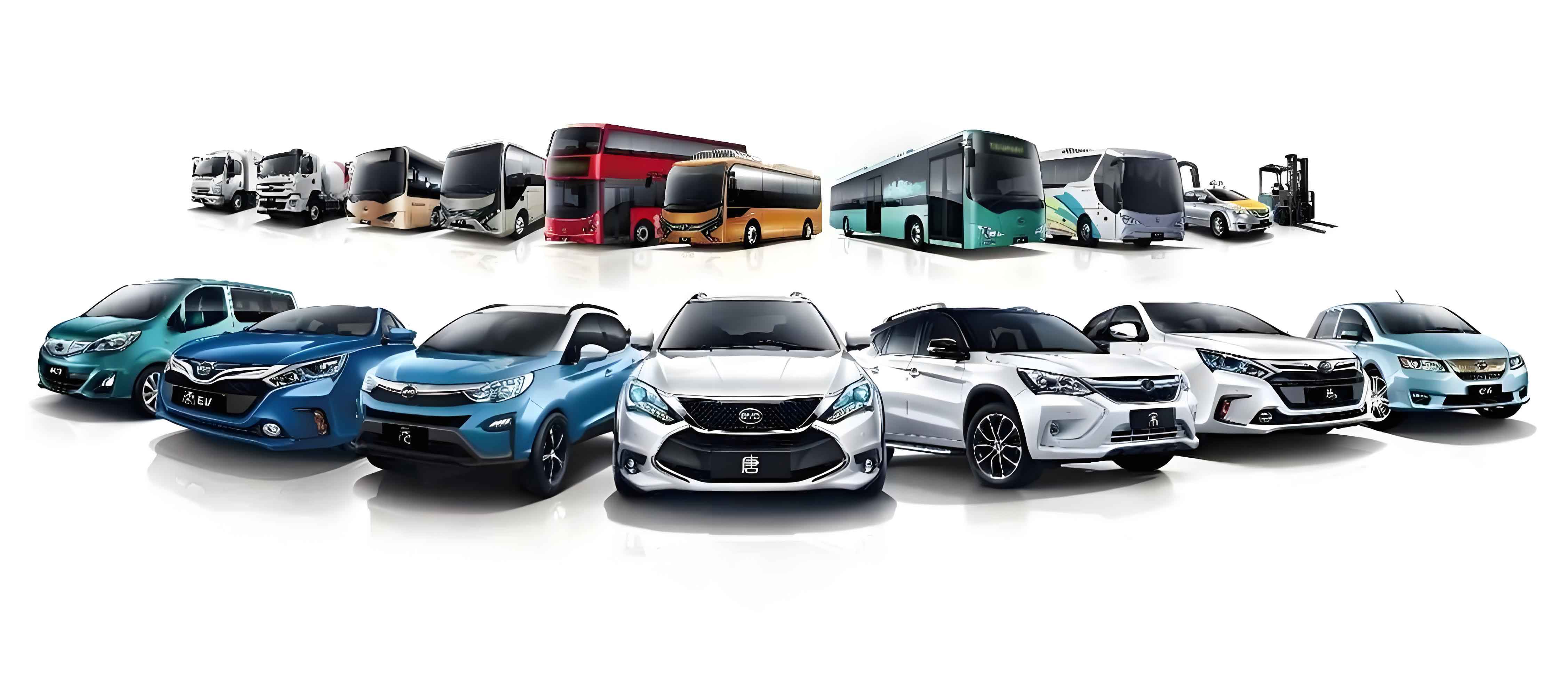
As climate change becomes increasingly severe, green and low-carbon transformation has become a global consensus. China, as the world’s largest producer and consumer of automobiles, plays a crucial role in achieving carbon peak targets through the automotive industry’s carbon reduction efforts. Since 2009, China has implemented purchase subsidies for new energy vehicles and continuously improved charging infrastructure to promote the adoption of electric vehicles, aiming to establish a robust ecosystem for China EV development. In this context, the electric vehicle market in China has expanded rapidly. According to statistics from the China Association of Automobile Manufacturers, sales of new energy vehicles have increased year by year from 2013 to 2023, with a remarkable growth of 262% in 2022. By 2023, electric vehicle sales accounted for 31.6% of total automobile sales. It is foreseeable that the number of electric vehicles in China will continue to grow steadily.
However, compared to traditional internal combustion engine vehicles, the technology for electric vehicles is not yet mature, with issues such as short driving range, significant battery degradation, long charging times, and battery safety concerns. In particular, accidents involving electric vehicles often result in fires or even explosions. For instance, in March 2022, a new energy vehicle in Guizhou Province began smoking after charging and subsequently caught fire. In April 2022, a electric vehicle in Fujian Province burst into flames while charging, igniting an adjacent vehicle. In November 2022, an electric vehicle in Chengdu caught fire during fast charging and exploded. In April 2023, a new energy car in Longyan, Fujian, caught fire and exploded while charging. In August 2023, a Nio ES8 collided with a road pillar in Zhejiang, causing a fire that resulted in the driver’s death. Based on collected data from approximately 230 electric vehicle accident cases between January and October 2023, statistical analysis indicates that most fire accidents occur during driving (53.04%) and charging (20%).
To address the fire safety issues of electric vehicles, some researchers have conducted studies. For example, Wang et al. used fault tree analysis for qualitative analysis of electric vehicle fire accidents, identifying basic events leading to such incidents, and employed fuzzy decision methods to assess the risk. Zhang et al. constructed a full-scale electric vehicle combustion test platform to study fire hazards, revealing that battery thermal runaway during combustion leads to smoke leakage and flame projection. Xia Jihao compared the fire characteristics and heat release rates of electric vehicles and traditional vehicles through theoretical analysis. Zhu Kai et al. established a full-scale bus combustion model to compare the fire hazards of pure electric and fuel-powered buses. Although current research on electric vehicle fire accidents covers various aspects and has yielded significant results, most studies focus on the battery itself and lack comprehensive safety analysis methods for overall risk assessment and hierarchical control of various risk factors. Therefore, this paper establishes a FTA-AHP-extension analysis model to analyze electric vehicle fire accidents, identify causes, assess their importance, determine the overall risk level, and propose preventive measures for weak links. This model enriches the field of electric vehicle fire safety and provides a reference for accident prevention and control.
FTA-AHP-Extension Analysis Model
The FTA-AHP-extension analysis model is based on Fault Tree Analysis (FTA). By constructing a fault tree, minimal cut sets or minimal path sets are identified to determine the structural importance of basic events. Based on the FTA results, an Analytic Hierarchy Process (AHP) model is built, using the Delphi method for expert scoring to assign values to different factors, constructing a target layer judgment matrix, and determining weights. On the basis of FTA-AHP analysis, extension evaluation is used to calculate the risk levels of basic events leading to accidents. This evaluation model compensates for the shortcomings of traditional methods, such as FTA’s difficulty in determining accident probabilities, AHP’s subjectivity, and FTA-AHP’s inability to intuitively identify weak links in accidents. The implementation steps of the FTA-AHP-extension analysis model are as follows:
1. Construct a fault tree.
2. Perform qualitative analysis on the fault tree to determine minimal cut sets and minimal path sets.
3. Build an AHP model. The top event of the fault tree serves as the target layer, minimal cut sets or minimal path sets as the criterion layer, and basic events as the indicator layer factors.
4. Construct judgment matrices. Use the Delphi method with the 1–9 scale for scoring.
5. Conduct consistency checks on judgment matrices. Calculate the consistency index IC, determine the corresponding average random consistency index IR, and compute the consistency ratio RC. When RC < 0.1, the judgment matrix’s consistency is acceptable; if RC > 0.1, the matrix needs revision.
6. Sort the indicator layer based on calculated element weights.
7. Determine the evaluation matter-element. Denote the object to be evaluated as N, its characteristics as C, and the characteristic values as v. Assume N has multiple characteristics: C1, C2, …, Cn, with corresponding values V1, V2, …, Vn. R is an n-dimensional matter-element, denoted as R = (N, C, V), as shown in Equation (1):
$$R = \begin{bmatrix} N & C_1 & V_1 \\ & C_2 & V_2 \\ & \vdots & \vdots \\ & C_n & V_n \end{bmatrix} = \begin{bmatrix} R_1 \\ R_2 \\ \vdots \\ R_n \end{bmatrix} \quad (1)$$
8. Determine the classical domain. The classical domain is defined based on the intervals of the evaluation matter-element’s characteristics and their values. Suppose the risk level of electric vehicles is divided into m levels, denoted as Nj (j = 1, …, m) for the j-th level, Ci (i = 1, …, n) for the i-th evaluation indicator, and Vij (i = 1, …, n) for the value range of the i-th evaluation indicator under level j. Vij is represented by the interval (a_{ji}, b_{ji}), then the classical domain matter-element is expressed by Equation (2):
$$R_j = (N_j, C_{ji}, V_j) = \begin{bmatrix} N_j & C_{j1} & (a_{j1}, b_{j1}) \\ & C_{j2} & (a_{j2}, b_{j2}) \\ & \vdots & \vdots \\ & C_{jn} & (a_{jn}, b_{jn}) \end{bmatrix} \quad (2)$$
9. Determine the nodal domain. The nodal domain is denoted as Rp. The nodal domain matter-element matrix consists of all risk levels of the object to be evaluated, evaluation indicators, and the corresponding value ranges. The nodal domain matter-element Rp is expressed by Equation (3):
$$R_p = (N_p, C_{ji}, V_p) = \begin{bmatrix} N_p & C_{p1} & (a_{p1}, b_{p1}) \\ & C_{p2} & (a_{p2}, b_{p2}) \\ & \vdots & \vdots \\ & C_{pn} & (a_{pn}, b_{pn}) \end{bmatrix} \quad (3)$$
where V_{pi} = (a_{pi}, b_{pi}), V_{pi} represents all risk levels of the object to be evaluated, and a_{pi} and b_{pi} are the lower and upper limits of the risk levels, respectively.
10. Determine the matter-element to be evaluated. The matter-element to be evaluated is expressed by Equation (4):
$$R_x = (N, C_{ji}, V) = \begin{bmatrix} N_x & C_{j1} & V_{j1} \\ & C_{j2} & V_{j2} \\ & \vdots & \vdots \\ & C_{jn} & V_{jn} \end{bmatrix} \quad (4)$$
11. Determine the correlation degree, expressed by Equation (5):
$$K_j(V_j) = \begin{cases} -\frac{\rho(V_i – V_{ji})}{|V_{ji}|}, & V_i \in V_{ji} \\ \frac{\rho(V_i – V_{ji})}{\rho(V_i – V_{pi}) – \rho(V_i – V_{ji})}, & V_i \notin V_{ji} \end{cases} \quad (5)$$
where
$$\rho(V_i – V_{ji}) = \left| V_i – \frac{a_{ji} + b_{ji}}{2} \right| – \frac{b_{ji} – a_{ji}}{2},$$
$$\rho(V_i – V_{pi}) = \left| V_i – \frac{a_{pi} + b_{pi}}{2} \right| – \frac{b_{pi} – a_{pi}}{2},$$
$$|V_{ji}| = |b_{ji} – a_{ji}|.$$
12. Determine the correlation degree of indicator layer elements. Use Equation (6) to determine the correlation degree between target layer and criterion layer elements:
$$K_j(P_i) = \sum_{i=1}^{n} w_{ji} K_j(V_j) \quad (6)$$
13. Based on the calculated correlation degrees of each element, determine their risk levels.
Safety Risk Study of Electric Vehicle Fire Accidents
Identification of Risk Factors for Electric Vehicle Fire Accidents
By analyzing electric vehicle fire accident cases and reviewing relevant data, the top event is defined as the electric vehicle fire accident. Through layered analysis, 12 intermediate events and 23 basic events leading to the top event are identified. The fault tree for electric vehicle fire accidents is constructed, and the meanings of each code are summarized in Table 1.
| Event Code | Event Name | Event Code | Event Name |
|---|---|---|---|
| T | Electric vehicle fire accident | X6 | High external ambient temperature |
| M1 | Ignition | X7 | Battery cooling system failure |
| M2 | Delayed fire extinguishing | X8 | Vehicle collision or deformation |
| M3 | Internal short circuit | X9 | Road debris impact |
| M4 | External short circuit | X10 | Uneven electrolyte immersion |
| M5 | Vehicle equipment failure | X11 | Dust on separator surface |
| M6 | Difficulty in extinguishing fire | X12 | Metal burrs on battery surface |
| M7 | Delayed human response | X13 | Water immersion |
| M8 | Overcharging | X14 | Dust and contamination protection failure |
| M9 | Over-discharging | X15 | Vehicle control system failure |
| M10 | Separator shrinkage | X16 | Aging electrical connection lines |
| M11 | Battery deformation | X17 | Unauthorized circuit modification |
| M12 | Poor battery quality | X18 | Ineffective extinguishing agent |
| X1 | Mismatched charging equipment | X19 | Extinguishing agent difficult to enter battery |
| X2 | Charging equipment without overload protection | X20 | Vehicle high-temperature alarm system failure |
| X3 | Substandard charging equipment quality | X21 | Lack of firefighting knowledge for electric vehicles |
| X4 | Inconsistent internal capacitance of battery pack | X22 | Toxic gas release from battery combustion |
| X5 | Excessive battery use | X23 | Rapid fire spread from battery combustion |
Due to the numerous OR gates in the fault tree, calculating minimal path sets is more convenient. Thus, minimal path sets are used to determine the structural importance of the fault tree. The structural importance is obtained as follows:
I(X23) = I(X22) = I(X21) = I(X20) > I(X19) = I(X18) > I(X17) = I(X16) = I(X15) = I(X14) = I(X13) = I(X12) = I(X11) = I(X10) = I(X9) = I(X8) = I(X5) = I(X4) = I(X3) = I(X2) = I(X1) > I(X7) = I(X6)
AHP Analysis of Electric Vehicle Fire Accidents
Construction of AHP Model
Based on FTA analysis, factors potentially leading to electric vehicle fire accidents are identified. To further determine the importance of these risk factors, an AHP model is constructed. The electric vehicle fire accident is set as the target layer. Human factors, vehicle factors, battery factors, environmental factors, and external equipment factors are set as the criterion layer. The risk factors identified by FTA are set as the indicator layer and categorized into each criterion layer based on their attributes. The constructed AHP model is illustrated in Figure 3.
Construction of Judgment Matrices and Weight Calculation
The 1–9 scale method is commonly used in AHP analysis but has inherent subjectivity. To mitigate this and reduce expert scoring errors, three experts in the field of electric vehicle fire safety with similar professional titles and work experience were invited to jointly conduct the AHP evaluation. The weights of the three experts are equal, and their scoring is primarily based on the potential causative factors of electric vehicle fire accidents identified by FTA and their structural importance ranking. The scoring results are the average of the three experts’ scores. The criteria for the 1–9 scale method are shown in Table 2. Based on this scale, the target layer-criterion layer judgment matrix A is constructed.
| Importance | Meaning |
|---|---|
| 1 | Equally important |
| 3 | Slightly more important |
| 5 | Obviously more important |
| 7 | Strongly more important |
| 9 | Absolutely more important |
| 2, 4, 6, 8 | Intermediate values between adjacent scales |
| 1, 1/2, …, 1/9 | Degree of unimportance |
Judgment matrix A is as follows:
$$A = \begin{bmatrix}
1 & 1/6 & 1/7 & 3 & 1/3 \\
6 & 1 & 1/3 & 5 & 3 \\
7 & 3 & 1 & 7 & 5 \\
1/3 & 1/5 & 1/7 & 1 & 1/3 \\
3 & 1/3 & 1/5 & 3 & 1
\end{bmatrix}$$
The calculated feature vector for the criterion layer is w_j = (0.0728, 0.2631, 0.4955, 0.0455, 0.1231)^T, with a consistency ratio RC = 0.070 < 0.10, passing the consistency check. The importance order in the criterion layer is battery factors (B3) > vehicle factors (B2) > external equipment factors (B5) > human factors (B1) > environmental factors (B4).
Similarly, judgment matrices are constructed for the criterion layer-indicator layer: human factors (B1), vehicle factors (B2), battery factors (B3), environmental factors (B4), and external equipment factors (B5).
For B1 (Human Factors):
$$B1 = \begin{bmatrix}
1 & 1/7 & 1/2 \\
7 & 1 & 5 \\
2 & 1/5 & 1
\end{bmatrix}$$
For B2 (Vehicle Factors):
$$B2 = \begin{bmatrix}
1 & 1/7 & 5 & 1/3 & 3 & 1/5 \\
7 & 1 & 9 & 5 & 7 & 3 \\
1/5 & 1/9 & 1 & 1/5 & 1/3 & 1/6 \\
3 & 1/5 & 5 & 1 & 5 & 1/2 \\
1/3 & 1/7 & 3 & 1/5 & 1 & 1/7 \\
5 & 1/3 & 6 & 2 & 7 & 1
\end{bmatrix}$$
For B3 (Battery Factors):
$$B3 = \begin{bmatrix}
1 & 3 & 4 & 1/3 & 8 & 7 & 5 \\
1/3 & 1 & 2 & 1/5 & 7 & 5 & 3 \\
1/4 & 1/2 & 1 & 1/6 & 6 & 4 & 2 \\
3 & 5 & 6 & 1 & 9 & 8 & 7 \\
1/8 & 1/7 & 1/6 & 1/9 & 1 & 1/3 & 1/5 \\
1/7 & 1/5 & 1/4 & 1/8 & 3 & 1 & 1/3 \\
1/5 & 1/3 & 1/2 & 1/7 & 5 & 3 & 1
\end{bmatrix}$$
For B4 (Environmental Factors):
$$B4 = \begin{bmatrix}
1 & 1/3 & 2 \\
3 & 1 & 5 \\
1/2 & 1/5 & 1
\end{bmatrix}$$
For B5 (External Equipment Factors):
$$B5 = \begin{bmatrix}
1 & 1/3 & 1/5 & 2 \\
3 & 1 & 1/3 & 5 \\
5 & 3 & 1 & 7 \\
1/2 & 1/5 & 1/7 & 1
\end{bmatrix}$$
The weights of each indicator are calculated, and Equation (7) is used to compute the comprehensive weight values to compare the importance of each indicator. The hierarchical total sorting and scoring structure are obtained, as shown in Table 3.
$$x_i = \sum_{i=1}^{63} w_j w_{ji} \quad (7)$$
where x_i is the comprehensive weight value, w_{ji} is the initial indicator layer weight value, and w_j is the criterion layer weight value.
| Criterion Layer | Criterion Layer Weight | Indicator Layer | Indicator Layer Weight | Comprehensive Weight | Ranking | Score |
|---|---|---|---|---|---|---|
| B1 | 0.0728 | C11 | 0.0944 | 0.0069 | 22 | 93 |
| C12 | 0.7380 | 0.0537 | 7 | 78 | ||
| C13 | 0.1676 | 0.0122 | 17 | 91 | ||
| B2 | 0.2631 | C21 | 0.0856 | 0.0225 | 13 | 79 |
| C22 | 0.4539 | 0.1194 | 2 | 72 | ||
| C23 | 0.0291 | 0.0077 | 20 | 86 | ||
| C24 | 0.1477 | 0.0389 | 9 | 84 | ||
| C25 | 0.0487 | 0.0128 | 16 | 88 | ||
| C26 | 0.2351 | 0.0619 | 6 | 76 | ||
| B3 | 0.4955 | C31 | 0.2375 | 0.1177 | 3 | 72 |
| C32 | 0.1317 | 0.0653 | 5 | 76 | ||
| C33 | 0.0934 | 0.0463 | 8 | 86 | ||
| C34 | 0.4126 | 0.2045 | 1 | 73 | ||
| C35 | 0.0218 | 0.0108 | 18 | 84 | ||
| C36 | 0.0366 | 0.0181 | 14 | 89 | ||
| C37 | 0.0664 | 0.0329 | 10 | 81 | ||
| B4 | 0.0455 | C41 | 0.2299 | 0.0105 | 19 | 93 |
| C42 | 0.6480 | 0.0295 | 12 | 83 | ||
| C43 | 0.1222 | 0.0056 | 23 | 91 | ||
| B5 | 0.1231 | C51 | 0.1079 | 0.0133 | 15 | 82 |
| C52 | 0.2671 | 0.0329 | 11 | 85 | ||
| C53 | 0.5628 | 0.0693 | 4 | 71 | ||
| C54 | 0.0622 | 0.0077 | 21 | 87 |
Matrix Consistency Check
To ensure the validity of the matrices, consistency checks are performed. By calculating the consistency index IC and the random consistency index RC, when RC = IC / IR < 0.1, the judgment matrix is considered valid; if RC > 0.1, the matrix is invalid. IC and RC are calculated using Equations (8) and (9), respectively. The check results are shown in Table 4.
$$IC = \frac{\lambda_{max} – n}{n – 1} \quad (8)$$
$$RC = \frac{IC}{IR} \quad (9)$$
| Judgment Matrix | Order n | IC | IR | RC | Consistency Check Result |
|---|---|---|---|---|---|
| A | 5 | 0.078 | 1.110 | 0.070 | Valid |
| B1 | 3 | 0.007 | 0.525 | 0.013 | Valid |
| B2 | 6 | 0.097 | 1.250 | 0.078 | Valid |
| B3 | 7 | 0.087 | 1.341 | 0.065 | Valid |
| B4 | 3 | 0.002 | 0.525 | 0.004 | Valid |
| B5 | 4 | 0.023 | 0.882 | 0.026 | Valid |
Extension Analysis of Electric Vehicle Fires
Determination of Evaluation Factors and Levels
Set the criterion layer evaluation set B = {B1, B2, B3, B4, B5} = {Human factors, Vehicle factors, Battery factors, Environmental factors, External equipment factors}. The indicator layer evaluation sets are C1 = {C11, C12, C13}, C2 = {C21, C22, C23, C24, C25, C26}, C3 = {C31, C32, C33, C34, C35, C36, C37}, C4 = {C41, C42, C43}, C5 = {C51, C52, C53, C54}.
Combining expert opinions, the safety evaluation level V = {V1, V2, V3, V4} = {Severe danger, High danger, Moderate danger, Low danger} is determined, divided into four risk levels I, II, III, IV. The specific level divisions are shown in Table 5. Based on expert scoring, the scores for each indicator layer are determined as in Table 3.
| Risk Level | Danger Degree | Score Interval |
|---|---|---|
| I | Severe danger | [0, 60) |
| II | High danger | [60, 75) |
| III | Moderate danger | [75, 90) |
| IV | Low danger | [90, 100) |
Determination of Classical Domain, Nodal Domain, and Matter-Element to be Evaluated
Taking human factors B1 as an example, its classical domain is as per Table 5.
Classical domain R_j = (N_j, C_{ji}, V_j):
$$R_1(B1) = \begin{bmatrix} N_1 & C_{11} & (0,60) \\ & C_{12} & (0,60) \\ & C_{13} & (0,60) \end{bmatrix}, \quad R_2(B1) = \begin{bmatrix} N_2 & C_{11} & (60,75) \\ & C_{12} & (60,75) \\ & C_{13} & (60,75) \end{bmatrix},$$
$$R_3(B1) = \begin{bmatrix} N_3 & C_{11} & (75,90) \\ & C_{12} & (75,90) \\ & C_{13} & (75,90) \end{bmatrix}, \quad R_4(B1) = \begin{bmatrix} N_4 & C_{11} & (90,100) \\ & C_{12} & (90,100) \\ & C_{13} & (90,100) \end{bmatrix}$$
Nodal domain R_p = (N_p, C_{ji}, V_p):
$$R_p(B1) = \begin{bmatrix} N_p & C_{11} & (0,100) \\ & C_{12} & (0,100) \\ & C_{13} & (0,100) \end{bmatrix}$$
Matter-element to be evaluated R_x = (N, C_{ji}, V):
$$R(B2) = \begin{bmatrix} N_{B2} & C_{11} & (0,100) \\ & C_{12} & (0,100) \\ & C_{13} & (0,100) \end{bmatrix}$$
where N_j is the risk level j of the evaluation object; C is the evaluation object; V_j is the value range of the evaluation object (classical domain); N_p is all levels of the evaluation object; V_p is the value range determined for level N (nodal domain); N_x is the matter-element to be evaluated; V is the score of the evaluation matter-element.
Correlation Degree Analysis
Using Equation (5), the correlation degrees and their respective levels are calculated, as shown in Table 6. The analysis shows that in the indicator layer, C22 (vehicle collision or deformation), C31 (inconsistent internal capacitance of battery pack), C34 (metal burrs on battery surface), and C53 (substandard charging equipment quality) have a risk level of II, indicating high danger. From C22, it is evident that electric vehicle manufacturers should optimize vehicle body and battery pack structure design to enhance impact resistance and reduce accidents caused by battery deformation due to collision and挤压. From C31 and C34, battery manufacturers should continuously optimize production processes, adopt high-precision processing equipment and techniques, and strictly test battery capacity consistency and surface smoothness before leaving the factory. From C53, charging equipment-related enterprises should optimize production processes, improve the quality of charging equipment materials, and conduct regular inspections and maintenance of deployed charging equipment to reduce accidents caused by charging equipment quality issues.
| Criterion Layer | Indicator Layer | Weight | Correlation Degree K_j(V_j) | Belonging Level | |||
|---|---|---|---|---|---|---|---|
| j=1 | j=2 | j=3 | j=4 | ||||
| B1 | C11 | 0.0069 | -0.8250 | -0.7200 | -0.3000 | 0.3000 | IV |
| C12 | 0.0537 | -0.4500 | -0.1200 | 0.2000 | -0.3529 | III | |
| C13 | 0.0122 | -0.7750 | -0.6400 | -0.1000 | 0.1000 | IV | |
| B2 | C21 | 0.0225 | -0.4750 | -0.1600 | 0.2667 | -0.3438 | III |
| C22 | 0.1194 | -0.3000 | 0.2000 | -0.0968 | -0.3913 | II | |
| C23 | 0.0077 | -0.6500 | -0.4400 | 0.2667 | -0.2222 | III | |
| C24 | 0.0389 | -0.6000 | -0.3600 | 0.4000 | -0.2727 | III | |
| C25 | 0.0128 | -0.7000 | -0.5200 | 0.1333 | -0.1429 | III | |
| C26 | 0.0619 | -0.4000 | -0.0400 | 0.0667 | -0.3684 | III | |
| B3 | C31 | 0.1177 | -0.3000 | 0.2000 | -0.0968 | -0.3913 | II |
| C32 | 0.0653 | -0.4000 | -0.0400 | 0.0667 | -0.3684 | III | |
| C33 | 0.0463 | -0.6500 | -0.4400 | 0.2667 | -0.2222 | III | |
| C34 | 0.2045 | -0.3250 | 0.1333 | -0.0690 | -0.3864 | II | |
| C35 | 0.0108 | -0.6000 | -0.3600 | 0.4000 | -0.2727 | III | |
| C36 | 0.0181 | -0.7250 | -0.5600 | 0.0667 | -0.0833 | III | |
| C37 | 0.0329 | -0.5250 | -0.2400 | 0.4000 | -0.3214 | III | |
| B4 | C41 | 0.0105 | -0.8250 | -0.7200 | -0.3000 | 0.3000 | IV |
| C42 | 0.0295 | -0.5750 | -0.3200 | 0.4667 | -0.2917 | III | |
| C43 | 0.0056 | -0.7750 | -0.6400 | -0.1000 | 0.1000 | IV | |
| B5 | C51 | 0.0133 | -0.5500 | -0.2800 | 0.4667 | -0.3077 | III |
| C52 | 0.0329 | -0.6250 | -0.4000 | 0.3333 | -0.2500 | III | |
| C53 | 0.0693 | -0.8750 | 0.2667 | -0.1212 | -0.3958 | II | |
| C54 | 0.0077 | -0.6750 | -0.4800 | 0.2000 | -0.1875 | III | |
Since the weights of the criterion layer-indicator layer differ, calculating the correlation degrees for the target layer-criterion layer risk levels using the same Equation (5) would deviate from the actual evaluation level. Therefore, Equation (6) is used, where w_{ji} is the evaluation indicator weight, and a larger weight indicates a greater impact on the evaluation object. The target layer-criterion layer risk level correlation degrees are obtained, as shown in Table 7.
| Target Layer | Criterion Layer | Weight | Correlation Degree K_j(V_j) | Belonging Level | |||
|---|---|---|---|---|---|---|---|
| j=1 | j=2 | j=3 | j=4 | ||||
| A | B1 | 0.0728 | -0.0393 | -0.0192 | 0.0075 | -0.0157 | III |
| B2 | 0.2631 | -0.1085 | -0.0062 | 0.0179 | -0.0914 | III | |
| B3 | 0.4955 | -0.1948 | 0.0055 | 0.0099 | -0.1744 | III | |
| B4 | 0.0455 | -0.0299 | -0.0205 | 0.0101 | -0.0049 | III | |
| B5 | 0.1231 | -0.0936 | -0.0021 | 0.0103 | -0.0412 | III | |
Risk Level Analysis
Using Equation (6), the target layer correlation degrees and their risk levels are calculated, as shown in Table 8, where K_max = K_3 = 0.0119. The risk level of electric vehicle fire accidents is III, indicating moderate danger, suggesting that the safety issues of electric vehicles have not been fully resolved. From Table 10, it can be seen that metal burrs on the battery surface, vehicle collision or deformation, and inconsistent internal capacitance of the battery pack have the greatest impact on electric vehicle fire accidents. Therefore, optimizing battery production processes and vehicle body and battery pack structure design are effective ways to improve the risk level of electric vehicle fire accidents.
| Target Layer | Correlation Degree K_j(V_j) | Belonging Level | |||
|---|---|---|---|---|---|
| j=1 | j=2 | j=3 | j=4 | ||
| A | -0.1408 | -0.0015 | 0.0119 | -0.1169 | III |
Conclusion
1. Compared to using FTA, AHP, or extension methods alone, the FTA-AHP-extension analysis model effectively compensates for the shortcomings of FTA’s difficulty in determining accident probabilities, AHP’s subjectivity, and FTA-AHP’s inability to intuitively identify weak links in accidents. It provides a new reference method for cause analysis of electric vehicle fire accidents.
2. Through FTA-AHP analysis, metal burrs on the battery surface are identified as the most important cause of accidents, with a weight proportion of 0.20445. Using extension analysis, factors such as vehicle collision or deformation, inconsistent internal capacitance of the battery pack, metal burrs on the battery surface, and substandard charging equipment quality are found to have a risk level of II, indicating high danger.
3. Optimizing battery production processes and vehicle body and battery pack structure design are effective ways to reduce the risk level of electric vehicle fire accidents. For the China EV market, these measures are crucial for enhancing overall safety and promoting sustainable development of electric vehicles.