
The increasing stringency of urban traffic restriction policies aimed at curbing air pollution and congestion has created a unique and often overlooked regulatory challenge concerning plug-in hybrid electric vehicles (PHEVs), or simply, the modern hybrid car. My investigation, centered on the operational dilemma faced by hybrid car owners, was driven by the fundamental disconnect between policy implementation and vehicle technology. The core issue is straightforward: a hybrid car operates in distinct modes—a zero-emission Electric Vehicle (EV) mode and an Internal Combustion Engine (ICE)-assisted hybrid mode. However, from an external enforcement perspective, these modes are indistinguishable. This leads to a blanket application of restrictions, penalizing hybrid car drivers even when they operate emission-free, thereby creating market disincentives and regulatory inefficiency.
My analysis is structured to dissect this problem through a multi-methodological lens, employing comparative policy analysis, survey-based grouping, and quantitative modeling. This document details the analytical journey, moving from problem identification and causal analysis to the development and quantitative evaluation of a proposed technological-policy integrated solution. The objective is to provide a robust, data-supported framework for policymakers and automotive manufacturers to align traffic management objectives with the nuanced reality of hybrid car technology.
Policy Landscape and the Genesis of the Hybrid Car Dilemma
The classification and treatment of the hybrid car within regulatory frameworks are inconsistent. Nationally, they are recognized as New Energy Vehicles (NEVs). However, at the municipal enforcement level, a problematic simplification often occurs. The logic applied by traffic authorities seems to follow a binary classification: if a vehicle possesses an internal combustion engine, it is subject to restriction, irrespective of its capability for pure electric propulsion. This “engine-present” heuristic, while administratively simple, fails the test of technological accuracy and policy fairness.
A comparative analysis of municipal policy documents reveals this inconsistency. As synthesized in the table below, while some cities correctly exempt all NEVs, others create an ambiguous or explicitly disadvantageous position for the hybrid car.
| Policy Stance Category | Description | Example Cities (Hypothetical) | Impact on Hybrid Car |
|---|---|---|---|
| Full NEV Exemption | All NEVs, including PHEVs and BEVs, are exempt from traffic restrictions. | City A, City B | Positive. No operational dilemma. |
| BEV-Only Exemption | Only Battery Electric Vehicles (BEVs) are explicitly listed as exempt. PHEVs are not mentioned. | City C (like the studied cities) | Negative. De facto restriction applied based on enforcement heuristic. |
| Explicit PHEV Restriction | PHEVs/Hybrid cars are explicitly categorized with ICE vehicles for restriction purposes. | City D |
The consequence of the latter two stances is the creation of an enforcement paradox. The legal principle of presumption of innocence is inverted into a pragmatic “presumption of pollution” for the hybrid car during restricted periods. This administrative presumption, lacking a factual basis for each individual instance, is legally tenuous and directly undermines the environmental rationale of the policy when the vehicle is in EV mode.
Deconstructing the Dilemma: Legal, Market, and Technical Dimensions
The hybrid car’s predicament can be modeled as a function of multiple constrained variables. Let ( D ) represent the overall dilemma severity, which is influenced by legal ambiguity ( L ), market distortion ( M ), and technical opacity ( T ). A simplified relationship can be expressed as:
$$
D = \alpha L + \beta M + \gamma T
$$
where ( \alpha, \beta, \gamma ) are weighting coefficients reflecting the relative importance of each factor in a given jurisdiction.
1. Legal Ambiguity (L): This stems from the conflict between national classification (NEV) and local enforcement logic (ICE-present). The absence of a clear, mode-dependent enforcement protocol creates a legal gray area, leaving hybrid car owners vulnerable to penalties for legal, emission-free behavior.
2. Market Distortion (M): The risk of unfair penalties acts as a significant deterrent for potential buyers. We can model the purchase probability ( P_{purchase} ) of a hybrid car versus a BEV or ICE vehicle as a function of perceived risk ( R ), utility ( U ), and cost ( C ). The policy-induced risk ( R_{policy} ) negatively impacts ( P_{purchase} ) for the hybrid car segment.
$$
P_{purchase} = f(B, C, R, I) \quad \text{where } R = R_{policy} + R_{other}
$$
Where B=Benefit, C=Cost, R=Risk, I=Individual factors. ( R_{policy} ) is disproportionately high for PHEVs in restrictive cities.
3. Technical Opacity (T): This is the root cause. There is no external, real-time indicator of the powertrain mode. Enforcement relies on indirect heuristics (vehicle model recognition) rather than direct observation of the vehicle’s instantaneous emission state. This makes fair, granular enforcement impossible with current technology.
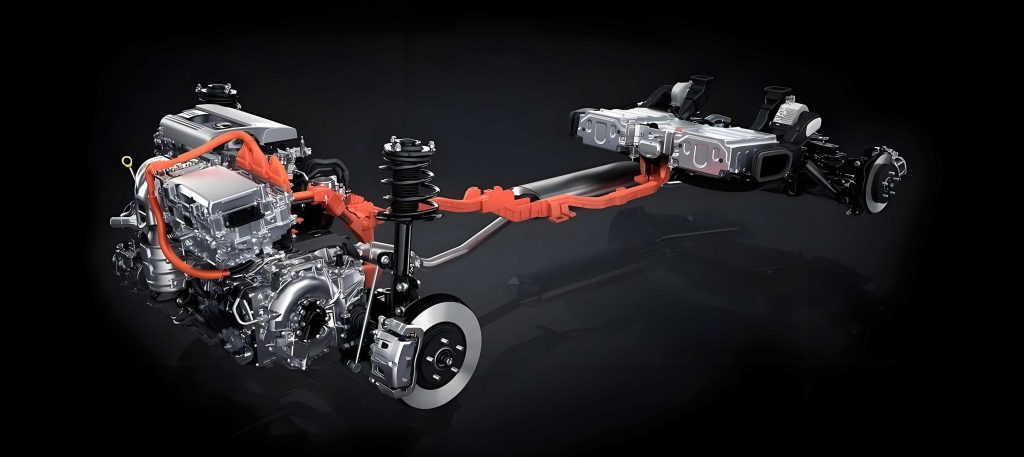
Proposed Solution: An Integrated Technical-Policy Framework with a Mode Indication System
The resolution lies in bridging the technical opacity gap. The proposed solution is a standardized Mode Indication and Logging System (MILS) integrated into every hybrid car. This system provides an unambiguous, externally visible signal of the vehicle’s operational mode, transforming the hybrid car from a “black box” into a transparent actor in the traffic ecosystem.
System Design & Specifications:
The MILS consists of a dual-color LED indicator (e.g., Green for EV mode, Red for ICE/Hybrid mode) and a time-logging module. It is physically integrated near the license plate for clear visibility to enforcement cameras and officers. The system logic is as follows:
- Power Source: Directly connected to the vehicle’s powertrain controller and high-voltage system.
- Activation Logic: Illuminates GREEN only when the vehicle is moving and the internal combustion engine is completely off and disengaged from the drivetrain (pure EV mode). Illuminates RED when the internal combustion engine is on and providing propulsion power (including in hybrid mode).
- Timing Function: The system logs the cumulative time spent in the RED mode for the current journey cycle (key-on to key-off). This “Red Mode Time” ( ( t_r ) ) is a crucial metric for enforcement.
Technical Feasibility Assessment:
The integration of the MILS is a matter of software integration and hardware addition, not a fundamental powertrain redesign. The required data (engine status, vehicle speed) is already available on the vehicle’s Controller Area Network (CAN bus). A feasibility assessment based on engineering principles is summarized below:
| Assessment Criterion | Feasibility Rating | Rationale & Notes |
|---|---|---|
| Data Availability | High | Engine on/off state, vehicle speed, and gearbox status are standard CAN bus signals. |
| Hardware Integration | High | Low-power LED and simple microcontroller. Mounting near license plate is straightforward. |
| Software Control | Medium-High | Requires new control logic in the vehicle’s body/powertrain control module. Standardizable across manufacturers. |
| Power Supply & Reliability | High | Can be powered from the vehicle’s 12V system with fail-safe diagnostics. |
| Cost Impact | Low | Minimal incremental component cost at scale of mass production. |
Dynamic Enforcement Policy Model Enabled by MILS
The MILS transforms the policy landscape from a static, vehicle-type-based rule to a dynamic, behavior-based enforcement model. The proposed enforcement protocol is as follows:
1. The Dynamic Penalty Function:
Penalties are no longer fixed but are a function of the confirmed violation duration, i.e., the time spent in RED mode during a restricted period. This creates a progressive and fair penalty structure. Let ( F ) be the fine and ( t_r ) be the Red Mode Time recorded during a restricted period. The penalty function can be defined as:
$$
F(t_r) =
\begin{cases}
0, & \text{if } t_r = 0 \quad \text{(GREEN mode only)} \\
\alpha, & 0 < t_r \leq T_1 \\
\alpha + \beta(t_r – T_1), & T_1 < t_r \leq T_2 \\
\alpha + \beta(T_2 – T_1) + \gamma(t_r – T_2), & t_r > T_2
\end{cases}
$$
Where:
- ( \alpha ) is a base fine for a minimal violation.
- ( T_1, T_2 ) are time thresholds (e.g., 2 hours, 10 hours).
- ( \beta, \gamma ) are incremental fine rates per unit time (e.g., per hour), with ( \gamma > \beta ) to penalize prolonged violations more heavily.
For example, a practical instantiation could be:
$$
F(t_r) =
\begin{cases}
0, & t_r = 0 \\
100, & 0 < t_r \leq 2 \\
100 + 50(t_r – 2), & 2 < t_r \leq 10 \\
100 + 400 + 100(t_r – 10), & t_r > 10
\end{cases}
\quad \text{(Monetary units)}
$$
2. Enforcement Protocol:
- Electronic Enforcement (Camera): Automated license plate recognition (ALPR) systems are upgraded to detect the MILS color. A RED light triggers a violation event. The system either uses a second confirmatory image after a minimum interval (Δt) to establish a duration, or, more effectively, the hybrid car’s MILS can be designed to transmit a secure, time-stamped log ( ( t_r ) ) via a short-range signal (e.g., dedicated short-range communications – DSRC) to roadside readers.
- Manual Enforcement (Officer): An officer visually confirms the MILS color. For a RED indication, the officer can request a display of the current journey’s ( t_r ) from the driver (via a simple button press cycling the MILS display).
- GREEN Mode Safeguard: To prevent gaming the system by momentary switching to EV mode before a camera, a “minimum green time” rule is applied. Exemption requires the MILS to show GREEN and have a continuous GREEN mode time exceeding a threshold (e.g., 5 minutes, ( t_g > 5 ) ), provable via the same time-logging function.
Quantitative Analysis of Impacts and Benefits
The implementation of the MILS framework yields measurable benefits across multiple dimensions. We can model these benefits quantitatively.
1. Environmental Impact:
The policy incentivizes drivers to maximize EV mode use in urban areas to avoid penalties. The reduction in emissions ( ( \Delta E ) ) for a fleet of ( N ) hybrid cars can be estimated as:
$$
\Delta E = N \cdot [d_{urban} \cdot (e_{ice} – e_{ev})] \cdot \rho
$$
Where:
- ( d_{urban} ) = average urban distance traveled per hybrid car under restriction policy.
- ( e_{ice}, e_{ev} ) = emission rates (e.g., g CO₂/km) in ICE/Hybrid and EV modes, respectively.
- ( \rho ) = behavioral compliance rate (increase in EV mode usage due to policy).
This creates a direct link between driver behavior and environmental outcome, which the original blanket policy lacks.
2. Economic & Market Impact:
The resolution of legal uncertainty removes a major market barrier. Consumer choice can be modeled using a discrete choice model where the utility ( U_i ) of choosing a hybrid car increases as the perceived penalty risk ( R_{policy} ) decreases to zero under the new framework.
$$
U_{hybrid} = V_{hybrid} – \lambda R_{policy} + \epsilon_{hybrid} \quad \text{and} \quad R_{policy} \rightarrow 0
$$
Where ( V ) is the observable utility (cost, features, range) and ( \lambda ) is a sensitivity parameter. This leads to a predicted increase in market share for the hybrid car, realigning it with its technological merits.
3. Administrative Efficiency:
The MILS reduces disputes and appeals because the evidence (light color & time) is objective and vehicle-generated. The cost of enforcement ( ( C_{enf} ) ) can be seen as a function of dispute resolution costs ( ( C_{disp} ) ), which decrease significantly.
$$
C_{enf}^{new} = C_{base} + C_{disp}^{new} \quad \text{where} \quad C_{disp}^{new} < C_{disp}^{old}
$$
A summary table of the comparative impact assessment is presented below:
| Impact Dimension | Blanking Restriction Policy | MILS-Based Dynamic Policy | Net Change |
|---|---|---|---|
| Fairness | Low (Unjust penalties for EV mode) | High (Penalties linked to actual emissions) | +++ |
| Environmental Efficacy | Moderate (Reduces all ICE traffic) | Higher (Incentivizes EV mode, reduces targeted emissions) | ++ |
| Market Distortion | High (Deters hybrid car adoption) | Low (Removes unfair disadvantage) | +++ |
| Enforcement Complexity | Low (Simple rule) | Medium (Requires system integration) | – |
| Long-term Scalability | Low (Does not adapt to tech) | High (Framework for future vehicle types) | ++ |
Challenges, Refinements, and Future Pathways
The proposed framework is robust but requires addressing several practical challenges for successful implementation.
1. Standardization and Regulation: The MILS specifications (color, intensity, location, data protocol) must be mandated through national automotive standards (e.g., GB standards in China, FMVSS in the US, UNECE regulations globally) to ensure uniformity across all hybrid car manufacturers.
2. Addressing Range Limitation as a Behavioral Driver: A key reason drivers might engage the ICE mode in cities is insufficient all-electric range (AER). The current minimum AER of 50 km (from subsidy thresholds) may be inadequate for large metropolitan areas. Policy should encourage longer AER. We can model the required AER ( ( R_{req} ) ) as a function of daily urban commute distance ( ( D_{commute} ) ) and a safety factor ( ( s ) ):
$$
R_{req} \geq s \cdot D_{commute}
$$
For a city where ( D_{commute} = 70 ) km and ( s = 1.2 ), ( R_{req} \geq 84 ) km. Aligning subsidy incentives or regulations with higher AER thresholds (e.g., 80-100 km minimum for urban-focused PHEVs) would synergize with the MILS policy to minimize red-mode usage.
3. Integration with Existing NEV Policies: The MILS framework does not replace existing NEV perks (purchase subsidies, dedicated license plates) but refines the operational rules. A hybrid car would still be an NEV for purchase incentives but would be subject to dynamic traffic restrictions based on its real-time operation.
4. Technological Evolution and Fraud Prevention: The MILS must be a tamper-proof system, cryptographically signed to prevent manipulation. Its status should be part of the vehicle’s periodic inspection. Future iterations could integrate with Vehicle-to-Infrastructure (V2I) communication for fully automated, precise enforcement.
Conclusion
The dilemma of the hybrid car under monolithic traffic restriction policies is a clear example of how regulatory frameworks can lag behind technological advancement. Through systematic analysis, the problem is identified not merely as a policy choice, but as a fundamental information asymmetry between the vehicle’s internal state and the enforcement authority. The proposed Mode Indication and Logging System (MILS), coupled with a dynamic penalty function, presents a coherent and innovative solution. This integrated technical-policy framework transforms the hybrid car from a source of regulatory ambiguity into a transparent participant in urban traffic management. It promotes fairness, enhances the environmental precision of restriction policies, corrects market distortions, and paves the way for smarter regulations adaptable to the increasingly complex powertrains of the future. The implementation of such a system requires collaborative standard-setting between automotive regulators and the industry but offers a definitive pathway to resolve the longstanding and unjust困境 faced by hybrid car owners and manufacturers.