
With the rapid advancement of the electric vehicle industry, particularly in regions like China where the adoption of China EV is accelerating, the reliability and safety of power batteries have become critical concerns. As the core component of electric vehicles, power batteries are subjected to complex and varying operating conditions, leading to potential failures that can compromise vehicle safety and user assets. Traditional fault diagnosis methods for power batteries often struggle with efficiency and adaptability, highlighting the need for innovative approaches. The emergence of big data technologies offers a promising avenue for enhancing fault diagnosis by leveraging vast amounts of operational data. This article explores the application of big data in diagnosing faults in electric vehicle power batteries, proposing a comprehensive methodology that includes data collection, feature extraction, model construction, and optimization. By analyzing massive datasets, we aim to develop accurate and efficient diagnostic models that can support the health management and maintenance of electric vehicles, thereby contributing to the sustainable growth of the China EV market and beyond.
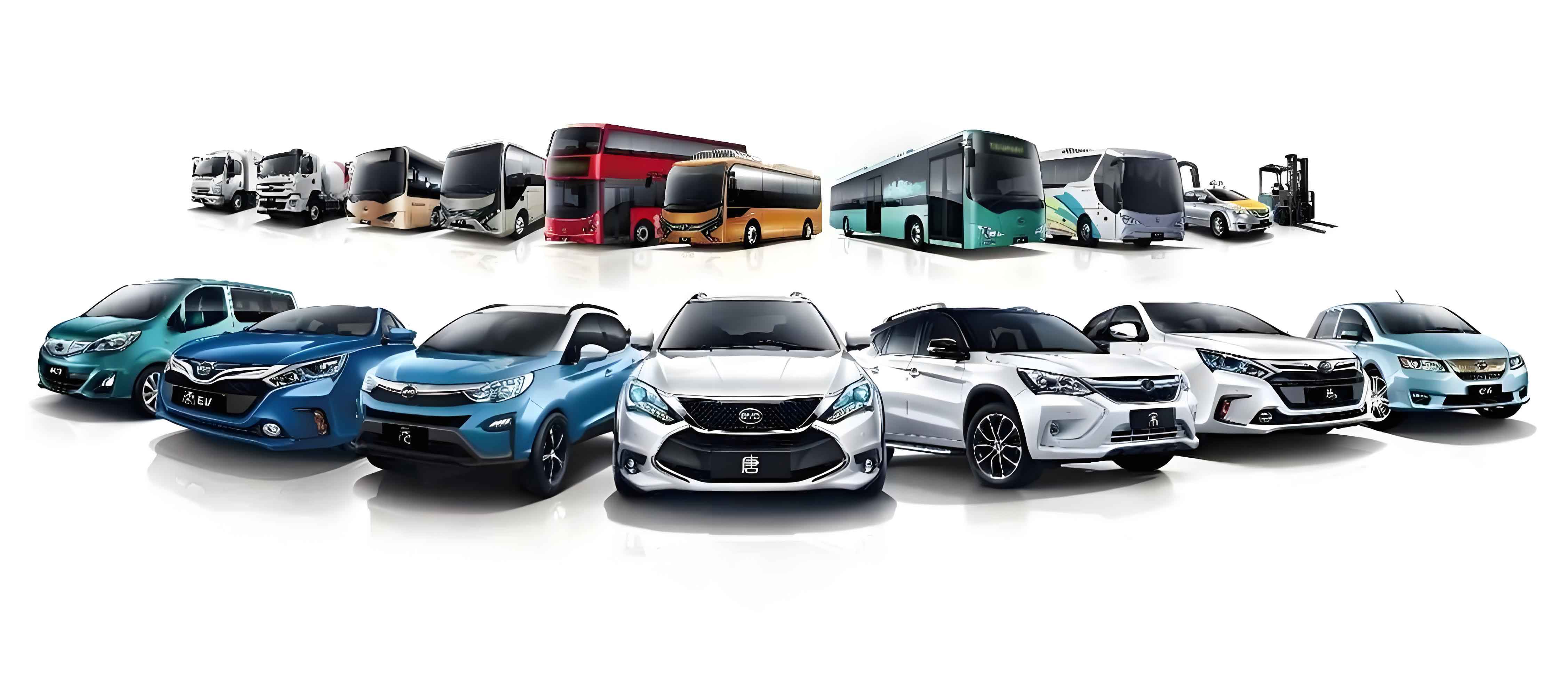
The electric vehicle sector, especially in China, has experienced exponential growth, driven by technological innovations and environmental policies. Power batteries, typically lithium-ion based, are essential for storing and supplying energy in electric vehicles. However, these batteries are prone to various faults, such as overcharging, over-discharging, and thermal runaway, which can lead to severe safety incidents. Traditional diagnostic techniques, including rule-based and model-based approaches, often fall short in handling the complexity and volume of data generated by modern electric vehicles. In contrast, big data analytics enables the processing of high-dimensional data streams from sensors and battery management systems (BMS), facilitating real-time monitoring and predictive maintenance. This research delves into the theoretical foundations of power battery faults, the current state of big data applications, and a detailed methodology for fault diagnosis, emphasizing the integration of machine learning and data-driven insights to address the challenges in the electric vehicle industry.
Theoretical Foundations of Electric Vehicle Power Battery Fault Diagnosis
Electric vehicle power batteries are complex systems composed of multiple cells arranged in series or parallel configurations. Each cell includes key components like cathodes, anodes, electrolytes, and separators, which facilitate the movement of lithium ions during charge and discharge cycles. The BMS plays a vital role in monitoring parameters such as voltage, current, and temperature to prevent abnormal conditions like overcharging or overheating. In China EV applications, ternary lithium-ion batteries are widely used due to their high energy density and long cycle life, but they are still susceptible to faults. Common failure types include overcharge and over-discharge, which cause irreversible structural changes in electrode materials, leading to capacity fade and increased internal resistance. Battery inconsistency, where cells exhibit variations in voltage or capacity, can exacerbate aging and safety risks. Additionally, chemical factors like electrolyte decomposition and mechanical damage from impacts further threaten battery integrity. Understanding these mechanisms is crucial for effective diagnosis, as traditional methods often rely on simplified models or expert rules that lack the precision for modern electric vehicle demands.
| Fault Type | Mechanism | Impact on Electric Vehicle |
|---|---|---|
| Overcharge | Excessive charging leading to electrode degradation | Reduced battery life, safety hazards |
| Over-discharge | Deep discharge causing irreversible material changes | Capacity loss, increased internal resistance |
| Inconsistency | Variations in cell parameters like voltage and capacity | Accelerated aging, potential for local failures |
| Thermal Runaway | Rapid temperature rise due to exothermic reactions | Fire risk, system failure |
| Mechanical Damage | Physical stress from collisions or挤压 | Short circuits, performance degradation |
Traditional fault diagnosis methods for electric vehicle power batteries can be categorized into rule-based, model-based, and data-driven approaches. Rule-based methods utilize expert knowledge to define fault conditions but struggle with complex, nonlinear relationships. Model-based techniques involve constructing equivalent circuit or electrochemical models to simulate battery behavior; however, their accuracy is limited by model assumptions and environmental factors. For instance, the equivalent circuit model can be represented by the equation: $$V_{bat} = V_{oc} – I \cdot R_{int} – \frac{I}{C} \int I dt$$ where \(V_{bat}\) is the terminal voltage, \(V_{oc}\) is the open-circuit voltage, \(I\) is the current, \(R_{int}\) is the internal resistance, and \(C\) is the capacitance. Despite their utility, these models often require precise parameter identification, which is challenging in real-world electric vehicle operations. Data-driven methods, such as those using machine learning, leverage historical data but demand high-quality, large-scale datasets. The limitations of these traditional approaches include poor generalization, low real-time performance, and insufficient adaptability to the dynamic conditions of China EV environments, necessitating the integration of big data technologies for improved diagnostics.
| Method | Description | Advantages | Limitations |
|---|---|---|---|
| Rule-Based | Uses predefined rules from expert experience | Simple implementation, fast for known faults | Poor adaptability to complex or new faults |
| Model-Based | Relies on mathematical models of battery behavior | Provides insights into physical processes | Sensitive to model inaccuracies and noise |
| Data-Driven | Employs machine learning on historical data | Handles nonlinear patterns, scalable | Requires large, labeled datasets |
Application of Big Data Technology in Fault Diagnosis
Big data technology has revolutionized fault diagnosis across various industries, including manufacturing and automotive sectors. In industrial settings, the analysis of sensor data, such as vibration and temperature signals, enables real-time equipment monitoring and early fault detection. For example, machine learning algorithms can process terabytes of data to identify anomalies and predict failures, reducing downtime and maintenance costs. In the context of electric vehicles, the proliferation of telematics and Internet of Things (IoT) devices facilitates the collection of extensive operational data from vehicles, including power battery parameters. This data deluge presents an opportunity to apply big data analytics for enhancing the reliability and safety of electric vehicles, particularly in the rapidly expanding China EV market. By harnessing technologies like distributed computing and cloud storage, researchers can process high-velocity data streams to uncover hidden patterns and correlations that traditional methods might miss.
The potential of big data in diagnosing faults in electric vehicle power batteries is immense. Operational data, such as voltage, current, state of charge (SOC), and temperature, can be continuously monitored and analyzed to detect early signs of degradation or failure. For instance, machine learning models can be trained on historical datasets to classify fault types based on features extracted from charge-discharge curves or internal resistance variations. Moreover, big data enables long-term health tracking and predictive maintenance, allowing for proactive interventions that extend battery life and prevent catastrophic failures. In China EV applications, where urban mobility and long-distance travel are common, such advancements can significantly improve user confidence and economic viability. The integration of big data with advanced algorithms, such as deep learning, further enhances the ability to handle complex, multi-modal data from diverse sources, paving the way for more resilient and intelligent electric vehicle systems.
Big Data-Based Fault Diagnosis Methodology for Electric Vehicle Power Batteries
Data Collection and Preprocessing
The first step in our big data-based fault diagnosis approach involves comprehensive data collection from electric vehicle power batteries. Sensors embedded in the BMS and vehicle systems capture real-time parameters, including voltage, current, temperature, SOC, and contextual data like vehicle speed and ambient conditions. For example, in a typical China EV scenario, data might be sampled at intervals as short as 100 milliseconds, generating millions of data points over time. This raw data often contains noise, missing values, and inconsistencies, necessitating rigorous preprocessing. Techniques such as data cleaning remove outliers and duplicates, while normalization standardizes values across different scales to ensure consistency. Additionally, data integration combines information from multiple sources, such as onboard diagnostics and cloud platforms, to form a unified dataset. Visualization tools can then be used to explore data distributions and identify initial patterns, laying the groundwork for subsequent analysis. In big data environments, methods like data compression and dimensionality reduction, such as Principal Component Analysis (PCA), help manage computational load while preserving essential information. The overall process ensures that the data fed into diagnostic models is of high quality and representative of real-world electric vehicle operations.
The preprocessing phase can be summarized mathematically using operations like normalization: $$x_{\text{norm}} = \frac{x – \mu}{\sigma}$$ where \(x\) is the original data point, \(\mu\) is the mean, and \(\sigma\) is the standard deviation. This step is crucial for stabilizing model training and improving convergence in machine learning algorithms applied to electric vehicle data.
Feature Extraction and Selection
Feature extraction is a critical stage where meaningful characteristics are derived from the preprocessed data to represent the health state of electric vehicle power batteries. Time-domain analysis computes statistical measures such as mean, variance, and peak values from voltage and current signals. For instance, the mean voltage over a charge cycle can indicate overall battery health, while variance might reveal instability. Frequency-domain techniques, like Fast Fourier Transform (FFT), convert signals into spectral components to identify periodic faults or resonances. The FFT for a discrete signal \(x[n]\) is given by: $$X[k] = \sum_{n=0}^{N-1} x[n] e^{-j 2\pi kn/N}$$ where \(X[k]\) represents the frequency components, and \(N\) is the number of samples. Time-frequency methods, such as wavelet transforms, provide multi-resolution analysis by decomposing signals into different scales, capturing transient events like sudden temperature spikes in electric vehicle batteries. However, the high dimensionality of extracted features can lead to redundancy and increased computation, necessitating feature selection. Algorithms like mutual information or recursive feature elimination identify the most discriminative features, reducing dimensionality while maintaining diagnostic accuracy. This process enhances model efficiency and generalizability, which is vital for applications in diverse China EV environments.
| Method Type | Technique | Application Example | Advantages |
|---|---|---|---|
| Time-Domain | Statistical measures (e.g., mean, variance) | Monitoring voltage fluctuations during driving | Simple to compute, intuitive interpretation |
| Frequency-Domain | Fourier Transform | Detecting oscillations in current signals | Reveals periodic patterns and noise |
| Time-Frequency | Wavelet Transform | Analyzing transient faults in temperature data | Captures both time and frequency information |
Feature selection involves evaluating the importance of each feature using criteria like correlation with fault labels or information gain. For example, in a dataset from China EV fleets, features with high mutual information scores are prioritized to build compact yet effective feature sets. This step not only speeds up model training but also mitigates overfitting, ensuring that the diagnostic system remains robust across different electric vehicle models and usage patterns.
Fault Diagnosis Model Construction
Constructing the fault diagnosis model is the core of our methodology, where machine learning algorithms are employed to classify and identify faults in electric vehicle power batteries. We utilize a variety of models, such as Support Vector Machines (SVM), Random Forests, and Neural Networks, each offering unique advantages for handling big data. SVM aims to find an optimal hyperplane that separates different fault classes with maximum margin, defined by the equation: $$\min_{w,b} \frac{1}{2} \|w\|^2 + C \sum_{i=1}^{n} \xi_i$$ subject to \(y_i (w \cdot x_i + b) \geq 1 – \xi_i\), where \(w\) is the weight vector, \(b\) is the bias, \(C\) is the regularization parameter, and \(\xi_i\) are slack variables for misclassifications. For electric vehicle applications, SVM can effectively handle high-dimensional feature spaces, making it suitable for complex battery data. Random Forests, an ensemble method, combine multiple decision trees to improve accuracy and reduce overfitting, which is beneficial for the noisy environments typical of China EV operations. Neural Networks, particularly deep learning architectures, excel at capturing nonlinear relationships in large datasets; a simple feedforward network can be represented as: $$a^{(l)} = f(W^{(l)} a^{(l-1)} + b^{(l)})$$ where \(a^{(l)}\) is the activation at layer \(l\), \(W^{(l)}\) is the weight matrix, \(b^{(l)}\) is the bias vector, and \(f\) is the activation function like ReLU. To enhance model adaptability, we incorporate techniques like transfer learning, which leverages pre-trained models from related domains to accelerate training on new electric vehicle data, and ensemble methods that aggregate predictions from multiple models for greater robustness.
| Model | Accuracy | Training Time | Suitability for Big Data |
|---|---|---|---|
| SVM | High for separable classes | Moderate to high | Good with kernel tricks |
| Random Forest | Very high with ensemble | Low to moderate | Excellent for parallel processing |
| Neural Network | Very high with deep layers | High | Ideal for large-scale data |
Model Training and Optimization
Model training and optimization are essential for achieving high diagnostic performance in electric vehicle power battery fault detection. The dataset is split into training, validation, and test sets, with the training set used to learn model parameters through iterative optimization. For neural networks, backpropagation minimizes a loss function, such as cross-entropy for classification: $$L = -\frac{1}{N} \sum_{i=1}^{N} \left[ y_i \log(\hat{y}_i) + (1 – y_i) \log(1 – \hat{y}_i) \right]$$ where \(y_i\) is the true label, \(\hat{y}_i\) is the predicted probability, and \(N\) is the number of samples. Optimization algorithms like stochastic gradient descent update weights to reduce loss, while techniques like dropout and L2 regularization prevent overfitting by penalizing large weights: $$L_{\text{reg}} = L + \lambda \sum w^2$$ where \(\lambda\) is the regularization parameter. In electric vehicle applications, where fault data may be imbalanced (e.g., rare failure events), we employ sampling strategies like SMOTE (Synthetic Minority Over-sampling Technique) to balance class distributions. Hyperparameter tuning, conducted via cross-validation, identifies optimal settings for parameters such as learning rates or tree depths. This iterative process ensures that the model generalizes well to unseen data from diverse China EV scenarios, enhancing real-time diagnostic capabilities and supporting proactive maintenance strategies.
The training pipeline involves continuous monitoring of metrics like precision and recall on the validation set, with early stopping to halt training when performance plateaus. For big data environments, distributed computing frameworks like Apache Spark enable scalable model training across clusters, handling the massive data volumes generated by electric vehicle fleets. This approach not only improves diagnostic accuracy but also reduces computational costs, making it feasible for widespread adoption in the electric vehicle industry.
Conclusion
In summary, the integration of big data technologies into fault diagnosis for electric vehicle power batteries represents a significant advancement in ensuring the safety and reliability of modern transportation systems. By systematically addressing data collection, feature engineering, model construction, and optimization, we have developed a methodology that leverages the power of machine learning and analytics to detect and classify faults with high precision. This approach is particularly relevant for the growing China EV market, where the demand for efficient and sustainable mobility solutions is driving innovation. The use of big data not only overcomes the limitations of traditional diagnostic methods but also enables predictive maintenance and long-term health monitoring, ultimately extending battery life and reducing operational costs. As big data technologies continue to evolve, their application in the electric vehicle sector will undoubtedly expand, offering new opportunities for enhancing performance and safety. Future research could focus on real-time implementation and the integration of emerging technologies like edge computing, further solidifying the role of data-driven diagnostics in the future of electric vehicles.