
In recent years, the automotive industry has witnessed a significant shift toward sustainable transportation, with hybrid cars emerging as a dominant force in the market. As a researcher focused on energy-efficient vehicle technologies, I have observed that hybrid cars offer a compelling blend of fuel economy, reduced emissions, and extended driving range, making them a practical transition from conventional fossil-fuel vehicles to fully electric ones. However, the widespread adoption of hybrid cars is hindered by critical challenges related to the safety and longevity of their power batteries. These issues are intrinsically linked to the thermal characteristics of the batteries, as excessive heat or uneven temperature distributions can lead to performance degradation, reduced lifespan, and even hazardous events like thermal runaway. Therefore, investigating the thermal management systems (TMS) for power batteries in hybrid cars is not only academically intriguing but also essential for ensuring vehicle reliability and promoting environmental sustainability. This article delves into the intricacies of battery thermal management, exploring the types of hybrid cars, current research status, factors influencing battery temperature, and the development of thermal models, all aimed at enhancing the efficiency and safety of hybrid car powertrains.
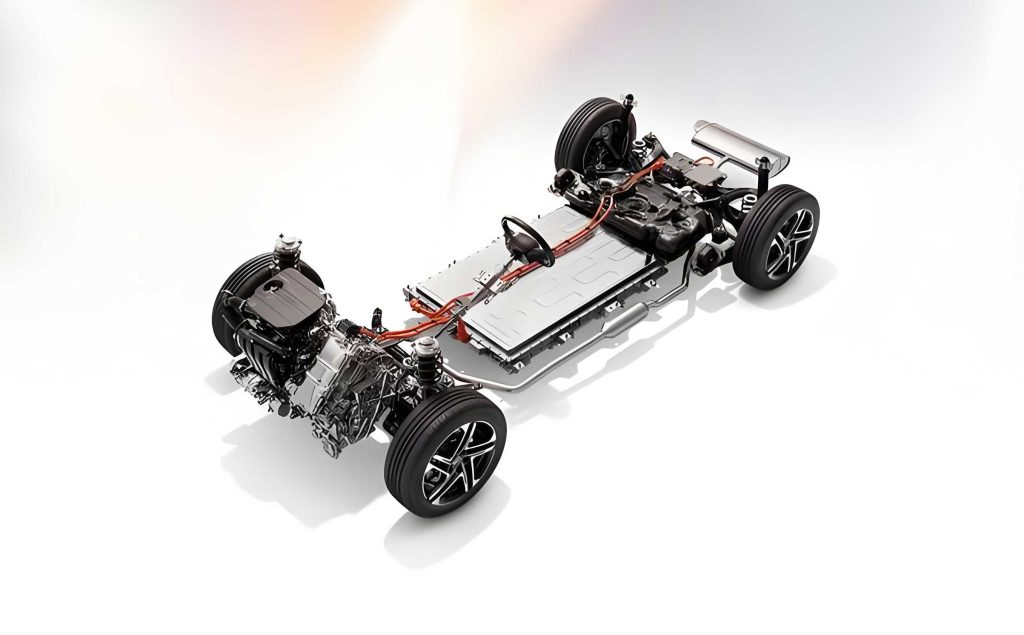
The evolution of hybrid cars represents a strategic response to stringent global regulations on vehicle emissions and fuel efficiency. From my perspective, the core advantage of a hybrid car lies in its dual power sources—typically an internal combustion engine combined with an electric motor and battery pack—which optimize energy usage based on driving conditions. This configuration allows hybrid cars to minimize fossil fuel consumption and tailpipe emissions, though they are not entirely free from environmental impact compared to pure electric vehicles. The diversity in hybrid car architectures necessitates a tailored approach to battery thermal management. Broadly, hybrid cars can be classified by their drivetrain configurations, such as series, parallel, and series-parallel systems, each presenting unique thermal challenges for the battery pack. Additionally, categorization based on the degree of hybridization—micro, mild, full, and plug-in hybrid cars—further influences the thermal load on batteries due to varying energy demands. Understanding these classifications is crucial for designing effective thermal management systems, as the operating modes of a hybrid car directly affect battery charge-discharge cycles and, consequently, heat generation. To illustrate, Table 1 summarizes the key types of hybrid cars and their thermal management implications.
| Type | Drivetrain Configuration | Energy Source Proportion | Thermal Load on Battery |
|---|---|---|---|
| Series Hybrid Car | Engine generates electricity for motor | High electric usage | Moderate, with frequent charging |
| Parallel Hybrid Car | Engine and motor drive wheels directly | Balanced hybrid operation | Variable, depending on acceleration |
| Series-Parallel Hybrid Car | Combines series and parallel modes | Optimized for efficiency | High, due to complex power splits |
| Micro Hybrid Car | Start-stop system with regenerative braking | Low electric assistance | Low, but with pulse heating |
| Full Hybrid Car | Can drive on electric power alone | High electric capacity | Significant, especially during high discharge |
The thermal management of power batteries in hybrid cars is a multifaceted domain that has garnered substantial research attention globally. In my analysis, temperature exerts a profound influence on battery performance: at low temperatures, internal resistance increases, capacity diminishes, and charge-discharge capabilities deteriorate, while at high temperatures, exothermic reactions can trigger thermal runaway, leading to safety hazards. For hybrid cars, where batteries often operate under high-current conditions during acceleration or regenerative braking, managing these thermal extremes is paramount. Historically, research in this area has diverged between regions. In some contexts, studies have focused primarily on steady-state thermal behavior at extreme temperatures, neglecting dynamic temperature field analysis during real-world usage. This gap is critical because the thermal response of a battery in a hybrid car is intimately tied to factors like state-of-charge (SOC) and charge-discharge current profiles. Without integrating these variables, accurate temperature distributions cannot be predicted, compromising the design of thermal management systems. Conversely, advanced research, often pioneered internationally, employs sophisticated models such as electrochemical-thermal coupling, thermal abuse, and electro-thermal models to simulate battery behavior under varied conditions. These models enable a deeper understanding of heat generation and dissipation mechanisms, which is vital for hybrid cars that rely on energy recovery strategies. For instance, during aggressive regenerative braking in a hybrid car, batteries may experience high-current charging, potentially causing overcharge and localized heating. If cooling systems like fans are inadequate, this can escalate into thermal runaway, emphasizing the need for robust thermal management. Table 2 contrasts common thermal analysis models used for batteries in hybrid cars.
| Model Type | Description | Applicability to Hybrid Car | Accuracy |
|---|---|---|---|
| Electrochemical-Thermal Coupling | Integrates electrochemical reactions with heat transfer | High, for detailed SOC effects | Very High |
| Thermal Abuse Model | Simulates extreme conditions like short circuits | Moderate, for safety validation | High |
| Electro-Thermal Model | Links electrical parameters to thermal response | High, for real-time management | Moderate to High |
| Lumped Parameter Model | Simplifies battery as a single thermal mass | Low, for preliminary design | Low |
Delving into the factors that influence battery temperature, lithium-ion batteries are predominant in modern hybrid cars due to their high energy density, long cycle life, and environmental friendliness. However, their thermal safety remains a concern, as I have explored through various studies. The heat generation within a lithium-ion battery arises from multiple sources: ohmic heating due to internal resistance, reversible entropic heat during charge-discharge, and irreversible heat from side reactions. These processes are temperature-dependent and can be described mathematically. For example, the total heat generation rate \( q \) in a battery cell can be expressed as:
$$ q = I^2 R + I T \frac{\partial U}{\partial T} + q_{\text{side}} $$
where \( I \) is the current, \( R \) is the internal resistance, \( T \) is the absolute temperature, \( U \) is the open-circuit voltage, and \( q_{\text{side}} \) represents heat from side reactions. In a hybrid car, high discharge rates during acceleration can significantly increase \( I \), leading to substantial ohmic heating. Moreover, the materials within the battery—such as the anode, cathode, electrolyte, and separator—exhibit distinct thermal behaviors. The anode, often graphite, may react with electrolyte at temperatures as low as 40–72°C, releasing heat, while cathode materials like lithium metal oxides decompose at higher temperatures around 172–256°C. The separator, critical for preventing short circuits, has a shutdown temperature that must be optimized; if it fails, thermal runaway can ensue. To quantify these effects, the Arrhenius equation is often used to model reaction rates:
$$ k = A e^{-\frac{E_a}{RT}} $$
where \( k \) is the rate constant, \( A \) is the pre-exponential factor, \( E_a \) is the activation energy, and \( R \) is the universal gas constant. For a hybrid car battery pack, uneven temperature distributions among cells exacerbate these risks, as hotter cells degrade faster, reducing overall pack longevity. Therefore, identifying key factors—such as discharge rate, ambient temperature, and cell arrangement—is essential. Table 3 summarizes the thermal properties of common battery materials in hybrid cars.
| Component | Material | Thermal Conductivity (W/m·K) | Specific Heat Capacity (J/kg·K) | Critical Temperature Range |
|---|---|---|---|---|
| Anode | Graphite | 1–5 | 700–900 | 40–120°C |
| Cathode | LiFePO₄ | 0.5–2 | 800–1000 | 170–260°C |
| Electrolyte | Organic Solvents | 0.1–0.3 | 1500–2000 | 60–150°C |
| Separator | Polyolefin | 0.2–0.5 | 1000–1200 | 80–130°C (shutdown) |
| Case | Aluminum | 200–250 | 900 | N/A |
To advance the thermal management of power batteries in hybrid cars, I have developed and analyzed thermal models that simulate real-world operating conditions. Establishing an accurate thermal model requires simplifying assumptions to balance complexity and computational feasibility. In my approach, I assume: (1) convective heat transfer within the battery is negligible compared to conduction; (2) radiative heat loss is ignored due to low temperatures; (3) thermal conductivity is isotropic and homogeneous; and (4) specific heat capacity and thermal conductivity are independent of temperature and SOC. These assumptions allow for a focused analysis on conduction-dominated heat transfer, which is typical in densely packed battery modules of a hybrid car. The governing equation for transient heat conduction in a battery cell can be written as:
$$ \rho c_p \frac{\partial T}{\partial t} = \nabla \cdot (k \nabla T) + q $$
where \( \rho \) is the density, \( c_p \) is the specific heat capacity, \( k \) is the thermal conductivity, and \( q \) is the volumetric heat generation rate. For a cylindrical cell, this reduces to a radial coordinate system, simplifying the analysis. In practice, I consider a lithium-ion battery with a capacity of 10 Ah, voltage of 3.3 V, and internal resistance of 24.5 mΩ, dimensions of 18.25 mm × 138.9 mm × 65.21 mm, and mass of 327.85 g. The heat generation rate is calculated based on discharge rates (C-rates), which are crucial for hybrid car applications where batteries undergo rapid power demands. For instance, at a discharge rate of \( nC \), the current \( I = n \times C_{\text{rated}} \), and the ohmic heat component becomes significant. The thermal parameters for materials like aluminum (positive tab), copper (negative tab), and stainless steel (case) are sourced from literature, with values as in Table 3. To model a battery pack, I account for air gaps between cells, as air, though a poor conductor with thermal conductivity around 0.026 W/m·K, still contributes to heat transfer in confined spaces. The effective thermal conductivity of the pack can be estimated using a series-parallel resistance network, represented as:
$$ k_{\text{eff}} = \frac{\sum k_i A_i}{\sum A_i} $$
where \( k_i \) and \( A_i \) are the conductivity and cross-sectional area of each component. Simulation results for a hybrid car battery pack under different discharge rates (1C, 2C, 4C) and ambient temperatures reveal critical insights. At higher C-rates, temperature rise is rapid, with hotspots developing in the core regions of the pack. This uneven distribution stresses individual cells, reducing overall efficiency. To mitigate this, cooling structures—such as air or liquid channels—must be integrated. The efficiency of the battery pack, defined as the ratio of useful electrical output to total input, is also affected by thermal losses. The power loss \( P_{\text{loss}} \) includes joule heating, cooling system consumption, and other parasitic losses, given by:
$$ P_{\text{loss}} = I^2 R_{\text{total}} + P_{\text{cooling}} $$
The overall efficiency \( \eta \) is then:
$$ \eta = \frac{P_{\text{out}}}{P_{\text{out}} + P_{\text{loss}}} \times 100\% $$
where \( P_{\text{out}} = V I \). In a hybrid car, during aggressive acceleration (e.g., discharge rates above 3C), thermal losses can exceed 1% of output power, significantly impacting performance. Therefore, optimizing battery design—by reducing internal resistance through advanced materials or improving tab connections—is key to enhancing efficiency. Table 4 presents simulation data for a hybrid car battery pack under varying conditions.
| Discharge Rate (C) | Ambient Temperature (°C) | Maximum Temperature Rise (°C) | Temperature Uniformity Index | Thermal Efficiency (%) |
|---|---|---|---|---|
| 1 | 25 | 5.2 | 0.92 | 98.5 |
| 2 | 25 | 12.8 | 0.85 | 97.1 |
| 4 | 25 | 28.5 | 0.72 | 94.3 |
| 2 | 40 | 18.3 | 0.78 | 96.0 |
| 4 | 40 | 35.7 | 0.65 | 92.8 |
The integration of thermal management systems in hybrid cars must address these simulation findings. From my experience, passive cooling methods—like phase change materials (PCMs)—and active methods—such as forced air or liquid cooling—offer trade-offs. For a hybrid car, where weight and space are constraints, a hybrid cooling approach might be optimal. For example, incorporating PCMs with melting points around 30–40°C can absorb excess heat during peak loads, while a liquid cooling loop manages sustained high-temperature operations. The effectiveness of such a system can be evaluated using the coefficient of performance (COP), defined as the heat removed per unit energy input for cooling. Mathematically, for a liquid cooling system:
$$ \text{COP} = \frac{\dot{m} c_p \Delta T}{P_{\text{pump}}} $$
where \( \dot{m} \) is the coolant mass flow rate, \( c_p \) is the specific heat of coolant, \( \Delta T \) is the temperature difference across the battery, and \( P_{\text{pump}} \) is the pump power. In a hybrid car, optimizing COP ensures that thermal management does not overly drain the battery, preserving the vehicle’s overall energy efficiency. Additionally, control algorithms that dynamically adjust cooling based on battery SOC and temperature profiles are vital. These algorithms can be derived from model predictive control (MPC) frameworks, minimizing a cost function like:
$$ J = \int (T – T_{\text{target}})^2 + \lambda P_{\text{cooling}} \, dt $$
where \( T_{\text{target}} \) is the desired temperature range (e.g., 20–40°C for lithium-ion batteries), and \( \lambda \) is a weighting factor for energy consumption. Implementing such strategies in a hybrid car not only enhances battery life but also improves safety, particularly in scenarios like fast charging or mountainous driving where thermal loads are high.
In conclusion, the thermal management of power batteries is a cornerstone for the advancement of hybrid cars. My research underscores that effective thermal control systems can mitigate safety risks, boost performance, and extend battery lifespan, thereby accelerating the adoption of hybrid cars in the global market. Through detailed modeling and analysis, I have highlighted the importance of considering factors like discharge rates, material properties, and pack geometry. Future work should focus on integrating advanced materials—such as graphene-enhanced composites for better thermal conductivity—and developing AI-driven thermal management systems that adapt in real-time to driving patterns. As hybrid cars evolve toward higher electrification, robust thermal solutions will be indispensable for achieving the dual goals of energy efficiency and environmental sustainability. This endeavor not only supports the growth of hybrid cars but also paves the way for next-generation electric vehicles, ultimately contributing to a greener transportation ecosystem.