
The pursuit of a sustainable, low-carbon future has catalyzed an exponential growth in the global Electric Vehicle (EV) market. However, this rapid adoption has been accompanied by increasing safety concerns, particularly those stemming from mechanical abuse during collisions. Among various impact scenarios, lateral collisions pose a particularly severe threat to the EV battery pack. The limited crumple zone and energy absorption space on the side of a vehicle often lead to direct, high-intensity intrusion into the battery compartment, risking mechanical damage to the cells, internal short circuits, and catastrophic thermal runaway events. Therefore, enhancing the lateral crashworthiness of the EV battery pack enclosure is a critical engineering challenge, paramount for ensuring passenger and vehicle safety.
Traditional approaches to improve impact resistance have primarily focused on material enhancement or localized structural reinforcement, such as increasing the thickness of aluminum alloy enclosure plates or employing high-strength steels. While effective to a degree, these methods significantly increase the overall mass of the EV battery pack, which directly contradicts the fundamental goal of vehicle lightweighting to extend driving range. Consequently, there is a pressing need for innovative designs that simultaneously achieve lightweight objectives and superior energy management under impact. This article explores a holistic redesign strategy, replacing conventional monolithic or stiffened aluminum frames with a multi-component system centered on a honeycomb sandwich panel. We investigate the synergistic optimization of the honeycomb core, composite face sheets, and the remaining enclosure components to achieve an optimal balance between minimal mass and controlled intrusion under lateral loading.
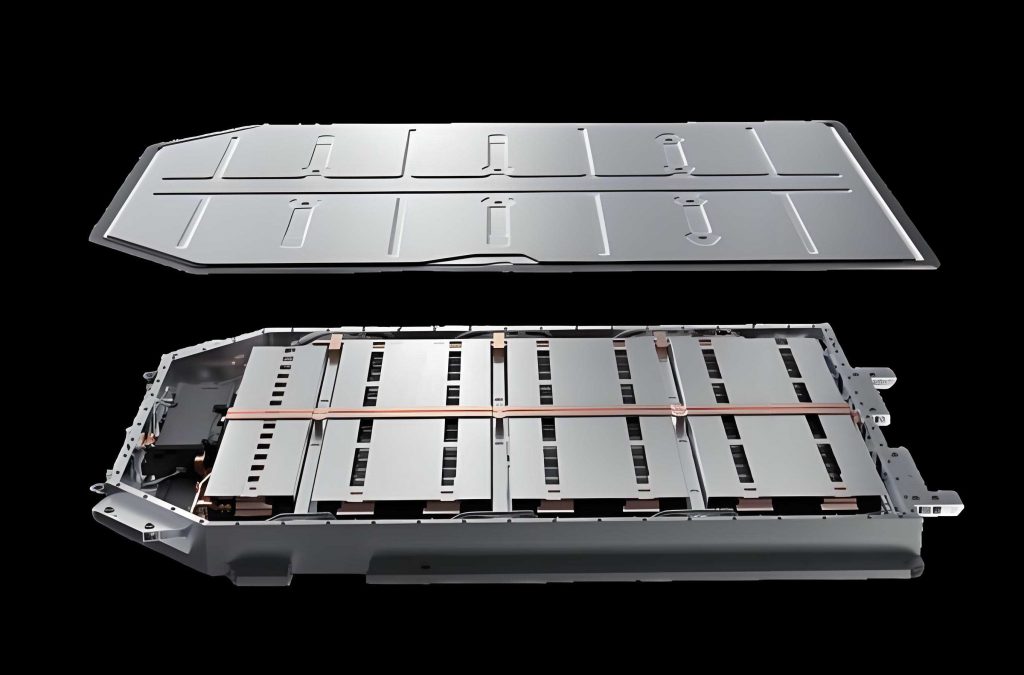
The core of our proposed solution is the honeycomb sandwich panel, renowned for its exceptional specific strength and specific stiffness. Its remarkable energy absorption capability stems from the stable, progressive plastic collapse of its multi-cellular core. When integrated into the sidewall of an EV battery pack, this structure can dissipate a substantial amount of impact energy through controlled deformation, thereby protecting the sensitive battery modules within. The design freedom offered by variable core geometry (cell shape, size, wall thickness), coupled with the choice of high-performance face sheet materials like Carbon Fiber Reinforced Polymer (CFRP), presents a vast parameter space for optimization.
Our methodological approach is systematic and multi-stage. Initially, we employ an orthogonal experimental design to screen and identify the most promising basic combination of honeycomb topology and face sheet material based on fundamental energy absorption metrics under quasi-static compression. The performance of candidate structures is evaluated using explicit finite element analysis in LS-DYNA. Following this down-selection, we construct a full-scale finite element model of the EV battery pack incorporating the chosen honeycomb sandwich panel design within its enclosure. A lateral impact scenario is simulated via a rigid column intrusion to replicate a standardized test condition.
To manage the computational expense of exploring the high-dimensional design space involving ten key parameters—covering honeycomb core dimensions, CFRP ply thicknesses, and thicknesses of other enclosure components—we rely on surrogate modeling. Multiple approximation models, including Radial Basis Function (RBF), Kriging, and Response Surface Methodology (RSM), are constructed and their accuracy is rigorously compared. The best-performing surrogate model is then used to define the explicit relationship between design variables and critical responses, namely total enclosure mass ( \( m_t \) ), specific energy absorption ( \( SEA \) ), maximum crushing force ( \( F_{max} \) ), and intrusion displacement ( \( D \) ).
The final stage involves a multi-objective optimization formulation. We aim to minimize both the mass \( m_t \) and the intrusion \( D \) of the EV battery pack enclosure, subject to safety constraints on the minimum energy absorption and maximum allowable force. This optimization problem is solved efficiently using the NSGA-II (Non-dominated Sorting Genetic Algorithm II) algorithm, which converges to a Pareto-optimal front, representing the best possible trade-offs between our conflicting objectives. The optimal design point is selected from this front and validated through a final high-fidelity simulation to confirm performance predictions.
| Run No. | Core Structure (A) | Face Sheet Material (B) | Core Thickness [mm] (C) | Total Energy Absorbed [J] | Peak Force [kN] | Specific Energy Absorption [J/kg] |
|---|---|---|---|---|---|---|
| 1 | Hexagonal | Aluminum | 0.10 | 224.15 | 13.92 | 11,185 |
| 2 | Hexagonal | Steel | 0.12 | 269.78 | 16.67 | 5,311 |
| 3 | Hexagonal | CFRP | 0.15 | 302.75 | 24.42 | 19,395 |
| 4 | Rectangular | Aluminum | 0.12 | 249.93 | 17.64 | 11,806 |
| 5 | Rectangular | Steel | 0.15 | 291.34 | 23.15 | 5,583 |
| 6 | Rectangular | CFRP | 0.10 | 228.91 | 12.45 | 16,733 |
| 7 | Corrugated | Aluminum | 0.15 | 307.53 | 25.05 | 13,772 |
| 8 | Corrugated | Steel | 0.10 | 211.67 | 14.72 | 4,345 |
| 9 | Corrugated | CFRP | 0.12 | 255.65 | 17.97 | 17,619 |
The orthogonal test analysis conclusively identified the hexagonal honeycomb core paired with CFRP face sheets as the optimal combination. This configuration consistently delivered high total energy absorption while achieving the highest specific energy absorption ( \( SEA \) ) values, which is the most critical metric for lightweight crashworthy design of an EV battery pack. The \( SEA \) is calculated as the total absorbed energy \( E_A \) divided by the mass \( m \) of the structure:
$$ SEA = \frac{E_A}{m} $$
Having selected the hexagonal-CFRP combination, we proceeded to parameterize the full enclosure system. The ten design variables \( (X_1 \text{ to } X_{10}) \) are defined as follows: \( X_1 \): Honeycomb wall thickness, \( X_2 \): Honeycomb height, \( X_3 \): Honeycomb cell size, \( X_4, X_5, X_6, X_7 \): Thickness of CFRP plies at \( 0^\circ, +45^\circ, -45^\circ, 90^\circ \) orientations respectively, \( X_8 \): Upper enclosure thickness, \( X_9 \): Lower enclosure thickness, \( X_{10} \): Internal reinforcement beam thickness.
A Latin Hypercube Sampling (LHS) plan generated 72 design points, each evaluated via the finite element model of the EV battery pack under lateral impact. The resulting dataset was used to train and compare the three surrogate models. Accuracy was assessed using the coefficient of determination \( R^2 \) and the root mean square error \( e_{RMS} \), defined as:
$$ R^2 = 1 – \frac{\sum_{k=1}^{n} (y_k – \hat{y}_k)^2}{\sum_{k=1}^{n} (y_k – \bar{y})^2}, \quad e_{RMS} = \sqrt{ \frac{1}{n} \sum_{k=1}^{n} \left( \frac{y_k – \hat{y}_k}{y_k} \right)^2 } $$
where \( y_k \), \( \hat{y}_k \), and \( \bar{y} \) are the actual simulation value, the predicted value from the surrogate model, and the mean of the actual values, respectively, for \( n \) sample points.
| Surrogate Model | Mass \( m_t \) | \( SEA \) | Max Force \( F_{max} \) | Intrusion \( D \) | ||||
|---|---|---|---|---|---|---|---|---|
| \( R^2 \) | \( e_{RMS} \) | \( R^2 \) | \( e_{RMS} \) | \( R^2 \) | \( e_{RMS} \) | \( R^2 \) | \( e_{RMS} \) | |
| Radial Basis Function (RBF) | 0.987 | 0.033 | 0.962 | 0.049 | 0.959 | 0.054 | 0.924 | 0.083 |
| Kriging | 0.942 | 0.064 | 0.847 | 0.112 | 0.910 | 0.089 | 0.882 | 0.096 |
| Response Surface (RSM) | 0.994 | 0.022 | 0.951 | 0.056 | 0.920 | 0.083 | 0.907 | 0.091 |
The RBF model demonstrated superior and consistently high fitting accuracy for the three crashworthiness-related responses ( \( SEA \), \( F_{max} \), \( D \) ), while RSM was slightly better for mass prediction. Given that the crash responses are the primary focus of optimization under safety constraints, the RBF model was selected to drive the subsequent optimization process. Analysis of the sensitivity information embedded within the RBF model revealed crucial trends: increasing honeycomb height \( (X_2) \) and wall thickness \( (X_1) \) generally reduces intrusion \( D \) but increases mass \( m_t \) and crushing force \( F_{max} \), while decreasing \( SEA \). The thickness of internal beams \( (X_{10}) \) showed a very strong positive correlation with both mass and crushing force.
Guided by these insights, we formulated the multi-objective optimization problem. The goal is to find the set of design parameters that minimize the enclosure mass and the intrusion into the EV battery pack, while ensuring safety. The optimization is mathematically defined as follows:
$$
\begin{aligned}
& \text{minimize} \quad f(x) = [ m_t(x), \quad D(x) ] \\
& \text{subject to:} \\
& \quad F_{max}(x) \geq 100 \text{ kN} \\
& \quad SEA(x) \geq 307.6 \text{ J/kg} \\
& \quad 0.5 \text{ mm} \leq X_1 \leq 1.5 \text{ mm} \\
& \quad 6 \text{ mm} \leq X_2 \leq 10 \text{ mm} \\
& \quad 8 \text{ mm} \leq X_3 \leq 12 \text{ mm} \\
& \quad 0.1 \text{ mm} \leq X_4, X_5, X_6, X_7 \leq 0.5 \text{ mm} \\
& \quad 1 \text{ mm} \leq X_8, X_9 \leq 3 \text{ mm} \\
& \quad 2 \text{ mm} \leq X_{10} \leq 4 \text{ mm}
\end{aligned}
$$
The NSGA-II algorithm was applied to solve this problem. The algorithm successfully converged, producing a Pareto frontier that clearly illustrates the trade-off between a lighter EV battery pack enclosure and a stiffer one with less intrusion. An optimal compromise point was selected from this frontier. The performance of this optimized design was then validated by running a final, high-fidelity finite element simulation using the optimal parameters. The results confirmed a remarkable improvement.
| Performance Metric | Baseline (Aluminum Frame) | Optimized (Honeycomb Sandwich) | Change | Validation Error |
|---|---|---|---|---|
| Total Mass \( m_t \) [kg] | 44.86 | 23.68 | -47.2% | 4.9% |
| Specific Energy Absorption \( SEA \) [J/kg] | 307.6 | 413.5 | +34.4% | 4.6% |
| Peak Crushing Force \( F_{max} \) [kN] | 136.1 | 111.1 | -22.5% | 2.4% |
| Intrusion Displacement \( D \) [mm] | 11.54 | 14.71 | +27.5% | 1.2% |
The optimization yielded a transformative outcome for the EV battery pack design. The most significant achievement is a drastic 47.2% reduction in enclosure mass, a direct and substantial contribution to vehicle lightweighting and extended range. Concurrently, the energy absorption efficiency, measured by \( SEA \), improved by over 34%. The peak crushing force was also reduced by 22.5%, indicating a smoother, more manageable load transfer to the vehicle chassis. While the intrusion displacement \( D \) increased by 27.5%, a critical analysis shows this value (14.71 mm) remains well within the safety margin. With a typical gap of 20 mm between the enclosure inner wall and the battery modules, the optimized design maintains a safety buffer of approximately 5.3 mm, effectively preventing catastrophic cell contact. This increase in intrusion is a characteristic trade-off; the honeycomb sandwich absorbs energy through larger but controlled deformations, whereas a thicker, stiffer aluminum frame resists deformation with higher force but greater mass.
In conclusion, this study demonstrates a highly effective pathway for advancing the safety and efficiency of electric vehicles. By systematically replacing a conventional aluminum frame with an optimized, multi-parameter honeycomb sandwich panel structure, we have developed an EV battery pack enclosure that masterfully reconciles the often conflicting demands of extreme lightweighting and superior crashworthiness. The integrated methodology—combining orthogonal screening, finite element analysis, high-fidelity surrogate modeling, and multi-objective genetic algorithm optimization—provides a robust framework for designing next-generation battery protection systems. The final design validates that significant mass savings can be achieved without compromising safety, but rather by intelligently managing impact energy through structural geometry and material choice. This approach marks a pivotal step towards safer, lighter, and more efficient electric vehicles.