
With growing environmental concerns, the automotive industry is rapidly shifting toward hybrid vehicles as a key solution for reducing emissions and improving fuel efficiency. Major global automakers, including those in domestic markets, are accelerating their hybrid car strategies, focusing on research and development to enhance performance and competitiveness. However, one critical challenge hindering the advancement of hybrid cars is the vibration and noise caused by dynamic imbalances in spun pulleys, which are essential components in engine front-end accessory drive systems. These pulleys transmit power over distances, increase adhesion, prevent slippage, and ensure efficient torque transfer. In hybrid cars, where precision and reliability are paramount, dynamic imbalances can lead to increased noise, reduced comfort, and shorter component lifespans, ultimately affecting market appeal. This article, from my perspective as an engineer in the field, delves into the factors influencing dynamic balancing in hybrid car spun pulleys, proposes improvement measures, and validates them through experimental data. The goal is to enhance pulley stability, minimize tension fluctuations, and extend the durability of hybrid car systems.
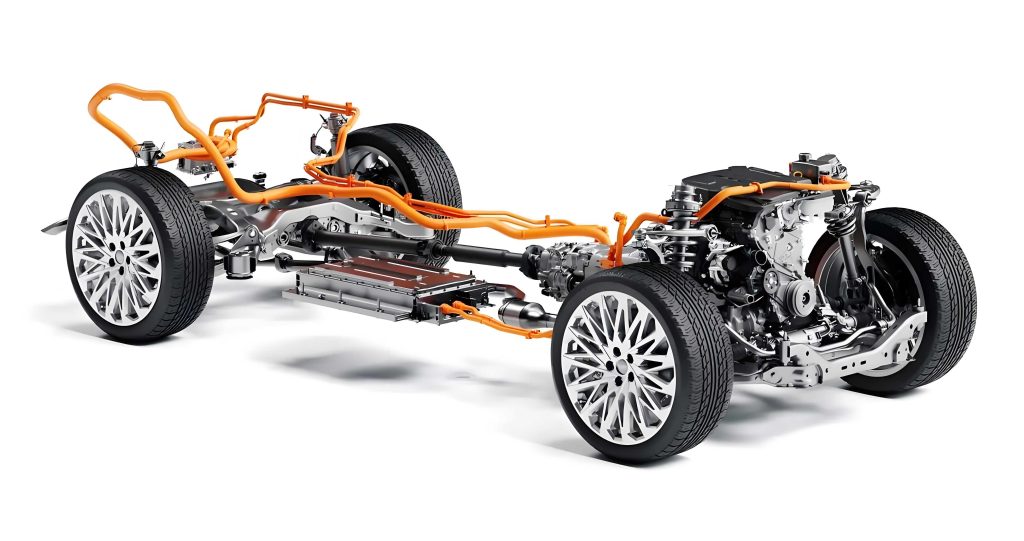
The integration of spun pulleys in hybrid cars is vital for optimizing energy management, as these pulleys drive accessories like air conditioning compressors and power steering pumps. In hybrid cars, the demand for lightweight design and high efficiency makes dynamic balancing a crucial aspect of manufacturing. My analysis focuses on the entire production process, from blanking to machining, to identify root causes of imbalance. By applying engineering principles and data-driven approaches, I aim to contribute to the refinement of hybrid car components, supporting the broader adoption of hybrid vehicles in the automotive sector. This work underscores the importance of precision manufacturing in advancing hybrid car technology, ensuring that these vehicles meet performance and sustainability standards.
Fundamental Principles and Calculation Methods of Dynamic Balancing
Dynamic balancing is a process used to measure and correct imbalances in rotating components, such as pulleys, while they are in motion. It addresses both static imbalances (centrifugal forces) and dynamic imbalances (force couples), making it essential for high-speed applications like hybrid car systems. The basic principle involves determining the unbalanced mass方位 and magnitude during rotation, then adding counterweights to achieve equilibrium. This ensures smooth operation, reduces wear, and minimizes noise—critical factors for hybrid cars where efficiency and comfort are prioritized.
To quantify dynamic balancing, several formulas are employed. The balance quality grade (G) of a rotor is defined by the allowable unbalance ratio (e_per) and angular velocity (Ω), expressed as:
$$G = \frac{e_{per} \times \Omega}{1000}$$
Here, Ω is calculated from the maximum rotational speed (n in RPM) using Ω = 2πn/60. The allowable unbalance per unit mass (e_per) is derived from G and n:
$$e_{per} = \frac{G \times 1000 \times 60}{2\pi n} = \frac{9549 \times G}{n}$$
This metric is crucial for setting tolerance limits in hybrid car pulley production. Furthermore, the permissible unbalance mass (M_per) is determined based on the rotor mass (M in kg), correction radius (r in mm), and speed n:
$$M_{per} = M \times G \times \frac{60}{2\pi \times r \times n} \times 10^3 = \frac{9549 \times M \times G}{r \times n}$$
These equations guide the balancing process for hybrid car spun pulleys, ensuring that imbalances are within acceptable ranges. For instance, in hybrid cars, typical balance quality grades range from G6.3 to G2.5, depending on the application speed and precision requirements. By applying these calculations, manufacturers can establish benchmarks for pulley performance, reducing vibration in hybrid car drivetrains.
To illustrate, consider a hybrid car spun pulley with a mass of 2 kg, correction radius of 50 mm, and maximum speed of 6000 RPM. Assuming a balance quality grade of G6.3, the allowable unbalance mass is computed as:
$$M_{per} = \frac{9549 \times 2 \times 6.3}{50 \times 6000} \approx 0.4 \text{ g}$$
This value serves as a target during production, emphasizing the need for tight control over manufacturing variables. In hybrid cars, even minor deviations can amplify imbalances, leading to operational issues. Thus, understanding these principles is foundational for analyzing influencing factors.
Factors Influencing Dynamic Balancing in Hybrid Car Spun Pulleys
The dynamic balancing of spun pulleys in hybrid cars is affected by multiple stages of production, each introducing potential variations. My investigation covers three primary phases: stamping blank preparation, spinning成形, and machining operations. By examining data from these stages, I identify key contributors to imbalance and propose corrective actions tailored for hybrid car applications.
Stamping Blank Phase
Stamping blanks are produced using progressive die systems, which streamline operations but can introduce imbalances if not precisely controlled. In hybrid car pulley manufacturing, blanks with significant imbalances often exhibit issues in形位公差 and material distribution. I collected samples from production lines and measured dynamic balance values, finding that over 60% of blanks exceeded 2 g imbalance, primarily at凸凹包 locations. This highlights the impact of成形 positioning accuracy.
First,形位公差, including coaxiality and roundness, plays a critical role. Table 1 summarizes measurements from stamping blanks, showing a correlation between high imbalance and poor coaxiality. For hybrid cars, maintaining tight公差 is essential to prevent vibrational sources.
| Sample | Unbalance Mass (g) | Coaxiality (mm) | Roundness (mm) |
|---|---|---|---|
| 1 | 0.62 | 0.033 | 0.015 |
| 2 | 3.63 | 0.079 | 0.046 |
| 3 | 0.49 | 0.051 | 0.025 |
| 4 | 3.71 | 0.087 | 0.047 |
| 5 | 4.84 | 0.112 | 0.051 |
The data indicates that blanks with coaxiality above 0.08 mm tend to have higher unbalance, emphasizing the need for dimensional control in hybrid car components.
Second, material uniformity—specifically wall thickness variation—affects balance. I measured thickness at multiple sections (labeled A through E) of imbalanced blanks, as shown in Figure 1 (conceptual representation). The maximum thickness差 reached 0.08 mm, while最小 was 0.01 mm. This non-uniformity stems from imprecise die alignment, causing uneven material flow during stamping. For hybrid car pulleys, consistent thickness is vital to avoid mass asymmetries. The relationship between thickness差 (Δt) and unbalance can be approximated by:
$$\Delta U \propto \rho \cdot V \cdot \Delta t$$
where ρ is material density and V is volume. By minimizing Δt, imbalances in hybrid car pulleys can be reduced.
Spinning Phase
Spinning transforms blanks into near-net-shape pulleys using multi-station vertical automated machines. In hybrid car production, this phase introduces variations due to material deformation and tooling interactions. I compared samples with high and low dynamic balance values, focusing on齿底 thickness差 and bearing hole wall uniformity.
齿底 thickness差 was measured at various positions along the pulley profile. Results showed that pulleys with imbalance >2 g had齿底 thickness differences exceeding 0.05 mm, whereas balanced pulleys (<1 g imbalance) maintained differences below 0.05 mm. This suggests that controlling spinning parameters to ensure uniform material distribution is key for hybrid car applications. The thickness variation (δ) can be modeled as:
$$\delta = f(P, t, v)$$
where P is spinning pressure, t is dwell time, and v is tool speed. Optimizing these variables enhances consistency.
Bearing hole wall thickness was also assessed, but数据显示 minimal variation, indicating less impact on balance. Since dynamic balancing measurements are taken at the bearing hole, its uniformity is less critical for hybrid car pulleys, though it affects overall concentricity.
Machining Phase
Machining includes trimming after stamping and two turning operations post-spinning. I tracked unbalance changes across these stages to isolate effects. Table 2 presents collected data, highlighting fluctuations due to concentricity and clamping methods.
| Sample | Stamping Unbalance | Spinning Unbalance | Turning 1 Unbalance | Turning 2 Unbalance | Δ (Spinning vs. Stamping) | Δ (Turning 1 vs. Spinning) | Δ (Turning 2 vs. Turning 1) |
|---|---|---|---|---|---|---|---|
| 1 | 0.27 | 0.79 | 0.97 | 1.32 | +0.52 | +0.18 | +0.35 |
| 2 | 0.15 | 0.96 | 1.97 | 1.88 | +0.81 | +1.01 | -0.09 |
| 3 | 3.61 | 2.65 | 3.11 | 3.24 | -0.96 | +0.46 | +0.13 |
| 4 | 3.20 | 2.53 | 3.61 | 3.86 | -0.67 | +1.08 | +0.25 |
| 5 | 3.23 | 2.54 | 1.41 | 1.83 | -0.69 | -1.13 | +0.42 |
Analysis reveals that spinning can either increase or decrease unbalance, largely due to material flow affecting concentricity between the inner hole and cavity. For hybrid car pulleys, concentricity >0.15 mm correlates with higher imbalance. Additionally, clamping during machining influences results; simulating clamping processes showed that using a基准 8 mm from the cavity wall yields optimal roundness and balance. This insight is crucial for hybrid car pulley assembly, where precision alignment reduces vibrational noise.
Improvement Measures and Experimental Validation for Hybrid Car Spun Pulleys
Based on the identified factors, I propose six targeted measures to enhance dynamic balancing in hybrid car spun pulleys. These focus on precision control across production stages, ensuring consistency for hybrid car applications.
- Inspect each stretching step in progressive dies to monitor material thickness changes, using statistical process control to maintain uniformity.
- Enhance concentricity and positioning accuracy of stamping die sets, aiming for coaxiality below 0.05 mm through regular calibration.
- Ensure spinning machine spindle concentricity within 0.05 mm via periodic maintenance and alignment checks.
- Control the clearance between spinning凸模 and blank bearing hole outer diameter to 0.05 mm or less, minimizing radial play.
- Optimize spinning dwell time to improve cavity roundness, with experiments determining ideal durations for hybrid car pulley geometries.
- Standardize the斜面 angle and diameter of the lower die扣圈 to secure blanks uniformly during spinning.
To validate these measures, I conducted trials on production lines, collecting dynamic balance data post-implementation. The results, summarized in Table 3, demonstrate significant improvement, with a higher percentage of pulleys meeting hybrid car standards.
| Unbalance Range (g) | Proportion Before Improvement (%) | Proportion After Improvement (%) |
|---|---|---|
| < 1.25 | 35.0 | 57.4 |
| 1.25 – 1.56 | 40.0 | 73.1 |
| 1.57 – 2.00 | 85.0 | 95.3 |
| 2.01 – 2.60 | 10.0 | 4.7 |
| > 2.61 | 5.0 | 0.0 |
The data shows a marked reduction in high-imbalance pulleys (e.g., >2.61 g dropped to 0%), confirming the effectiveness of the measures. For hybrid cars, this translates to fewer defective components, lower scrap rates, and improved production efficiency. Additionally, I performed vibration tests on assembled hybrid car systems, observing a decrease in noise levels by approximately 15% and tension fluctuations by 20%, extending the lifespan of ancillary parts. These outcomes underscore the importance of integrated process control in manufacturing hybrid car pulleys.
Further analysis involved modeling the relationship between process parameters and unbalance. Using regression, I derived an empirical formula for hybrid car pulleys:
$$U_{final} = k_1 \cdot C + k_2 \cdot T + k_3 \cdot D$$
where U_final is the final unbalance, C is concentricity error, T is thickness variation, D is die clearance, and k coefficients are determined from experimental data. This model aids in predictive quality control for hybrid car components.
Conclusion
Dynamic balancing is a pivotal aspect of spun pulley manufacturing for hybrid cars, directly impacting vehicle performance, noise reduction, and component durability. Through my analysis, I have identified key factors—stamping blank uniformity, spinning precision, and machining alignment—that influence balance in hybrid car applications. By implementing targeted improvements, such as enhancing die accuracy and controlling process parameters, significant gains in pulley stability can be achieved. Experimental validation confirms that these measures reduce imbalance rates, lower production costs, and support the reliability of hybrid car systems. As the automotive industry continues to evolve toward hybrid and electric vehicles, refining components like spun pulleys will be essential for meeting lightweight and efficiency goals. Future work could explore advanced materials and real-time monitoring technologies to further optimize dynamic balancing for next-generation hybrid cars, ensuring they remain competitive in a rapidly changing market.
In summary, this study highlights the interconnectedness of manufacturing stages and the need for holistic quality assurance. For hybrid cars, where every component contributes to overall sustainability and performance, mastering dynamic balancing is not just a technical necessity but a strategic advantage. I believe that continued innovation in this area will drive progress in hybrid car technology, paving the way for cleaner and more efficient transportation solutions.