
As an expert in the field of electric vehicle (EV) technologies, I have witnessed the rapid evolution of high-speed electric drive systems, which are pivotal for enhancing the performance and efficiency of modern electric vehicles. The electric drive system serves as the core assembly in electric vehicles, and its optimization is crucial for achieving superior power density, energy economy, and overall vehicle dynamics. In this article, I will delve into the current technological landscape, challenges, future trends, and recommendations for high-speed electric drive systems, with a focus on the electric vehicle market, particularly in the context of China EV developments. The growth of the electric vehicle industry, driven by policy support and environmental demands, has accelerated innovations in electric drive systems, making high-speed solutions a key area of competition. For instance, the China EV market is projected to see sales exceeding 15.6 million units by 2025, underscoring the importance of advancing these technologies.
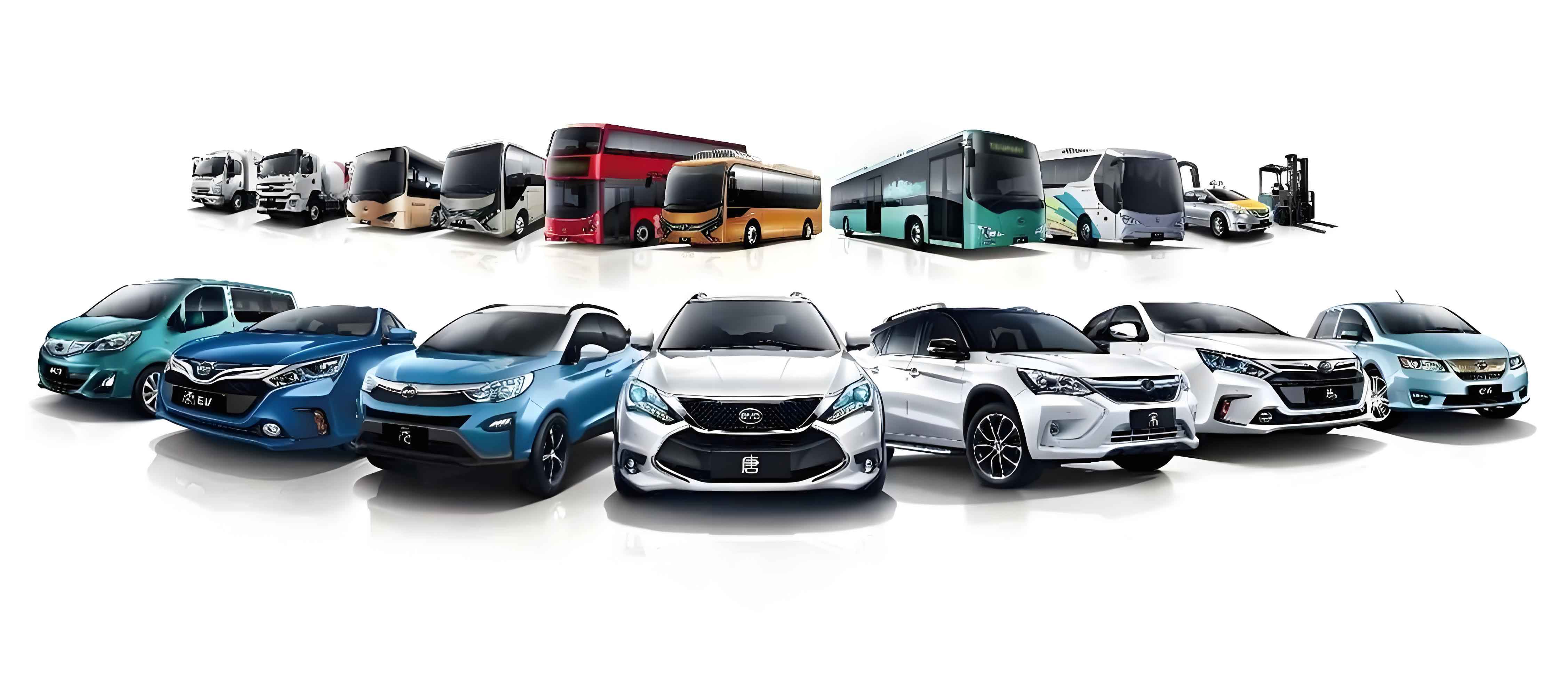
High-speed electric drive systems typically refer to those where the motor operates at speeds exceeding 12,000 r/min or with a difficulty factor (the product of speed and the square root of power) above 1×10^5. In recent years, the electric vehicle industry has seen motors reaching speeds of 16,000 r/min and beyond, with some manufacturers like Tesla and Huawei achieving over 20,000 r/min. This trend toward high-speed operation in electric vehicles is driven by the need for compact designs and improved power density, which directly impact vehicle lightweighting and energy efficiency. However, this shift also introduces challenges such as structural integrity, thermal management, and control complexity. In this analysis, I will explore the current state of high-speed electric drive systems for electric vehicles, highlighting key technologies, persistent issues, and emerging directions, all while emphasizing the role of China EV advancements in shaping the global landscape.
Current Technological Status of High-Speed Electric Drive Systems
The development of high-speed electric drive systems for electric vehicles has seen significant progress, with various manufacturers introducing innovative solutions to enhance power density and efficiency. In my assessment, the electric vehicle sector, especially in China EV applications, has embraced technologies like carbon fiber rotor sleeves, advanced cooling methods, and wide-bandgap semiconductors. For example, the use of carbon fiber in rotors allows for higher rotational speeds by providing superior mechanical strength and reducing centrifugal forces. This is critical in electric vehicles where compactness and reliability are paramount. Additionally, the integration of flat wire windings in stators has improved slot fill factors and thermal management, leading to higher efficiency in high-speed operations. The following table summarizes the key parameters of some representative high-speed electric drive systems in the electric vehicle market, illustrating the diversity in approaches and performance metrics.
| Manufacturer / System | Peak Speed (r/min) | Peak Power (kW) | Power Density (kW/kg) | Key Technologies |
|---|---|---|---|---|
| Tesla Model S Plaid | >20,000 | N/A | N/A | Carbon fiber rotor, high-speed design |
| BorgWarner System | 25,000 | High | Carbon fiber rotor, advanced cooling | |
| Lucid Air | 21,000 | 500 | 6.75 (system) | Multi-layer flat wire, axial oil cooling |
| ZF EVSys800 | 19,000 | 275 | 3.72 | Woven wave winding, integrated planetary gear |
| Huawei DriveONE | 22,000 | N/A | Improved | SiC-based controller, compact design |
| Xiaomi V8s | 27,200 | 425 | 10.14 | Bidirectional oil cooling, SiC modules |
| GAC Hyper SSR | 30,000 | N/A | 13 | Amorphous alloy stator, carbon fiber rotor |
| Zeekr 001FR | 20,620 | Distributed | 4.4 | SiC controllers, direct waterfall cooling |
From my perspective, the adoption of wide-bandgap semiconductors, such as silicon carbide (SiC) and gallium nitride (GaN), has been a game-changer for electric vehicle power electronics. These materials enable higher switching frequencies and lower losses, which are essential for high-speed electric drive systems. For instance, the efficiency of a SiC-based inverter can be modeled using the formula for power loss: $$P_{loss} = P_{conduction} + P_{switching}$$ where $$P_{conduction} = I^2 \cdot R_{ds(on)}$$ and $$P_{switching} = f_{sw} \cdot E_{sw}$$, with \(I\) being the current, \(R_{ds(on)}\) the on-resistance, \(f_{sw}\) the switching frequency, and \(E_{sw}\) the switching energy. In electric vehicles, this translates to improved overall system efficiency, as seen in China EV models integrating SiC modules for better performance. Moreover, advancements in rotor design, such as the use of high-strength silicon steel sheets and carbon fiber wrapping, have addressed mechanical stresses at high speeds. The centrifugal force on a rotor can be expressed as $$F_c = m \cdot \omega^2 \cdot r$$, where \(m\) is the mass, \(\omega\) the angular velocity, and \(r\) the radius. By optimizing materials and topology, manufacturers have minimized deformation risks, crucial for the reliability of electric vehicles operating under extreme conditions.
In terms of gearbox systems, high-speed electric drive systems often employ planetary gear reducers to achieve high transmission ratios without significantly increasing size. The gear ratio \(i\) relates the input speed \(\omega_{in}\) to output speed \(\omega_{out}\) as $$\omega_{out} = \frac{\omega_{in}}{i}$$, which allows electric vehicles to maintain torque at high motor speeds. For example, integrated designs in China EV platforms combine the motor, reducer, and differential into a single unit, enhancing power density. However, this integration poses challenges in noise, vibration, and harshness (NVH), which I will discuss later. The table below provides a summary of key technological advancements in high-speed electric drive components for electric vehicles, highlighting how these innovations contribute to the overall system performance.
| Component | Advancement | Impact on Electric Vehicles |
|---|---|---|
| Rotor | Carbon fiber sleeves, high-strength silicon steel | Enables higher speeds, reduces weight, improves durability in China EV models |
| Stator | Flat wire windings, amorphous alloys | Increases slot fill factor, reduces AC losses, enhances cooling for electric vehicles |
| Bearings | Ceramic hybrids, insulating coatings | Mitigates shaft current issues, extends lifespan in high-speed electric vehicle applications |
| Controller | SiC/GaN power devices, advanced PWM techniques | Boosts efficiency, supports higher frequencies, crucial for China EV innovation |
| Cooling System | Oil cooling, axial channels | Manages thermal loads, ensures stable operation in electric vehicles under high stress |
| Gearbox | Planetary gears, multi-speed designs | Provides high transmission ratios, optimizes torque for electric vehicle dynamics |
Furthermore, the electric vehicle industry, particularly in China EV sectors, has seen a push toward higher integration levels, such as in-wheel motor systems like the ProteanDrive Pd18. These systems eliminate traditional drivetrain components, reducing energy losses and improving space utilization. The power density of such systems can be calculated as $$\text{Power Density} = \frac{P}{m}$$, where \(P\) is power and \(m\) is mass, highlighting the trade-offs in design. As electric vehicles evolve, these technologies are setting new benchmarks for performance, making high-speed electric drive systems a cornerstone of future mobility solutions.
Key Challenges in High-Speed Electric Drive Systems for Electric Vehicles
Despite the advancements, high-speed electric drive systems for electric vehicles face several critical challenges that must be addressed to ensure reliability and efficiency. From my experience, these issues are particularly pronounced in the context of China EV development, where the demand for high-performance electric vehicles is accelerating. One major challenge is rotor strength; as speeds increase, the centrifugal forces exerted on the rotor can lead to mechanical failure. The stress \(\sigma\) on a rotor component can be approximated by $$\sigma = \rho \cdot \omega^2 \cdot r^2$$, where \(\rho\) is density, \(\omega\) angular velocity, and \(r\) radius. This necessitates the use of advanced materials like carbon fiber composites, but even then, optimizing the topology to balance electromagnetic and mechanical properties remains complex for electric vehicles.
Another significant issue is transmission system design. High-speed electric vehicles require gearboxes with large reduction ratios to convert motor speed to wheel torque, but this often results in increased size, weight, and NVH problems. The efficiency of a gear system \(\eta_g\) can be modeled as $$\eta_g = 1 – \sum losses$$, where losses include friction and meshing losses, which escalate at high speeds. In China EV applications, achieving a compact, efficient transmission while maintaining durability is a persistent hurdle. Additionally, high-frequency control poses challenges due to parameter variations and coupling effects. For electric vehicles, the control loop must compensate for time-varying inductances and resistances, which can be described by differential equations such as $$\frac{di}{dt} = \frac{1}{L} (V – iR – k_e \omega)$$, where \(i\) is current, \(L\) inductance, \(V\) voltage, \(R\) resistance, \(k_e\) back-EMF constant, and \(\omega\) speed. This requires sophisticated algorithms, such as model predictive control, to maintain stability in electric vehicle drive systems.
Thermal management is also a critical challenge in high-speed electric drive systems for electric vehicles. As power losses rise with speed, effective cooling becomes essential to prevent overheating. The heat generation \(Q\) can be estimated as $$Q = P_{loss} = I^2 R + k_h f B^2$$, where \(k_h\) is a hysteresis constant, \(f\) frequency, and \(B\) flux density. In electric vehicles, especially in China EV models with integrated designs, limited space exacerbates cooling demands, necessitating innovative solutions like direct oil cooling. Moreover, vibration and noise issues become more severe at high frequencies, affecting passenger comfort. The sound pressure level \(SPL\) in decibels can be related to vibration amplitudes, and mitigating this requires multi-physics optimization in electric vehicle systems.
Shaft currents and insulation design are additional concerns. In high-speed electric vehicles, PWM inverters induce common-mode voltages that lead to bearing currents, causing erosion and failure. The轴电压 \(V_{shaft}\) can be modeled as $$V_{shaft} = k \cdot f_{sw} \cdot V_{dc}$$, where \(k\) is a coupling factor, \(f_{sw}\) switching frequency, and \(V_{dc}\) DC link voltage. This necessitates insulation strategies, such as ceramic bearings or conductive rings, to protect electric vehicle components. Furthermore, insulation materials must withstand high temperatures and electric fields, with breakdown voltage \(V_{bd}\) following $$V_{bd} = E_{max} \cdot d$$, where \(E_{max}\) is the dielectric strength and \(d\) thickness. In China EV applications, developing durable insulation systems is vital for long-term reliability. The table below summarizes these challenges and their implications for electric vehicles, providing a clear overview of the areas needing attention.
| Challenge | Description | Impact on Electric Vehicles |
|---|---|---|
| Rotor Strength | High centrifugal forces cause deformation and cracking | Risk of mechanical failure, limits speed in electric vehicles like China EV models |
| Transmission Design | Large gear ratios increase size and NVH issues | Reduces efficiency and comfort in electric vehicles |
| High-Frequency Control | Parameter coupling and sensor limitations affect stability | Leads to control errors, impacts performance of electric vehicles |
| Cooling and Thermal Management | High losses require efficient heat dissipation | Overheating can degrade components in electric vehicles, especially in China EV high-speed scenarios |
| Vibration and Noise | Resonance at high frequencies causes discomfort | Affects NVH characteristics, crucial for electric vehicle user experience |
| Shaft Currents | Induced voltages lead to bearing corrosion | Shortens lifespan of electric vehicle drive systems |
| Insulation Design | High electric fields and temperatures challenge materials | Risk of insulation failure, critical for safety in electric vehicles |
| Multi-Physics Coupling | Interactions between electromagnetic, thermal, and mechanical fields | Complicates design and optimization for electric vehicles |
In my view, addressing these challenges requires a holistic approach, combining material science, control theory, and thermal engineering. For electric vehicles, particularly in the China EV market, overcoming these hurdles is essential to achieving the full potential of high-speed electric drive systems and ensuring sustainable growth in the industry.
Future Trends in High-Speed Electric Drive Systems for Electric Vehicles
Looking ahead, the future of high-speed electric drive systems for electric vehicles is shaped by several promising trends that aim to enhance performance, efficiency, and sustainability. From my perspective, the electric vehicle sector, including China EV initiatives, will see continued breakthroughs in新材料 technologies. Wide-bandgap semiconductors like SiC and GaN are expected to dominate, offering higher efficiency and power density. The figure of merit for these materials can be expressed as $$FOM = \frac{E_c \cdot \mu \cdot v_{sat}}{k}$$, where \(E_c\) is critical electric field, \(\mu\) mobility, \(v_{sat}\) saturation velocity, and \(k\) thermal conductivity, indicating their superiority for electric vehicle applications. Additionally, the use of super-copper materials with enhanced conductivity could reduce copper losses, modeled as $$P_{cu} = I^2 \cdot R_{ac}$$, where \(R_{ac}\) is AC resistance, crucial for high-frequency operations in electric vehicles.
Integration levels will continue to rise, with electric drive systems becoming more compact and multifunctional. In electric vehicles, this means deeper integration of motors, gearboxes, and power electronics into unified modules. For example, in-wheel motor systems, such as those used in some China EV prototypes, eliminate intermediate components, reducing energy losses and improving response times. The overall system efficiency \(\eta_{system}\) can be approximated as $$\eta_{system} = \eta_{motor} \cdot \eta_{inverter} \cdot \eta_{gearbox}$$, and higher integration minimizes losses at interfaces. Moreover, the trend toward chassis integration will enable better vehicle dynamics control, with electric drive systems working in tandem with steering and braking systems. This is particularly relevant for China EV developments, where smart, connected vehicles are a focus.
Control performance will see significant optimization through advanced algorithms and sensorless techniques. In high-speed electric vehicles, adaptive control methods like model predictive control (MPC) can handle nonlinearities, with the cost function formulated as $$J = \sum (x – x_{ref})^T Q (x – x_{ref}) + u^T R u$$, where \(x\) is state, \(x_{ref}\) reference, \(u\) control input, and \(Q\), \(R\) weighting matrices. This allows for real-time adjustment to varying conditions in electric vehicles. Additionally, the adoption of AI and digital twins will facilitate predictive maintenance and efficiency optimization. For instance, cloud-based models can analyze data from electric vehicle fleets to optimize control parameters, enhancing reliability in China EV operations.
Operational efficiency will be further improved through loss minimization and smart energy management. In electric vehicles, techniques like maximum torque per ampere (MTPA) control ensure optimal current usage, with the torque \(T\) related to current components as $$T = \frac{3}{2} p (\lambda_d i_q – \lambda_q i_d)$$, where \(p\) is pole pairs, \(\lambda\) flux linkages, and \(i\) currents. The table below outlines these future trends and their potential impact on electric vehicles, emphasizing how they align with the growth of the China EV market.
| Trend | Description | Potential Impact on Electric Vehicles |
|---|---|---|
| New Material Applications | SiC, GaN, super-copper, amorphous alloys | Increases power density, reduces losses, and extends lifespan for electric vehicles, including China EV models |
| Higher Integration | In-wheel motors, combined power units | Enhances compactness, improves energy efficiency in electric vehicles |
| Advanced Control Algorithms | MPC, sensorless control, AI integration | Boosts stability and adaptability in high-speed electric vehicle operations |
| Efficiency Optimization | MTPA, loss modeling, smart thermal management | Maximizes range and performance for electric vehicles, key for China EV competitiveness |
| Sustainability Focus | Low-carbon materials, recycling technologies | Reduces environmental impact, supports green initiatives in electric vehicle production |
From my viewpoint, these trends will drive the next generation of electric vehicles, with China EV players leading in adoption. For example, the integration of wide-bandgap devices could push system efficiencies above 99%, while digitalization will enable more personalized driving experiences. As electric vehicles become more prevalent, these advancements will not only improve performance but also contribute to broader goals of energy conservation and emission reduction.
Recommendations for Advancing High-Speed Electric Drive Systems in Electric Vehicles
Based on my analysis, I propose several recommendations to foster the development of high-speed electric drive systems for electric vehicles, with a focus on balancing performance, cost, and sustainability. First, it is essential to prioritize comprehensive performance optimization in electric vehicles. Rather than solely pursuing higher speeds, designers should aim for a balanced approach that considers acceleration, energy consumption, and reliability. For instance, in China EV applications, intelligent control strategies can dynamically adjust motor operations to match driving conditions, minimizing unnecessary stress on components. The overall cost-benefit can be evaluated using metrics like $$\text{Total Cost of Ownership} = \text{Initial Cost} + \sum \text{Operational Costs}$$, which highlights the importance of longevity and efficiency in electric vehicles.
Second, enhancing the integration between electric drive systems and vehicle chassis is crucial. For electric vehicles, this means developing modular platforms that accommodate different drive configurations, such as distributed in-wheel systems or centralized multi-motor setups. In China EV designs, this could involve standardizing interfaces to allow for flexible adaptations across models. The dynamics of such integrated systems can be described by equations of motion, such as $$m \ddot{x} = F_{drive} – F_{drag} – F_{roll}$$, where \(m\) is mass, \(\ddot{x}\) acceleration, \(F_{drive}\) drive force, \(F_{drag}\) aerodynamic drag, and \(F_{roll}\) rolling resistance. By optimizing this integration, electric vehicles can achieve better handling and stability, particularly at high speeds.
Third, promoting low-carbon and green development in electric drive systems is vital for the sustainability of electric vehicles. This involves adopting eco-friendly materials, such as water-based insulation coatings, and improving recycling processes for rare-earth elements. In China EV manufacturing, reducing the carbon footprint of production can be quantified using life cycle assessment (LCA) models, like $$\text{LCA Impact} = \sum (\text{Resource Use} + \text{Emission Output})$$. Additionally, advancing lightweight technologies, such as hollow shaft designs, can lower material usage and energy consumption in electric vehicles. The following table summarizes these recommendations and their expected outcomes for the electric vehicle industry, with an emphasis on China EV leadership.
| Recommendation | Action Plan | Expected Outcome for Electric Vehicles |
|---|---|---|
| Comprehensive Performance Optimization | Implement adaptive control and multi-objective design | Balanced power, efficiency, and cost in electric vehicles, enhancing China EV market appeal |
| Chassis-Drive System Integration | Develop modular platforms and standardized interfaces | Improved vehicle dynamics and space utilization for electric vehicles |
| Low-Carbon Green Development | Use sustainable materials and optimize recycling | Reduced environmental impact and compliance with regulations in electric vehicle production |
| Cost Management | Adopt hybrid inverter designs and lightweight components | Lower total cost of ownership for electric vehicles, supporting mass adoption in China EV sectors |
Fourth, optimizing cost management is key to making high-speed electric drive systems accessible for mass-market electric vehicles. This can involve using cost-effective materials, such as reduced rare-earth magnets, and leveraging economies of scale in production. For China EV manufacturers, adopting SiC-IGBT hybrid inverters could offer a balance between performance and affordability. The cost efficiency can be analyzed through ratios like $$\text{Cost per kW} = \frac{\text{System Cost}}{P}$$, where \(P\) is power, guiding decisions in electric vehicle development. By focusing on these areas, the electric vehicle industry can accelerate the adoption of high-speed technologies while ensuring economic viability.
In my opinion, these recommendations will help address the current challenges and capitalize on future trends, positioning electric vehicles, particularly in the China EV sphere, for sustained growth and innovation. As the industry evolves, collaboration between academia, industry, and policymakers will be essential to drive progress in high-speed electric drive systems.
Conclusion
In conclusion, high-speed electric drive systems represent a critical advancement for the electric vehicle industry, offering significant benefits in power density and efficiency. From my perspective, the ongoing developments in materials, integration, and control technologies are paving the way for more capable and reliable electric vehicles, with China EV markets playing a leading role. However, challenges such as rotor strength, thermal management, and cost control require continued attention and innovation. By embracing a holistic approach that balances performance with sustainability and affordability, the electric vehicle sector can unlock the full potential of high-speed electric drive systems. As we look to the future, I am confident that these systems will become increasingly integral to electric vehicles, driving progress toward a smarter, greener transportation ecosystem. The journey ahead for electric vehicles, especially in China EV contexts, promises to be transformative, with high-speed electric drive systems at its core.