
As global environmental awareness intensifies and energy structures shift, the electric vehicle industry is experiencing unprecedented growth. This trend stems not only from concerns over pollution from traditional internal combustion engines but also from continuous advancements in battery technology, drive systems, and intelligent technologies. Electric vehicles, as a crucial component of future transportation, have placed the development of intelligent technologies at the forefront of industry attention. In this article, I will explore the current state of intelligent technologies in electric vehicles, analyze the challenges they face, and discuss innovations and future prospects, with the aim of strengthening research and promoting the intelligent evolution of electric vehicles. From my perspective, transportation authorities must adapt their regulatory roles to this new era, deeply understanding the future of intelligent electric vehicle technologies to foster industry upgrades and ensure transportation safety.
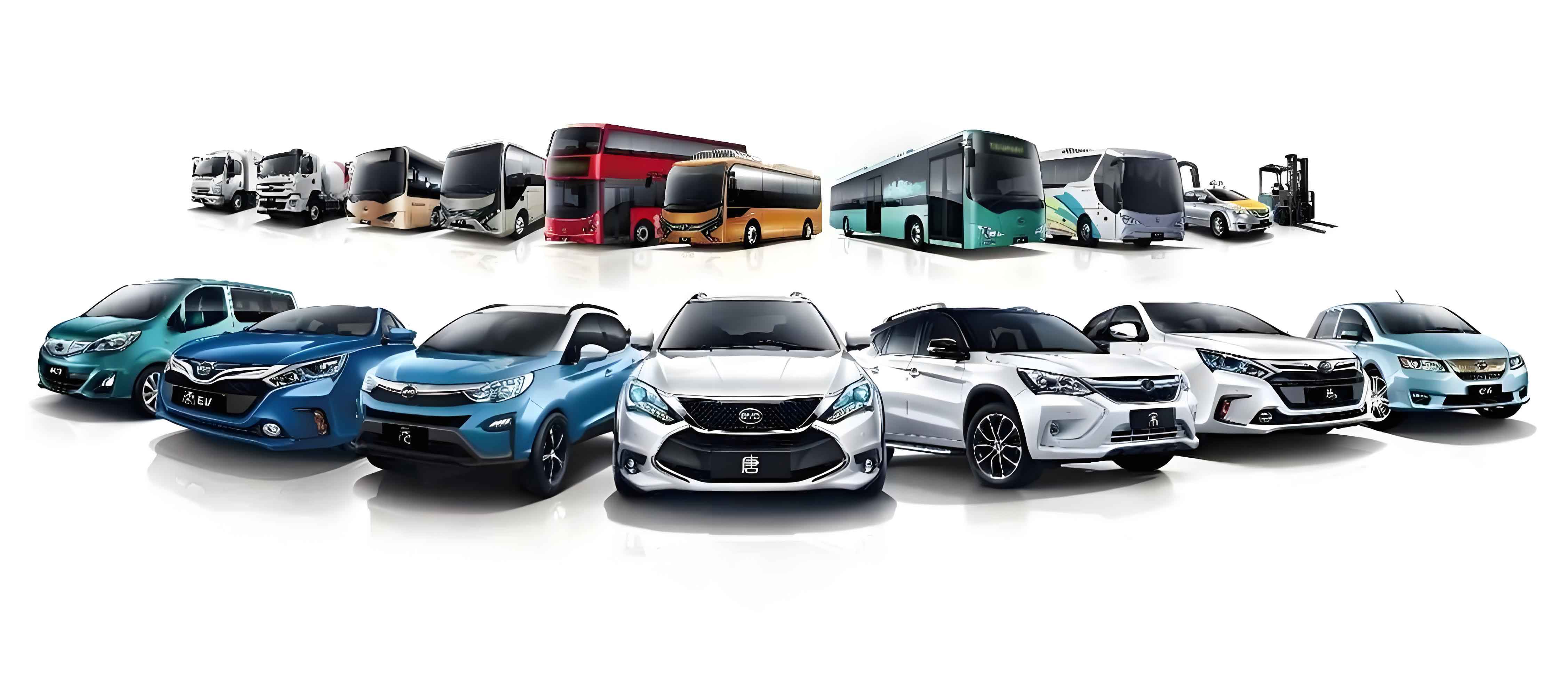
By 2023, the global penetration rate of electric vehicles had exceeded 18%, with intelligent technologies becoming a new battleground for competition. In China, the electric vehicle sector is in a rapid development phase, characterized by cross-industry integration. Companies like Xiaopeng, Xiaomi, Huawei, and Nio have entered the electric vehicle market, significantly enhancing the intelligent capabilities of their products. Intelligent technology now serves as a core driver for electric vehicle development, transforming traditional vehicle attributes and reshaping the transportation landscape. To fully leverage the regulatory functions of transportation authorities and guide urban transport development, it is essential to conduct in-depth research into the intelligent technologies of electric vehicles, thereby safeguarding transportation security. In this analysis, I will focus on key areas such as autonomous driving, vehicle connectivity, and smart charging, incorporating data and formulas to provide a comprehensive overview.
Current Development Status of Intelligent Electric Vehicle Technologies
The advancement of intelligent technologies in electric vehicles is multifaceted, encompassing autonomous driving, vehicle networking, and smart charging systems. As I examine these areas, I will use tables and formulas to summarize key metrics and trends, emphasizing the progress in China’s electric vehicle industry.
Autonomous Driving Technology
Autonomous driving is a cornerstone of intelligent electric vehicles, with maturity levels categorized from L2 to L4. Based on my research, L2 automation, which includes features like adaptive cruise control and lane centering, has become standard in many electric vehicle models. For instance, Tesla’s Autopilot system has accumulated over 30 billion miles of global driving, demonstrating its utility in assisting drivers. In China, electric vehicles from companies like Nio have seen growing adoption of similar systems, with usage rates indicating high user engagement. However, challenges persist, such as the limited generalization of L2 systems in complex scenarios and regulatory hurdles for L3 and beyond. The performance of sensors and cameras can be affected by adverse weather, leading to potential misjudgments, which underscores the need for algorithmic improvements in decision-making for unpredictable traffic environments.
To quantify the current state, consider the following table summarizing autonomous driving levels, their functions, penetration rates, and representative systems as of 2023:
| Autonomous Level | Key Functions | Market Penetration (%) | User Usage Rate (%) | Representative System |
|---|---|---|---|---|
| L2 | Adaptive Cruise Control, Lane Centering | 62 | 89 | Tesla Autopilot |
| L2+ | NOA Highway Pilot | 28 | 74 | Xiaopeng XNGP |
| L3 | Conditional Automation | 3 | 51 | Mercedes DRIVE PILOT |
| L4 | Limited Scenario Unmanned Driving | <0.5 | N/A | Waymo One (Robotaxi) |
In terms of technological performance, the efficiency of perception systems can be modeled using formulas. For example, the false negative rate (FNR) in object detection for autonomous driving has been reduced through innovations like the BEV perception model. Mathematically, this can be expressed as:
$$ \text{FNR} = \frac{\text{Number of Missed Detections}}{\text{Total Objects}} \times 100\% $$
In recent implementations, the FNR has dropped to 0.8%, showcasing improvements. Additionally, the decision-making algorithms in electric vehicles rely on probabilistic models to handle uncertain environments. For instance, the probability of safe navigation in complex scenes can be represented as:
$$ P(\text{safe}) = \int f(\text{sensor data}) \, d(\text{environment}) $$
where \( f \) denotes the algorithm’s response function. These advancements are critical for the evolution of electric vehicle autonomy, particularly in the context of China’s rapidly expanding EV market.
Vehicle Networking Technology
Vehicle networking, which integrates IoT and mobile internet technologies, enables seamless communication between “human-vehicle-road-cloud” entities, providing intelligent connectivity services for electric vehicles. In my analysis, I have identified several standards, such as LTE-V2X, 5G NR-V2X, and 802.11bd, each with distinct performance metrics. For example, LTE-V2X supports peak data rates of up to 100 Mbps and latency between 20-50 ms, making it suitable for applications like traffic light information推送. The adoption of 5G networks in electric vehicles, as seen in systems like Xiaopeng’s Xmart OS, enhances real-time navigation and entertainment, improving driver comfort.
The following table outlines key vehicle networking technologies, their parameters, and deployment status:
| Technology | Peak Data Rate | Latency (ms) | Deployment Status | Typical Application |
|---|---|---|---|---|
| LTE-V2X | 100 Mbps | 20-50 | Deployed in 50+ cities | Traffic Light Info |
| 5G NR-V2X | 1 Gbps | <10 | Pilot in 10 cities | Cooperative Parking |
| 802.11bd | 10 Gbps | Lab Testing | High-Speed Platooning |
From a technical perspective, the data transmission efficiency can be described using the Shannon-Hartley theorem, which relates channel capacity to bandwidth and signal-to-noise ratio:
$$ C = B \log_2(1 + \frac{S}{N}) $$
where \( C \) is the capacity, \( B \) is bandwidth, \( S \) is signal power, and \( N \) is noise power. This formula highlights the potential of 5G and beyond in supporting high-speed connectivity for electric vehicles. In China, the integration of北斗 navigation has improved positioning accuracy to 10 cm, which is vital for reliable vehicle networking. As I see it, the continued innovation in this area will drive the smart evolution of electric vehicles, making them more integrated into urban transport systems.
Intelligent Charging Management Technology
Charging infrastructure remains a critical bottleneck for electric vehicle adoption, with various charging types offering different efficiencies and power levels. Based on my review, AC slow charging, DC fast charging, wireless charging, and V2G bidirectional charging are the primary methods. For instance, DC fast charging can deliver up to 350 kW of power with efficiencies between 93-95%, significantly reducing charging times. Intelligent battery management systems in electric vehicles optimize charging strategies based on user behavior, leveraging data from navigation and grid conditions to plan efficient charging routes.
The table below summarizes the charging technologies, their peak power, efficiency, and global deployment as of 2023:
| Charging Type | Peak Power (kW) | Efficiency (%) | Global Deployment (Units) |
|---|---|---|---|
| AC Slow Charging | 22 | 88-92 | 12 million |
| DC Fast Charging | 350 | 93-95 | 580,000 |
| Wireless Charging | 11 | 90-92 | 200+ projects |
| V2G Bidirectional | 150 | 92 | 50+ stations |
The efficiency of charging systems can be modeled using the formula for energy conversion efficiency:
$$ \eta = \frac{E_{\text{output}}}{E_{\text{input}}} \times 100\% $$
where \( \eta \) is efficiency, \( E_{\text{output}} \) is the energy delivered to the electric vehicle battery, and \( E_{\text{input}} \) is the energy drawn from the grid. Innovations like Huawei’s 600 kW ultra-fast charging enable ranges of 300 km with just 5 minutes of charging, which I find promising for addressing range anxiety in China’s electric vehicle market. Furthermore, the integration of AI for dynamic charging scheduling can minimize costs and grid stress, as expressed in optimization problems:
$$ \min \sum_{t} C(t) \cdot P(t) $$
where \( C(t) \) is the electricity cost at time \( t \), and \( P(t) \) is the power consumed. This approach is essential for scaling intelligent charging solutions globally.
Challenges in the Development of Intelligent Electric Vehicle Technologies
Despite the progress, intelligent electric vehicle technologies face several challenges that hinder their full potential. In my assessment, these include technical limitations, data security issues, and regulatory gaps. Technically, autonomous driving systems still struggle with complex traffic scenarios, where sensor fusion and decision algorithms require further refinement. For example, in adverse weather, the accuracy of cameras and LiDAR can degrade, leading to safety risks. Mathematically, the uncertainty in perception can be represented as:
$$ \sigma_{\text{error}} = \sqrt{ \sigma_{\text{sensor}}^2 + \sigma_{\text{environment}}^2 } $$
where \( \sigma_{\text{error}} \) is the total error, and \( \sigma_{\text{sensor}} \) and \( \sigma_{\text{environment}} \) are errors from sensors and environmental factors, respectively.
Data security is another critical concern, as electric vehicles handle vast amounts of personal and operational data. In 2024, several incidents of data breaches highlighted vulnerabilities, even with encryption techniques. The risk can be quantified using metrics like the probability of a breach:
$$ P(\text{breach}) = 1 – e^{-\lambda t} $$
where \( \lambda \) is the failure rate and \( t \) is time. Strengthening encryption, such as through quantum key distribution, is vital for protecting electric vehicle communications.
Regulatory and standardizational lag also poses a challenge, as existing transportation laws are not fully adapted to autonomous electric vehicles. Differences in international policies complicate研发 for global companies, necessitating harmonized frameworks. From my viewpoint, addressing these challenges is crucial for the sustainable growth of intelligent electric vehicles, especially in regions like China where the EV industry is booming.
Innovations and Future Prospects of Intelligent Electric Vehicle Technologies
Looking ahead, innovations in autonomous driving, vehicle networking, and charging technologies are set to transform the electric vehicle landscape. In my analysis, I will highlight key trends and their implications, particularly from a transportation perspective, using data and formulas to illustrate future directions.
Key Technological Innovations and Trend Predictions
In autonomous driving, sensor configurations and algorithms have evolved significantly. For instance, the installation rate of LiDAR in electric vehicles increased from 3.2% in 2021 to 18.7% in 2023, with 40% of models adopting 8-megapixel cameras. The BEV perception model has reduced missed detection rates to 0.8%, while occupancy networks improve obstacle recognition. As an example, Xiaomi’s SU7 incorporates a Hesai AT128 LiDAR and multiple sensors, with a proprietary BEV+Transformer model trained on 20 billion km of data. Tests in Shanghai showed a takeover rate of 0.3 per 100 km for city NOA, and parking success rates reached 99.2%. Future advancements may include multi-spectral sensors and computational breakthroughs to overcome L3 regulatory barriers.
The evolution can be modeled using improvement rates; for example, the annual growth in algorithm accuracy might follow:
$$ A(t) = A_0 e^{kt} $$
where \( A(t) \) is accuracy at time \( t \), \( A_0 \) is initial accuracy, and \( k \) is the growth constant.
In vehicle networking, innovations like北斗 navigation enable 10 cm-level positioning, while edge computing units achieve 100 TOPS of processing power. Encryption methods, such as the SM9 algorithm, secure vehicle-cloud communications. For instance, Xiaomi SU7 supports 4G/5G switching with under 30 ms latency, connecting to over 300 roadside devices in pilot areas. Future developments aim for integrated communication, perception, and computing, with quantum encryption systems enhancing security. The target for urban traffic simulation systems is to achieve over 95% accuracy in digital twin environments, which can be expressed as:
$$ \text{Accuracy} = \frac{\text{Correct Predictions}}{\text{Total Predictions}} \times 100\% $$
In smart charging, breakthroughs include Tesla’s integrated solar-storage-charging systems, Xiaomi’s wireless charging with dynamic alignment tolerating ±30 cm errors, and Huawei’s 600 kW ultra-fast chargers. AI-driven scheduling optimizes costs, as in:
$$ \text{Cost Savings} = \sum_{i} (C_{\text{peak}} – C_{\text{off-peak}}) \cdot E_i $$
where \( C \) represents electricity costs and \( E \) is energy consumed. Research into solid-state batteries promises further efficiencies, with laboratory targets focusing on compatibility and fast charging for electric vehicles.
Prospects from a Transportation Perspective
From a transportation standpoint, the future of intelligent electric vehicle technologies involves infrastructure support and risk management. I believe that roadside facility upgrades are essential; for example, 5G-V2X coverage is projected to rise from 12% in 2023 to 30% by 2025, and smart traffic light coverage from 8% to 25%. High-definition map coverage is expected to expand from 350,000 km to 1 million km. Transportation authorities should establish mechanisms for L3+ autonomous accident liability and data security platforms, ensuring safe integration into existing systems.
Moreover, the application of intelligent electric vehicles in transportation includes developing smart shuttle services for accessible mobility, such as one-click ride-hailing for elderly users. National platform integration could connect over 90% of key road sections, enabling real-time data exchange and digital twin governance. In emergency scenarios, autonomous electric logistics vehicles could deliver supplies in disaster zones, with ad-hoc networking in offline conditions. The benefits can be quantified using metrics like reduced congestion time:
$$ \Delta T = T_{\text{without EV}} – T_{\text{with EV}} $$
where \( \Delta T \) represents time saved due to optimized electric vehicle routing. These prospects underscore the transformative potential of intelligent technologies in electric vehicles, particularly for China’s EV-driven transportation evolution.
Conclusion
In conclusion, the intelligentization of electric vehicles is an inevitable outcome of technological progress and a core trend in future transportation. Through my analysis, I have emphasized the importance of focusing on autonomous driving, vehicle networking, and charging technologies to overcome existing challenges. From a transportation perspective, the prospects for intelligent electric vehicle technologies are vast, promising enhanced safety, comfort, and convenience, while revolutionizing urban management, energy utilization, and environmental protection. As the electric vehicle industry, especially in China, continues to evolve, sustained research and innovation will be key to unlocking the full potential of these intelligent systems, ultimately contributing to a smarter and more sustainable transportation ecosystem.