
The global automotive industry is in the midst of a profound transformation, driven by an urgent emphasis on environmental sustainability and energy security. In this shifting landscape, the hybrid car has cemented its role as a crucial transitional technology, effectively bridging the gap between conventional internal combustion engine vehicles and pure electric vehicles. By significantly reducing fuel consumption and tailpipe emissions without imposing range anxiety, hybrid powertrains offer a pragmatic solution for a vast market. In recent years, Chinese domestic automobile brands have emerged as formidable players in this arena. Having dedicated immense resources to research and development, they have achieved remarkable technological breakthroughs and are rapidly expanding their market presence. This progress marks a pivotal shift from technology followers to innovators in the hybrid car domain. This article, from my analytical perspective, delves into the core principles and intricate designs of several representative hybrid systems from leading Chinese brands. We will explore their power architectures, operational logic, and the engineering philosophies that underpin them, utilizing technical summaries, comparative tables, and fundamental formulas to elucidate their contributions to the modern hybrid car.
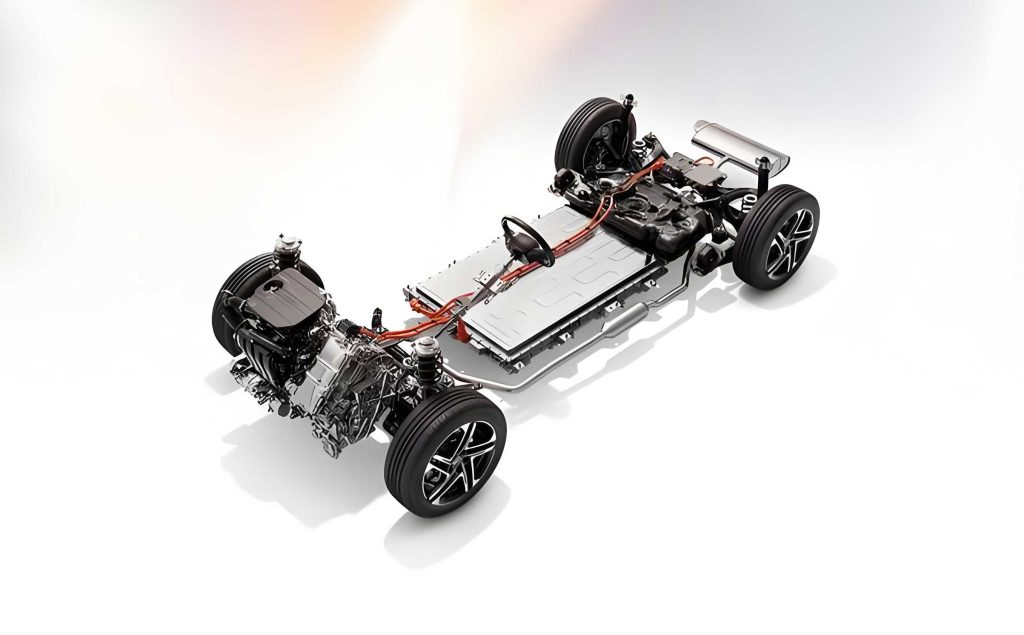
The accelerated development of Chinese hybrid car technologies is largely a product of intense market competition and supportive national policies. Around 2021, a wave of next-generation, independently developed hybrid systems was unveiled, signaling the technological maturity of domestic automakers. Companies like BYD, Geely, Chery, Great Wall, Changan, and SAIC each introduced their proprietary solutions, representing diverse approaches to solving the efficiency puzzle. These systems, though sharing the common goal of optimizing energy usage, employ distinct mechanical layouts and control strategies. Today, these platforms are fully realized, setting the stage for a fiercely competitive market where technological sophistication will be a key differentiator. The journey involves continuous iteration; for instance, BYD has progressed to its DM 5.0 platform, while Geely’s Leishen technology and SAIC’s solutions have undergone multiple generational updates, demonstrating a commitment to relentless improvement.
Fundamental Technical Principles: The P-Series and Serial-Parallel Topology
To understand the specific architectures, one must first grasp the basic classification of components in a hybrid car. The most common framework uses the “P” (for “Position”) nomenclature to describe the location of electric motor(s) relative to the engine and transmission.
- P0: A belt-driven starter-generator mounted on the engine front-end accessory drive.
- P1: A motor mounted directly on the engine crankshaft, acting as both a starter and a generator.
- P2: A motor located between the engine and the transmission, typically after a clutch.
- P3: A motor placed on the transmission output side or directly on the differential/drive axle.
- P4: A motor driving an axle that is not mechanically connected to the engine (e.g., a separate rear axle in a front-engine vehicle).
The most prevalent architecture among efficient Chinese plug-in hybrid cars is the serial-parallel (or power-split) configuration. This system ingeniously combines the benefits of both series and parallel hybrids. It typically uses two electric motors (often P1 and P3) and an internal combustion engine (ICE), connected via a dedicated electromechanical coupling device, often called a Dedicated Hybrid Transmission (DHT).
The core operational modes are:
- Pure Electric (EV) Mode: The battery powers the drive motor (e.g., P3), propelling the vehicle while the engine is off. This is the default mode for a plug-in hybrid car with sufficient battery charge.
- Series Mode (Range Extender): The engine drives a generator (e.g., P1) to produce electricity. This electricity can either power the drive motor (P3) or charge the battery. The engine operates in its most efficient speed/load range, disconnected from the wheels.
- Parallel/Engine Direct Drive Mode: A clutch engages to connect the engine mechanically to the wheels. The engine provides the primary propulsion, potentially assisted by the drive motor for extra power (parallel hybrid).
- Power-Split Mode: This is the most complex and optimized state. The engine’s power is split into two paths: a mechanical path directly to the wheels and an electrical path via the generator (P1). The generated electricity can then drive the traction motor (P3), providing additional torque or optimizing the engine’s operating point. The power flow is governed by a planetary gear set or a similar coupling mechanism.
- Regenerative Braking: The drive motor acts as a generator during deceleration, converting kinetic energy back into electrical energy to recharge the battery.
The overall system efficiency \(\eta_{sys}\) of a hybrid car in a given mode can be conceptually represented as a function of component efficiencies:
$$ \eta_{sys} = f(\eta_{eng}, \eta_{gen}, \eta_{mot}, \eta_{bat}, \eta_{trans}) $$
where \(\eta_{eng}\) is engine thermal efficiency, \(\eta_{gen}\) and \(\eta_{mot}\) are generator and motor efficiencies, \(\eta_{bat}\) is battery charge/discharge efficiency, and \(\eta_{trans}\) is mechanical transmission efficiency. The control system’s objective is to maximize \(\eta_{sys}\) across all driving conditions.
The total power at the wheels \(P_{wheel}\) in a combined driving mode can be expressed as:
$$ P_{wheel} = (P_{eng} \cdot \eta_{trans\_eng} + P_{mot} \cdot \eta_{trans\_mot}) $$
where \(P_{eng}\) is the engine power after losses, \(P_{mot}\) is the motor power from the battery, and \(\eta_{trans\_eng}\) and \(\eta_{trans\_mot}\) are the respective transmission path efficiencies for the engine and motor power streams.
Analysis of Representative Domestic Hybrid Car Architectures
BYD DM-i: The Pioneer of P1+P3 Serial-Parallel Philosophy
BYD’s journey into plug-in hybrids began early, culminating in the influential DM-i system. This architecture is a quintessential example of a single-speed, P1+P3 serial-parallel hybrid car design. Its power unit consists of a dedicated high-efficiency Atkinson-cycle engine, a dual-motor electronic control unit, and a large-capacity power battery.
The mechanical layout is elegantly simple. A P1 motor is coupled to the engine via a clutch. A separate input shaft connects the P3 traction motor directly to the output shaft through reduction gears. When operating in pure EV mode, power flows directly from the P3 motor to the wheels. In series mode, the engine drives the P1 generator. For highway cruising, the clutch engages, allowing the engine to drive the wheels directly (parallel mode), with the P1 motor available to adjust the engine’s load for optimal efficiency. This “electricity-first” philosophy prioritizes the electric drive, using the engine primarily as a highly efficient generator or for direct, steady-state cruising, defining a generation of Chinese hybrid cars.
Great Wall Lemon DHT: A Two-Speed Parallel-Shaft Design
The Lemon DHT system presents a distinct approach within the serial-parallel hybrid car family. It features a parallel-shaft layout with two electric motors (Generator and Traction Motor). The traction motor has a direct path to the wheels. The engine connects to the generator and, via a clutch, to a dedicated two-speed gearbox (constant-mesh type) before its power is merged with the traction motor’s output.
This two-speed gearbox is a key differentiator. It allows the engine to enter direct drive mode efficiently at lower vehicle speeds and provides a second gear for high-speed efficiency, reducing engine RPM at cruising speeds. This enhances the overall efficiency of the hybrid car across a broader speed range compared to single-speed designs. The system seamlessly switches between EV, series, parallel (with two gear ratios), and combined modes.
Chery Kunpeng DHT: The Deep Integration of P2 and P2.5 Motors with a 3-Speed DCT
Chery’s solution ingeniously blends hybrid technology with the principles of a dual-clutch transmission (DCT). The Kunpeng DHT is essentially a 3-speed DCT structure that deeply integrates two motors: a P2 motor on the engine shaft and a P2.5 motor (parallel to the shaft) on one of the transmission input shafts.
The engine and P2 motor are on the same axis, connected/disconnected by clutch C1. The P2.5 motor feeds into the gear train. Clutches C2 and C3 control engagement with different gear sets (1st/3rd and 2nd, respectively). This setup provides immense flexibility. The hybrid car can drive in pure EV mode using either the P2 or P2.5 motor (or both). The three physical gears allow the engine to operate in its sweet spot during direct drive or parallel assistance at various speeds, improving highway fuel economy and performance. It represents a high-performance, multi-mode approach to the hybrid car challenge.
Changan Blue Core iDD: An Integrated P2 on a 6-Speed DCT Platform
Changan’s Blue Core iDD takes a different path, focusing on a P2 hybrid car architecture built upon a modified 6-speed dual-clutch transmission. Its core innovation is the high level of integration. The system employs a “three-clutch” module where the engine disconnect clutch (C1) is integrated with the dual clutches (C2, C3) of the DCT, all housed within the rotor of the P2 motor.
This compact packaging saves space and weight. The P2 motor is positioned between the engine and the multi-speed transmission. Power from both the engine and the P2 motor is combined at the transmission input and can then be processed through six gear ratios. This architecture is particularly adept at delivering strong parallel boost and high-speed performance, as the motor’s torque is multiplied by the transmission gears. While perhaps less inherently efficient in pure series city driving than a dedicated P1+P3 system, it offers a compelling blend of electrification and traditional drivetrain performance for a hybrid car.
Geely Leishen Hi·X (DHT Pro): The 3-Speed Planetary Gear Power-Split Specialist
Geely’s Leishen DHT Pro stands out for its high integration and complex, AT-like gearing mechanism. It is a highly compact module (~120kg) integrating two motors, a 3-speed automatic transmission based on planetary gear sets, power electronics, and hydraulic controls.
The P1 motor is integrated with the input clutch assembly. The P2 motor’s rotor is hollow and contains a double planetary gearset. The system functions as an electromechanical continuously variable transmission (e-CVT) with discrete gear steps. By controlling a clutch (C1) and two brakes (B1, B2), the planetary gearset can achieve different fixed gear ratios for engine direct drive. This allows for very efficient mechanical coupling at low, medium, and high speeds. The hybrid car benefits from electric launch, efficient series mode, and three optimized mechanical gears for direct engine drive, aiming for top-tier fuel efficiency across all scenarios.
SAIC DMH Super Hybrid Technology: The Refined P1+P3 with Coaxial P1 Design
SAIC’s latest DMH system represents a refined evolution of the mainstream single-speed P1+P3 serial-parallel topology. Similar to BYD’s approach, it uses a dedicated engine, a P1 generator, a P3 traction motor, and an integrated controller. However, its key mechanical distinction lies in the layout of the P1 motor.
In the DMH system, the P1 motor is coaxially mounted with the engine crankshaft, eliminating one set of reduction gears typically required in a parallel-shaft P1 design. This coaxial arrangement potentially reduces mechanical losses, noise, and complexity. Power flows remain similar: P3 motor for EV drive, P1 for generation in series mode, and a direct mechanical path from the engine (via a clutch and gears) to the wheels for highway driving. This design exemplifies the continuous optimization process in modern hybrid car technology, seeking marginal gains in efficiency and packaging.
Comparative Summary and Technical Evaluation
The following tables synthesize the key characteristics of the discussed hybrid car systems, highlighting their architectural choices and implications.
| System Name | Brand | Key Motor Positions | Transmission/Gearing | Notable Feature |
|---|---|---|---|---|
| DM-i / DM 5.0 | BYD | P1 + P3 | Single-Speed Dedicated | Electricity-first philosophy, high integration. |
| Lemon DHT | Great Wall | P1 (Gen) + P3 (TM) | Two-Speed (Constant Mesh) | Parallel-shaft layout, engine has two direct drive gears. |
| Kunpeng DHT | Chery | P2 + P2.5 | Three-Speed DCT Derivative | Deep motor integration into a multi-speed DCT structure. |
| Blue Core iDD | Changan | P2 | Six-Speed DCT | Three-clutch module integrated inside P2 motor rotor. |
| Leishen DHT Pro | Geely | P1 + P2 | Three-Speed Planetary Gear | Ultra-high integration, planetary gearset for e-CVT with fixed ratios. |
| DMH Super Hybrid | SAIC | P1 + P3 | Single-Speed Dedicated | Coaxial P1 motor design, simplified gear train. |
| Architecture Type | Representative System | Primary Advantages | Potential Trade-offs |
|---|---|---|---|
| Single-Speed P1+P3 (Serial-Parallel) | BYD DM-i, SAIC DMH | Simplicity, high EV efficiency, excellent urban fuel economy, smooth operation. | Engine direct drive efficiency at very high speeds may be lower than multi-speed designs. |
| Multi-Speed P1+P3 | Great Wall Lemon DHT | Broader optimized range for engine direct drive, improved high-speed efficiency. | Increased mechanical complexity and potential control logic complexity. |
| Multi-Speed P2/P2.5 (DCT-based) | Chery Kunpeng, Changan iDD | Strong performance and acceleration (motor torque multiplied by gears), leverages existing DCT expertise. | May have lower pure electric mode efficiency at high speed due to spinning transmission gears; packaging challenge for P2 motor. |
| Multi-Speed Power-Split (Planetary) | Geely Leishen DHT Pro | Highly efficient power-split across wide range, compact packaging, multiple optimized direct drive points. | High manufacturing precision required, complex control strategy for clutch/brake actuation. |
The efficiency of a hybrid car in charge-sustaining mode (after battery depletion) heavily depends on how well the system manages the engine’s operating point. Systems with multiple mechanical gears (Lemon, Kunpeng, Leishen, iDD) aim to keep the engine near its maximum Brake Thermal Efficiency (BTE) island more frequently during direct drive. The ideal target can be modeled as minimizing a cost function \(J\) related to fuel consumption:
$$ J = \min \int_{t_0}^{t_f} \dot{m}_{fuel}(T_{eng}, \omega_{eng}, P_{elec\_req}) \, dt $$
subject to vehicle power demand \(P_{demand}(t) = P_{wheel}(t)\), battery state-of-charge constraints, and component limits. Here, \(\dot{m}_{fuel}\) is the fuel flow rate, a function of engine torque \(T_{eng}\), speed \(\omega_{eng}\), and the electrical power requirement \(P_{elec\_req}\) from the generator.
Conclusion and Future Trajectory
The landscape of Chinese hybrid car technology is vibrant and fiercely competitive. Domestic brands have successfully developed and commercialized a diverse portfolio of hybrid powertrain architectures, each with its own merits and targeted performance characteristics. From the elegantly simple single-speed serial-parallel systems to the complex multi-speed power-split and DCT-based hybrids, this technological pluralism demonstrates a high level of engineering maturity and innovation. The core advantages of these systems—substantially reduced fuel consumption, lower emissions, enhanced drivability, and the elimination of range anxiety—are clear drivers for their growing market acceptance.
The evolution is continuous. Future developments will likely focus on several key areas: further increasing the thermal efficiency of dedicated hybrid engines, improving the power density and efficiency of electric motors and power electronics, developing more intelligent and predictive energy management systems, and reducing system cost through higher levels of integration and scale. As global regulations tighten and consumer preference shifts decisively towards electrification, the role of the advanced hybrid car as a dominant powertrain choice in the transitional era is assured. Chinese automakers, through their significant investments and rapid iterations, are not only competing effectively in this space but are also actively shaping its future direction. Their progress underscores a broader trend in the global auto industry: the center of gravity for hybrid and electric vehicle innovation is demonstrably expanding.