
In recent years, the automotive industry has witnessed a significant shift towards sustainable mobility, driven by global concerns over environmental degradation and energy security. Among the various alternatives, hybrid cars, particularly plug-in hybrid electric vehicles (PHEVs), have emerged as a pivotal solution, offering a balance between conventional internal combustion engines and fully electric powertrains. As a researcher focused on reliability engineering, I have embarked on a comprehensive study to investigate the fault rate patterns in hybrid cars, aiming to enhance their dependability and reduce lifecycle costs. This research is crucial because improving the reliability of hybrid cars not only minimizes operational expenses but also aligns with national policies advocating for low-carbon transportation and energy conservation. In this article, I will detail our methodology, data analysis, and findings, emphasizing the application of statistical models to understand failure behaviors in hybrid cars.
The reliability of hybrid cars is a multifaceted domain, encompassing design, testing, production, and maintenance phases. By studying fault rates, we can identify weak points in hybrid car systems and implement corrective measures, ultimately leading to more robust vehicles. Our investigation begins with a thorough literature review, highlighting the importance of reliability in hybrid cars, which often integrate complex components like batteries, electric motors, and power electronics. These elements introduce unique failure modes that differ from traditional vehicles, necessitating specialized analysis. We focus on the fault occurrence during driving cycles, utilizing real-world data to model failure distributions. The core of our approach relies on the Weibull distribution, a widely used statistical tool in reliability engineering, to characterize the failure patterns of hybrid cars. Through linear regression and hypothesis testing, we derive key parameters that describe the fault behavior over mileage, providing insights for manufacturers and consumers alike.
To gather empirical data, we employed a multi-faceted data collection strategy, combining offline and online sources. This included field visits to dealerships and repair shops, where we documented fault incidents in hybrid cars, as well as web scraping from automotive forums, government databases, and survey platforms. We also leveraged big data techniques, using authorized crawlers to extract relevant information from hybrid car websites, followed by data cleaning and preprocessing. The collected dataset comprises 69 fault records, each associated with the mileage at which the failure occurred in hybrid cars. This data forms the foundation for our analysis, allowing us to observe trends and patterns specific to hybrid cars. Below, we present a subset of the fault data in tabular form, which illustrates the mileage points for various failures in hybrid cars.
| Sequence i | Mileage L (km) | Sequence i | Mileage L (km) | Sequence i | Mileage L (km) |
|---|---|---|---|---|---|
| 1 | 9788 | 24 | 53792 | 47 | 45492 |
| 2 | 21638 | 25 | 54168 | 48 | 45499 |
| 3 | 30593 | 26 | 54206 | 49 | 45701 |
| 4 | 33538 | 27 | 54354 | 50 | 46131 |
| 5 | 34447 | 28 | 54566 | 51 | 46324 |
| 6 | 34588 | 29 | 54572 | 52 | 46345 |
| 7 | 34650 | 30 | 54990 | 53 | 46352 |
| 8 | 38539 | 31 | 56025 | 54 | 46660 |
| 9 | 39204 | 32 | 56213 | 55 | 47434 |
| 10 | 39811 | 33 | 56233 | 56 | 48402 |
| 11 | 39830 | 34 | 56452 | 57 | 48868 |
| 12 | 40071 | 35 | 56990 | 58 | 48946 |
| 13 | 40104 | 36 | 57366 | 59 | 49005 |
| 14 | 40339 | 37 | 59327 | 60 | 49311 |
| 15 | 40397 | 38 | 59628 | 61 | 49560 |
| 16 | 41372 | 39 | 61395 | 62 | 49841 |
| 17 | 42501 | 40 | 62480 | 63 | 49862 |
| 18 | 43234 | 41 | 62550 | 64 | 49872 |
| 19 | 43341 | 42 | 63256 | 65 | 50139 |
| 20 | 43430 | 43 | 64783 | 66 | 50272 |
| 21 | 43627 | 44 | 65432 | 67 | 50372 |
| 22 | 43828 | 45 | 65990 | 68 | 52442 |
| 23 | 44394 | 46 | 87566 | 69 | 53132 |
From the data, we observed that faults in hybrid cars are most frequent between 30,000 km and 40,000 km, after which the vehicles tend to stabilize, with fewer failures beyond 50,000 km to 60,000 km. This suggests that the characteristic failure-free mileage for hybrid cars lies around 50,000 km to 60,000 km, while the median failure-free mileage is between 30,000 km and 60,000 km. These insights are vital for planning maintenance schedules and warranty periods for hybrid cars. To delve deeper, we proceed to model the fault development规律 using statistical distributions, with a focus on the Weibull distribution for hybrid cars.
In reliability analysis, the Weibull distribution is often employed due to its flexibility in modeling various failure rates, including increasing, decreasing, or constant rates. For hybrid cars, we hypothesize that the fault mileage data follows a two-parameter Weibull distribution, denoted as W(b, θ), where b is the shape parameter and θ is the scale parameter (characteristic life). The probability density function f(L), cumulative distribution function F(L), and failure rate function λ(L) are given by:
$$ f(L) = \frac{b}{\theta} \left( \frac{L}{\theta} \right)^{b-1} e^{-(L/\theta)^b}, \quad L \geq 0 $$
$$ F(L) = 1 – e^{-(L/\theta)^b}, \quad L \geq 0 $$
$$ \lambda(L) = \frac{b}{\theta} \left( \frac{L}{\theta} \right)^{b-1}, \quad L \geq 0 $$
To estimate the parameters b and θ from our hybrid car fault data, we use linear regression techniques. First, we linearize the reliability function R(L) = 1 – F(L) = e^{-(L/\theta)^b}. Taking double logarithms, we obtain:
$$ \ln \left[ \ln \left( \frac{1}{R(L)} \right) \right] = b \ln L – b \ln \theta $$
Letting y = \ln [\ln (1/R(L))] and x = \ln L, this reduces to a linear form y = b x + A, where A = -b \ln θ. Using the fault data from hybrid cars, we compute the median ranks for R(L) and generate pairs (x_i, y_i) for i = 1 to 69. Applying the least squares method in Excel, we perform linear fitting to estimate b and A. The fitted curve yields b = 0.769 and A = 2.7528, from which we derive θ = 5.349 (in units of 10,000 km). This indicates that the fault mileage for hybrid cars approximates a Weibull distribution with these parameters.
To validate our hypothesis, we conduct a goodness-of-fit test using the correlation coefficient r². For linear regression, r² is calculated as:
$$ r^2 = \frac{ \left( \sum_{i=1}^n (x_i – \bar{x})(y_i – \bar{y}) \right)^2 }{ \sum_{i=1}^n (x_i – \bar{x})^2 \sum_{i=1}^n (y_i – \bar{y})^2 } $$
where n = 69, $\bar{x}$ and $\bar{y}$ are the sample means. We compute r² = 0.91, which exceeds the critical value of 0.9, confirming that the linear relationship is significant. Thus, we accept that the fault data for hybrid cars follows the two-parameter Weibull distribution. This allows us to proceed with detailed trend analysis for hybrid cars.
Based on the estimated parameters, we can now analyze the fault distribution trends for hybrid cars. The reliability function R(L) and cumulative fault function F(L) are:
$$ R(L) = e^{-(L / 53490)^{0.0769}} $$
$$ F(L) = 1 – e^{-(L / 53490)^{0.0769}} $$
The probability density function f(L) and failure rate function λ(L) are:
$$ f(L) = \frac{0.0769}{53490} \left( \frac{L}{53490} \right)^{-0.9231} e^{-(L / 53490)^{0.0769}} $$
$$ \lambda(L) = \frac{0.0769}{53490} \left( \frac{L}{53490} \right)^{-0.9231} $$
These functions help us visualize how faults evolve with mileage in hybrid cars. For instance, the failure rate λ(L) decreases over time, indicating that hybrid cars become more reliable as mileage accumulates, which is typical for systems with early failures. To further quantify reliability, we compute key lifetime metrics for hybrid cars:
- Characteristic life L₀.₃₇: This is the mileage at which reliability drops to e⁻¹ ≈ 0.37. From our model, L₀.₃₇ = θ = 53490 km.
- Median life L₀.₅: The mileage where reliability is 0.5. Using the formula L_R = θ [\ln(1/R)]^{1/b}, we get L₀.₅ = 9106 km.
- Reliable life L₀.₉: The mileage for reliability 0.9, calculated as L₀.₉ = 268 km.
- Mean time between failures (MTBF): For the Weibull distribution, MTBF = θ Γ(1 + 1/b), where Γ is the gamma function. With b = 0.0769, Γ(1 + 1/b) ≈ 0.841, so MTBF = 44985 km.
We summarize these reliability characteristics for hybrid cars in the table below:
| Characteristic | Estimated Value (km) |
|---|---|
| Mean Time Between Failures (MTBF) | 44976 |
| Characteristic Life (L₀.₃₇) | 53480 |
| Median Life (L₀.₅) | 9100 |
| Reliable Life (L₀.₉) | 266 |
These metrics provide a quantitative basis for evaluating the reliability of hybrid cars. For example, the relatively low median life suggests that early interventions may be needed in hybrid cars to prevent initial failures. Additionally, the high characteristic life indicates that hybrid cars can achieve long operational periods before significant degradation. Our analysis underscores the importance of tailored maintenance strategies for hybrid cars, focusing on critical components like engines and electric motors, which our data shows are prone to faults. To illustrate the fault patterns visually, we include a graphical representation below, which highlights the distribution of faults across different systems in hybrid cars.
From our data, we found that engine-related faults are the most prevalent in hybrid cars, accounting for 18 occurrences, followed by motor-related faults with 16 occurrences. Other systems like DC-DC converters, batteries, and braking systems also contribute to the fault profile of hybrid cars. This distribution emphasizes the need for robust design and quality control in these areas to enhance the overall reliability of hybrid cars. By understanding these patterns, manufacturers can prioritize research and development efforts, potentially reducing warranty claims and improving customer satisfaction for hybrid cars.
In conclusion, our study demonstrates the applicability of statistical methods, particularly the Weibull distribution, in analyzing fault rates for hybrid cars. Through comprehensive data collection and linear regression, we have modeled the failure behavior of hybrid cars over mileage, providing valuable insights for reliability engineering. The results indicate that hybrid cars exhibit a decreasing failure rate over time, with key lifetime metrics offering benchmarks for performance evaluation. As the adoption of hybrid cars continues to grow, driven by environmental and economic factors, such reliability studies become increasingly important. Future work could expand on this by incorporating more data points, examining different hybrid car models, or integrating machine learning techniques for predictive maintenance. Ultimately, enhancing the reliability of hybrid cars will contribute to their long-term viability and success in the automotive market.
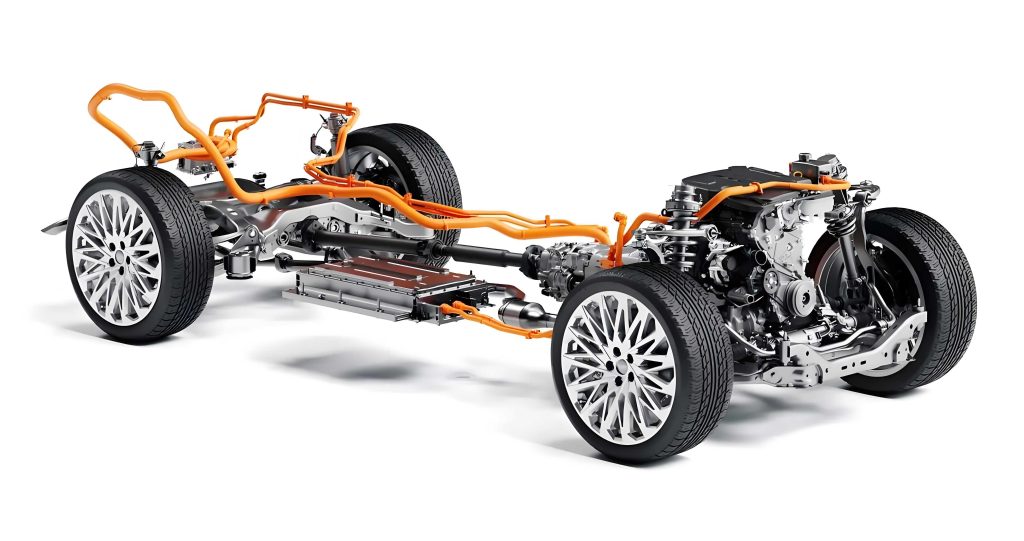
To further elaborate, the reliability analysis of hybrid cars involves not just statistical modeling but also practical considerations. For instance, the integration of multiple power sources in hybrid cars—such as internal combustion engines, electric motors, and battery packs—introduces complex interactions that can affect fault rates. Our study focuses on mileage-based failures, but other factors like driving conditions, temperature, and maintenance practices may also influence reliability in hybrid cars. Therefore, we recommend that future research incorporate multivariate analysis to account for these variables. Additionally, the use of accelerated life testing could help predict long-term failure modes in hybrid cars more efficiently. By continuously refining our models, we can better support the development of reliable and sustainable hybrid cars.
In terms of methodology, our approach combines traditional reliability theory with modern data analytics. The Weibull distribution has proven effective for hybrid cars, but other distributions like the exponential, normal, or log-normal might be applicable in different contexts. We chose the Weibull distribution for its flexibility in modeling various failure patterns, which aligns with the diverse nature of faults in hybrid cars. The linear regression process, coupled with goodness-of-fit tests, ensures the validity of our parameter estimates. This rigorous framework can be adapted for other vehicle types or even broader engineering systems, highlighting the generalizability of our work.
From a practical standpoint, the findings from this study can inform several aspects of hybrid car management. For manufacturers, the reliability characteristics can guide warranty policy design, ensuring that coverage aligns with expected fault occurrences in hybrid cars. For consumers, understanding the fault patterns can aid in making informed purchasing decisions and maintaining their hybrid cars effectively. Moreover, policymakers can use such data to set standards for hybrid car reliability, promoting higher quality across the industry. As hybrid cars evolve with advancements in technology, ongoing reliability monitoring will be essential to address emerging challenges and capitalize on improvements.
In summary, the reliability of hybrid cars is a critical area of study that bridges engineering, statistics, and environmental science. Our research contributes to this field by providing a detailed fault rate analysis using real-world data and statistical models. The insights gained emphasize the importance of reliability in enhancing the appeal and performance of hybrid cars. As we move towards a greener future, hybrid cars will likely play a central role, and ensuring their dependability will be key to their success. We hope that this work inspires further investigations and collaborations aimed at advancing the reliability of hybrid cars for the benefit of society and the planet.