
With the rapid expansion of the new energy vehicle industry, we have witnessed the establishment of the world’s largest electric vehicle charging network. This growth underscores the critical role of EV charging stations in supporting the global shift toward sustainable transportation. As an integral part of this infrastructure, the safety, reliability, and interoperability of EV charging stations have become focal points for industry stakeholders. In this article, we explore the market characteristics, technical requirements, and evolving trends in the detection and certification of EV charging stations. We analyze the current competitive landscape, application scenarios, and certification frameworks, while projecting future developments in detection technologies. The integration of advanced testing methodologies is essential to ensure that EV charging stations meet stringent standards, fostering trust and adoption among consumers and operators alike.
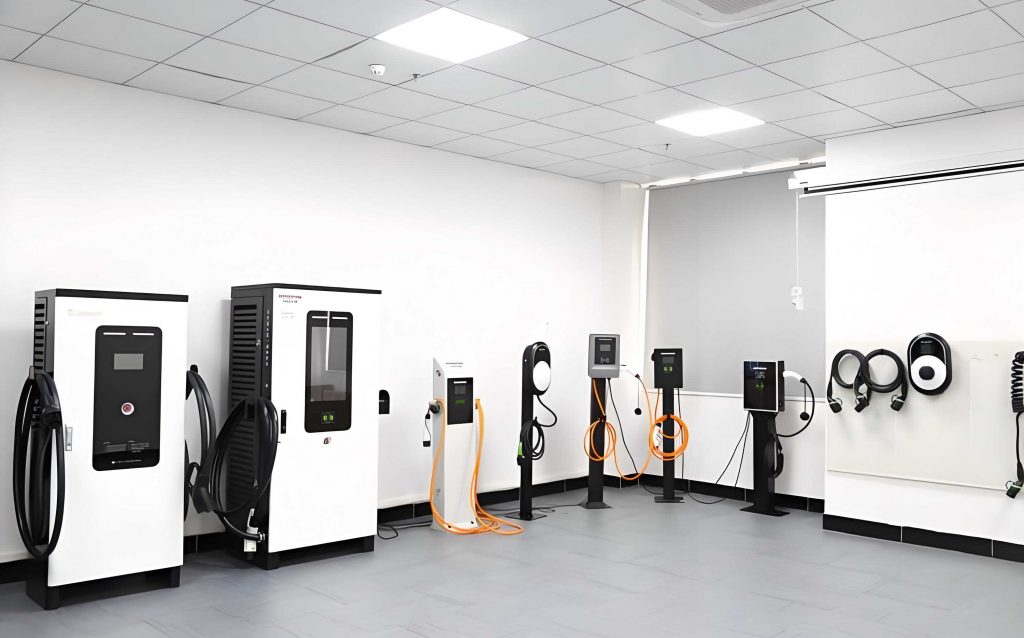
The proliferation of EV charging stations has been driven by policy mandates and technological advancements, leading to a complex market ecosystem. We observe that the detection market for EV charging stations is transitioning from a phase of rapid expansion to one of standardization and intelligence. This shift is characterized by the implementation of强制性产品认证 (CCC) in regions like China, which mandates rigorous testing for EV charging stations to ensure public safety. The demand for detection services is fueled by the need to verify compliance with international standards, such as those outlined by the International Electrotechnical Commission (IEC). As we delve into the specifics, we will use tables and mathematical formulations to summarize key data and relationships, emphasizing the importance of EV charging stations in the broader energy landscape.
Market Characteristics and Technical Requirements
In examining the market characteristics, we note that the production and sales of new energy vehicles have surpassed significant milestones, with over 10 million units annually, cementing their dominance in the global automotive sector. This growth is paralleled by the expansion of EV charging infrastructure. By mid-2025, the total number of EV charging stations reached 16 million, with public stations accounting for 25% and private ones for 75%. This represents a 53% year-over-year increase, highlighting the accelerating deployment of EV charging stations worldwide. The detection需求 for these EV charging stations is intensifying, as regulatory bodies like the State Administration for Market Regulation in China have incorporated EV charging equipment into the CCC certification目录, effective from March 2025. This move aims to standardize the market and enhance the safety of EV charging stations.
From a technical perspective, the safety and reliability of EV charging stations are paramount. We have seen the evolution of testing standards from national recommendations to mandatory requirements. For instance, the recently promulgated GB 39752—2024 and GB 44263—2024 standards in China address the safety aspects of EV charging stations, ensuring compatibility with high-power charging systems. The technical path for EV charging stations involves adherence to standards such as GB/T 18487.1—2023 for general requirements and GB/T 18487.2—2017 for electromagnetic compatibility. These standards facilitate the development of robust EV charging stations that can withstand varying operational conditions. To quantify the power dynamics, we can express the charging efficiency of an EV charging station using the formula for power transfer: $$ P = V \times I $$ where \( P \) is the power in kilowatts (kW), \( V \) is the voltage, and \( I \) is the current. For example, a typical DC EV charging station might operate at voltages up to 1500 V and currents sufficient to deliver power ratings from 250 kW to 800 kW, enabling rapid charging capabilities.
The detection需求 for EV charging stations encompasses a range of tests, including electrical safety, electromagnetic compatibility (EMC), and interoperability. We emphasize that the certification process for EV charging stations is becoming more rigorous, with timelines set for full compliance by August 2026. This aligns with global trends where EV charging stations must undergo similar certifications like CE in the European Union or UL in the United States. The table below summarizes the key certification standards for EV charging stations, illustrating the alignment between domestic and international requirements.
| Certification Type | Standard Code | Description | Effective Date |
|---|---|---|---|
| CCC (China) | GB 39752—2024 | Safety requirements for EV charging stations | 2025-08-01 |
| CCC (China) | GB 44263—2024 | Safety requirements for conductive charging systems | 2025-08-01 |
| CQC (China) | GB/T 18487.1—2023 | General requirements for EV charging stations | Transition to CCC by 2026-08-01 |
| CE (EU) | EN IEC 61851-1:2019 | General standard for EV charging stations | Ongoing |
| UL (USA) | SAE J1772 | Standard for conductive charging | Ongoing |
In terms of technical路径, the advancement of EV charging stations involves the adoption of liquid-cooled ultra-fast charging technologies, which allow for higher power densities and improved thermal management. We project that the efficiency of an EV charging station can be modeled using the formula for energy loss: $$ E_{\text{loss}} = I^2 R t $$ where \( E_{\text{loss}} \) is the energy loss, \( I \) is the current, \( R \) is the resistance, and \( t \) is time. By minimizing resistance through better materials and design, EV charging stations can achieve higher efficiency, reducing operational costs and environmental impact. The focus on technical excellence is crucial for the widespread adoption of EV charging stations, as it directly influences user confidence and the overall sustainability of electric mobility.
Market现状 and Competitive Landscape
Turning to the market现状, we observe a highly competitive environment for EV charging stations, characterized by price competition and service homogenization. This has led to narrowed profit margins, prompting detection agencies to innovate in testing technologies. The operational端 of EV charging stations is dominated by key players such as Telue, Yunkuai Chong, and Xingxing Chong in China, while international brands like Tesla, Siemens, and ABB have established a strong presence in global markets. For instance, Tesla has deployed over 50,000 supercharging stations worldwide, leveraging its proprietary technology to enhance the EV charging station ecosystem. Similarly, Siemens and ABB have expanded their portfolios through acquisitions and partnerships, focusing on smart charging solutions for EV charging stations.
The competitive格局 for EV charging stations is shaped by the coexistence of state-owned enterprises, private companies, and foreign brands. State-owned entities like State Grid and Southern Grid play a pivotal role in infrastructure development, while private firms drive市场化 innovation. We note that there are over 2,000 operators of EV charging stations, with private enterprises accounting for more than 80% of the market. This diversity fosters a collaborative yet competitive atmosphere, encouraging advancements in the detection and certification of EV charging stations. The table below illustrates the market share distribution among major operators of EV charging stations, based on recent data.
| Operator Type | Key Players | Market Share (%) | Primary Focus |
|---|---|---|---|
| Public DC EV Charging Stations | Telue, Yunkuai Chong, Xingxing Chong | ~40% | Fast-charging networks |
| Public AC EV Charging Stations | Xingxing Chong, Yunkuai Chong, Telue | ~35% | Slow-charging in urban areas |
| Private EV Charging Stations | Various residential providers | ~25% | Home and workplace charging |
In the context of foreign brands, we see that companies like Tesla and Siemens employ distinct strategies for EV charging stations. Tesla utilizes a direct sales model and vertical integration, while Siemens relies on distributors and local partnerships. This diversity in approach enriches the global landscape for EV charging stations, but it also introduces challenges in standardization and detection. For example, the communication protocols for EV charging stations vary across regions, necessitating multiple certifications for international market access. The cost and time associated with these certifications can act as barriers, but they are essential for ensuring the safety and reliability of EV charging stations. We believe that the evolution of the competitive landscape will continue to drive innovation, with a focus on enhancing the detection processes for EV charging stations to meet both local and global standards.
Detection and Certification of EV Charging Stations
In the realm of detection and certification, we analyze the application scenarios and technical structures of EV charging stations. AC EV charging stations, typically with power ratings of 7 kW to 21 kW, are ideal for daily commuting and are predominantly installed in residential areas, offices, and commercial parking lots. As of mid-2025, private EV charging stations in residential areas numbered 12 million, reflecting a thirteen-fold increase from the end of the 13th Five-Year Plan. These AC EV charging stations are cost-effective and leverage off-peak electricity, with valley charging accounting for an average of 68% of usage, thereby minimizing grid impact. The charging power for an AC EV charging station can be expressed as: $$ P_{\text{AC}} = V_{\text{rms}} I_{\text{rms}} \cos \phi $$ where \( V_{\text{rms}} \) is the root mean square voltage, \( I_{\text{rms}} \) is the root mean square current, and \( \cos \phi \) is the power factor. This formula highlights the importance of power quality in AC EV charging stations.
In contrast, DC EV charging stations offer high-power charging, ranging from 250 kW to 800 kW, and are essential for addressing range anxiety in long-distance travel. These EV charging stations are deployed in highways, bus terminals, and urban fast-charging hubs. The adoption of liquid-cooled technologies in DC EV charging stations enables higher power densities, with some models supporting 800 V platforms that can charge from 20% to 80% in 8–10 minutes. The power output of a DC EV charging station can be modeled as: $$ P_{\text{DC}} = V_{\text{dc}} I_{\text{dc}} $$ where \( V_{\text{dc}} \) is the DC voltage and \( I_{\text{dc}} \) is the DC current. By 2031, we anticipate that DC EV charging stations will capture 67% of the public charging market, up from 47% in 2024, driven by technological advancements and increasing demand for fast charging.
The certification要求 for EV charging stations vary significantly across regions. Internationally, EV charging stations must comply with standards such as CE marking in the European Union, which involves adherence to EN IEC 61851 series, or UL certification in the United States based on SAE J1772. These certifications ensure that EV charging stations meet safety and performance benchmarks, but they often require retesting due to differences in communication protocols and technical specifications. For instance, an EV charging station designed for the European market might need additional validation for North American standards, increasing time and costs. The table below provides a comparative overview of international certification standards for EV charging stations.
| Certification | Applicable Region | Key Standards | Testing Focus |
|---|---|---|---|
| CE | European Union | EN IEC 61851-1, EN IEC 61851-23 | Safety, EMC, and interoperability |
| UL | United States | SAE J1772, UL 2594 | Electrical safety and performance |
| CB Scheme | Global | IEC 61851-1:2017, IEC 61851-23:2023 | Harmonized testing for international markets |
| CCC | China | GB 39752—2024, GB 44263—2024 | Mandatory safety and system requirements |
Domestically, the certification landscape for EV charging stations is evolving with the introduction of CCC强制性认证. Designated agencies, such as the China Quality Certification Centre (CQC), now oversee the certification process for EV charging stations, with full enforcement from August 2026. This shift from voluntary CQC certification to mandatory CCC certification underscores the growing emphasis on safety and reliability in EV charging stations. We note that detection institutions include state-owned entities like the China Electric Power Research Institute, as well as private firms like Huace Testing Certification Group. These bodies conduct tests based on standards涵盖 GB/T and NB/T series, ensuring that EV charging stations comply with national and international benchmarks. The integration of these certification frameworks is critical for the global expansion of EV charging stations, as it facilitates cross-border compatibility and trust.
Future Trends in EV Charging Station Detection
Looking ahead, we project that the market for EV charging stations will continue to expand, with the total number expected to exceed 50 million by 2030. This growth will be accompanied by several key trends in detection and technology. First, we anticipate a shift toward high-power and intelligent EV charging stations, with liquid-cooled ultra-fast charging becoming standard. The power rating of EV charging stations is likely to increase, with single-gun DC EV charging stations evolving to 350 kW and beyond. This can be represented by the formula for charging time reduction: $$ t_{\text{charge}} = \frac{E_{\text{battery}}}{P_{\text{charging}}} $$ where \( t_{\text{charge}} \) is the charging time, \( E_{\text{battery}} \) is the battery energy capacity, and \( P_{\text{charging}} \) is the power of the EV charging station. As \( P_{\text{charging}} \) increases, \( t_{\text{charge}} \) decreases, enhancing user convenience.
Second, the detection market for EV charging stations will see increased integration of smart technologies, such as AI-driven testing systems and IoT-based monitoring. These advancements will enable real-time data analysis and predictive maintenance for EV charging stations, improving overall reliability. We also foresee a greater emphasis on green and sustainable practices, with EV charging stations incorporating renewable energy sources like solar and storage systems. The concept of “photovoltaic-storage-charging integration” for EV charging stations will gain traction, supporting carbon neutrality goals. Mathematically, the energy efficiency of an EV charging station can be optimized using: $$ \eta = \frac{E_{\text{output}}}{E_{\text{input}}} \times 100\% $$ where \( \eta \) is the efficiency, \( E_{\text{output}} \) is the energy delivered to the vehicle, and \( E_{\text{input}} \) is the energy drawn from the grid or renewable sources. By maximizing \( \eta \), EV charging stations can reduce waste and environmental impact.
However, challenges remain, including intense price competition, regional disparities in infrastructure development, and the high costs of upgrading older EV charging stations. The detection industry must address these issues by fostering innovation and international collaboration. We believe that the future of EV charging station detection will transition from passive compliance to active safety management, with standards evolving to keep pace with technological advancements. The table below summarizes projected trends and challenges in the EV charging station detection market.
| Trend Area | Projection | Impact on EV Charging Stations | Potential Challenges |
|---|---|---|---|
| Technological Advancements | Adoption of AI and IoT in detection | Enhanced reliability and interoperability of EV charging stations | High implementation costs |
| Market Expansion | Growth in rural and global markets | Increased deployment of EV charging stations | Regulatory and logistical hurdles |
| Policy and Standards | Strengthening of CCC and international norms | Higher safety benchmarks for EV charging stations | Need for continuous updates |
| Sustainability | Integration with renewable energy | Greener operations of EV charging stations | Technical complexity and costs |
In conclusion, we assert that the detection market for EV charging stations is poised for significant evolution, driven by policy, technology, and market forces. As EV charging stations become more pervasive, the role of detection in ensuring their safety and efficiency will be paramount. We encourage stakeholders to invest in research and development, aiming to set new benchmarks for EV charging station performance and sustainability.
Conclusion
In summary, the EV charging station detection market is at a pivotal juncture, characterized by rapid growth and increasing complexity. We have explored the market characteristics, technical requirements, and competitive dynamics that define the current landscape for EV charging stations. The implementation of stringent certification frameworks, such as CCC in China and CE in Europe, underscores the global commitment to enhancing the safety and reliability of EV charging stations. Looking forward, we anticipate that technological innovations, including high-power charging and smart detection systems, will reshape the industry, enabling EV charging stations to meet the demands of a growing electric vehicle fleet. By addressing challenges like cost pressures and standardization, we can foster a robust ecosystem for EV charging stations that supports sustainable mobility and energy transition goals. The continued focus on detection excellence will be crucial in building consumer trust and driving the widespread adoption of EV charging stations worldwide.