
In recent years, the global electric car market has experienced exponential growth, driven by technological advancements and supportive policies. By mid-2025, the production and sales of electric vehicles have surpassed the ten-million mark, with China EV penetration rates approaching 50%. This surge is largely attributed to a combination of policy incentives, technological innovations, and rising consumer demand, positioning China as a leader in the global electric car industry. However, this rapid expansion has also exposed several challenges, including exaggerated claims about vehicle performance, inaccurate range estimates, malfunctions in assisted driving systems, and safety hazards related to door handles. One critical issue involves the placement of battery packs in electric cars. To optimize interior space, balance weight distribution, and enhance handling, manufacturers often install battery packs beneath the vehicle floor. This design, while beneficial for performance, increases the risk of damage from road impacts and undercarriage collisions. Such damage can lead to costly repairs, with battery replacement expenses running into thousands of dollars, and in severe cases, result in fire incidents that endanger lives.
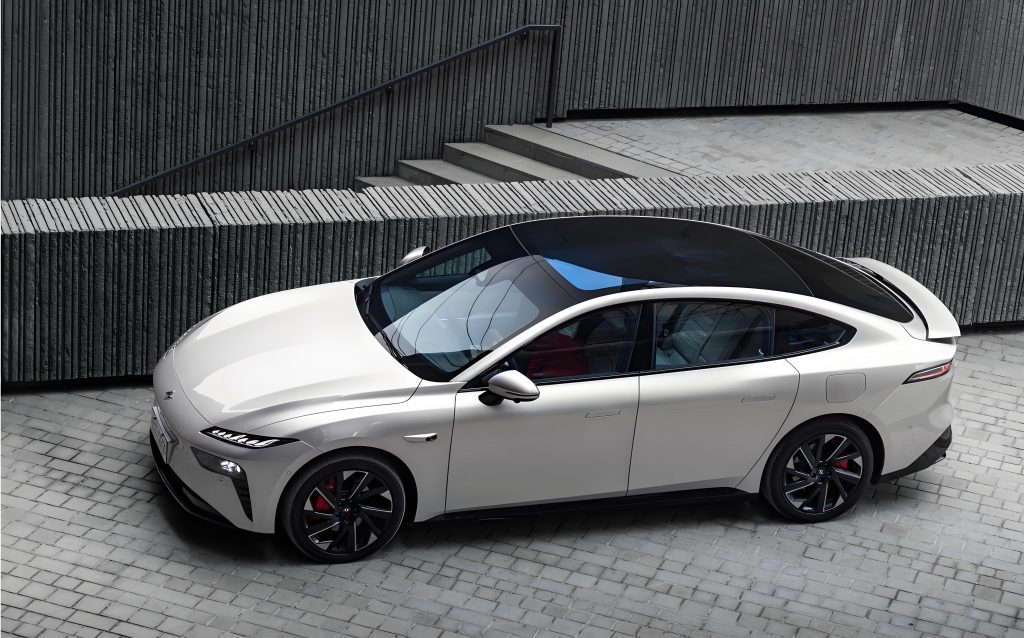
While some electric car manufacturers install battery guards as a protective measure, many opt out due to cost considerations, leaving vehicles vulnerable. Market research reveals that existing battery guard products are often limited in model compatibility, expensive, and typically require large-scale mechanical pressing equipment for production. There is a notable lack of customized, manual fabrication services. To address this gap, our project focuses on innovating manual sheet metal techniques to create bespoke battery guards for electric cars. Through collaborations with local electric car maintenance enterprises, we aim to integrate industry-academia partnerships and foster practical skills development. This approach not only solves real-world problems but also aligns with industrial upgrades and the cultivation of high-skilled talent. The project’s philosophy, inspired by the concept of mutual support and guided direction, emphasizes teamwork and safety, resonating with the core values of manual craftsmanship in the China EV sector.
The overall strategy of this project centers on applying manual sheet metal fabrication to produce battery guards that meet market demands. By leveraging simple tools and equipment, we eliminate the need for large-scale machinery, factories, or complex power setups, making the process highly adaptable and cost-effective. The battery guards are designed to utilize original vehicle mounting points without altering the structure, ensuring compatibility and maintaining ground clearance. Features such as reinforced ribs enhance strength, while spray coating reduces noise and corrosion, extending lifespan. Additionally, drainage holes are incorporated to prevent water accumulation. This solution is directly applicable in practical settings, addressing frontline issues in electric car maintenance. Furthermore, the project facilitates the transformation of vocational competition resources into educational materials, including the development of online courses, ideological and political education modules, and digital textbooks on manual sheet metal work. This enriches professional training and extends the project’s impact to other areas like engine and transmission guards, promoting broader industry adoption.
Key skill points in manual battery guard production involve precision and consistency. Below is a table summarizing these critical aspects:
| Skill Point | Description | Optimal Practice |
|---|---|---|
| Angle | Maintaining perpendicular alignment during rib line formation to avoid point defects or sheet rupture. | Ensure the line chisel is held vertically to the workpiece. |
| Force | Controlling impact force to achieve uniform rib depth and prevent inconsistencies. | Apply consistent striking force with each hammer blow. |
| Accuracy | Aligning the chisel tip precisely with marked lines to prevent deviations. | Carefully position the chisel front end on the mark before striking. |
| Speed | Regulating movement speed when using pneumatic tools to avoid irregularities in rib formation. | Maintain a steady, consistent speed during operation. |
| Distance | Managing chisel displacement to balance smooth transitions and efficiency. | Move the chisel in optimal increments to ensure seamless connections. |
| Frequency | Maintaining equal striking counts per rib segment to prevent warping. | Standardize the number of strikes across all sections. |
| Tool Selection | Choosing appropriate chisels to minimize marks and defects, especially on edges. | Use POM material chisels for lightweight, high-strength processing with reduced痕迹. |
Mathematically, the relationship between force and deformation in sheet metal can be expressed using Hooke’s Law for elastic materials: $$ F = k \cdot \Delta x $$ where \( F \) is the applied force, \( k \) is the material stiffness constant, and \( \Delta x \) is the deformation. For plastic deformation in rib formation, the work done per strike can be modeled as: $$ W = \int F \, dx $$ where \( W \) represents the work energy contributing to rib depth. Consistency in force application ensures that the cumulative work \( \sum W \) remains uniform across the guard surface, preventing distortions.
The project has yielded significant outcomes, demonstrating its practical value and educational impact. Firstly, the manually produced battery guards for electric cars have received high praise from multiple 4S shops and customers, leading to numerous orders. This commercial success underscores the demand for customized solutions in the China EV market. Secondly, team members have actively contributed to curriculum development, creating a comprehensive course system on manual sheet metal fabrication. This includes online精品 courses, ideological demonstration courses, and golden classes, filling a global gap in this educational domain. Thirdly, the project has generated two utility model patents for innovative tools, highlighting its inventive approach. Lastly, through participation in vocational education week events, the team has showcased manual skills and exhibited handcrafted works, attracting visits and exchanges from numerous vocational institutions nationwide. These achievements reflect the project’s role in advancing skills and knowledge in the electric car industry.
Innovation is a cornerstone of this project, manifesting in three key areas:理念, tools, and工艺. In terms of理念创新, the approach eliminates reliance on large equipment, factories, or extensive power supplies, relying instead on simple tools for manual production. This makes it highly practical for solving real-world problems in electric car maintenance, aligning with industrial transformation. The guards can be fabricated from various materials like low-carbon steel, stainless steel, manganese steel, or aluminum alloys, catering to个性化定制 needs while ensuring resource efficiency, cost-effectiveness, and quality. Environmentally, the process is pollution-free and minimizes waste, supporting green and sustainable development in the China EV sector. The economic and ecological benefits can be quantified using efficiency ratios: $$ \text{Efficiency} = \frac{\text{Output Value}}{\text{Input Cost}} $$ where a higher ratio indicates better resource utilization. For instance, manual methods reduce capital investment, boosting this ratio compared to automated systems.
Tool innovation has been pivotal, with team members developing original tools that enhance quality and speed. These innovations address limitations of traditional line chisels, such as heaviness, slippage, prominent marks, and inability to process sheet edges. The new tools, protected by utility model patents, facilitate precise and efficient fabrication. For example, the force amplification in these tools can be described by the mechanical advantage formula: $$ MA = \frac{F_{\text{output}}}{F_{\text{input}}} $$ where a well-designed tool increases \( MA \), reducing the effort required for rib formation.
工艺创新 revolutionizes the traditional rib-making process, which typically involves holding a chisel by hand and striking it with a hammer—a method prone to inefficiency and safety risks like hand injuries. By adopting pneumatic hammers as a power source, the project ensures safety, reliability, and higher efficiency. The time savings can be expressed as: $$ \text{Time Ratio} = \frac{T_{\text{traditional}}}{T_{\text{new}}} \approx 5 $$ indicating a fivefold increase in efficiency. The pneumatic hammer delivers consistent force, and when combined with innovative chiseling techniques and stainless steel templates acting as “backstops,” it produces smooth, aesthetically pleasing ribs with assured quality. The energy transfer in pneumatic systems can be modeled as: $$ E = P \cdot V \cdot t $$ where \( E \) is the energy output, \( P \) is pressure, \( V \) is volume flow rate, and \( t \) is time, ensuring uniform energy distribution for consistent results.
In summary, this project has achieved substantial results in the manual production of electric car battery guards, contributing to the advancement of the China EV industry. However, we recognize that technological evolution is perpetual, and our team remains committed to continuous improvement and innovation. By refining manual techniques and expanding applications, we aim to support the sustainable development of electric car manufacturing and maintenance, ensuring safer and more reliable vehicles for the future. The journey of innovation, much like the guided path of the electric car revolution, requires collaboration, precision, and a forward-looking vision.