
As a researcher in the field of energy storage, I have witnessed the rapid evolution of solid-state batteries as a promising alternative to conventional lithium-ion batteries. The core motivation behind this shift lies in addressing safety concerns associated with flammable liquid electrolytes. A solid-state battery comprises solid electrodes and a solid electrolyte, which replaces the separator, solvent, and lithium salt in traditional batteries. This configuration offers inherent advantages such as non-leakage, non-volatility, non-flammability, and high energy density. However, the journey toward commercialization is fraught with challenges, primarily revolving around three critical issues: ionic conductivity, interfacial impedance, and lithium anode stability. In this article, I will delve into the preparation and characterization techniques for solid-state batteries, drawing from recent advancements and my own insights, with the aim of fostering industry progress. The discussion will be enriched with tables and formulas to summarize key concepts, and I will ensure the frequent mention of “solid-state battery” to emphasize its centrality.
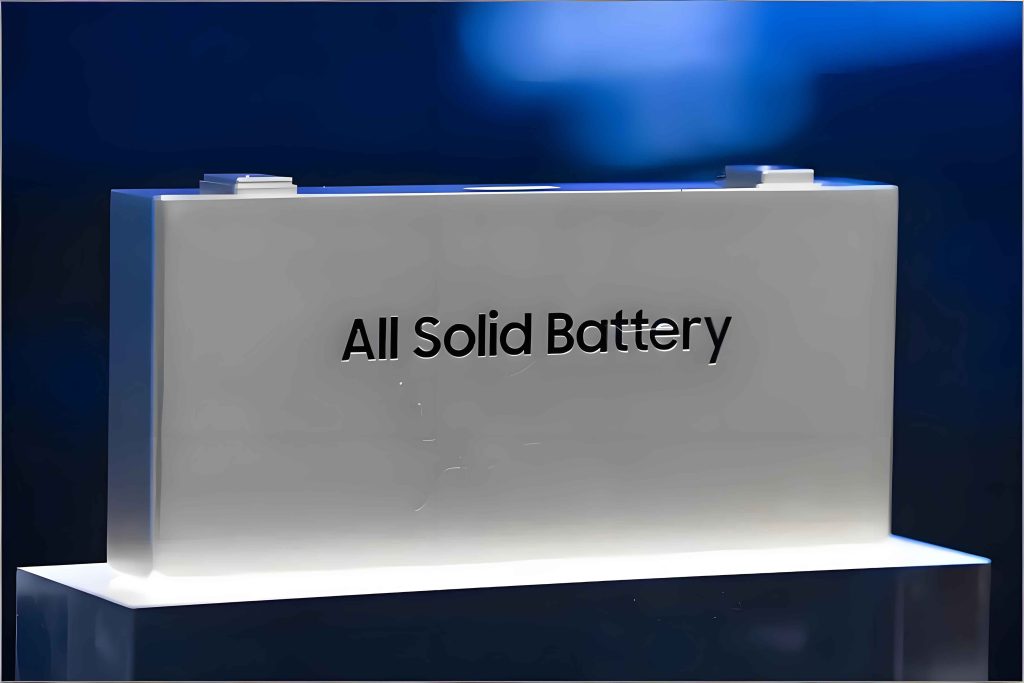
The development of a solid-state battery hinges on understanding its operational mechanisms, which in turn relies on advanced characterization tools. Before exploring these techniques, it is essential to grasp the preparation methods that enable the fabrication of functional solid-state batteries. These methods vary based on the type of solid electrolyte used—polymer, oxide, or sulfide—and each presents unique benefits and hurdles. In the following sections, I will outline the prominent preparation technologies, including in-situ polymerization, tape casting, cold pressing, and low-temperature co-firing, followed by a comprehensive overview of characterization techniques like X-ray methods, nuclear magnetic resonance, atomic force microscopy, neutron diffraction, and transmission electron microscopy. Throughout, I will incorporate formulas to elucidate theoretical aspects and tables to compare methodologies, all while maintaining a first-person perspective to share my analytical viewpoint.
Preparation Technologies for Solid-State Batteries
The fabrication of a solid-state battery is a meticulous process that demands careful consideration of material compatibility and interface engineering. Unlike liquid electrolyte systems, where wetting is straightforward, solid-state batteries require intimate contact between solid components to minimize resistance. I have explored various preparation techniques, each tailored to specific electrolyte classes. Below, I detail these methods, highlighting their principles, advantages, and limitations.
In-Situ Polymerization Method
In-situ polymerization is a versatile technique for creating polymer-based solid-state batteries. In this approach, I inject a precursor solution containing unsaturated small molecules and lithium salts into the battery cell. Upon heating, the solution undergoes polymerization,固化 forming a solid polymer electrolyte that conforms closely to the electrode surfaces. This method effectively mitigates interfacial issues by ensuring continuous contact. For instance, studies have shown that aluminum cations can trigger ring-opening polymerization of ethers, yielding solid polymer electrolytes with room-temperature ionic conductivities exceeding 1 mS·cm⁻¹. The resulting solid-state battery exhibits low interfacial impedance and high Coulombic efficiency, as demonstrated in Li-S and Li-LiFePO₄ systems. The ionic conductivity of such electrolytes can be described by the Arrhenius equation:
$$\sigma = A \exp\left(-\frac{E_a}{kT}\right)$$
where $\sigma$ is the ionic conductivity, $A$ is the pre-exponential factor, $E_a$ is the activation energy, $k$ is Boltzmann’s constant, and $T$ is the temperature. This formula underscores the temperature dependence of conductivity in solid-state batteries. In-situ polymerization aligns with existing battery manufacturing processes, requiring no additional investment, making it a scalable option for solid-state battery production. However, the inherent low ionic conductivity of polymers remains a bottleneck, prompting research into high-conductivity polymers.
Tape Casting Method
Tape casting, or流延法, is commonly used for oxide-based solid-state batteries. I have employed this technique to fabricate thin, flexible ceramic electrolyte films. The process involves spreading a slurry of oxide particles (e.g., Li₀.₃₄La₀.₅₆TiO₃ or LLZO) with binders on a substrate, followed by drying and sintering. This yields self-supporting membranes as thin as 25 μm, with enhanced ionic conductivity compared to thicker pellets. For example, LLZO films prepared via tape casting show conductivities around 2.0 × 10⁻⁵ S·cm⁻¹, coupled with mechanical strength of 264 MPa. The conductivity improvement can be attributed to reduced grain boundary resistance, which is critical in solid-state batteries. The total resistance $R$ of an electrolyte layer is given by:
$$R = \frac{L}{A \sigma}$$
where $L$ is the thickness, $A$ is the area, and $\sigma$ is the ionic conductivity. Thinner films reduce $L$, lowering overall resistance. Tape casting also facilitates the integration of composite electrolytes, such as polymer-ceramic hybrids, which bridge gaps between particles. Despite these advances, interfacial compatibility between oxides and electrodes requires further optimization, often through buffer layers like LiNbO₃. I believe tape casting holds promise for mass-producing solid-state batteries, provided we unravel the synergistic Li⁺ transport mechanisms in composites.
Cold Pressing Method
Cold pressing is a straightforward technique for sulfide-based solid-state batteries, leveraging the deformability of sulfide electrolytes at room temperature. I apply pressure to compact mixtures of sulfide electrolytes (e.g., Li₆PS₅Cl) and electrode materials, forming dense layers without high-temperature sintering. This method helps achieve good interfacial contact, but challenges persist in eliminating pores and cracks. To enhance uniformity, I have experimented with solution infiltration, where electrode preforms are immersed in sulfide suspensions before pressing. For instance, LiCoO₂ cathodes treated this way deliver reversible capacities of 141 mAh·g⁻¹ in solid-state batteries. The cold pressing process can be modeled using empirical formulas for density $\rho$ under pressure $P$:
$$\rho = \rho_0 + k P^n$$
where $\rho_0$ is the initial density, and $k$ and $n$ are constants. This highlights the importance of pressure in densifying solid-state battery components. However, cold pressing may introduce defects in sulfides, potentially degrading performance. Wet processing alternatives, such as slurry coating, offer better interface control. I envision that combining cold pressing with supportive scaffolds (e.g., Kevlar nonwovens) could enable thin-electrolyte, cathode-supported solid-state batteries, boosting energy density.
Low-Temperature Co-Firing Method
In my work on oxide solid-state batteries, I have developed a low-temperature co-firing technique to address grain boundary resistance. This method involves stacking green tapes of LiSiAlON solid electrolyte and cathode materials, followed by hot pressing at moderate temperatures and subsequent cold pressing with lithium anodes. The co-firing process reduces晶界数量 and enhances densification, leading to improved ionic conductivity. The ionic conductivity in such systems can be expressed as:
$$\sigma = \sigma_{\text{grain}} + \sigma_{\text{boundary}}$$
where $\sigma_{\text{grain}}$ is the grain interior conductivity and $\sigma_{\text{boundary}}$ is the grain boundary conductivity. By minimizing $\sigma_{\text{boundary}}$ through co-firing, the overall conductivity of the solid-state battery increases. My experiments show that LiSiAlON-based batteries exhibit stable electrochemical performance, with the method offering simplicity and scalability. The key lies in optimizing firing conditions to prevent interfacial reactions while maintaining mechanical integrity. I am optimistic that low-temperature co-firing can be extended to other oxide systems, paving the way for cost-effective solid-state battery manufacturing.
| Method | Solid Electrolyte Type | Key Advantages | Key Challenges | Typical Ionic Conductivity (S·cm⁻¹) |
|---|---|---|---|---|
| In-Situ Polymerization | Polymer | Excellent interface contact, compatible with existing processes | Low ionic conductivity at room temperature | ~10⁻³ |
| Tape Casting | Oxide | Thin films, flexibility, reduced grain boundaries | Interfacial compatibility, requires sintering | ~10⁻⁵ to 10⁻⁴ |
| Cold Pressing | Sulfide | Room temperature processing, good deformability | Pore formation, defect introduction | ~10⁻⁴ to 10⁻³ |
| Low-Temperature Co-Firing | Oxide/Nitride | Enhanced densification, reduced grain boundary resistance | Process optimization, potential interfacial reactions | ~10⁻⁵ to 10⁻⁴ |
Characterization Techniques for Solid-State Batteries
To advance solid-state battery technology, I rely on a suite of characterization tools that probe structural, chemical, and dynamic properties across multiple scales. These techniques illuminate failure mechanisms, such as lithium dendrite growth or interfacial degradation, guiding optimization efforts. Below, I discuss several advanced methods, emphasizing their application in solid-state battery research.
X-Ray Techniques
X-ray methods are indispensable for studying solid-state batteries due to their high brightness and tunable energy. I use in-situ X-ray diffraction (XRD) to monitor lattice changes during cycling, revealing phase transitions and strain evolution. For example, synchrotron-based XRD has captured real-time structural dynamics in electrode materials. Additionally, X-ray photoelectron spectroscopy (XPS) helps analyze surface chemistries, such as solid-electrolyte interphase (SEI) composition on lithium anodes. The interfacial impedance $R_{\text{interface}}$ in a solid-state battery can be correlated with SEI properties via:
$$R_{\text{interface}} = \frac{d}{\sigma_{\text{SEI}}}$$
where $d$ is the SEI thickness and $\sigma_{\text{SEI}}$ is its ionic conductivity. X-ray absorption spectroscopy (XAS), including near-edge and extended fine structure, provides insights into local electronic structures and coordination environments, aiding in the design of stable interfaces. I have employed these techniques to identify detrimental phases like Li₂CO₃ on cathode surfaces, informing coating strategies. The non-destructive nature of X-rays enables operando studies, crucial for understanding solid-state battery behavior under working conditions.
Nuclear Magnetic Resonance (NMR) Spectroscopy
NMR spectroscopy is a powerful tool for investigating local structures and ion dynamics in solid-state batteries. I utilize magic-angle spinning NMR to resolve specific nuclear sites, such as ⁷Li or ³¹P, in solid electrolytes. For instance, studies on β-Li₃PS₄ have measured Li⁺ self-diffusion coefficients, aligning with conductivity data. The diffusion coefficient $D$ relates to ionic conductivity through the Nernst-Einstein equation:
$$\sigma = \frac{n e^2 D}{k T}$$
where $n$ is the carrier concentration and $e$ is the elementary charge. This formula connects microscopic ion motion to macroscopic performance in solid-state batteries. I also apply pulsed-field gradient NMR to track Li⁺ migration in composite electrolytes, revealing how polymer-ceramic interactions enhance transport. NMR’s sensitivity to light elements makes it ideal for probing Li distribution and interfacial reactions, offering a atomic-level view of solid-state battery operation.
Atomic Force Microscopy (AFM)
AFM provides nanoscale resolution for imaging surface morphologies and measuring mechanical properties in solid-state batteries. I have conducted in-situ AFM experiments to observe lithium dendrite growth on anode surfaces, applying voltage biases to simulate cycling. The stress $\sigma_s$ generated during dendrite formation can be quantified using AFM tips, with values reaching up to 130 MPa for lithium whiskers. This stress contributes to electrolyte cracking, a common failure mode in solid-state batteries. The mechanical stability of interfaces is critical, and AFM helps assess parameters like elastic modulus and adhesion. By combining AFM with environmental transmission electron microscopy, I have visualized dendrite propagation in real-time, emphasizing the need for robust electrolyte designs. AFM’s ability to map surface potentials also aids in understanding charge distribution across solid-state battery interfaces.
Neutron Diffraction and Transmission Electron Microscopy (TEM)
Neutron diffraction complements X-ray techniques by offering deep penetration and sensitivity to light elements like lithium. I use it to determine Li⁺ occupancy in crystal structures, such as in LATP solid electrolytes, and to image Li distribution in electrodes. The scattering cross-section of neutrons allows for bulk analysis, ideal for operando studies of solid-state batteries. Meanwhile, TEM delivers atomic-scale insights into microstructures and interfaces. I employ in-situ TEM to watch lithium plating and electrolyte crack propagation, revealing mechanisms like grain boundary-assisted Li⁺ diffusion. Recently, machine learning-enhanced TEM has enabled real-time visualization of Li⁺ movement in bulk solid-state batteries, highlighting resistance hotspots. These findings guide material design to reduce internal resistance. The combination of neutron and electron microscopy provides a comprehensive picture of solid-state battery dynamics, from bulk to nanoscale.
Other Characterization Techniques
Beyond the above, I routinely use scanning electron microscopy (SEM) for morphology analysis, Raman spectroscopy for chemical bond identification, and optical microscopy for dendrite observation. For example, sealed transfer SEM allows me to study lithium electrode evolution without air exposure, while Raman confirms intermediate species like LiO₂ in lithium-air systems. These techniques, though common, are vital for correlating microstructure with performance in solid-state batteries. I often integrate multiple methods to triangulate data, ensuring robust conclusions about solid-state battery behavior.
| Technique | Key Capabilities | Scale of Analysis | Applications in Solid-State Batteries |
|---|---|---|---|
| X-Ray Methods | Structural and chemical analysis, operando monitoring | Atomic to macroscopic | Phase detection, interface chemistry, in-situ cycling studies |
| NMR Spectroscopy | Local structure and ion dynamics | Atomic to nanometer | Li⁺ diffusion measurement, SEI characterization |
| Atomic Force Microscopy | Surface imaging and mechanical property mapping | Nanometer to micrometer | Dendrite observation, stress measurement, interface stability |
| Neutron Diffraction | Bulk structure analysis, light element sensitivity | Nanometer to macroscopic | Li⁺ occupancy determination, 3D imaging |
| Transmission Electron Microscopy | Atomic-resolution imaging and spectroscopy | Atomic to nanometer | Interface evolution, dendrite growth, defect analysis |
Conclusion and Outlook
In summary, the preparation and characterization of solid-state batteries are multifaceted endeavors that require interdisciplinary approaches. From my perspective, the choice of fabrication method—whether in-situ polymerization, tape casting, cold pressing, or low-temperature co-firing—depends on the electrolyte chemistry and desired performance metrics. Each technique offers unique pathways to mitigate interfacial impedance and enhance ionic conductivity, yet challenges remain in scaling up and cost reduction. Characterization technologies, ranging from X-rays to TEM, provide invaluable insights into failure mechanisms, enabling iterative improvements. The solid-state battery field is poised for growth, with oxides showing particular promise due to their stability and potential for nitrogen doping to boost conductivity. I believe that advancing oxynitride electrolytes could be a key research direction. Moreover, integrating novel manufacturing methods like 3D printing or injection molding may revolutionize solid-state battery production. As we continue to refine these techniques, collaboration across academia and industry will be crucial to overcome hurdles and realize the full potential of solid-state batteries for applications like electric vehicles. The journey is complex, but with persistent innovation in preparation and characterization, the era of safe, high-energy-density solid-state batteries is within reach.