
The relentless pursuit of higher energy density and enhanced safety in energy storage has positioned the solid-state battery as a pivotal next-generation technology. As an evolution from conventional lithium-ion batteries, solid-state batteries replace the liquid electrolyte and separator with a solid-state electrolyte. This fundamental shift promises a transformative leap in performance, addressing critical limitations of current technology while introducing new challenges that shape its path to commercialization.
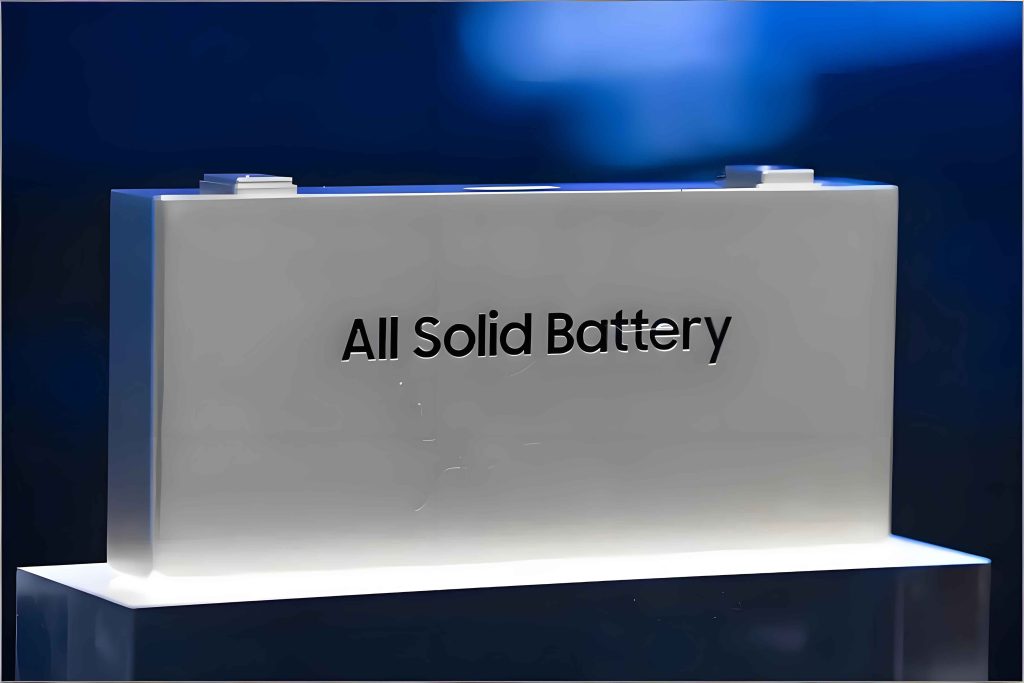
The core advantages of the solid-state battery are compelling. By employing a solid electrolyte, it achieves a wider electrochemical stability window, enabling the use of higher-voltage cathode materials. It also offers improved intrinsic safety, as the non-flammable solid electrolyte eliminates leakage risks and significantly raises the thermal runaway initiation temperature. Furthermore, the solid-state battery architecture allows for simplified cell stacking and internal series connections, reducing inactive mass and volume. The ultimate promise lies in enabling ultra-high-energy-density chemistries, particularly lithium metal anodes, which are impractical in liquid systems due to dendrite growth and safety concerns. The energy density ($$E_d$$) of a battery is fundamentally determined by its specific charge capacity ($$Q$$), operating voltage ($$V$$), and mass ($$m$$):
$$E_d = \frac{Q \times V}{m}$$
Therefore, enhancing the solid-state battery involves strategic improvements across all three variables.
Enhancing Energy Density: Material and Architectural Innovations
Simply replacing a liquid electrolyte with a solid one does not automatically increase energy density; the solid electrolyte’s higher density can even be detrimental. The true potential of the solid-state battery is unlocked by synergistically upgrading the entire cell chemistry and design.
Cathode Material Evolution
The cathode is a primary determinant of cell voltage and capacity. The wider electrochemical window of solid-state electrolytes allows the exploration of cathode materials that are unstable in liquid systems. The development trajectory points towards materials with higher specific capacities and operating voltages.
| Cathode Material | Theoretical Specific Capacity (mAh/g) | Average Voltage (V) | Key Challenges for Solid-State Battery Integration |
|---|---|---|---|
| High-Nickel NCM (Ni≥0.8) | ~220 | 3.7-3.8 | Interfacial instability, capacity fade, safety degradation with higher Ni content. |
| Lithium-Rich Manganese-Based (LMR) | 300-450 | 3.4-3.8 | Low electronic conductivity, severe interfacial side reactions, voltage fade. |
| High-Voltage Spinel (LiNi0.5Mn1.5O4) | ~147 | ~4.75 | Electrolyte oxidation at high voltage, transition metal dissolution. |
| Sulfur | 1675 | ~2.1 | Poor conductivity, large volume expansion, polysulfide shuttle. |
Currently, most solid-state battery prototypes utilize modified versions of established high-nickel layered oxides (e.g., NCM811). The long-term roadmap, however, targets lithium-rich manganese-based (LMR) and sulfur cathodes for their superior theoretical energy, despite significant hurdles remaining before commercialization.
Anode Material Revolution: From Silicon to Lithium Metal
The anode is the next frontier for energy density. Graphite, the commercial standard, is approaching its theoretical limit (372 mAh/g). The solid-state battery is seen as the key enabler for next-generation anodes.
| Anode Material | Theoretical Specific Capacity (mAh/g) | Volume Expansion | Main Challenges |
|---|---|---|---|
| Graphite | 372 | ~12% | Low capacity ceiling. |
| Silicon (Si) | 4200 (for pure Si) | >300% | Massive volume change, SEI instability, pulverization. |
| Silicon-Oxide (SiOx) | ~1500-2000 | >100% | Moderate volume change, low initial coulombic efficiency. |
| Lithium Metal (Li) | 3860 | Infinite (hostless) | Dendrite growth, unstable SEI, low cycling efficiency, safety risks. |
Silicon-based anodes (Si, SiOx, Si/C composites) offer a near-term path. Their integration into a solid-state battery can potentially mitigate the continuous SEI growth and electrolyte depletion caused by volume changes in liquid systems. However, managing the mechanical stress at the solid-solid interface remains critical.
The ultimate goal for the solid-state battery is the integration of a lithium metal anode. Its ultra-high capacity and low potential are unmatched. The solid electrolyte’s mechanical strength is theorized to suppress lithium dendrite penetration, a fatal flaw in liquid batteries. The energy density gain is profound, as illustrated by the following conceptual comparison of achievable ranges:
$$E_{d,\text{Graphite-based}} \approx 250-350 \text{ Wh/kg}$$
$$E_{d,\text{Si-based}} \approx 350-500 \text{ Wh/kg}$$
$$E_{d,\text{Li-metal-based}} > 500 \text{ Wh/kg}$$
Architectural Simplification: Cell Design and Manufacturing
The solid-state battery enables novel manufacturing processes. The absence of liquid electrolyte filling simplifies production. Bipolar stacking, where multiple cell units are stacked directly in series within a single package, becomes feasible. This eliminates the need for individual tabs and external connectors, increasing the cell’s volumetric energy density and reducing packaging cost. The formula for the effective energy density of a stacked cell must account for the reduced inactive components:
$$E_{d,\text{stack}} = \frac{n \cdot (Q \cdot V)_{\text{unit}}}{m_{\text{active, unit}} \cdot n + m_{\text{inactive, stack}}}}$$
where $$n$$ is the number of stacked units, and $$m_{\text{inactive, stack}}$$ is significantly lower than the sum of individual unit’s inactive mass. However, this approach intensifies the challenge of maintaining perfect interfacial contact between solid layers throughout charge-discharge cycles.
Solid-State Electrolyte Technology Roadmaps
The choice of solid-state electrolyte defines the technology path. Three main families dominate research, each with distinct trade-offs between ionic conductivity, stability, processability, and cost.
| Electrolyte Type | Ionic Conductivity at RT (S/cm) | Key Advantages | Key Disadvantages | Industrialization Status |
|---|---|---|---|---|
| Polymer (e.g., PEO-based) | ~10-5 (needs heating) | Flexible, good processability, low cost, compatible interfaces. | Low RT conductivity, narrow voltage window, low thermal stability. | Earliest commercialization (small-scale). Often used in composites. |
| Oxide (e.g., garnet LLZO, perovskite LLTO) | 10-5 – 10-4 | Excellent chemical/thermal stability, wide voltage window. | Rigid, high grain boundary resistance, severe solid-solid interface issues. | Leading path for semi-solid batteries (with ~5% liquid). High processing cost. |
| Sulfide (e.g., LGPS, argyrodite) | 10-3 – 10-2 | Highest RT conductivity, good mechanical properties (soft). | Extremely air-sensitive (H2S emission), narrow voltage window, expensive raw materials. | Most challenging. Advanced R&D in Japan/Korea. Requires stringent dry-room conditions. |
The ionic conductivity is the critical parameter governing power performance. The relationship between conductivity ($$\sigma$$), ion mobility ($$\mu$$), and charge carrier concentration ($$n$$) is given by:
$$\sigma = n \cdot e \cdot \mu$$
where $$e$$ is the elementary charge. Sulfides achieve high $$\sigma$$ through high $$\mu$$, while polymers suffer from low $$\mu$$ at room temperature. The thermal stability advantage of solid-state batteries is stark. The onset temperature for thermal runaway in a solid-state battery with oxide electrolytes can exceed 600°C, compared to ~200°C for conventional liquid electrolytes, fundamentally altering the safety equation.
Market Demand Analysis: Where Will the Solid-State Battery Fit?
The adoption of solid-state battery technology will be market-driven, as different applications prioritize different battery characteristics: energy density, power, safety, cycle life, and cost.
1. Electric Vehicles (EVs) / Power Battery Market: This is the largest potential market. EVs demand high energy density for range, fast charging capability, superior safety, long cycle life, and ultimately, low cost. The incumbent liquid lithium-ion technology is rapidly iterating, narrowing the window for solid-state battery entry. In the short term, semi-solid batteries offer a compromise, improving safety while leveraging existing manufacturing lines. Full commercial traction depends on overcoming cost and longevity hurdles.
2. Energy Storage Systems (ESS): ESS, crucial for grid stability and renewable integration, prioritizes long cycle life, safety, and very low cost. Energy density is often secondary. While the intrinsic safety of a solid-state battery is highly attractive for ESS, its current high cost and unproven ultra-long cycle life are significant barriers. Adoption may begin in niche, safety-critical stationary applications before broader grid-scale use.
3. Consumer Electronics and High-End Equipment: This segment is likely the earliest adopter for the solid-state battery. Devices like smartphones, laptops, and wearables demand high volumetric energy density, slim form factors, and safety. The solid-state battery’s potential for flexible form factors and higher energy density is a perfect fit. Similarly, high-end applications like drones, maritime equipment, and aerospace prioritize performance and safety over cost. The ability of a solid-state battery to maintain functionality even under mechanical compromise is a decisive advantage in these fields.
Investment Logic and Technology Iteration Pathway
The development of the solid-state battery is not a single leap but a multi-stage evolution, closely tied to material advancements. The investment logic must track this phased trajectory and anchor on critical industry milestones.
Phased Technology Iteration Path
Phase 1 (Present ~ 2025): Semi-Solid Battery + Silicon Anode. This hybrid approach mitigates the interfacial resistance and conductivity issues of pure solid-state systems by retaining a small amount of liquid electrolyte (~5%). It allows for the introduction of silicon-based anodes (Si/C, SiOx) to boost energy density while utilizing near-conventional manufacturing processes. This phase is about proving reliability and generating positive feedback from early adopters (e.g., in premium EVs or electronics).
Phase 2 (~2025 – 2027): All-Solid-State Battery (ASSB). Building on semi-solid manufacturing and interface learnings, the liquid component is removed. The electrolyte becomes a true solid-state separator. The electrode pair may remain “High-Ni Cathode / Si-based Anode.” The core challenge is solving the fundamental solid-solid interface problem to achieve competitive rate capability and cycle life.
Phase 3 (~2027+): Integration of Lithium Metal Anode. With a stable and conductive solid-state electrolyte interface, the anode can transition from silicon to lithium metal. This is the breakthrough moment for energy density, potentially enabling cells exceeding 500 Wh/kg. Success depends on completely suppressing dendrites and ensuring stable long-term cycling.
Phase 4 (~2030+): Novel Cathode Adoption. The final material upgrade involves integrating ultra-high-capacity cathodes like lithium-rich manganese-based (LMR) or sulfur. This completes the full material innovation cycle for the solid-state battery, pushing energy densities toward their theoretical maxima.
Critical Investment Time Nodes
Given the technology-driven nature of the solid-state battery industry, its progress is marked by specific validation points that de-risk or accelerate investment.
Node 1: 2025 – The Semi-Solid Feedback Inflection Point. By 2025, multiple automakers and OEMs are expected to have completed testing and initial pilot production of semi-solid battery packs. Widespread positive feedback on performance, safety, and manufacturability would trigger significant capital allocation toward scaling production capacity. Negative feedback would prolong the dominance of advanced liquid lithium-ion batteries and delay the solid-state roadmap.
Node 2: 2027 – The First Full-Scale Commercialization Claim. Several leading players, most notably Toyota with its sulfide-based solid-state battery, have announced targets for commercial vehicle integration around 2027-2028. The successful launch of a credible, mass-market EV featuring a solid-state battery with significantly enhanced range (e.g., a claimed 2x improvement) would be a watershed moment. It would validate a specific technical pathway, disrupt competitive dynamics, and force the entire industry to re-evaluate its strategy. Failure to meet these announced targets would signal persistent technical hurdles and likely shift investor sentiment and timelines.
In conclusion, the solid-state battery represents a paradigm shift with a compelling value proposition centered on safety and energy density. Its path to market dominance is complex, navigated through competing electrolyte chemistries and a staged material innovation process. Investment logic must therefore be dynamic, focusing on companies with robust solutions to the interfacial challenge, scalable manufacturing plans, and strategic positioning to capture value in early-adopting markets like consumer electronics and premium electric vehicles, while closely monitoring the industry’s progress against the critical 2025 and 2027 milestones.