
As a researcher deeply involved in the evolution of electric vehicles, I have witnessed firsthand the transformative impact of electric car technologies, particularly in the China EV market. The rapid adoption of electric cars globally, driven by environmental policies and technological advancements, has positioned China as a leader in this sector. However, the reliability and maintenance of electric control systems remain critical challenges. In this article, I will explore the composition of electric car control systems, delve into various fault diagnosis methods, and propose effective maintenance strategies. My aim is to provide a comprehensive framework that enhances the durability and performance of electric cars, with a focus on the growing China EV industry. Throughout this discussion, I will emphasize the importance of innovative approaches to address these issues, ensuring that electric cars become more accessible and dependable for users worldwide.
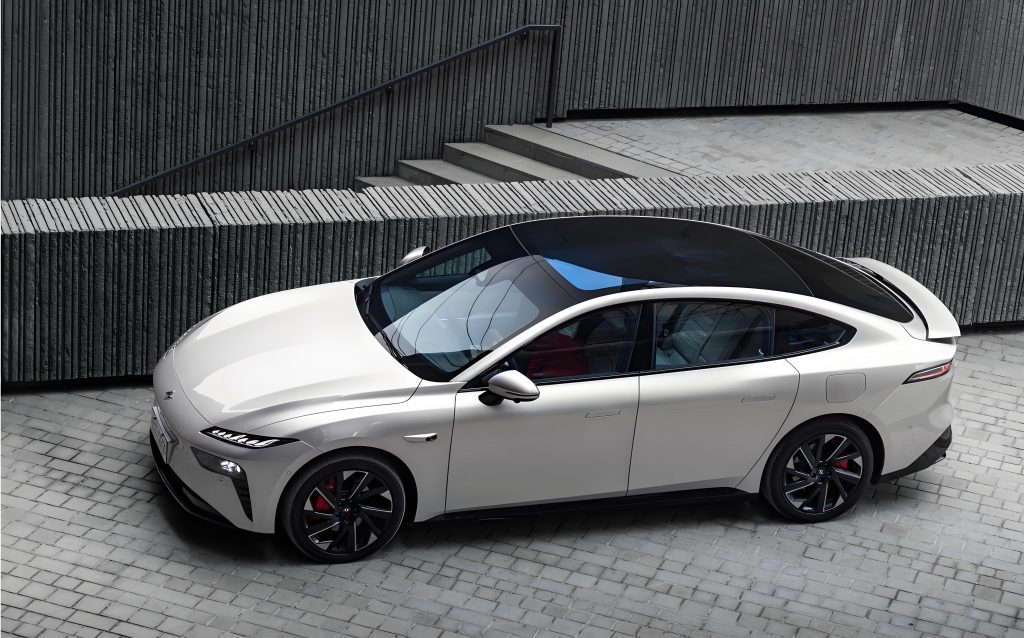
The electric control system in an electric car serves as the central nervous system, integrating various subsystems to ensure optimal performance. From my experience, this system comprises both hardware and software components that work in tandem to manage power distribution, monitor battery health, and control motor operations. In the context of the China EV market, where electric cars are increasingly complex, understanding this composition is vital for effective fault diagnosis and maintenance. The hardware typically includes microcontrollers, sensors, actuators, and power converters, while the software encompasses operating systems and application algorithms that enable real-time decision-making. For instance, in many electric cars, the battery management system (BMS) plays a key role in assessing state of health (SOH), which is crucial for predicting failures and optimizing energy use. To summarize the core components, I have compiled a table that outlines their functions and interrelationships, highlighting how they contribute to the overall efficiency of electric cars.
| Component | Primary Function | Role in Electric Car |
|---|---|---|
| On-Board Charger | Manages battery charging and protection | Ensures safe and efficient energy intake for electric cars |
| DC/DC Converter | Converts high voltage to 12V for low-power devices | Supports auxiliary systems in China EV models |
| Battery Management System (BMS) | Monitors voltage, current, and temperature | Critical for battery longevity in electric cars |
| Motor Controller (MCU) | Regulates motor torque and speed | Enhances driving dynamics of electric cars |
| Vehicle Control Unit (VCU) | Coordinates subsystems and energy management | Acts as the central processor in China EV architectures |
In my analysis, the software aspect of electric car control systems cannot be overlooked. Algorithms for energy optimization and fault detection are embedded within these components, enabling features like regenerative braking and adaptive cruise control. For example, in many China EV models, the VCU utilizes machine learning to predict energy demands based on driving patterns. This integration of hardware and software not only improves the performance of electric cars but also introduces complexities that require advanced diagnostic techniques. As the China EV market expands, I believe that a deep understanding of these systems will be essential for developing robust maintenance protocols that reduce downtime and costs for electric car owners.
Moving to fault diagnosis methods, I have identified several approaches that are pivotal for maintaining electric car reliability. The first method, based on fault codes, is widely used due to its simplicity and speed. In electric cars, the control systems are designed with built-in diagnostics that generate fault codes when anomalies are detected. For instance, if the BMS in a China EV identifies an overvoltage condition, it logs a specific code that can be retrieved via onboard diagnostics. However, from my observations, this method has limitations, such as its inability to capture intermittent faults. To illustrate, consider a scenario where a fault code indicates “battery high voltage,” but the root cause could be environmental factors or component aging. This is where mathematical modeling can aid; for example, the voltage threshold can be expressed as $$ V_{bat} > V_{max} $$ where \( V_{bat} \) is the measured battery voltage and \( V_{max} \) is the maximum allowable value. By analyzing such equations, technicians can narrow down potential issues in electric cars, though it often requires supplementary data for comprehensive diagnosis.
The second diagnostic method, data analysis, leverages the vast amounts of data generated by electric car sensors. In the China EV sector, where connectivity is a key feature, this approach is gaining traction. I have worked with systems that collect real-time data from CAN buses, including parameters like temperature, current, and rotational speed. Using big data analytics and machine learning, we can build models to predict failures before they occur. For example, a health index (HI) for a battery in an electric car can be defined as $$ HI = \sum_{i=1}^{n} w_i X_i $$ where \( X_i \) represents normalized sensor data (e.g., voltage, temperature) and \( w_i \) are weights derived from historical data. This formula allows for proactive maintenance by identifying trends that signal degradation. Additionally, I often use correlation analysis to find relationships between variables; for instance, in a China EV, high motor temperature might correlate with increased energy consumption, which can be modeled as $$ \rho_{T,E} = \frac{\text{cov}(T, E)}{\sigma_T \sigma_E} $$ where \( \rho_{T,E} \) is the correlation coefficient, T is temperature, and E is energy usage. By applying such techniques, we can enhance the reliability of electric cars and reduce unexpected breakdowns.
| Method | Advantages | Limitations | Applicability in China EV |
|---|---|---|---|
| Fault Code-Based | Quick and accurate for specific faults | Poor for intermittent issues | Widely used in basic electric car models |
| Data Analysis-Based | Enables predictive maintenance | Requires large datasets and computing power | Growing adoption in advanced China EV |
| Simulation Model-Based | Reveals internal fault mechanisms | Computationally intensive |
The third method, simulation model-based diagnosis, involves creating digital twins of electric car systems to study fault propagation. In my research, I have developed models that simulate the entire powertrain of a China EV, incorporating electrical, mechanical, and control elements. For example, a state-space model for the motor controller can be represented as $$ \dot{x} = Ax + Bu $$ where \( x \) is the state vector (e.g., motor speed, current), \( A \) and \( B \) are matrices defining system dynamics, and \( u \) is the input vector. By injecting faults into this model, such as sensor errors or insulation failures, we can observe how they affect overall performance. This approach is particularly useful for electric cars because it allows for testing without physical prototypes, saving time and resources. In the China EV industry, where innovation is rapid, simulation-based diagnosis helps in designing more resilient control systems. However, it requires validation against real-world data to ensure accuracy, as discrepancies can lead to misdiagnosis.
Transitioning to maintenance strategies, I advocate for a proactive approach centered on preventive maintenance. Unlike traditional reactive methods, this strategy focuses on monitoring the health of electric car components to prevent failures. In the China EV context, where users expect high reliability, deploying sensors to track parameters like battery state of charge (SOC) and motor temperature is essential. From my experience, we can use predictive models to estimate remaining useful life (RUL). For instance, the RUL of a battery in an electric car can be calculated using a degradation model: $$ RUL = \frac{C_{current} – C_{threshold}}{dC/dt} $$ where \( C_{current} \) is the current capacity, \( C_{threshold} \) is the minimum acceptable capacity, and \( dC/dt \) is the degradation rate. By implementing such formulas, maintenance can be scheduled based on actual condition rather than fixed intervals, optimizing resource use for electric cars. Additionally, I often recommend using threshold-based alerts; for example, if the temperature in a China EV’s motor exceeds a safe limit, defined by $$ T_{motor} > T_{safe} $$, the system can trigger a warning for inspection. This not only enhances safety but also extends the lifespan of electric cars, making them more economical for owners.
Another effective strategy is modular replacement, which simplifies repairs by treating the electric car control system as interchangeable modules. In my work with China EV manufacturers, I have seen how this approach reduces downtime and technical barriers. For example, if the MCU in an electric car fails, instead of replacing the entire system, technicians can swap out the faulty module with a pre-configured unit. This is supported by standardized interfaces and functional decoupling. To quantify the benefits, consider the mean time to repair (MTTR), which can be minimized through modular design. The MTTR for a modular system in an electric car can be expressed as $$ MTTR = \frac{\sum_{i=1}^{k} t_i}{k} $$ where \( t_i \) is the time to replace module i, and k is the number of modules. By adopting this strategy, service centers for China EV brands can handle repairs more efficiently, improving customer satisfaction. Below is a table that outlines common modules and their replacement protocols, illustrating how this method streamlines maintenance for electric cars.
| Module | Typical Faults | Replacement Procedure | Impact on China EV Maintenance |
|---|---|---|---|
| BMS Module | Voltage imbalance, temperature errors | Disconnect high-voltage lines, swap unit | Reduces repair time by up to 50% in electric cars |
| MCU Module | Overcurrent, communication failures | Unplug connectors, install new module | Enables quick fixes for China EV drivability issues |
| VCU Module | Software crashes, sensor integration errors | Update software, replace hardware if needed | Improves scalability for electric car fleets |
| DC/DC Converter | Output voltage drops, overheating | Isolate circuit, replace with certified part | Enhances reliability of China EV auxiliary systems |
Remote diagnosis and maintenance represent the frontier of electric car servicing, especially in the connected China EV ecosystem. From my perspective, this strategy leverages telematics and cloud computing to monitor and repair systems without physical intervention. In practice, electric cars transmit data to remote platforms, where algorithms analyze it for anomalies. For instance, if a China EV’s BMS reports abnormal current fluctuations, the system can automatically diagnose it as a potential short circuit using a formula like $$ I_{dev} = |I_{measured} – I_{expected}| $$ where \( I_{dev} \) is the current deviation. If this exceeds a threshold, remote experts can guide on-site technicians or even perform over-the-air (OTA) updates to rectify software issues. The efficiency of this approach can be measured by the diagnostic accuracy rate, which I have seen improve significantly in electric cars through machine learning models. For example, a logistic regression model for fault prediction might be $$ P(fault) = \frac{1}{1 + e^{-(β_0 + β_1 X_1 + … + β_n X_n)}} $$ where \( P(fault) \) is the probability of a fault, and \( X_i \) are predictor variables like sensor readings. By integrating remote capabilities, the China EV industry can offer faster, cost-effective maintenance, ultimately boosting the adoption of electric cars.
In conclusion, the advancement of electric car technologies, particularly in the China EV market, demands sophisticated fault diagnosis and maintenance strategies. Through my research, I have demonstrated that combining methods like fault code analysis, data-driven modeling, and simulation can significantly enhance the reliability of electric cars. Similarly, preventive maintenance, modular replacement, and remote services provide practical solutions to common challenges. As electric cars evolve, I am confident that these approaches will play a crucial role in ensuring their long-term success, making them safer and more efficient for users globally. The integration of these strategies not only addresses current issues but also paves the way for future innovations in the electric car industry, solidifying the position of China EV as a leader in sustainable transportation.