
The pursuit of advanced energy storage is one of the defining scientific and engineering challenges of our time. As a researcher deeply immersed in this field, I view the transition from conventional lithium-ion batteries (LIBs) to solid-state batteries as not merely an incremental improvement, but a fundamental paradigm shift. The promise is compelling: a leap in energy density coupled with intrinsic safety by eliminating flammable liquid electrolytes. However, the journey from laboratory promise to commercial reality is paved with intricate materials science puzzles and formidable engineering hurdles. In this article, I will articulate my perspective on the core challenges and potential pathways forward for solid-state battery technology, drawing from the ongoing global research effort.
The limitations of current LIBs are well-documented. Their energy density is asymptotically approaching theoretical limits dictated by the chemistry of layered oxide cathodes and graphite anodes. More critically, the organic liquid electrolytes they rely upon are thermodynamically unstable at the operating potentials of these electrodes, leading to continuous degradation and, under abuse conditions, thermal runaway. The solid-state battery concept directly addresses these flaws. By replacing the liquid with a solid ion conductor, we inherently remove the flammable component. Furthermore, this unlocks the possibility of using ultra-high-capacity electrodes like lithium metal, which is impractical with liquid electrolytes due to dendrite growth and reactivity.
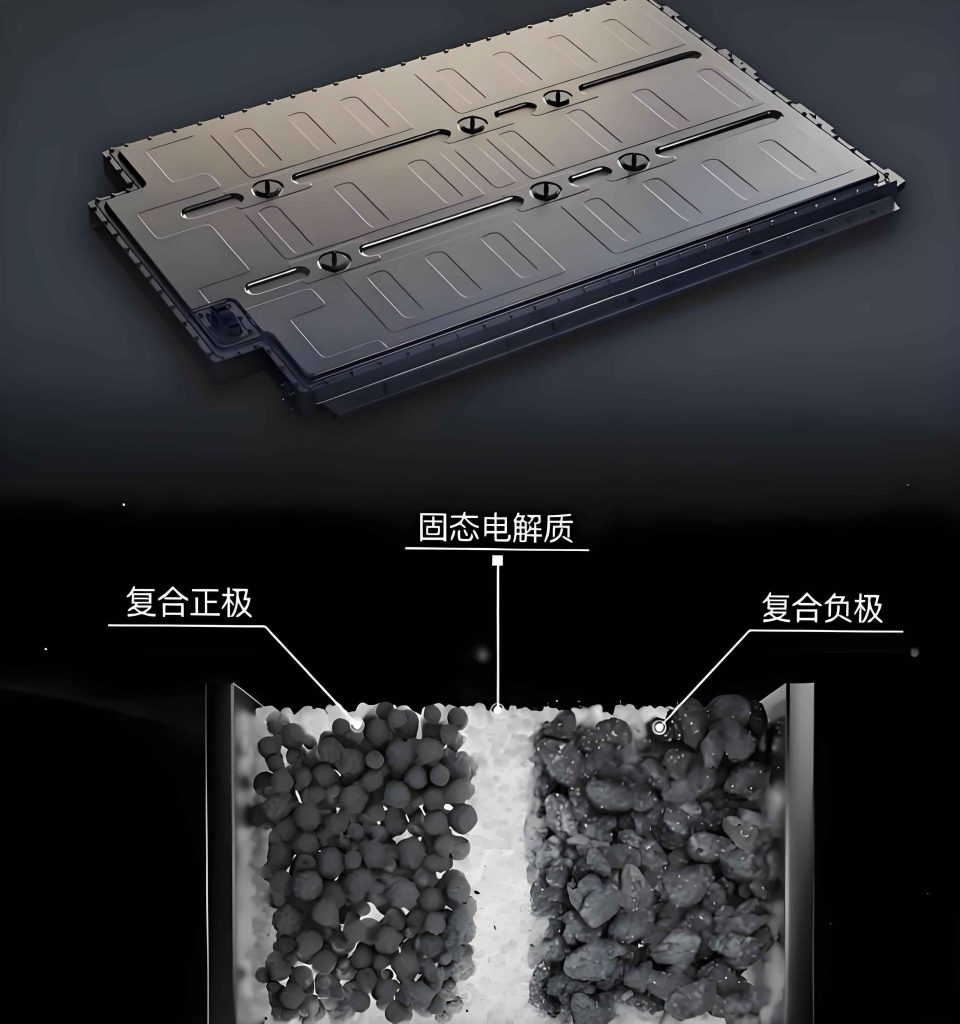
However, proclaiming the superiority of the solid-state battery is facile without confronting the profound challenges that have hindered its development for decades. At its heart, the solid-state battery is a complex, multi-layered system where every interface and bulk property is critical. The triumvirate of challenges can be summarized as: the search for the “perfect” solid electrolyte, the mastery of solid-solid interfaces, and the development of scalable manufacturing processes. Let us delve into each.
The Solid Electrolyte: The Heart of the Matter
The solid-state electrolyte (SSE) is the cornerstone. An ideal SSE must satisfy a daunting list of requirements simultaneously: high ionic conductivity (> 1 mS cm⁻¹ at room temperature), negligible electronic conductivity, excellent electrochemical stability against both the low-potential anode and high-potential cathode, mechanical robustness yet processability, environmental stability, and low cost. No single material discovered to date ticks all these boxes. Instead, the field has diverged into several material families, each with a distinct trade-off profile.
We can categorize the major contenders and their key properties as follows:
| Electrolyte Class | Exemplary Composition | Room-Temp Ionic Conductivity (σ) | Key Advantages | Critical Disadvantages |
|---|---|---|---|---|
| Sulfide | Li9.54Si1.74P1.44S11.7Cl0.3 | ~25 mS cm⁻¹ | Highest σ; soft, good interfacial contact | Poor air stability, releases H2S; expensive precursors |
| Oxide | Li7La3Zr2O12 (LLZO) | ~0.1-1 mS cm⁻¹ | Good air stability; wide electrochemical window | Brittle, high grain boundary resistance; surface Li2CO3 formation |
| Halide | Li3YCl6, Li2ZrCl6 | ~0.5-2 mS cm⁻¹ | High σ; good oxidative stability (>4V); deformable | Moisture sensitive; reducible by Li metal; cost of rare-earth metals |
| Polymer | PEO-LiTFSI | ~10-6-10-4 S cm⁻¹ (RT) | Excellent flexibility; easy processing; low cost | Low σ at RT; narrow electrochemical window; poor thermal stability |
| Anti-Perovskite | Li3OCl | ~10-4-10-3 S cm⁻¹ | Excellent Li metal stability; simple composition | Moderate σ; stability in humid air is questionable |
The ionic conductivity, often the first metric discussed, follows Arrhenius-type behavior:
$$ \sigma T = A \exp\left(-\frac{E_a}{k_B T}\right) $$
where $\sigma$ is conductivity, $T$ is temperature, $A$ is the pre-exponential factor, $E_a$ is the activation energy for ion hopping, and $k_B$ is Boltzmann’s constant. While sulfide electrolytes boast impressive room-temperature values, their practical deployment is hamstrung by processing challenges. The need for inert atmospheres throughout cell fabrication adds significant cost and complexity. Oxide electrolytes like LLZO are more stable but require high-temperature sintering (>1000°C) to achieve low grain boundary resistance, which is incompatible with other cell components. Furthermore, their reaction with atmospheric CO₂ forms a resistive Li₂CO₃ layer:
$$ \text{LLZO} + x\text{CO}_2 \rightarrow \text{LLZO-surface} + \text{Li}_2\text{CO}_3 $$
This layer must be meticulously removed before a low-resistance interface with Li metal can be formed.
From my viewpoint, composite electrolytes represent a highly promising, pragmatic direction. By combining materials, we aim to synergize their advantages. For instance, embedding LLZO particles within a polymer matrix (PEO-LiTFSI) can improve the mechanical strength and Li⁺ transference number of the polymer while lowering the sintering temperature and improving interfacial contact for the oxide. The effective conductivity of such a composite can be modeled by effective medium theory, such as the Maxwell-Garnett equation for dilute inclusions:
$$ \sigma_{\text{eff}} = \sigma_m \left[ \frac{\sigma_i + 2\sigma_m + 2f(\sigma_i – \sigma_m)}{\sigma_i + 2\sigma_m – f(\sigma_i – \sigma_m)} \right] $$
where $\sigma_{\text{eff}}$, $\sigma_m$, and $\sigma_i$ are the conductivities of the composite, matrix, and inclusions, respectively, and $f$ is the volume fraction of inclusions. The quest for the ideal solid-state electrolyte is therefore evolving from a search for a single miracle material to the intelligent design of composite architectures.
Interfacial Engineering: The Battlefield
If the solid electrolyte is the heart, the interfaces are the vital arteries and capillaries. In a liquid system, the electrolyte flows and conforms, maintaining intimate contact. In a solid-state battery, we have rigid, point-to-point contacts that are easily lost due to volume changes during cycling. The interfacial challenges are multifaceted and differ fundamentally at the cathode and anode.
At the cathode, the composite cathode (active material, SSE, conductive carbon) is a complex three-phase mixture. Key issues include:
- Space Charge Layer Formation: When two different ionic conductors (the cathode active material, e.g., NMC, and the SSE) are brought into contact, a difference in chemical potential for Li⁺ can lead to ion redistribution, creating a space charge layer that depletes or accumulates Li⁺ at the interface, severely hindering transfer. This is particularly severe for sulfide electrolytes paired with oxide cathodes.
- Electrochemical/Chemical Instability: Most high-voltage cathodes (>4.2 V vs. Li⁺/Li) are not stable against SSEs, especially sulfides. This leads to the growth of a high-resistance interphase, analogous to the CEI in liquid cells but often more resistive. The decomposition reaction can be generic: $\text{Cathode} + \text{SSE} \rightarrow \text{Interphase Products (Li}_2\text{S, Li}_3\text{P, transition metal sulfides, etc.)}$.
- Mechanical Decoupling: Cathode materials like NMC can undergo significant unit cell volume changes (2-7%) during (de)lithiation. In a rigid solid-state system, this can break contact, leading to “dead” active material and rapid capacity fade.
The primary strategy to combat these issues is interfacial coating. An ideal coating should be: (i) an excellent Li⁺ conductor, (ii) electronically insulating, (iii) chemically stable against both the cathode and SSE, and (iv) mechanically compliant. Materials like LiNbO₃, Li₃PO₄, and Li₂ZrO₃ have been explored for oxide cathodes. For sulfide SSEs, thin layers of more stable argyrodites or even halides are being investigated. The challenge is applying these coatings uniformly and conformally at nanoscale thicknesses on cathode particles, a significant materials processing hurdle.
At the anode, the challenges are, if anything, more severe, especially when targeting lithium metal.
- Lithium Dendrite Penetration: This remains the “Achilles’ heel.” Contrary to early hopes, most SSEs are not mechanically impervious to Li filaments. Dendrites can propagate through grain boundaries, pores, or even through the bulk of polycrystalline SSEs if they possess any electronic conductivity. The critical current density (CCD) before short-circuit is a key metric, but it is highly dependent on stack pressure and electrolyte thickness. The driving force is the local current density, which is related to the overpotential ($\eta$) by the Butler-Volmer equation. Non-uniform contact creates “hot spots” of high local current, initiating dendrites.
- Interfacial Instability: Very few SSEs are thermodynamically stable against Li metal (potential ~ -3.04 V vs. SHE). They form a reduction interphase. Whether this interphase is protective (like SEI in liquids) or continuously growing is crucial. For instance, LLZO can form a Li-Al-O layer if Al-doped, which is somewhat protective, while many sulfides form continuously growing mixed ionic/electronic conducting interphases (MCI) that are detrimental.
- Void Formation: During stripping (discharge), Li⁺ is removed from the Li metal/SSE interface. If the Li⁺ flux cannot be compensated by Li diffusion from the bulk or if the contact is lost, voids form. These voids increase local current density during subsequent plating, accelerating dendrite initiation.
Strategies here are diverse. Applying a thin interfacial layer (e.g., Au, Si, Al₂O₃ via ALD) can improve wettability and homogeneity of Li deposition. Using composite anodes, where Li is infused into a 3D host (e.g., carbon felt, porous metal), can reduce the effective current density and accommodate volume change. The concept of “anode-free” solid-state batteries, where Li is plated directly from the cathode onto a bare current collector, is extremely attractive for energy density but magnifies all these interfacial challenges, as there is no Li reservoir to compensate for inefficiencies.
| Interface Location | Primary Challenge | Underlying Physics/Chemistry | Mitigation Strategies |
|---|---|---|---|
| Cathode|SSE | High resistance, side reactions | Space charge layer; High-voltage decomposition; $ \Delta G < 0 $ for reaction | Dielectric/ion-conducting coatings (LiNbO₃, Li₃PO₄); Composite cathode design with compliant phases |
| SSE|Anode (Li Metal) | Dendrite penetration, unstable interphase | Local current density hotspots ($J_{local}$); Unfavorable interfacial energy; Void formation during stripping | Interfacial wetting layers; 3D Li hosts; Stack pressure management; Stable artificial SEI |
| Grain Boundaries (within SSE) | Low ionic conductivity, dendrite pathways | High activation energy $E_a$ for ion hop; Preferential Li reduction at electronic defects | Grain boundary engineering (doping, sintering aids); Single crystal or glassy electrolytes |
Constructing the Full Solid-State Battery Cell: From Powder to Pouch
Exciting half-cell or symmetric cell data published in academic journals is necessary but insufficient. The true test of solid-state battery technology is the fabrication and cycling of practical multi-layer pouch or prismatic cells with high areal loadings (>3 mAh cm⁻²), minimal excess lithium, and lean electrolyte content. This transition from materials science to electrochemical engineering is where many challenges converge.
Manufacturing processes for solid-state batteries are fundamentally different from slurry-casting used for LIBs. Key considerations include:
- Processing Atmosphere: Sulfide and some halide SSEs require strict moisture-free (e.g., dew point < -50°C) and often oxygen-free environments throughout the entire electrode and cell assembly line. This is a major capital and operational expense.
- Forming Dense Layers: To achieve high volumetric energy density and prevent dendrites, the SSE separator layer must be dense and thin (<100 µm). This typically requires isostatic pressing at high pressures (tons per cm²). Integrating this into a continuous roll-to-roll process is a significant engineering challenge.
- Cathode Composite Fabrication: How does one mix cathode active material, SSE, and conductive carbon to form a homogeneous, percolating network for both ions and electrons? Dry powder processes are being explored to avoid solvent incompatibility. Wet processes using non-reactive binders and solvents are also in development.
Furthermore, the operational requirements of a solid-state battery differ. Many lab-scale cells require the application of external stack pressure (tens of MPa) during cycling to maintain interfacial contact. Designing a cell casing that applies and maintains such pressure reliably over thousands of cycles and varying temperatures is non-trivial. The holy grail is to design electrode and electrolyte architectures that are pressure-resilient.
From a system performance perspective, we must evaluate metrics beyond specific energy and cycle life:
- Rate Capability: The power density of a solid-state battery is often limited by solid-state diffusion in the cathode composite and interfacial charge transfer kinetics. The total cell impedance ($R_{\text{cell}}$) can be expressed as a sum of contributions:
$$ R_{\text{cell}} = R_{\text{SSE,bulk}} + R_{\text{SSE,gb}} + R_{\text{cathode|SSE}} + R_{\text{SSE|anode}} + R_{\text{cathode composite}} $$
Each term must be minimized. - Wide-Temperature Operation: Polymer-based solid-state batteries struggle below 60°C. Inorganic systems have activation energies; their performance declines at sub-zero temperatures. Designing interfaces that remain stable and conductive across -30°C to 80°C is critical for automotive applications.
- Safety Re-assessment: While eliminating liquid electrolyte removes a primary ignition source, solid-state batteries are not inherently “safe” under all conditions. Internal short circuits from dendrites, exothermic reactions between electrodes and SSE, and the energy release from a lithium metal fire if the cell is breached are all risks that must be rigorously quantified.
Future Perspectives and Concluding Thoughts
The development of the solid-state battery is a marathon, not a sprint. It requires sustained, collaborative effort across disciplines—from fundamental solid-state ionics and computational materials discovery to electrochemical engineering and manufacturing science. Based on the current trajectory, I see several key focus areas for the coming decade:
1. Material Innovation Beyond Incrementalism: We need breakthroughs in SSE design. This could involve new structural families (e.g., complex hydrides, new halides), “designer” composite electrolytes where the morphology and distribution of phases are meticulously controlled, or the development of single-ion conducting polymers with high Li⁺ transference numbers ($t_{Li^+} \approx 1$). Machine learning and high-throughput computational screening will be invaluable in navigating the vast chemical space.
2. Deep Interfacial Understanding: We must move beyond phenomenological descriptions of interface failure. In situ and operando techniques—such as cryo-electron microscopy, neutron depth profiling, X-ray tomography, and impedance spectroscopy deconvolution via the distribution of relaxation times (DRT) method—are essential to observe interfaces evolve under operating conditions. This will allow us to design interfaces from first principles.
3. Holistic Cell and System Design: The future solid-state battery may not look like a simple stack of layers. Graded interfaces, architectured electrodes with channels for stress relief, and integrated current collectors may be necessary. The choice of anode may also diverge: while lithium metal offers the ultimate energy density, silicon-based or even graphite-based anodes with suitable SSEs could offer a safer, more immediately manufacturable path to better solid-state batteries.
4. The Cost Imperative: Any new battery technology must ultimately compete on $/kWh. The use of expensive elements (Ge, Ga, In, rare earths) in many promising SSEs is a major concern. Synthesis routes must be developed that use abundant precursors and low-energy processes. The total cost of ownership, including the safety and longevity benefits of a solid-state battery, will be the final arbiter.
In conclusion, the promise of the solid-state battery as a safe, high-energy-density storage device remains undimmed. The path forward is now clearer than ever, though no less steep. It is a path defined not by a single “eureka” moment, but by the systematic, relentless solving of interconnected scientific and engineering problems. The transition to solid-state batteries represents one of the most significant material challenges in energy storage today, and its successful resolution will have a transformative impact on how we power our world. The collective effort of the global research community continues to bring the vision of a practical, high-performance solid-state battery closer to reality with each passing day.