
As an automotive market analyst, I have dedicated significant effort to understanding the evolving landscape of hybrid vehicles. The strategic shift from a sole focus on pure electric vehicles to a multi-technology approach has placed hybrid cars at a pivotal juncture. This analysis delves into the current market characteristics of hybrid cars and explores the underlying consumer demands through empirical research. The goal is to forecast future trajectories and support strategic objectives for the new energy vehicle sector. The insights presented here are derived from market data analysis and a dedicated consumer survey, aiming to provide a comprehensive view of the hybrid car ecosystem.
The hybrid car market is broadly segmented into Hybrid Electric Vehicles (HEVs) and Plug-in Hybrid Electric Vehicles (PHEVs). Each represents a distinct technological pathway with unique value propositions. HEVs optimize fuel efficiency through regenerative braking and engine assistance, while PHEVs offer extended electric-only range and external charging capability, serving as a bridge to full electrification. Understanding these technical nuances is crucial for analyzing market performance and consumer adoption patterns.
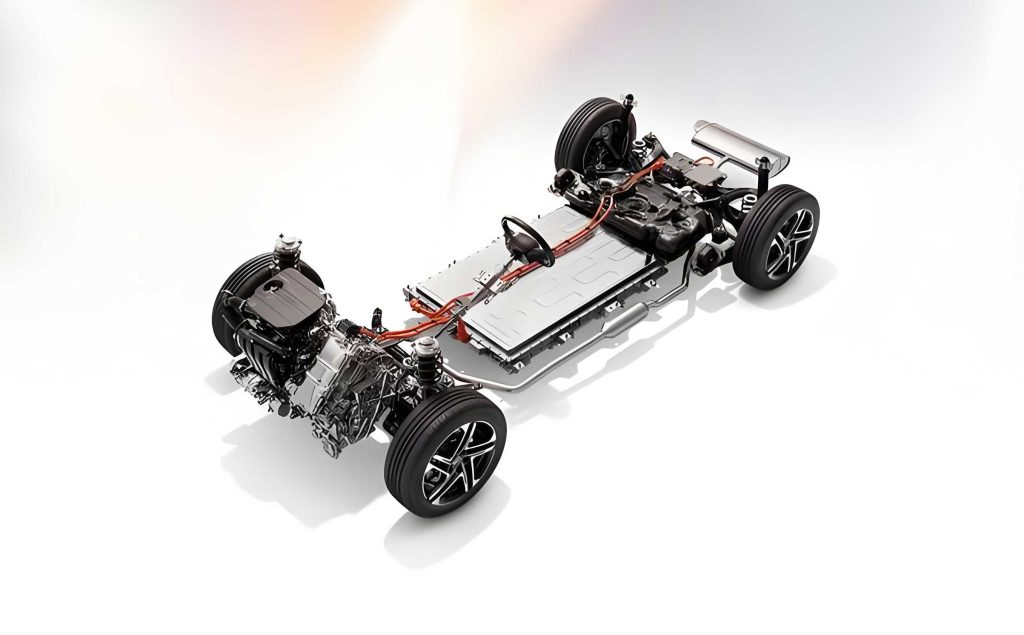
The overall new energy vehicle market exhibits robust growth, with hybrid cars playing an increasingly vital role. The market penetration of hybrid cars is influenced by policy, technology cost, and consumer acceptance. To quantify market evolution, I have developed a growth model. The projected market share $M_t$ at time $t$ can be expressed as a function of policy incentive $P_t$, technology advancement rate $A_t$, and consumer preference index $C_t$:
$$ M_t = M_0 \cdot e^{(k_1 P_t + k_2 A_t + k_3 C_t)t} $$
where $M_0$ is the initial market share, and $k_1$, $k_2$, $k_3$ are elasticity coefficients specific to the hybrid car segment.
Market Characteristics of HEVs and PHEVs
The market for hybrid cars shows divergent trends between HEVs and PHEVs. HEV sales, while growing, still constitute a small fraction of the traditional internal combustion engine vehicle market. In contrast, PHEVs are a significant component of the new energy vehicle portfolio, benefiting from direct policy support. The competitive landscape is also markedly different.
| Metric | HEV Market | PHEV Market |
|---|---|---|
| Dominant Brand Origin | Japanese (Toyota, Honda) | Chinese Domestic Brands |
| Key Competitors | Limited; Japanese brand hegemony | Diverse; Domestic brands lead, European brands growing |
| Primary Vehicle Body Type | Sedan (dominant), growing MPV segment | SUV and Sedan (co-dominant) |
| Typical Price Concentration | Trending towards 200k-250k RMB | Increasingly diversified price brackets |
| Policy Driver | Corporate Average Fuel Consumption (CAFC) credits, Technology Roadmap | New Energy Vehicle (NEV) subsidy & credit system, charging infrastructure |
The sales volume $S_v$ for a given hybrid car type can be broken down by price segment $i$ and brand $j$:
$$ S_v = \sum_{i=1}^{n} \sum_{j=1}^{m} (P_{ij} \cdot D_{ij}) $$
where $P_{ij}$ is the price attractiveness factor for segment $i$ and brand $j$, and $D_{ij}$ is the corresponding market demand coefficient. For HEVs, $P_{ij}$ is highly correlated with Japanese brand presence, whereas for PHEVs, it is more dispersed.
In-Depth Consumer Demand Analysis
To ground the market analysis in real-world behavior, I conducted a survey targeting 600 existing and potential hybrid car owners. The sample included 330 PHEV-focused respondents (30 potential) and 270 HEV-focused respondents (30 potential). The analysis covers demographic profiles, purchase motivations, vehicle perceptions, and consumption attitudes.
Consumer Profile and Psychographics
The demographic and economic profiles of hybrid car consumers reveal distinct patterns. The data is summarized in the following composite table, which highlights key differences between existing owners and potential buyers for each hybrid car type.
| Attribute | HEV Existing Owners | HEV Potential Buyers | PHEV Existing Owners | PHEV Potential Buyers |
|---|---|---|---|---|
| Primary Income Range (RMB) | 150k-200k (23% concentration) | 150k-200k (30% concentration) | 200k-250k (25% concentration) | 150k-200k (47% concentration) |
| Common Employment Sector | Private/SMEs (20%) | Private/SMEs, State-Owned Enterprises (20% each) | Foreign/Joint Ventures (25%) | Private Enterprises (23%) |
| Perceived Economic Pressure | Moderate (50% feel pressure) | Higher (Nearly 50% feel pressure) | Moderate (Over 50% feel pressure) | Higher (60% feel pressure) |
| Vehicle Perception Priority | Comfort, Safety, Technology Experience | Comfort, Safety, Control, Trendiness | Comfort, Safety, Control, Personal Image | Social Expansion, Personal Taste, Comfort/Safety |
| Consumption Attitude | Brand-conscious, Rational, Pro-domestic goods | Brand-conscious, Rational, Seeks uniqueness | Brand-loyal, Rational, Comparative shopper | High brand-conscious, Seeks differentiation, Impulse-prone, Pro-domestic goods |
The consumer utility $U$ for choosing a hybrid car can be modeled as a weighted function of these psychosocial attributes. Let $V$ represent the value derived from vehicle perception (comfort, safety, etc.), and $C$ represent the value from consumption alignment (brand fit, rationality, etc.). The total utility is then:
$$ U = \omega_1 V + \omega_2 C + \epsilon $$
where $\omega_1$ and $\omega_2$ are individual-specific weights, and $\epsilon$ is a random error term. For potential PHEV buyers, $\omega_2$ related to “uniqueness” is likely higher.
Purchase Motivation and Key Decision Factors
The fundamental reasons for purchasing a hybrid car show remarkable convergence between PHEV and HEV considerers. The primary motivation is practical daily mobility.
| Motivation | PHEV User Priority | HEV User Priority | Aggregate Significance |
|---|---|---|---|
| Commuting / Daily Errands | Highest | Highest | Approximately 50% cite as primary |
| Family Transportation (e.g., school runs) | High | High | Very High |
| Driving Pleasure / Experience | Medium | Medium | Significant Factor |
| Quality of Life Improvement (post-income rise) | Medium | Medium | Significant Factor |
When evaluating specific vehicle attributes, quality, appearance, and safety are the top three concerns for all hybrid car shoppers. However, the emphasis varies. A factor scoring model illustrates this. Let the importance score $I_a$ for attribute $a$ be on a scale of 1-10. The overall evaluation score $E$ for a hybrid car model $m$ is:
$$ E_m = \sum_{a=1}^{A} (I_a \cdot P_{ma}) $$
where $P_{ma}$ is the performance rating of model $m$ on attribute $a$. For PHEV buyers, $I_{quality}$ and $I_{appearance}$ tend to be higher. For HEV buyers, $I_{safety}$ is paramount. Secondary attributes like interior comfort and configuration richness score higher for PHEV buyers, while HEV buyers place extra weight on driving controllability.
High-Frequency Usage Scenarios and Derived Needs
The actual use cases for hybrid cars directly inform design and marketing priorities. The top scenarios are urban and family-centric.
| Scenario | PHEV User Frequency | HEV User Frequency | Implied Vehicle Requirements |
|---|---|---|---|
| Commuting to Work | Very High | Very High | Low energy consumption in stop-and-go traffic, reliable performance. |
| Shopping / Dining Out | High | High | Convenient parking, adequate cargo space. |
| Transporting Family Members | Very High | Very High | Spacious rear seats, superior ride comfort, and safety features. |
| Weekend Leisure Activities | Medium-High | Medium-High | Entertainment/infotainment systems, comfortable seating for longer periods. |
| Long-Distance Highway Travel | Medium | Medium | Extended range (electric for PHEV), high-speed stability, low wind noise. |
From these scenarios, three critical hybrid car performance requirements emerge: 1) Space and comfort as a rigid demand, 2) Low energy consumption and substantial pure-electric range for urban/low-speed driving, and 3) Advanced in-cabin entertainment and connectivity features. The demand for electric range $R_e$ in PHEVs can be modeled against daily commute distance $D_c$:
$$ \text{Desired } R_e \geq \lambda \cdot D_c $$
where $\lambda$ is a buffer factor (typically 1.2 to 1.5) ensuring the daily commute can be completed in pure electric mode, maximizing economic and environmental benefits for the hybrid car owner.
Future Outlook for the Hybrid Car Market
Synthesizing the market and consumer analysis leads to several conclusions and forecasts for the hybrid car sector. The development of the hybrid car market is subject to the interplay of policy, technology, and consumer adoption curves.
Conclusions:
- The new energy vehicle market is expanding vigorously. The hybrid car, particularly the PHEV, is instrumental in achieving national penetration targets. However, the HEV’s share within the conventional vehicle fleet remains low, indicating substantial growth potential is needed to meet long-term goals.
- The HEV market is characterized by strong Japanese brand dominance, with sedans as the mainstay and MPVs emerging. Price points are consolidating in a higher bracket. The PHEV market is led by domestic brands with intense competition from European makers, featuring diverse body types and an increasingly broad price spectrum.
- Hybrid car consumers are primarily motivated by practical daily utility. Their purchase decisions heavily weigh quality, aesthetics, and safety. Vehicles excelling in interior space, comfort, and styling, while offering low operational costs in frequent urban scenarios, are poised for success.
Forecasts and Growth Modeling: The trajectory for PHEVs and HEVs will diverge. PHEVs face a mixed outlook: as a transitional technology towards full electrification, they have a sustained market role. However, subsidy phase-outs, potential loss of dedicated licenses in some regions, and higher manufacturing costs pose headwinds. The growth rate $g_{PHEV}$ might moderate. Conversely, HEVs received a policy boost from revised CAFC credit rules that incentivize low-fuel-consumption vehicles. This, coupled with potential technology diffusion from Japanese to domestic automakers, could significantly accelerate HEV adoption in the short-to-medium term.
I propose a dual-track forecast model. For PHEVs, future sales $S_P$ are more sensitive to policy variable $Pol$ and charging infrastructure index $Inf$:
$$ S_P(t) = S_P(0) \cdot (1 + g_{P0} – \theta \cdot \Delta Subsidy + \phi \cdot Inf(t))^{t} $$
For HEVs, sales $S_H$ are more sensitive to cost reduction $r$ from technology spread and CAFC credit value $Cred$:
$$ S_H(t) = S_H(0) \cdot (1 + g_{H0} + \mu \cdot r(t) + \nu \cdot Cred(t))^{t} $$
Here, $g_{P0}$ and $g_{H0}$ are baseline growth rates, and $\theta$, $\phi$, $\mu$, $\nu$ are positive sensitivity parameters. The hybrid car market, in aggregate, is expected to see expanded volume for both types, but with HEVs potentially experiencing a more pronounced short-term surge due to regulatory tailwinds.
In summary, the hybrid car market is a complex and vital component of the automotive industry’s sustainable transition. Success for automakers will depend on tailoring products to the precise practical and aspirational needs identified in consumer behavior, while navigating the evolving regulatory landscape that distinctly shapes the pathways for HEVs and PHEVs. Continuous innovation in battery efficiency, energy management systems, and intelligent features will be key to sustaining the growth and relevance of the hybrid car in the coming decade.