
In the rapidly evolving electric vehicle (EV) industry, I have observed that extending driving range remains a paramount challenge. As EV adoption scales, the weight of the vehicle directly impacts energy consumption. A critical avenue for improvement lies in lightweighting, and the EV battery pack, constituting 18% to 30% of the total vehicle curb weight, offers a significant opportunity. Through my research and practical involvement, I believe that integrating advanced welding techniques with innovative lightweight materials is fundamental to achieving substantial weight reduction in EV battery pack assemblies. This not only enhances energy density but also improves overall vehicle efficiency and performance.
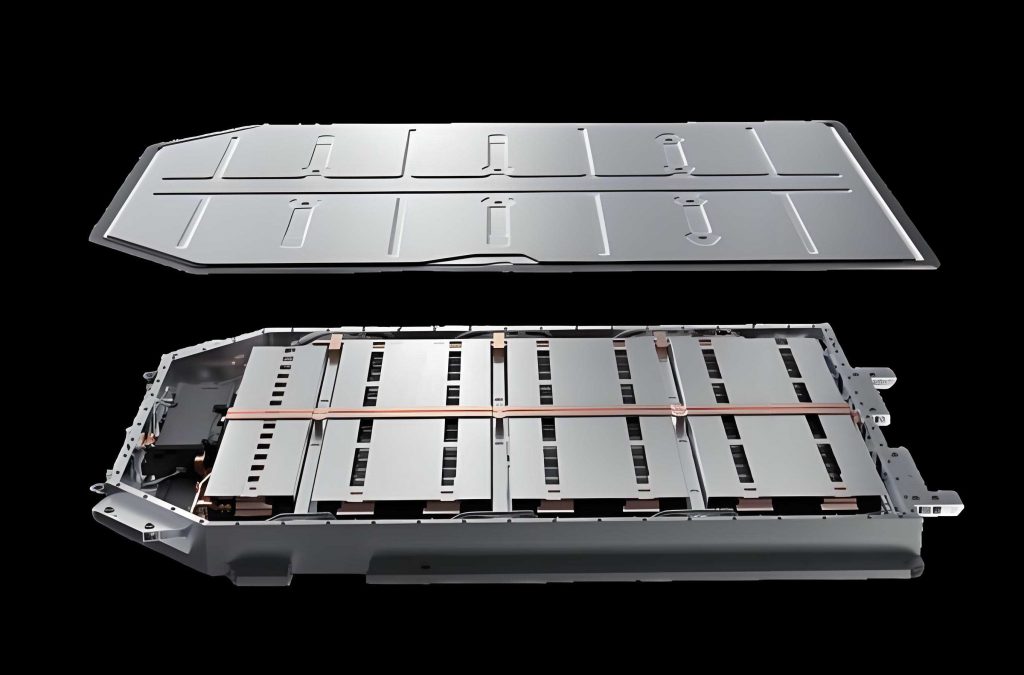
Welding, at its core, is a fabrication process that joins materials, typically metals or thermoplastics, by causing coalescence. This is often achieved through the application of heat, pressure, or a combination of both. In the context of manufacturing, especially for an EV battery pack, welding is indispensable for creating robust, sealed, and durable structures. The selection of an appropriate welding method depends on material properties, joint design, and the desired mechanical and electrical characteristics of the final EV battery pack enclosure.
To systematically understand the landscape, I have categorized common welding methods relevant to EV battery pack production. The table below summarizes these techniques, their principles, and typical applications in lightweight manufacturing.
| Welding Category | Specific Methods | Operating Principle | Relevance to EV Battery Pack |
|---|---|---|---|
| Fusion Welding | Gas Metal Arc Welding (GMAW/MIG) | Electric arc melts consumable electrode and base metal. | Joining aluminum structural frames. |
| Laser Beam Welding (LBW) | Concentrated laser beam melts and fuses materials. | High-precision welding of busbars and thin sheets. | |
| Electron Beam Welding (EBW) | High-velocity electron beam provides deep penetration. | Vacuum-sealed battery casing applications. | |
| Pressure Welding | Resistance Spot Welding (RSW) | Heat from electrical resistance and pressure form nugget. | Joining battery cell tabs and module internals. |
| Friction Stir Welding (FSW) | Rotating tool generates frictional heat and plasticizes material. | Seam welding of aluminum alloy battery trays. | |
| Ultrasonic Welding (USW) | High-frequency ultrasonic vibrations create solid-state bond. | Welding thin foils and connectors within the EV battery pack. | |
| Brazing & Soldering | Torch Brazing | Filler metal melts above 450°C and flows into joint by capillary action. | Joining dissimilar materials like copper and aluminum. |
| Laser Brazing | Laser heats the joint precisely, melting the filler metal. | Aesthetic and sealed joints on battery pack covers. |
The fundamental energy input in many fusion welding processes can be described by the heat input formula, which is crucial for controlling weld quality and minimizing distortion in thin-walled EV battery pack components:
$$ Q = \eta \cdot \frac{V \cdot I}{v} $$
Where \( Q \) is the linear heat input (J/mm), \( \eta \) is the arc efficiency (dimensionless), \( V \) is the voltage (V), \( I \) is the current (A), and \( v \) is the travel speed (mm/s). For lightweight materials, precise control over \( Q \) is essential to prevent burn-through or excessive heat-affected zones (HAZ).
Delving into the structure of an EV battery pack, it is a complex assembly that integrates electrochemical cells, thermal management systems, electrical distribution, and a robust enclosure. The push for lightweighting has driven intensive research into alternative materials. Aluminum alloys have emerged as a dominant choice for the EV battery pack enclosure due to their favorable strength-to-weight ratio. However, the quest for further mass reduction explores composites like carbon fiber reinforced polymer (CFRP) and glass fiber reinforced polymer (GFRP). The following table compares key properties of materials used in EV battery pack housings.
| Material Type | Specific Grade/Form | Density, \( \rho \) (g/cm³) | Tensile Strength (MPa) | Specific Strength (MPa·cm³/g) | Primary Application in EV Battery Pack |
|---|---|---|---|---|---|
| Mild Steel | DP600 | 7.85 | 600 | 76.4 | Legacy designs; high strength but heavy. |
| Aluminum Alloy | AA6061-T6 | 2.70 | 310 | 114.8 | Enclosure frames, cooling plates, and covers. |
| Aluminum Alloy | AA5083-H111 | 2.66 | 275 | 103.4 | Battery tray base requiring formability. |
| Carbon Fiber Composite | Epoxy/CF (Unidirectional) | 1.55 | 1500 | 967.7 | High-performance top covers or structural inserts. |
| Glass Fiber Composite | Epoxy/GF (Woven) | 1.90 | 350 | 184.2 | Non-structural covers or interior panels. |
| Sheet Molding Compound (SMC) | Polyester/Glass | 1.85 | 80 | 43.2 | Complex-shaped, non-load bearing housings. |
The effective modulus of a composite material used in an EV battery pack can be estimated using the rule of mixtures for aligned fibers, which informs design choices:
$$ E_c = V_f E_f + (1 – V_f) E_m $$
Here, \( E_c \) is the composite’s Young’s modulus, \( V_f \) is the fiber volume fraction, \( E_f \) is the fiber modulus, and \( E_m \) is the matrix modulus. Optimizing \( V_f \) is key to achieving the desired stiffness for the EV battery pack while minimizing mass.
My focus on advanced welding technologies has revealed several key processes that are transformative for EV battery pack manufacturing. Cold Metal Transfer (CMT) welding is a variant of GMAW that features controlled droplet detachment, resulting in exceptionally low heat input. This is ideal for joining thin aluminum sheets (0.5-3 mm) common in EV battery pack casings without distortion. The process stability can be modeled by analyzing the current waveform, where a rapid short-circuit phase minimizes net energy.
Friction Stir Welding (FSW) is a solid-state joining process that I consider vital for high-integrity aluminum EV battery pack enclosures. It involves a non-consumable rotating tool with a pin and shoulder. The heat generated plasticizes the material, and the tool’s traverse motion forges the joint. The peak temperature \( T_{peak} \) during FSW is often empirically related to process parameters:
$$ T_{peak} \approx \alpha \cdot \sqrt[3]{\omega^2 \cdot \mu \cdot F_N / v} $$
Where \( \alpha \) is a material constant, \( \omega \) is the rotational speed (rad/s), \( \mu \) is the friction coefficient, \( F_N \) is the axial force (N), and \( v \) is the welding speed (m/s). Precise control of these parameters ensures defect-free welds with strength often exceeding 75% of the base aluminum alloy, which is critical for the structural integrity of the EV battery pack.
Laser welding stands out for its precision, speed, and minimal thermal distortion. In my work on EV battery pack assembly, I’ve utilized it for sealing cell cans, welding busbars, and joining dissimilar materials. The depth of penetration in keyhole mode laser welding can be approximated for certain regimes by:
$$ d \propto \frac{P}{\sqrt{v \cdot D_{th}}} $$
With \( d \) as penetration depth, \( P \) as laser power, \( v \) as welding speed, and \( D_{th} \) as thermal diffusivity of the material. This relationship underscores the need for high power and controlled speed to achieve deep, narrow welds necessary for compact EV battery pack designs.
Two specific welding challenges in EV battery pack manufacturing have garnered my particular attention. The first involves joining cast aluminum components (like corner brackets or mounting points) to wrought aluminum alloy extrusions (forming the frame). These are nominally the same metal but have different microstructures and thermal properties, making fusion welding prone to hot cracking. Resistance Spot Welding (RSW) offers a viable solution. The heat generated \( Q_{RSW} \) is given by Joule’s law:
$$ Q_{RSW} = I^2 R_{contact} t_{weld} $$
Here, \( I \) is the welding current, \( R_{contact} \) is the dynamic contact resistance, and \( t_{weld} \) is the weld time. By carefully controlling the current profile and electrode force, a sound nugget can be formed between the cast and wrought aluminum, avoiding the brittle phases that form with excessive melting. This spot-welded connection is a reliable and lightweight alternative to using heavy mechanical fasteners throughout the EV battery pack structure.
The second, more complex challenge is joining aluminum to copper, a common requirement for electrical connections between battery cells and busbars within the EV battery pack. The large difference in thermal conductivity and melting points, along with the formation of brittle intermetallic compounds (IMCs) like Al2Cu and Al4Cu9, makes fusion welding difficult. Pulsed laser welding has proven effective by minimizing the heat-affected zone and controlling IMC growth. The thickness of the IMC layer \( \delta \) often follows a parabolic growth law:
$$ \delta = \sqrt{k_p \cdot t} $$
Where \( k_p \) is the temperature-dependent parabolic growth constant and \( t \) is the interaction time. By using high-power, short-pulse lasers (e.g., nanosecond pulses), we can keep \( t \) extremely low, thereby suppressing \( \delta \) to below 5 µm, which is essential for maintaining joint ductility and electrical conductivity in the EV battery pack. The table below compares methods for Al-Cu joining in this context.
| Joining Method | Process Characteristics | Typical IMC Thickness | Advantages for EV Battery Pack | Limitations |
|---|---|---|---|---|
| Pulsed Laser Welding | High energy density, precise control, rapid cooling. | 1-10 µm | Minimal HAZ, high-speed automation suitable for mass production. | High equipment cost, sensitive to fit-up. |
| Ultrasonic Welding | Solid-state process, uses high-frequency vibrations. | Negligible (if kept below melting) | Excellent for thin foils and wires, no filler needed. | Limited to lap joints, joint size constraints. |
| Resistance Spot Welding | Uses electrode pressure and resistive heating. | 5-20 µm | Fast, established technology for tab connections. | Electrode wear, potential for expulsion in Al-Cu. |
| Laser Brazing | Laser melts a filler metal (e.g., Al-Si wire). | Confined to filler/base interface | Good gap bridging, lower process temperature. | Requires filler material, additional process step. |
Optimizing the weld joint strength is critical. For a laser-welded lap joint between aluminum and copper in an EV battery pack busbar, the shear strength \( \tau_s \) can be empirically related to the weld width \( w \) and the controlled IMC thickness \( \delta \):
$$ \tau_s = A \cdot w \cdot \exp(-B \cdot \delta) $$
Where \( A \) and \( B \) are material constants. This highlights the trade-off: a wider weld increases strength, but excessive IMC growth (large \( \delta \)) drastically reduces it. Therefore, process parameter optimization is a central part of my development work on the EV battery pack.
Looking forward, the trajectory for EV battery pack lightweighting involves not only material substitution but also holistic design and manufacturing innovation. Multi-material hybrid structures, combining aluminum, composites, and even magnesium alloys, will become more prevalent. This necessitates the development of novel welding and joining techniques, such as laser-assisted friction stir welding or electromagnetic pulse welding. Furthermore, the integration of in-process monitoring systems using sensors and machine learning algorithms will ensure consistent weld quality in high-volume EV battery pack production.
In my assessment, the sustainability aspect is also paramount. Lightweight EV battery packs contribute to lower energy consumption during vehicle operation. Additionally, welding processes that enable disassembly and repair, such as certain solid-state techniques, can support circular economy principles for EV battery packs at end-of-life. Research into welding recycled aluminum alloys or joining recycled composite materials will be crucial.
To quantify the potential impact of these advancements, consider a simplified model for the range extension \( \Delta R \) achieved by reducing the EV battery pack mass \( \Delta m_{pack} \), assuming all else constant:
$$ \Delta R \approx R_0 \cdot \gamma \cdot \frac{\Delta m_{pack}}{m_{vehicle}} $$
Here, \( R_0 \) is the original range, \( \gamma \) is a vehicle-specific efficiency factor (often between 0.5 and 0.7), and \( m_{vehicle} \) is the total vehicle mass. A 20% reduction in EV battery pack weight (which could be achieved through material and joining optimization) can thus lead to a measurable increase in driving range, enhancing the appeal and utility of electric vehicles.
In conclusion, my extensive engagement with this field solidifies the view that welding technology is not merely a joining step but a foundational enabler for EV battery pack lightweighting. The synergy between advanced materials like high-strength aluminum alloys and carbon composites with precision welding processes—CMT, FSW, and laser welding—is pivotal. By solving specific joining challenges like cast-to-wrought aluminum and aluminum-to-copper connections through optimized resistance spot welding and pulsed laser welding, we can eliminate heavy mechanical fasteners and reduce material usage. This comprehensive approach significantly reduces the mass of the EV battery pack, thereby increasing energy density and vehicle range. The continued evolution of these technologies will undoubtedly accelerate the adoption of electric vehicles, contributing profoundly to a more sustainable and efficient transportation future. The journey of perfecting the EV battery pack through intelligent manufacturing has just begun, and welding sits at its very heart.