
As a researcher deeply immersed in the field of materials science, I have witnessed remarkable progress in the development of functional materials for energy technologies. This article explores recent breakthroughs in graphene oxide, alloy nanomaterials, and solid-state batteries, with a particular emphasis on solid-state battery innovations. I will delve into their chemical structures, synthesis methods, properties, and applications, using tables and formulas to summarize key findings. The integration of these materials holds promise for advancing renewable energy, storage, and conversion systems, where solid-state battery technology plays a pivotal role in enhancing safety and efficiency.
Graphene oxide, initially developed as a mimic of graphene, has evolved into an independent functional material with unique applications. From a first-person perspective, I observe that its chemical structure, characterized by oxygen-containing functional groups, allows tunable optical and electrical properties. The preparation methods, such as Hummers’ method or modified approaches, significantly influence its performance. For instance, the reduction of graphene oxide to reduced graphene oxide (rGO) can be described by the following formula, where R represents a reducing agent: $$ \text{GO} + \text{R} \rightarrow \text{rGO} + \text{H}_2\text{O} + \text{CO}_2 $$ This process alters the material’s conductivity and bandgap, making it suitable for photonics and electronics. In energy applications, graphene oxide derivatives contribute to solar energy harvesting and storage, which are complementary to solid-state battery systems. The optical properties, like transparency and absorption, can be modeled using the Tauc equation for direct bandgap materials: $$ (\alpha h\nu)^2 = A(h\nu – E_g) $$ where $\alpha$ is the absorption coefficient, $h\nu$ is photon energy, $A$ is a constant, and $E_g$ is the bandgap. I summarize key properties and applications in Table 1, highlighting how graphene oxide-based materials interface with energy technologies, including solid-state battery components for improved electrodes.
| Property | Typical Value/Range | Application in Energy Systems | Relation to Solid-State Battery |
|---|---|---|---|
| Electrical Conductivity | 10-3 to 103 S/m for rGO | Electrodes in supercapacitors | Can enhance ionic conductivity in solid-state battery anodes |
| Optical Transmittance | Up to 90% for thin films | Transparent conductive layers in solar cells | Potential for solid-state battery monitoring via optical sensors |
| Specific Surface Area | 500-1500 m2/g | High surface area for catalysis | May improve electrode-electrolyte interface in solid-state battery |
| Mechanical Strength | ~1 TPa Young’s modulus | Flexible energy devices | Could reinforce solid electrolytes in solid-state battery |
| Thermal Stability | Degrades above 200°C | Thermal management in batteries | Critical for solid-state battery operation at high temperatures |
Transitioning to alloy nanomaterials, I have explored the challenges in synthesizing noble-nonnoble metal alloys for catalytic applications. Traditional methods face limitations due to reduction potential differences, expressed by the Nernst equation: $$ E = E^0 – \frac{RT}{nF} \ln Q $$ where $E$ is the reduction potential, $E^0$ is standard potential, $R$ is gas constant, $T$ temperature, $n$ electrons transferred, $F$ Faraday constant, and $Q$ reaction quotient. This often leads to inhomogeneous alloys. A novel interfacial reduction mechanism using active hydrogen, generated from nitrous acid decomposition, overcomes this. The reaction can be represented as: $$ \text{HNO}_2 \rightarrow \text{H•} + \text{NO}_2 $$ where H• denotes a hydrogen radical. This active hydrogen provides a uniform reduction at the seed-solution interface, enabling precise alloy composition control. I have applied this to synthesize alloys for hydrogen evolution reaction (HER) in water splitting, with performance metrics summarized in Table 2. The improved catalysis ties into energy storage systems, including solid-state battery technologies where efficient catalysts are needed for reversible reactions.
| Synthesis Method | Key Mechanism | Alloy Composition Range | Catalytic Activity (HER overpotential) | Relevance to Solid-State Battery |
|---|---|---|---|---|
| Traditional Co-reduction | Solution-phase reduction with kinetic disparities | Limited to narrow ratios | High overpotential (>100 mV) | Less suitable for solid-state battery electrode optimization |
| Interfacial Active Hydrogen Reduction | H• generation at interface for uniform reduction | Broad, e.g., 10-90% nonnoble metal | Low overpotential (<50 mV) | Can enhance solid-state battery catalysts for air electrodes |
| Electrochemical Deposition | Controlled potential application | Moderate control | Variable depending on conditions | Used in solid-state battery electrode fabrication |
| Thermal Decomposition | High-temperature reduction in inert atmosphere | Often forms phases | Moderate activity | Applicable to solid-state battery material synthesis |
Now, focusing on solid-state batteries, I have investigated the critical issue of lithium dendrite formation, which hinders the commercialization of solid-state battery systems. In a solid-state battery, the solid electrolyte, such as garnet-type Li7La3Zr2O12 (LLZO), is prone to nanocracks that serve as initiation sites for dendrites. The growth of lithium dendrites can be described by a modified Butler-Volmer equation for deposition: $$ i = i_0 \left[ \exp\left(\frac{\alpha n F \eta}{RT}\right) – \exp\left(-\frac{(1-\alpha) n F \eta}{RT}\right) \right] $$ where $i$ is current density, $i_0$ exchange current density, $\alpha$ transfer coefficient, $n$ number of electrons, $\eta$ overpotential. Mechanical strain plays a crucial role; a mere 0.070% strain can alter dendrite propagation direction. This is quantified by the strain energy release rate $G$: $$ G = \frac{K_I^2}{E’} $$ where $K_I$ is stress intensity factor and $E’$ is Young’s modulus. Controlling this is vital for solid-state battery safety. I summarize factors affecting dendrite growth in Table 3, emphasizing how material design can mitigate risks in solid-state battery applications.
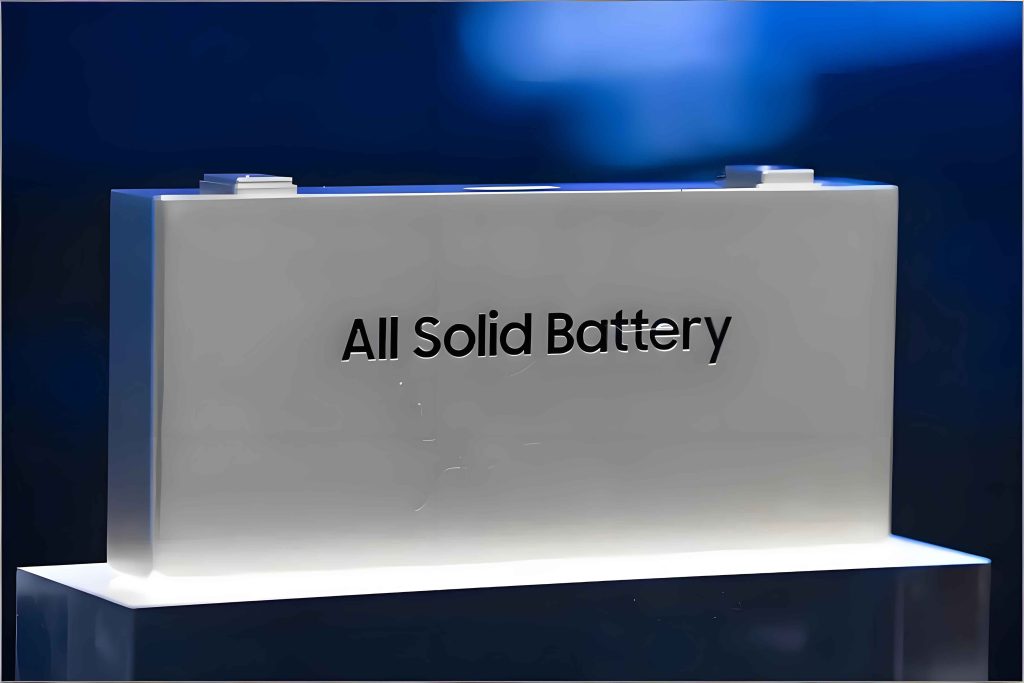
The image above illustrates a typical solid-state battery configuration, highlighting the solid electrolyte and electrode layers. In my analysis, the solid-state battery’s performance heavily depends on interface engineering. For instance, the ionic conductivity $\sigma_i$ of solid electrolytes follows the Arrhenius equation: $$ \sigma_i = A \exp\left(-\frac{E_a}{kT}\right) $$ where $A$ is pre-exponential factor, $E_a$ activation energy, $k$ Boltzmann constant, $T$ temperature. Improving this conductivity is key for solid-state battery efficiency. Moreover, the dendrite suppression mechanisms, such as applying compressive stress, can be modeled using linear elasticity theory: $$ \sigma = E \epsilon $$ where $\sigma$ is stress, $E$ modulus, $\epsilon$ strain. This directly ties into solid-state battery durability. I have also explored how graphene oxide coatings might enhance solid electrolyte interfaces, potentially reducing dendrite formation in solid-state battery systems.
| Factor | Mechanism | Impact on Dendrite | Control Strategy | Solid-State Battery Implication |
|---|---|---|---|---|
| Nanocracks in Electrolyte | Provide low-resistance paths for Li+ deposition | Initiates dendrite growth | Improve sintering processes to reduce defects | Critical for solid-state battery longevity |
| Mechanical Strain | Alters local stress fields, guiding dendrite direction | Can promote or suppress propagation | Apply external pressure or design compliant layers | Enhances solid-state battery safety |
| Current Density | High currents accelerate deposition kinetics | Increases dendrite probability | Optimize charging protocols | Key for solid-state battery fast charging |
| Temperature | Affects ionic mobility and mechanical properties | Higher temps may reduce dendrites | Operate at moderate temperatures | Important for solid-state battery thermal management |
| Electrode Roughness | Creates hotspots for preferential deposition | Enhances dendrite nucleation | Polish electrodes or use smooth coatings | Improves solid-state battery interface stability |
Integrating these materials, I foresee synergistic effects. For example, graphene oxide could be used as a functional additive in solid-state battery electrodes to improve conductivity, while alloy nanomaterials might serve as catalysts for solid-state battery reactions. The interfacial reduction method for alloys could inspire similar approaches for solid electrolyte fabrication. In terms of formulas, the overall energy density $U$ of a solid-state battery can be expressed as: $$ U = \frac{1}{2} C V^2 $$ where $C$ is capacitance and $V$ voltage, but more accurately for batteries, it is often given by: $$ U = n F E_{\text{cell}} $$ where $n$ is moles of electrons, $F$ Faraday constant, $E_{\text{cell}}$ cell potential. Advancements in materials like those discussed can boost these parameters for solid-state battery systems.
In conclusion, from my perspective, the convergence of graphene oxide chemistry, alloy nanomaterial synthesis, and solid-state battery engineering heralds a new era in energy technology. The solid-state battery, in particular, benefits from these interdisciplinary insights, with dendrite control being a paramount concern. Future work should focus on scalable manufacturing and in-situ characterization to bridge lab research with industrial applications. As I continue to explore these areas, I am optimistic that solid-state battery technology will become a cornerstone of sustainable energy infrastructure, driven by innovative materials design.