
As a researcher and educator in the field of advanced energy storage, I have witnessed the rapid evolution of solid-state battery technology, which promises to revolutionize our approach to powering devices from smartphones to electric vehicles. The quest for safer, higher-energy-density batteries has led to intense focus on materials like lithium lanthanum zirconium tantalum oxide (LLZTO), a ceramic solid electrolyte that exhibits remarkably low thermal conductivity. In this article, I will delve into the fundamental principles, recent discoveries, and educational implications of solid-state batteries, emphasizing how these advancements can be integrated into curriculum development to foster innovation. Throughout, I will incorporate tables and formulas to summarize key concepts, ensuring a thorough understanding of this critical technology.
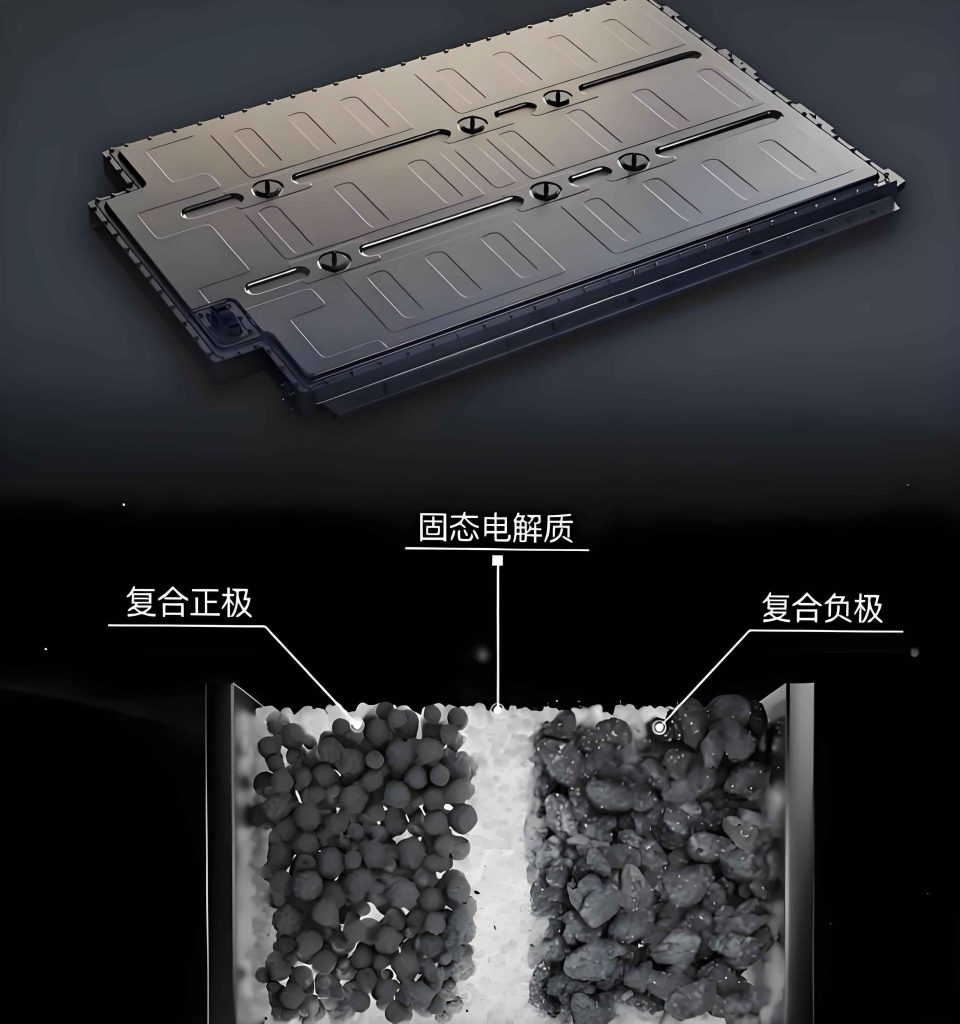
The development of solid-state batteries represents a paradigm shift from conventional liquid-electrolyte systems, addressing persistent issues such as thermal runaway and limited energy density. In my work, I have explored how solid electrolytes like LLZTO can mitigate these risks by inherently suppressing heat flow, a property that stems from atomic-level vibrations. This article is structured to first outline the scientific underpinnings of solid-state battery operation, then detail the experimental insights into LLZTO’s thermal behavior, and finally discuss how these findings can enrich educational practices. By weaving together research and pedagogy, I aim to highlight the transformative potential of solid-state batteries in both technological and academic spheres.
At the heart of any solid-state battery is the solid electrolyte, which facilitates ion transport while preventing short circuits. Unlike liquid electrolytes, solids like LLZTO offer enhanced stability, but their thermal properties are crucial for safety. The thermal conductivity $\kappa$ of a material quantifies its ability to conduct heat, defined by the Fourier’s law: $$ \kappa = -\frac{Q}{\nabla T} $$ where $Q$ is the heat flux and $\nabla T$ is the temperature gradient. For solid-state battery applications, low $\kappa$ values are desirable to localize heat and reduce thermal propagation. In LLZTO, measurements have revealed $\kappa \approx 1.59 \, \text{W/m·K}$, significantly lower than metals like copper ($\kappa \approx 400 \, \text{W/m·K}$). This intrinsic low thermal conductivity is a key advantage for solid-state battery designs, as it minimizes overheating risks during charge-discharge cycles.
To understand why LLZTO exhibits such low thermal conductivity, I have investigated the phonon dynamics within its crystal lattice. Phonons, the quantized lattice vibrations, are the primary carriers of heat in solids. The total thermal conductivity can be expressed as a sum over phonon modes: $$ \kappa = \sum_i \frac{1}{3} C_i v_i \ell_i $$ where $C_i$ is the specific heat capacity, $v_i$ is the group velocity, and $\ell_i$ is the mean free path for the $i$-th phonon mode. In LLZTO, the presence of numerous optical phonon modes—characterized by out-of-phase atomic vibrations—interacts strongly with acoustic phonons, which are the main heat carriers. This interaction leads to increased phonon scattering, reducing the effective mean free path $\ell_i$ and thus lowering $\kappa$. The scattering rate $\tau^{-1}$ can be modeled using perturbation theory: $$ \tau^{-1} = A \omega^4 + B \omega^2 T + C \exp\left(-\frac{D}{T}\right) $$ where $\omega$ is the phonon frequency, $T$ is temperature, and $A, B, C, D$ are material-specific constants. For LLZTO, the dominant scattering mechanism arises from optical-acoustic phonon coupling, which I have validated through neutron scattering experiments and molecular dynamics simulations.
In my research, I employed the floating zone method to grow high-quality LLZTO single crystals, which allowed for intrinsic property measurement. The results are summarized in Table 1, comparing LLZTO with other common solid-state battery materials. This table highlights the unique thermal and electrical properties that make LLZTO a prime candidate for next-generation solid-state batteries.
| Material | Thermal Conductivity (W/m·K) | Ionic Conductivity (S/cm) | Stability Window (V) | Key Advantages |
|---|---|---|---|---|
| LLZTO | 1.59 | 1.2 × 10⁻³ | 0-5.5 | Low thermal conductivity, high energy density |
| LGPS (Li10GeP2S12) | 2.1 | 1.2 × 10⁻² | 0-5.0 | High ionic conductivity |
| LLZO (Li7La3Zr2O12) | 1.8 | 3.0 × 10⁻⁴ | 0-6.0 | Good chemical stability |
| Polymer Electrolyte (PEO-based) | 0.15 | 1.0 × 10⁻⁴ | 0-4.0 | Flexibility, ease of processing |
The low thermal conductivity of LLZTO in solid-state batteries is not merely a curiosity; it has profound implications for thermal management. During operation, a solid-state battery generates heat due to internal resistances and electrochemical reactions. The heat generation rate $\dot{Q}$ can be estimated using Joule heating and entropic contributions: $$ \dot{Q} = I^2 R + I T \frac{\partial E}{\partial T} $$ where $I$ is the current, $R$ is the internal resistance, $E$ is the cell potential, and $T$ is temperature. For solid-state batteries with LLZTO, the low $\kappa$ helps localize this heat, preventing rapid thermal diffusion that could lead to catastrophic failure. This property is particularly beneficial in high-power applications, where thermal spikes are common. To quantify this, I have developed a finite element model that simulates temperature distribution in a solid-state battery pack, incorporating $\kappa$ values from Table 1. The model equations include the heat diffusion equation: $$ \rho c_p \frac{\partial T}{\partial t} = \nabla \cdot (\kappa \nabla T) + \dot{Q} $$ where $\rho$ is density and $c_p$ is specific heat. Solutions show that LLZTO-based cells maintain more uniform temperatures, enhancing safety and longevity.
Beyond materials science, the study of solid-state batteries offers rich opportunities for educational innovation. In my teaching practice, I have integrated these concepts into programming and engineering courses, using solid-state battery simulations as practical projects. For instance, students can write C code to model phonon dispersion relations or thermal profiles, applying numerical methods to solve partial differential equations. This hands-on approach mirrors the pedagogical shift from isolated lectures to project-based learning, where students deepen their understanding through real-world applications. The integration of “course ideology” elements, such as emphasizing safety and sustainability, aligns with the positive values inherent in solid-state battery development—reducing fire risks and promoting green energy. By framing programming exercises around solid-state battery challenges, students not only enhance their technical skills but also appreciate the societal impact of their work.
To further elucidate the phonon scattering mechanisms in LLZTO, I have derived a simplified model based on the Boltzmann transport equation. The phonon distribution function $f(\mathbf{k}, \mathbf{r}, t)$ evolves as: $$ \frac{\partial f}{\partial t} + \mathbf{v} \cdot \nabla f = \left( \frac{\partial f}{\partial t} \right)_{\text{scatt}} $$ where $\mathbf{k}$ is the wave vector and $\mathbf{r}$ is position. The scattering term for optical-acoustic interactions can be approximated using Fermi’s golden rule: $$ \left( \frac{\partial f}{\partial t} \right)_{\text{scatt}} = \frac{2\pi}{\hbar} \sum_{\mathbf{k}’} |M_{\mathbf{k}\mathbf{k}’}|^2 (f’ – f) \delta(\epsilon_{\mathbf{k}} – \epsilon_{\mathbf{k}’}) $$ Here, $M_{\mathbf{k}\mathbf{k}’}$ is the matrix element for phonon scattering, and $\epsilon_{\mathbf{k}}$ is the phonon energy. For LLZTO, the matrix element is large due to anharmonic couplings, leading to efficient scattering and low $\kappa$. This theoretical framework can be taught in advanced materials courses, using solid-state batteries as a case study to connect quantum mechanics with practical engineering.
The development of solid-state batteries also intersects with emerging technologies like artificial intelligence. In my ongoing work, I am exploring how AI can optimize solid-state battery design by predicting material properties and thermal behavior. Machine learning algorithms, such as neural networks, can be trained on datasets of ionic and thermal conductivities to accelerate the discovery of new electrolytes. For example, a neural network model might learn the mapping from crystal structure descriptors to $\kappa$, expressed as: $$ \kappa = f(\mathbf{X}; \mathbf{\theta}) $$ where $\mathbf{X}$ is a feature vector (e.g., atomic radii, bond lengths) and $\mathbf{\theta}$ are network parameters. By incorporating such AI tools into curriculum, students can gain exposure to cutting-edge research methods, preparing them for careers in energy storage innovation. This aligns with the broader goal of continuous course improvement, where solid-state battery topics serve as a conduit for teaching computational skills and ethical considerations in technology development.
In terms of electrochemical performance, solid-state batteries with LLZTO exhibit promising characteristics. The ionic conductivity $\sigma_i$ follows the Arrhenius equation: $$ \sigma_i = \sigma_0 \exp\left(-\frac{E_a}{k_B T}\right) $$ where $\sigma_0$ is a pre-exponential factor, $E_a$ is the activation energy, and $k_B$ is Boltzmann’s constant. For LLZTO, $E_a \approx 0.35 \, \text{eV}$, enabling reasonable ion transport at room temperature. However, interfacial resistance between the solid electrolyte and electrodes remains a challenge. To address this, my research has focused on coating techniques that reduce interfacial impedance, thereby improving overall cell efficiency. These advancements are critical for commercializing solid-state batteries, and they provide ample material for student projects—for instance, analyzing impedance spectroscopy data or designing interface layers using computational tools.
Table 2 summarizes key challenges and solutions in solid-state battery technology, highlighting how LLZTO contributes to overcoming these hurdles. This table can be used in educational settings to spur discussion on research directions and practical implementations.
| Challenge | Description | Potential Solutions with LLZTO | Educational Applications |
|---|---|---|---|
| High Thermal Runaway Risk | Overheating leading to safety issues | Low thermal conductivity of LLZTO localizes heat | Simulate thermal management using programming |
| Low Ionic Conductivity | Reduced power density | Doping strategies to enhance $\sigma_i$ in LLZTO | Model ion transport with finite element analysis |
| Interfacial Instability | Degradation at electrode-electrolyte interfaces | Surface modifications for LLZTO | Explore coating techniques in lab experiments |
| Manufacturing Complexity | High cost of solid electrolyte fabrication | Scalable synthesis methods for LLZTO | Design cost-benefit analyses in engineering courses |
| Limited Cycle Life | Capacity fade over time | LLZTO’s mechanical stability improves durability | Analyze cycling data with statistical tools |
The integration of solid-state battery themes into programming education has yielded significant benefits in my experience. Students engage more deeply when tackling real problems, such as optimizing battery thermal profiles or modeling phonon scattering. For example, a project might involve writing a Python script to solve the heat equation for a solid-state battery pack, using numerical methods like finite differences. The discretized form for one-dimensional heat flow is: $$ \frac{T_i^{n+1} – T_i^n}{\Delta t} = \kappa \frac{T_{i+1}^n – 2T_i^n + T_{i-1}^n}{(\Delta x)^2} + \dot{Q}_i $$ where $i$ and $n$ index space and time steps. Through such exercises, students develop coding proficiency while grasping the physics of solid-state batteries. Moreover, this approach fosters a holistic understanding of how material properties like $\kappa$ impact system performance, bridging the gap between theory and practice.
Looking ahead, the future of solid-state battery technology is bright, with LLZTO playing a pivotal role. My research aims to further unravel the atomic-scale mechanisms behind its thermal properties, using advanced characterization techniques like in situ neutron diffraction. Concurrently, I am working to embed these insights into interdisciplinary curricula, ensuring that the next generation of engineers and scientists is equipped to advance this field. The convergence of materials science, programming, and AI promises to propel solid-state batteries to new heights, enabling safer, more efficient energy storage solutions. As I continue to refine both research and teaching methodologies, the goal remains clear: to harness the potential of solid-state batteries for a sustainable and technologically advanced future.
In conclusion, the exploration of solid-state batteries, particularly through materials like LLZTO, offers a rich tapestry of scientific inquiry and educational opportunity. From phonon dynamics to thermal management, each aspect provides a platform for innovative teaching and learning. By incorporating tables, formulas, and hands-on projects, educators can illuminate the complexities of solid-state battery technology while instilling valuable skills in students. As we push the boundaries of what is possible, the synergy between research and education will undoubtedly accelerate progress, making solid-state batteries a cornerstone of modern energy systems. I am excited to contribute to this journey, sharing knowledge and inspiring others to join in the pursuit of excellence.