
In the rapidly evolving landscape of automotive technology, the widespread adoption of electronically controlled engines has significantly enhanced vehicle performance, fuel economy, and emission standards. However, this advancement has also increased the complexity of engine systems, rendering traditional experiential diagnosis methods inadequate for the multi-parameter, strongly coupled fault characteristics of modern control systems. As a practitioner in this field, I have observed that precise and efficient fault diagnosis technology is crucial for ensuring vehicle reliability and safety. Despite continuous updates in diagnostic equipment and techniques, practical applications still face challenges such as inaccurate fault localization, low diagnostic efficiency, and difficulties in troubleshooting complex faults. Therefore, optimizing the application of fault diagnosis technology for automotive motor control unit systems is essential to improve diagnostic accuracy and efficiency.
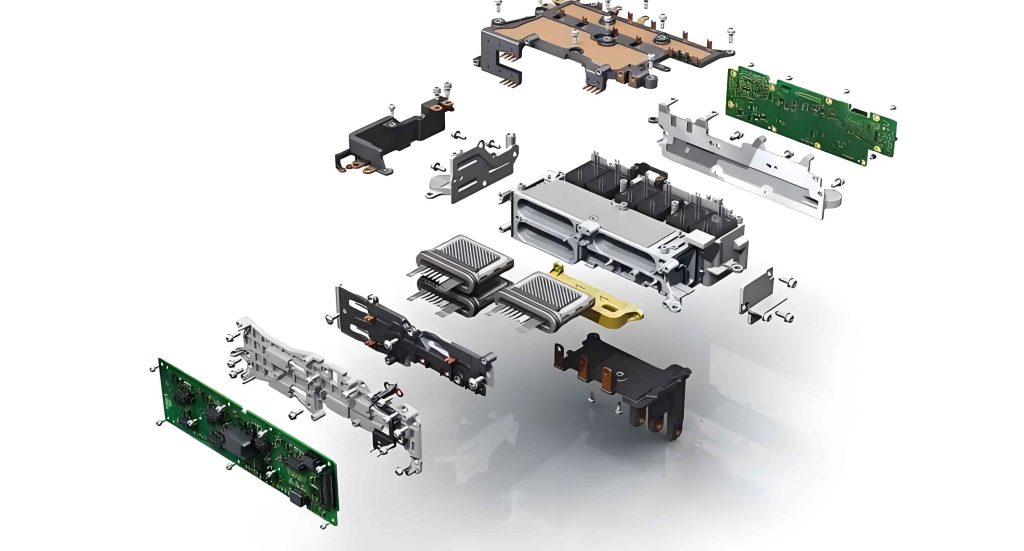
The motor control unit serves as the brain of the engine, orchestrating critical parameters like fuel injection timing, ignition advance angle, and air intake volume. Its failure can lead to performance degradation or even safety hazards. In my experience, leveraging advanced diagnosis techniques is key to mitigating these risks. This article explores the value, challenges, and optimization strategies for fault diagnosis in motor control unit systems, incorporating data analysis, modeling, and intelligent technologies to drive industry progress.
Application Value of Fault Diagnosis Technology for Motor Control Unit Systems
Fault diagnosis technology for motor control unit systems plays a pivotal role in modern automotive maintenance and safety. From my perspective, its value extends across multiple dimensions, including vehicle performance, cost reduction, and adaptation to emerging trends like smart and connected vehicles.
Ensuring Vehicle Power Performance and Driving Safety
The motor control unit is integral to maintaining optimal engine operation. By precisely managing parameters such as fuel injection and ignition timing, the motor control unit ensures efficient combustion and power output. Any malfunction in sensors or actuators can compromise performance, leading to issues like power loss or unsafe driving conditions. For instance, real-time monitoring through the motor control unit allows for early detection of anomalies—such as deviations in oxygen sensor voltage waveforms—enabling proactive interventions before faults escalate. In high-speed or complex road scenarios, sudden engine failures can cause loss of control, endangering lives. Thus, fault diagnosis technology acts as a critical safety net, triggering warning signals and fault protection modes to limit engine output and prevent accidents. I believe that this technology is not merely a repair tool but a lifelong safety component in vehicles, indispensable for road safety.
Reducing Maintenance Costs and Enhancing Service Efficiency
Efficient fault diagnosis technology significantly cuts down troubleshooting time and lowers repair costs, thereby improving customer satisfaction. Traditional trial-and-error methods often involve replacing multiple parts, leading to wasted resources and extended vehicle downtime. In contrast, modern diagnosis using tools to read fault codes and analyze data streams can quickly pinpoint issues. For example, when an engine experiences idle vibration, diagnosis technology analyzes data like injection pulse width and ignition advance angle per cylinder to identify whether a clogged injector or faulty ignition coil is to blame. This precision reduces unnecessary part replacements and minimizes indirect losses from vehicle immobilization. As I have seen in practice, rapid and accurate diagnosis is a competitive edge for repair businesses, fostering trust and loyalty among customers. In an era of growing vehicle ownership and intense market competition, mastering advanced motor control unit fault diagnosis is vital for cost-effectiveness and service quality.
Foundation for Smart and Connected Vehicle Development
With the shift toward electrification, intelligence, and connectivity in the automotive industry, fault diagnosis technology for motor control unit systems forms a technical backbone for smart and connected vehicles. Even in new energy vehicles, where power systems differ, the complexity of control systems surpasses that of traditional engines. Hybrid vehicles, for example, require balancing power distribution between engines and motors, necessitating diagnosis that integrates data from multiple sources. Smart connected vehicles utilize onboard sensors and communication modules for data exchange with cloud platforms, enabling remote diagnosis and predictive maintenance. The motor control unit can transmit real-time operational data to the cloud, where big data analytics and AI algorithms facilitate fault预警 and intelligent diagnosis. This cloud-based approach transcends spatial and temporal limits of on-site diagnosis, transforming maintenance from reactive to proactive. In my view, continuous innovation in motor control unit fault diagnosis not only meets the needs of conventional vehicles but also paves the way for service model evolution in the smart era, supporting high-quality development in the automotive sector.
Challenges in Applying Fault Diagnosis Technology for Motor Control Unit Systems
Despite its importance, the application of fault diagnosis technology for motor control unit systems faces several hurdles. Based on my observations, these include issues with fault code interpretation, data analysis capabilities, and diagnostic equipment limitations.
Inaccurate Fault Code Interpretation Leading to High Misdiagnosis Rates
Overreliance on fault codes is a common pitfall in diagnosing motor control unit issues. Technicians often misinterpret codes as direct indicators of faulty components, without considering that codes are merely alerts from the motor control unit based on predefined logic. For instance, a code indicating “slow oxygen sensor response” might stem from sensor aging, exhaust leaks, or unstable power supply to the motor control unit. Replacing the sensor without further analysis can waste parts and fail to address the root cause. Intermittent faults that don’t trigger code storage further complicate diagnosis, as technicians lack guidance. Additionally, fault code definitions vary across vehicle models, and without specialized knowledge, misjudgments are likely. I attribute this to a superficial understanding of motor control unit工作原理, where codes are treated as “universal keys” rather than diagnostic clues, undermining accuracy.
Weak Sensor Data Analysis Capabilities Affecting Diagnostic Efficiency
The core of motor control unit fault diagnosis lies in deep analysis of sensor data streams, but technicians’ limited data interpretation skills hinder efficiency. Modern engines employ dozens of sensors to collect real-time parameters, and diagnostic tools display vast data like intake pressure and coolant temperature. However, many technicians only check if values fall within normal ranges, missing insights from trends and parameter correlations. For example, when an engine shows poor acceleration, low air flow meter readings might suggest sensor failure, but correlating with throttle opening and oxygen sensor voltage could reveal an intake leak instead. This multi-parameter analysis requires solid knowledge of engine control principles, which is often lacking due to insufficient training. As I have noted, this gap leads to inefficient methods like repeated testing for疑难故障, reducing repair speed and customer experience.
Limited Diagnostic Equipment Functionality for Complex Faults
Current diagnostic equipment for motor control unit systems often lacks advanced features needed for complex faults. Mainstream tools can read fault codes and view data streams, but fall short in waveform analysis, active actuator testing, and system calibration. For faults involving signal quality—such as distorted crankshaft position sensor signals or abnormal injector drive waveforms—oscilloscopes are essential to capture voltage characteristics, but many repair shops lack such capabilities or have low-precision equipment. Moreover, active tests for components like injectors or throttle actuators require specialized functions that generic tools may not support. The absence of data interoperability between devices, such as diagnostic tools and multimeters, adds operational complexity and disrupts diagnostic continuity. In my experience, this equipment inadequacy impedes effective troubleshooting.
Optimization Strategies for Fault Diagnosis Technology in Motor Control Unit Systems
To address these challenges, I propose several optimization strategies centered on data-driven approaches, knowledge modeling, and intelligent technologies. These aim to enhance the precision and efficiency of motor control unit fault diagnosis.
Building a Comprehensive Diagnostic Analysis System Based on Data Streams
A holistic diagnostic system should prioritize data stream analysis over mere fault code reliance. This involves understanding standard parameter values and their variations under different conditions, leveraging logical correlations to pinpoint faults. For instance, in idle conditions, normal oxygen sensor voltage ranges from 0.1 to 0.9 V, with short-term fuel trim within ±5%. Deviations, such as consistently low voltage and positive trim, indicate lean mixture, requiring further checks on fuel injection or intake. By analyzing injection pulse width data, one can determine if the motor control unit compensates adequately; if not, the issue may lie in fuel supply or sensor accuracy. This multi-parameter logic demands deep knowledge of closed-loop control in the motor control unit. To aid this, repair enterprises should develop standard databases for typical vehicle models, documenting normal parameter ranges for reference. Below is a table summarizing key sensor parameters and their diagnostic implications:
| Sensor | Normal Range | Common Fault Indicators |
|---|---|---|
| Oxygen Sensor | 0.1–0.9 V | Voltage stuck high/low, indicating rich/lean mixture |
| Throttle Position Sensor | 0.5–4.5 V (varies) | Erratic readings, causing idle fluctuations |
| Coolant Temperature Sensor | -40°C to 130°C | Out-of-range values affecting fuel enrichment |
Mathematically, the relationship between sensor inputs and motor control unit outputs can be expressed as:
$$ \text{Fuel Injection Pulse Width} = f(\text{MAF}, \text{O2 Sensor Voltage}, \text{Engine Load}) $$
where \( f \) represents the control algorithm in the motor control unit. By modeling such functions, technicians can better interpret data anomalies.
Establishing a Typical Fault Pattern Library and Diagnostic Decision Model
Improving diagnosis efficiency requires systematic knowledge management through fault pattern libraries and decision models. A fault pattern library should catalog cases from various vehicles and systems, detailing symptoms, fault code behaviors, data stream anomalies, and solutions. Technicians can input observed issues to retrieve similar cases, accelerating analysis. This library must be built from long-term repair experiences, with regular updates for new technologies. Furthermore, diagnostic decision models using AI techniques like decision trees can automate logical推理. For example, a model might guide technicians through step-by-step tests based on initial symptoms, adapting paths as results unfold. Below is a simplified decision tree for diagnosing engine misfire related to the motor control unit:
| Step | Action | Possible Outcomes |
|---|---|---|
| 1 | Check for fault codes | If code present, proceed to specific sensor test; else, go to data stream analysis |
| 2 | Analyze cylinder-specific data (e.g., injection pulse) | Identify abnormal cylinder; test corresponding injector or ignition coil |
| 3 | Verify with oscilloscope waveforms | Confirm signal integrity from the motor control unit |
The diagnostic logic can be formalized as:
$$ \text{Diagnosis Path} = \begin{cases}
\text{Direct Replacement} & \text{if fault code is unambiguous and verified} \\
\text{Data Correlation Analysis} & \text{if multiple parameters deviate} \\
\text{Active Testing} & \text{for intermittent or complex faults}
\end{cases} $$
This structured approach leverages the motor control unit’s data to streamline repairs.
Applying Intelligent Diagnosis Technology with Multi-Source Information Fusion
As fault patterns grow more complex, single-source diagnosis is insufficient. Intelligent technologies that fuse multi-source information—such as diagnostic tool data, oscilloscope waveforms, infrared thermography, and vibration signals—offer enhanced accuracy. For example, to diagnose injector issues, combining injection pulse width from the motor control unit with current waveforms from an oscilloscope can reveal电磁阀 response delays, while thermal imaging detects temperature imbalances among cylinders. Vibration signal analysis can identify early signs of bearing wear or piston knock, enabling predictive maintenance. Implementing this requires investment in integrated diagnostic platforms that consolidate various tools. The fusion process can be modeled as:
$$ \text{Fault Probability} = \sum_{i=1}^{n} w_i \cdot I_i $$
where \( I_i \) represents information from source \( i \) (e.g., motor control unit data, waveform features), and \( w_i \) are weights assigned based on reliability. Machine learning algorithms can optimize these weights using historical data. Below is a table illustrating multi-source inputs for common faults:
| Fault Type | Motor Control Unit Data | Additional Sources | Fusion Benefit |
|---|---|---|---|
| Injector Malfunction | Injection pulse width anomaly | Oscilloscope waveform, thermal image | Distinguishes clogging vs. electrical issues |
| Sensor Drift | Erratic readings in data stream | Cross-validation with other sensors | Reduces false positives from the motor control unit |
| Mechanical Wear | No direct code | Vibration frequency analysis | Early detection without motor control unit alerts |
By adopting such technologies, repair services can transition from reactive to proactive models, aligning with smart vehicle trends where the motor control unit serves as a data hub.
Conclusion
Fault diagnosis technology for automotive motor control unit systems is indispensable for vehicle safety and maintenance quality. Through my analysis, I emphasize the need for comprehensive data stream systems, fault pattern libraries, and intelligent multi-source fusion. These strategies require ongoing investment in training and equipment upgrades by repair enterprises. In the era of smart connected vehicles, the motor control unit will continue to evolve, and leveraging these optimizations can position the industry at the forefront of innovation. By enhancing diagnostic precision and efficiency, we can deliver more reliable services, drive high-quality development in the automotive aftermarket, and lead technological progress for years to come.