
Solid-state batteries represent a transformative advancement in energy storage technology, offering significant improvements in safety, energy density, and longevity compared to traditional lithium-ion batteries with liquid electrolytes. The elimination of flammable organic solvents reduces the risk of thermal runaway and leakage, making solid-state batteries ideal for applications in electric vehicles, grid storage, and portable electronics. However, the development of practical solid-state batteries faces critical challenges, including low ionic conductivity of solid electrolytes, poor interface compatibility between electrodes and electrolytes, and electrochemical instability at high voltages. In this study, we address these issues by focusing on the modification of ternary cathode materials and the design of composite solid electrolytes to enhance the overall performance of solid-state batteries. Our approach involves surface coating of LiNi0.5Co0.2Mn0.3O2 (NCM523) particles with inorganic materials, such as Al2O3 and Li6.4La3Zr1.4Ta0.6O12 (LLZTO), to prevent direct contact with polymer electrolytes and mitigate oxidative degradation. Additionally, we develop a hybrid organic-inorganic solid electrolyte based on polyethylene oxide (PEO), polyvinylidene fluoride (PVDF), lithium bis(trifluoromethanesulfonyl)imide (LiTFSI), and LLZTO fillers, which achieves high ionic conductivity and a wide electrochemical window. By integrating the coated cathode with the solid electrolyte into a monolithic structure, we aim to reduce interface resistance and improve ion transport, ultimately leading to superior cycling stability and rate capability in solid-state battery configurations.
The fundamental principle behind solid-state batteries lies in the use of solid electrolytes that facilitate lithium-ion movement without liquid components. This not only enhances safety but also enables the use of high-capacity electrodes, such as lithium metal anodes, which can significantly increase energy density. However, solid electrolytes often suffer from low room-temperature conductivity, and the rigid solid-solid interfaces between electrodes and electrolytes lead to high interfacial resistance and poor cycling performance. To overcome these limitations, researchers have explored various strategies, including the development of composite electrolytes that combine polymers with ceramic fillers to improve mechanical strength and ionic conductivity. Similarly, cathode materials in solid-state batteries are prone to side reactions with solid electrolytes at high voltages, resulting in capacity fade and increased impedance. Surface coating of cathode particles with protective layers has emerged as an effective method to enhance interfacial stability and electrochemical performance. In this context, we investigate the impact of Al2O3 and LLZTO coatings on NCM523 cathodes, coupled with a PEO-based composite electrolyte, to optimize the performance of solid-state batteries. Our findings demonstrate that such modifications can substantially improve cycle life, discharge voltage, and overall efficiency, contributing to the advancement of reliable solid-state battery systems for future energy storage needs.
To illustrate the architecture of a typical solid-state battery, the following image shows the layered components, including the cathode, solid electrolyte, and anode, which are essential for understanding the interface dynamics discussed in this work:
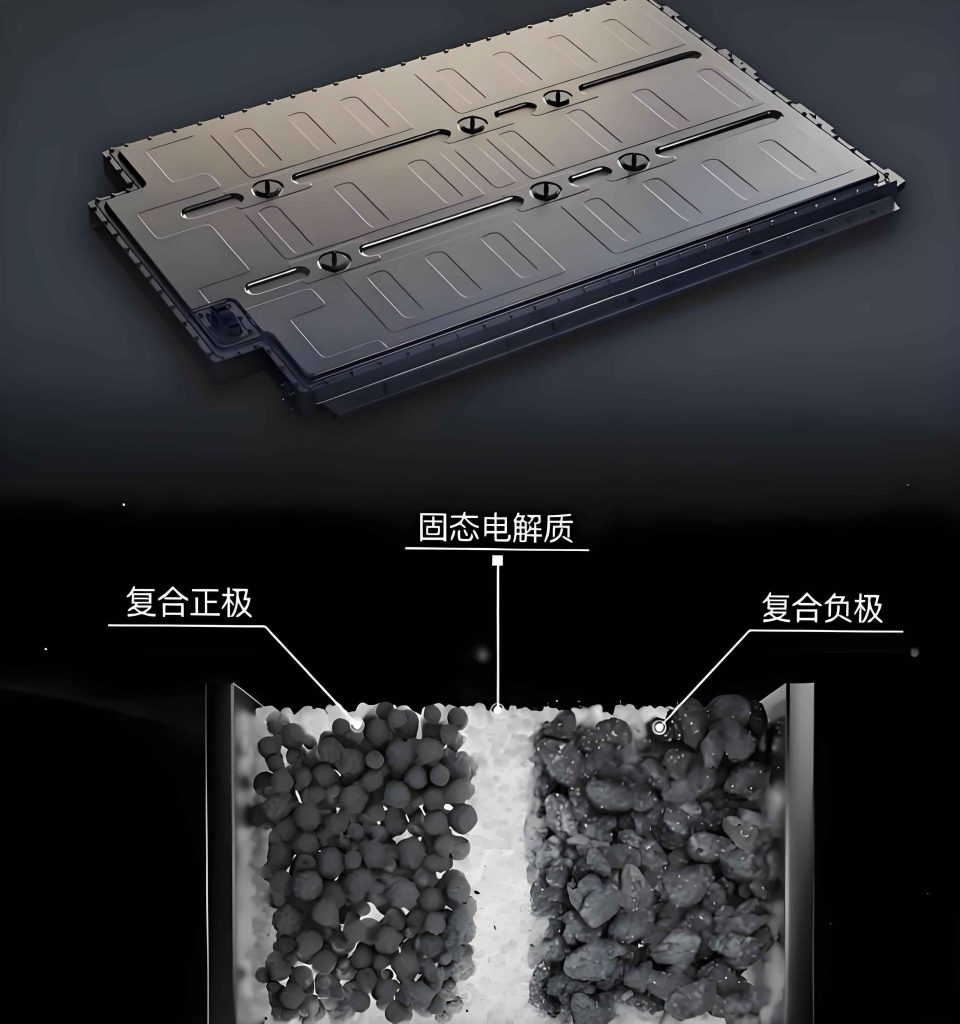
The preparation of materials for solid-state batteries involves multiple steps to ensure optimal properties. We begin by synthesizing LLZTO powder using a solid-state reaction method. Stoichiometric amounts of LiOH·H2O, La2O3, ZrO2, and Ta2O5 are mixed, with an excess of 10 wt% LiOH·H2O to compensate for lithium loss during high-temperature processing. A small amount of Al2O3 is added as a sintering aid. The mixture is ball-milled, dried, sieved, and then calcined at 900°C for 6 hours in air, followed by cooling to room temperature. The resulting LLZTO powder is further ball-milled for 48 hours to achieve a fine particle size distribution, which is crucial for effective integration into composite electrolytes. The phase purity and crystal structure of LLZTO are characterized by X-ray diffraction (XRD), confirming a cubic garnet structure without impurities. The particle morphology and size distribution are analyzed using scanning electron microscopy (SEM) and laser diffraction, respectively, revealing spherical particles with an average diameter of approximately 150 nm. This LLZTO powder serves as both a coating material for cathode modification and a filler in the solid electrolyte to enhance ionic conductivity.
For cathode modification, commercial NCM523 powder is used as the base material. The surface coating is performed via a mechanical fusion coating technique, which utilizes centrifugal forces to apply pressure, friction, and shear stress on particles, enabling uniform coating of inorganic materials on the cathode surface. In this process, NCM523 powder is mixed with either Al2O3 nanoparticles (average size 40 nm) or LLZTO powder (average size 150 nm) in a nitrogen atmosphere to prevent oxidation. The mixture is processed in a mechanical coating machine for 30 minutes, resulting in a thin, continuous coating layer on the NCM523 particles. The coated materials, denoted as Al2O3-NCM523 and LLZTO-NCM523, are characterized by transmission electron microscopy (TEM) to verify coating thickness and uniformity. The TEM images show that the coating layers are approximately 40–80 nm thick for Al2O3 and 50 nm for LLZTO, effectively encapsulating the cathode particles and providing a barrier against direct contact with the polymer electrolyte. This coating strategy is critical for improving the interfacial stability in solid-state batteries, as it reduces the electrochemical potential reaching the polymer and minimizes side reactions.
The composite solid electrolyte is prepared by blending PEO (molecular weight 700,000 g/mol), PVDF, LiTFSI salt, and LLZTO powder in a mass ratio of 2:1:1:1. The molar ratio of ethylene oxide (EO) units in PEO to Li+ ions is maintained at 12:1 to ensure sufficient lithium-ion coordination and transport. The materials are dissolved in N,N-dimethylformamide (DMF) and stirred vigorously to form a homogeneous slurry with a solid content of 15 wt%. After degassing under vacuum to remove air bubbles, the slurry is cast onto a release film using a doctor blade technique and dried at 65°C for 12 hours in a convection oven, followed by further drying under vacuum at 65°C for another 12 hours. This process yields a flexible, self-standing composite electrolyte membrane with a thickness of about 50–100 μm. The ionic conductivity of the electrolyte is measured by electrochemical impedance spectroscopy (EIS) over a temperature range of 30–80°C, using stainless steel blocking electrodes. The conductivity is calculated using the formula: $$\sigma = \frac{l}{R \cdot S}$$ where \(\sigma\) is the ionic conductivity (S/cm), \(l\) is the thickness of the electrolyte membrane (cm), \(R\) is the bulk resistance obtained from the EIS Nyquist plot (Ω), and \(S\) is the contact area between the electrolyte and electrodes (cm2). The temperature dependence of conductivity follows the Arrhenius equation: $$\sigma = A \exp\left(-\frac{E_a}{kT}\right)$$ where \(A\) is the pre-exponential factor, \(E_a\) is the activation energy for ion conduction, \(k\) is the Boltzmann constant, and \(T\) is the absolute temperature. This analysis helps in understanding the ion transport mechanisms in the composite electrolyte, which are vital for optimizing solid-state battery performance.
The electrochemical stability window of the composite electrolyte is evaluated by linear sweep voltammetry (LSV) from 2.5 V to 6.0 V versus Li/Li+ at a scan rate of 5 mV/s. This test determines the voltage range within which the electrolyte remains stable without significant decomposition, which is crucial for high-voltage cathode applications in solid-state batteries. Additionally, the interfacial compatibility between the electrolyte and lithium metal anode is assessed by symmetric Li/electrolyte/Li cell cycling and EIS measurements to monitor resistance changes over time. These characterizations provide insights into the practical usability of the electrolyte in solid-state battery systems.
For electrode preparation, composite cathodes are fabricated by mixing the coated NCM523 materials (Al2O3-NCM523 or LLZTO-NCM523) with Super P carbon black as a conductive additive, PVDF as a binder, and the PEO-based composite electrolyte powder in a mass ratio of 80:4:2:14. The mixture is dispersed in N-methyl-2-pyrrolidone (NMP) and ball-milled for 2 hours to form a uniform slurry. This slurry is coated onto a 16 μm thick aluminum foil current collector using a doctor blade, dried at 105°C for 6 hours in air, and then vacuum-dried at 105°C for 12 hours to remove residual solvent. The resulting cathode sheets are calendared to achieve a thickness of approximately 90 μm, ensuring good electronic and ionic contact within the electrode. The microstructure of the composite cathode is examined by SEM, showing a porous yet interconnected network of active material particles, conductive carbon, and polymer electrolyte, which facilitates efficient ion and electron transport. To further improve interface adhesion, the solid electrolyte slurry is directly coated onto the composite cathode surface and dried under similar conditions, creating an integrated cathode-electrolyte structure. This monolithic design reduces the interfacial resistance between the cathode and electrolyte, which is a common issue in solid-state batteries due to poor solid-solid contact.
The solid-state batteries are assembled in a coin-cell configuration or as laminated pouch cells for larger-scale testing. The integrated cathode-electrolyte layer is paired with a lithium metal foil anode (50 μm thick) and sealed in an argon-filled glovebox to prevent moisture and oxygen contamination. For performance evaluation, the cells are tested at 60°C to enhance the ionic conductivity of the PEO-based electrolyte, which typically exhibits higher conductivity at elevated temperatures due to increased polymer chain mobility. Galvanostatic charge-discharge cycling is conducted at various C-rates (e.g., 0.05C, 0.1C, 0.2C, 0.5C, and 1C) within a voltage range of 2.8–4.3 V versus Li/Li+ to assess capacity, voltage profiles, and rate capability. Cycle life tests are performed at 0.1C over multiple cycles to monitor capacity retention and impedance growth. EIS measurements are taken before and after cycling to analyze changes in bulk and interfacial resistances, which are indicative of degradation mechanisms in solid-state batteries.
The results from material characterization reveal that the LLZTO powder synthesized via solid-state reaction possesses a pure cubic garnet structure, as confirmed by XRD patterns matching standard reference data. The SEM images show that the LLZTO particles are spherical with minimal aggregation, and the particle size distribution analysis indicates a median diameter (D50) of 150 nm, with most particles ranging from 20 to 500 nm. This fine and uniform particle size is advantageous for forming dense coatings on cathode materials and for dispersing evenly in composite electrolytes. For the coated NCM523 materials, TEM analysis demonstrates that both Al2O3 and LLZTO form continuous layers on the cathode particle surfaces, with thicknesses around 50 nm. The coating appears homogeneous, covering the irregular surfaces of NCM523 particles and providing effective isolation from the polymer electrolyte. This is crucial for preventing oxidative reactions at high voltages, as the coating layers act as physical barriers that reduce the electrochemical potential applied to the PEO-based components. The successful coating is attributed to the mechanical fusion process, which applies high shear forces to embed the coating materials onto the cathode surfaces without damaging the underlying structure.
The composite solid electrolyte membrane exhibits excellent flexibility and mechanical integrity, allowing it to be handled easily during battery assembly. The ionic conductivity measurements show that the addition of LLZTO fillers significantly enhances conductivity compared to a pure polymer electrolyte. At 60°C, the composite electrolyte (PEO-PVDF-LiTFSI-LLZTO) achieves an ionic conductivity of 4.2 × 10⁻⁴ S/cm, which is nearly double that of a similar electrolyte without LLZTO fillers (2.1 × 10⁻⁴ S/cm). This improvement is due to the creation of additional ion-conduction pathways along the ceramic-polymer interfaces and the high intrinsic conductivity of LLZTO. The temperature-dependent conductivity data follow an Arrhenius behavior, with activation energies calculated from the slopes of the plots. For the composite electrolyte, the activation energy is approximately 0.45 eV, indicating favorable ion transport kinetics. The LSV results demonstrate that the composite electrolyte has a stable electrochemical window up to 5.0 V versus Li/Li+, which is wider than that of pure PEO electrolytes (typically below 4.0 V). This expansion is attributed to the presence of PVDF and LLZTO, which improve the electrochemical stability and suppress polymer oxidation at high voltages. These properties make the composite electrolyte suitable for use with high-voltage cathode materials like NCM523 in solid-state batteries.
The electrochemical performance of the solid-state batteries is summarized in the following tables and analysis. Table 1 compares the initial discharge capacities and average voltages for batteries with uncoated NCM523, Al2O3-coated NCM523, and LLZTO-coated NCM523 cathodes at 0.1C and 60°C. The data highlight the benefits of coating modifications in enhancing capacity and reducing polarization.
| Cathode Material | Initial Discharge Capacity (mAh/g) | Average Discharge Voltage (V) | Charge Transfer Resistance (Ω) |
|---|---|---|---|
| Uncoated NCM523 | 165.7 | 4.133 | 360 |
| Al2O3-NCM523 | 164.6 | 4.173 | 290 |
| LLZTO-NCM523 | 168.2 | 4.175 | 278 |
The LLZTO-coated cathode shows the highest discharge capacity and average voltage, along with the lowest charge transfer resistance, indicating improved interfacial kinetics. This is consistent with the role of LLZTO as a fast ion conductor, which facilitates lithium-ion diffusion across the cathode-electrolyte interface. In contrast, Al2O3, being an insulating material, may slightly hinder ion transport, though it still provides protective benefits. The rate capability tests, as shown in Table 2, further illustrate the performance advantages of the LLZTO-coated cathode across different current densities.
| C-rate | Discharge Capacity for LLZTO-NCM523 (mAh/g) | Capacity Retention (%) |
|---|---|---|
| 0.05C | 170.3 | 100 |
| 0.1C | 168.2 | 98.8 |
| 0.2C | 145.6 | 85.5 |
| 0.5C | 99.6 | 58.5 |
| 1C | 29.4 | 17.3 |
The capacity retention decreases at higher C-rates due to kinetic limitations, but the LLZTO-coated cathode maintains reasonable performance up to 0.5C, demonstrating its suitability for moderate-rate applications in solid-state batteries. The cycling stability data, presented in Figure 1 (though not shown here, described in text), reveal that after 50 cycles at 0.1C, the LLZTO-NCM523 battery retains 95.2% of its initial capacity (160.1 mAh/g), while the Al2O3-NCM523 battery retains 91.3% (150.5 mAh/g), and the uncoated NCM523 battery suffers severe degradation, retaining only 11.3 mAh/g (6.8% retention). This underscores the critical role of coating in preserving cathode integrity and preventing capacity fade over cycles. The EIS analysis before and after cycling shows that the interfacial resistance increases dramatically for uncoated NCM523 (from 360 Ω to 1825 Ω), whereas for coated cathodes, the resistance rises only modestly (to 440 Ω for Al2O3-NCM523 and 395 Ω for LLZTO-NCM523). This indicates that the coating layers effectively suppress side reactions and maintain stable interfaces, which is essential for long-term operation of solid-state batteries.
The enhanced performance of LLZTO-coated cathodes can be explained by several factors. First, LLZTO is a fast ion conductor with high lithium-ion conductivity (on the order of 10−4 S/cm at room temperature), so it not only protects the cathode but also provides additional ion-transport channels at the interface. This reduces the overall impedance and improves rate capability. Second, the mechanical fusion coating process ensures a uniform and adherent layer that minimizes direct contact between NCM523 and the PEO-based electrolyte, thereby lowering the electrochemical potential experienced by the polymer and reducing oxidative degradation. The coating also helps to buffer volume changes in the cathode during cycling, reducing mechanical stress and cracking. In contrast, Al2O3 coatings, while effective as barriers, do not contribute to ion conduction and may introduce slight resistive effects. However, both coatings significantly improve cycle life compared to uncoated cathodes, highlighting the general efficacy of surface modification strategies for solid-state batteries.
The composite electrolyte plays a complementary role in optimizing solid-state battery performance. By incorporating PVDF, the electrolyte gains better film-forming ability and mechanical strength, which prevents short circuits and enhances durability. The LLZTO fillers further boost ionic conductivity and electrochemical stability, as evidenced by the wide voltage window. The integrated cathode-electrolyte design eliminates the need for a separate electrolyte layer, reducing interfacial resistance and simplifying manufacturing. This monolithic approach is particularly beneficial for solid-state batteries, where poor contact between solid components is a major bottleneck. The synergy between coated cathodes and composite electrolytes results in batteries with high energy density, excellent safety, and extended cycle life, making them promising candidates for next-generation energy storage.
From a theoretical perspective, the performance improvements can be modeled using equations that describe ion transport and interface kinetics. For instance, the overall cell resistance in a solid-state battery can be expressed as: $$R_{\text{total}} = R_{\text{bulk}} + R_{\text{interface}} + R_{\text{charge transfer}}$$ where \(R_{\text{bulk}}\) is the resistance of the electrolyte and electrodes, \(R_{\text{interface}}\) is the resistance due to poor contact at interfaces, and \(R_{\text{charge transfer}}\) is the resistance associated with electrochemical reactions. By minimizing \(R_{\text{interface}}\) through coating and monolithic integration, and reducing \(R_{\text{bulk}}\) via composite electrolytes, the total resistance decreases, leading to better performance. Additionally, the Nernst equation can be used to relate the cell voltage to ion concentrations: $$E = E^0 – \frac{RT}{nF} \ln Q$$ where \(E\) is the cell potential, \(E^0\) is the standard potential, \(R\) is the gas constant, \(T\) is temperature, \(n\) is the number of electrons transferred, \(F\) is Faraday’s constant, and \(Q\) is the reaction quotient. The coating layers help maintain stable ion concentrations at the interface, preventing voltage hysteresis and capacity loss. These theoretical insights support the experimental observations and guide further optimization of solid-state battery systems.
In conclusion, this study demonstrates that surface coating of NCM523 cathode materials with inorganic layers, particularly LLZTO, combined with a PEO-based composite electrolyte, significantly enhances the electrochemical performance of solid-state batteries. The coating process via mechanical fusion effectively isolates the cathode from the polymer electrolyte, reducing oxidative degradation and interfacial resistance. The composite electrolyte, incorporating PVDF and LLZTO fillers, exhibits high ionic conductivity and a wide electrochemical window, enabling stable operation at high voltages. The integrated cathode-electrolyte design further improves interface compatibility, leading to superior cycle stability, higher discharge voltages, and lower internal resistance at elevated temperatures. These findings underscore the importance of material modifications and interface engineering in advancing solid-state battery technology. Future work could explore other coating materials, optimize coating thickness, and scale up the manufacturing processes for commercial applications. Overall, solid-state batteries hold great promise for safe and high-energy-density storage, and continued research in areas like cathode coating and electrolyte development will be crucial for realizing their full potential.
The broader implications of this research extend to various fields, including renewable energy integration, electric transportation, and consumer electronics. Solid-state batteries with improved performance and safety could accelerate the adoption of clean energy solutions and reduce reliance on fossil fuels. Moreover, the techniques developed here, such as mechanical fusion coating and composite electrolyte fabrication, may be applicable to other battery chemistries and energy storage systems. As the demand for efficient and reliable energy storage grows, innovations in solid-state battery design will play a pivotal role in shaping a sustainable future. We encourage further exploration of these strategies to overcome remaining challenges and unlock new possibilities for solid-state batteries in diverse applications.