
With the continuous advancement of the electrification of commercial vehicles, the technical roadmap and bottlenecks for the electric drive unit are becoming increasingly clear. While the penetration rate of electric drive unit systems in the commercial vehicle sector has been gradually increasing in recent years, the number of manufacturers capable of supplying stable, high-performance electric drive unit products in bulk remains limited, with many being international brands. In the process of achieving breakthroughs in the research and development of the electric drive unit, bench testing and validation are indispensable stages, crucial for enhancing the unit’s performance.
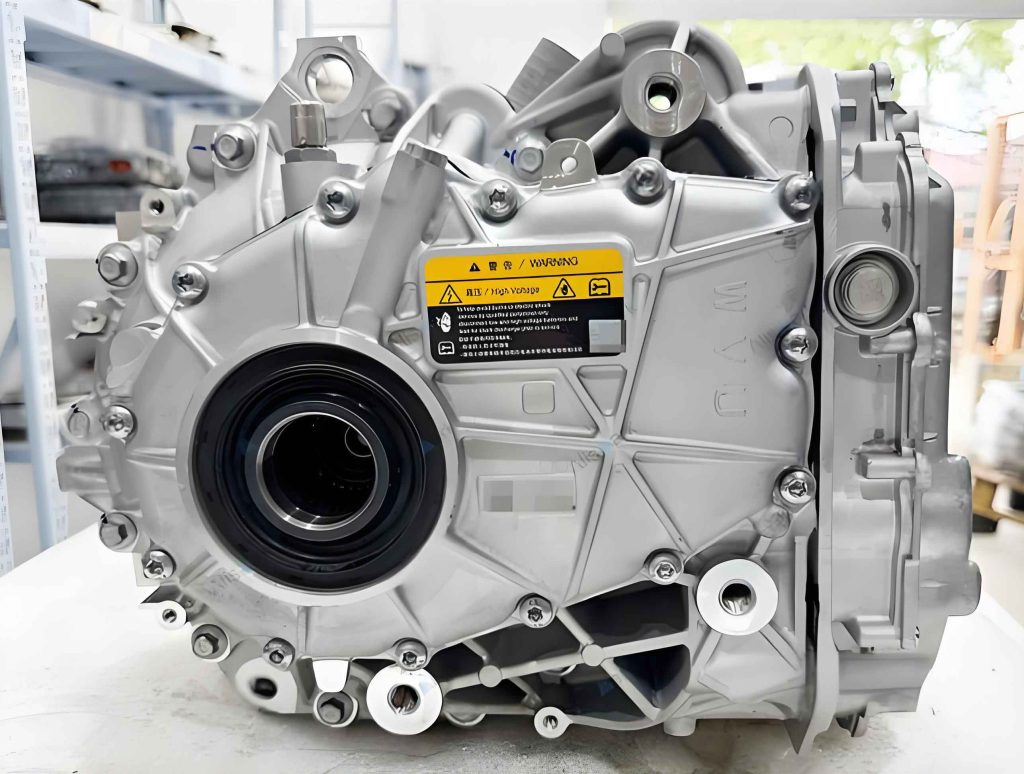
In recent years, domestic test benches have experienced rapid development, and their technology has gradually matured. However, overall, they are still in a stage dominated by static or quasi-static tests such as basic performance tests, efficiency tests, and durability tests. Compared to imported test benches, the main shortcomings exhibited by domestic benches are as follows.
| Area of Gap | Specific Shortcomings | Impact on Development |
|---|---|---|
| Stability & Repeatability | Test result consistency and long-term operational stability are insufficient. | Reduces reliability of validation data, increasing development risk. |
| Dynamic Response Capability | Inability to precisely capture performance under complex, transient conditions. | Hinders accurate evaluation of real-world driving performance and control system interaction. |
| System Openness & Flexibility | Rigid architecture makes it difficult to adapt to rapid iterations of the electric drive unit. | Slows down development cycles and increases integration costs for new unit variants. |
| Data Post-Processing | Lack of advanced tools for deep analysis of high-speed, synchronized data streams. | Limits insight extraction from tests, affecting optimization potential. |
Furthermore, due to the rapid development of electrification in recent years, numerous domestic enterprises and associations have entered the field to engage in the formulation of related products and testing standards. This has led to a highly fragmented and non-systematic landscape of testing standards related to the electric drive unit within the country. Simultaneously, the forward-looking nature and先进性 of both products and related testing standards are noticeably inadequate, failing to correctly guide the development direction for enterprises researching and developing electric drive unit products.
Prospective Testing Requirements
1. Customized Testing Solutions
With the electrification of commercial vehicle powertrains, requirements for comprehensive vehicle energy consumption under various conditions and other aspects are gradually increasing. However, due to the vast and complex array of commercial vehicle types, existing test specifications struggle to cover all operational scenarios, particularly performance assessments under extreme environmental conditions. Therefore, there is an urgent need to refine testing methods, segmenting test content and technical indicators by vehicle type and application场景. The立项 of relevant group standards also confirms this demand.
The core of customization lies in defining application-specific duty cycles. For a delivery truck and a mining dump truck, the torque-speed profiles are vastly different. A standardized test fails to validate the electric drive unit for its intended use. The required torque $T_{req}$ over a duty cycle can be derived from vehicle dynamics:
$$ T_{req}(t) = \frac{r_{wheel}}{\eta_{trans}} \left[ m \cdot g \cdot f_r \cdot \cos(\theta(t)) + \frac{1}{2} \rho_a \cdot C_d \cdot A_f \cdot v(t)^2 + m \cdot g \cdot \sin(\theta(t)) + \delta \cdot m \cdot a(t) \right] $$
where $r_{wheel}$ is wheel radius, $\eta_{trans}$ is transmission efficiency, $m$ is vehicle mass, $g$ is gravity, $f_r$ is rolling resistance coefficient, $\theta$ is road gradient, $\rho_a$ is air density, $C_d$ is drag coefficient, $A_f$ is frontal area, $v$ is velocity, $\delta$ is rotational inertia factor, and $a$ is acceleration. Customized testing requires the bench to accurately replicate these unique $T_{req}(t)$ and corresponding speed $\omega(t)$ profiles.
2. Integrated and Modular Testing
As new energy commercial vehicle electric drive systems develop towards a high degree of integration, testing methods must also adapt to this change. Integrated electric drive systems combine the motor, inverter, gearbox, sensors, and other related components into a single unit. Testing methods need to comprehensively evaluate the overall performance and reliability of such integrated systems while simultaneously aiming to streamline the testing process and maximize testing efficiency. Furthermore, the integration of functional components demands that the testing capability of the electric drive unit test bench be rapidly and flexibly configurable, placing higher requirements on the stability and security of the entire hardware and software system.
| Aspect | Traditional Dispersed System | Modern Integrated Electric Drive Unit | Implication for Testing |
|---|---|---|---|
| System Boundary | Motor, Inverter, Gearbox tested separately. | Single, sealed unit containing all powertrain elements. | Test focus shifts from component interfaces to total system behavior and internal thermal/EMI management. |
| Key Metrics | Individual efficiency, peak torque/speed. | System efficiency map, continuous power rating, NVH, thermal derating characteristics. | Bench must measure input DC power and output mechanical power simultaneously under dynamic load to calculate system efficiency $\eta_{sys}$: $$ \eta_{sys}(t) = \frac{T(t) \cdot \omega(t)}{V_{dc}(t) \cdot I_{dc}(t)} $$ |
| Fault Simulation | Complex to inject faults at component interfaces. | Fault injection (e.g., sensor failure, over-temperature) must be done via unit’s communication interface. | Bench requires sophisticated Hardware-in-the-Loop (HiL) capabilities to simulate vehicle network commands and fault states. |
3. High-Dynamic Real-World Driving Cycle Simulation Testing
Traditional performance testing of automotive传动 systems, such as dynamics, could only be conducted through整车 road tests or chassis dynamometer tests, which are costly and inefficient. The increasing integration level of the electric drive unit system makes bench testing a viable possibility. To conduct performance tests like dynamics on a bench, the test bench must first possess the capability for high-dynamic real-world driving cycle simulation. Secondly, relevant test specifications need to be完善. Currently, leading domestic enterprises and research institutions have begun exploring this area of testing.
Furthermore, with the普及化 of new energy vehicles, requirements for performance indicators such as the high-efficiency zone of the electric drive unit system are becoming more精细化 and精准化. This demands that the development and testing phases of the electric drive unit system更接近实车运行状况. This implies that bench testing for the electric drive unit system is gradually evolving from fixed-parameter tests to tests simulating real-world driving cycle parameters, i.e., from static and semi-static testing towards high-dynamic testing. Related test validation and standards are also gradually taking shape.
A key challenge is the accurate replication of vehicle inertia and road load on a bench with limited mechanical inertia. This is achieved through “virtual vehicle” models in the bench controller. The dynamometer applies a torque $T_{dyn}$ calculated in real-time to emulate the vehicle’s behavior:
$$ T_{dyn}(t) = T_{req}(t) – J_{eq} \cdot \frac{d\omega}{dt} $$
where $J_{eq}$ is the equivalent vehicle inertia reflected at the electric drive unit output shaft, and $\frac{d\omega}{dt}$ is the angular acceleration. The bench controller must solve this equation with high fidelity and minimal latency to create a realistic feel for the unit under test.
4. Bench Test Validation Methods for Electric Drive Unit Control Strategies
With the development of automotive electrification, the importance of control strategies in vehicle propulsion systems composed of the electric drive unit is increasingly prominent. Traditionally, experimental validation of control strategies during development is divided into two main stages. The first stage involves using a Hardware-in-the-Loop (HiL) system combined with models of the motor and vehicle to validate the strategy and functionality of a single controller (e.g., the Vehicle Control Unit or VCU) in the early R&D phase. While this approach can effectively缩短 development time and cost, it focuses more on signal-level functional validation of the control strategy, does not involve power-level testing, and often fails to accurately simulate complex nonlinear subsystems within the vehicle system. This can easily lead to incomplete development and validation of the control strategy, yielding unrealistic test results.
The second stage occurs later in R&D, where the controller is installed in a complete vehicle for road testing to further verify the accuracy, reliability, and safety of the control strategy. However,整车 validation is firstly affected by the整车 development schedule; secondly, it is constrained by safety and environmental limitations, making it impossible to test the boundary limits of the control strategy. Moreover, both of the aforementioned test validation methods have significant limitations in fault reproduction and fault injection, often being time-consuming and labor-intensive without achieving the desired test outcomes.
The concept of a HiL test bench addresses this gap. Unlike traditional HiL which tests the controller in isolation with simulated plant models, a HiL test bench incorporates the complete physical electric drive unit (the “plant”) into the loop. The bench system provides the mechanical load and electrical input, while the vehicle and driver are simulated in real-time. This allows for power-level testing of the control strategy under safe, repeatable, and controllable laboratory conditions, enabling boundary condition tests and systematic fault injection that are impractical on actual vehicles.
Key Testing Technologies
Key testing technologies are the crucial link determining whether the electric drive unit test bench can obtain authentic test data according to the testing methods. These technologies involve the mechanical system, electrical system, measurement system, and software control system of the entire test bench. It is necessary to distill the key content and develop corresponding key testing technologies based on the testing methods and objectives.
1. Forward Bench Development Based on System-Level Modal Analysis
With the rapid development of automotive powertrain electrification, the proportion of vibration and noise generated by the electric drive unit system during vehicle operation has become more pronounced. To improve driving comfort, controlling the NVH (Noise, Vibration, and Harshness) performance of the electric drive unit is particularly important. Therefore, to better reflect the NVH characteristics of the electric drive unit system and ensure the authenticity and credibility of NVH feature points during testing, system-level modal analysis is conducted during the bench design phase. This involves合理 designing the mass, stiffness, and damping distribution of the bench to increase the first-order natural frequency of the bench base, thereby reducing the耦合影响 between the test bench and the electric drive unit under test.
The requirements for dynamic performance testing and real-world driving cycle simulation testing place extremely high demands on the dynamic response capability of the test bench. Utilizing dynamics analysis software combined with modal analysis enables low-inertia design of the drive shafting. This aims to minimize the response time lag or delay of the bench’s dynamometer to the control system’s commands, thereby ensuring high dynamic response of the bench system. This guarantees that the performance of the electric drive unit system under actual road condition模拟 can be accurately reflected.
The design objective is to ensure the bench’s first rigid body mode is significantly higher than the maximum operating frequency of the unit. If the electric drive unit has a maximum mesh order frequency $f_{mesh}^{max}$, the bench base first natural frequency $f_{bench}$ should satisfy:
$$ f_{bench} > k \cdot f_{mesh}^{max} $$
where $k$ is a safety factor, typically $k \geq 1.5$. This prevents bench resonances from amplifying or masking the unit’s own NVH signatures.
2. High-Speed Signal Processing Technology Based on Real-Time Control Systems
To meet the demands of complex test conditions for high dynamic response capability, high-speed signal acquisition, and highly synchronized signal acquisition of the electric drive test bench, high-speed signal processing technology based on a real-time control system has been developed. This technology employs a combination of EtherCAT and CAN fieldbus technologies for real-time data transmission and sharing. It applies测控一体化关联 technology to achieve synchronous triggering of electrical and non-electrical signals, synchronizing them on a single timeline and correlating them with control parameters like $i_d$ and $i_q$ current to validate the dynamic response of the control system. Relevant electrical signals (especially at the PWM center) are synchronously采集每个PWM周期, making the acquired data more authentic and valuable for analysis, thereby enabling a more comprehensive evaluation of the electric drive unit‘s performance in actual operation.
The synchronization error $\Delta t_{sync}$ between different measurement channels (e.g., current, voltage, torque, speed) must be minimized. For accurate efficiency calculation under dynamic conditions, the error should be a fraction of the smallest period of interest. If analyzing phenomena up to frequency $f_{analysis}$, then:
$$ \Delta t_{sync} << \frac{1}{f_{analysis}} $$
For example, for $f_{analysis} = 10\text{kHz}$, $\Delta t_{sync}$ should be in the order of microseconds.
3. Bench Testing Technology for the Electric Drive Unit System Based on HiL
The key to the HiL test bench lies in: 1) The high-speed operation of simulation models and the seamless transmission and sharing of real-time data between heterogeneous devices, thereby enabling model verification and correction based on experiments, as well as pre-test simulation and test planning. 2) The accuracy and learnability of the simulation计算 models. One of the main objectives of establishing a HiL test bench is to simulate整车道路谱工况, thereby enabling testing of metrics like the energy consumption rate of the electric powertrain system in the laboratory. The parameter variables output by the simulation model are crucial for bench control and the smoothness of the simulated工况.
A typical HiL bench architecture integrates several real-time models:
$$ \text{Driver Model} \rightarrow \text{Vehicle Dynamics Model} \rightarrow \text{Battery Model} $$
The output of these models (desired torque, speed, DC bus voltage/current) is fed to the bench controller and power supply, which then apply these conditions to the physical electric drive unit. The unit’s response (actual torque, speed, consumption) is fed back to the models, closing the loop. The vehicle dynamics model is核心, often based on the equations mentioned earlier for $T_{req}(t)$. Its accuracy directly impacts the validity of the test.
| Component | Function | Key Performance Requirement |
|---|---|---|
| Real-Time Simulator | Runs high-fidelity vehicle, battery, and driver models. | Deterministic loop time ≤ 1 ms. |
| Bench Controller | Executes dynamometer control algorithms (speed/torque) and safety logic. | Control loop time ≤ 100 µs; seamless integration with simulator. |
| Programmable DC Power Supply | Simulates battery behavior (voltage, current limit, impedance). | Fast voltage response to emulate battery sag under load. |
| Data Acquisition System | Synchronously captures all electrical and mechanical signals. | High sample rate (>1 MS/s per channel), low synchronization jitter. |
| Fault Injection Unit | Simulates sensor failures, network errors, short circuits. | Precise, repeatable fault timing and type. |
4. Software-Hardware Coupling and Rapid Decoupling Technology
Traditional test benches, to improve bench performance, enhance system reliability, and increase协同 control capability, tend to tightly couple the entire bench’s机电软 system. However, due to the rapid technological iteration of electric drive unit products, higher demands are placed on the bench’s extensibility and开放性. Moreover, the iteration cycles for the bench’s hardware and software are not synchronized. Software iterations are faster with relatively lower marginal costs, while hardware iteration cycles, especially for mechanical hardware, are longer with higher marginal costs. Only through rapid decoupling of the bench’s hardware and software, achieving functional decoupling of the test bench, can the issues of testing efficiency and cost for the electric drive unit system be resolved. Therefore, during the architecture design of the entire test bench, software closed loops, system closed loops, and hardware closed loops are formed. The integration of hardware and software can enable more efficient data exchange and processing, thereby improving the overall system’s performance. Through close collaboration, hardware and software can jointly optimize the resource utilization of the bench testing system, enhancing the operating speed and response capability of the testing system.
This is achieved through a layered, service-oriented architecture (SOA) for the bench software. The core control functions (e.g., PID loops for dynamometer control) reside in a dedicated real-time layer with fixed interfaces. The test sequencing, data logging, and user interface reside in a non-real-time layer. Communication between layers uses well-defined APIs (Application Programming Interfaces). This allows the non-real-time test automation software to be updated or replaced without affecting the critical real-time control stability, enabling rapid adaptation to new test procedures for下一代 electric drive unit products.
5. Global System Safety Strategy
Providing sufficient openness to the bench measurement and control system also意味着 that all system parameters are designed into an adequately open生态架构. Under conditions of complete openness, safety is an issue that cannot be overlooked. To ensure safety and prevent major accidents, the safety system detection technology architecture is divided into multiple modules, facilitating协同工作 between modules and improving the system’s flexibility and extensibility. Simultaneously, considering the reliability and real-time performance of signal transmission, the diversity of response strategies, optimization of response speed, and the accuracy of execution commands and optimization of execution resources, a global system safety strategy is developed. Based on this, a bench safety matrix is formed.
The safety matrix defines actions for various fault conditions (e.g., over-speed, over-torque, over-temperature, communication loss). For each fault $F_i$, there is a corresponding safe state $S_i$ and an action $A_i$ (e.g., ramp torque to zero, open contactor). This logic is implemented in a dedicated safety PLC (Programmable Logic Controller) or in safety-rated functions within the real-time controller, independent of the main control application, ensuring fail-safe operation.
Conclusion
In summary, the development direction of domestic commercial vehicle electric drive unit bench testing technology can be归纳 as follows.
- Standardization: The establishment of forward-looking product standards,完善 and systematization of bench testing standards, and the creation of an authoritative standard system to correctly guide the healthy development of the industry.
- Bench Design Philosophy: With the development of electrification, the high-speed trend of the electric drive unit is inevitable. Consequently, test bench development will gradually shift from traditional粗犷式,笨重式 design to forward system-level design, thereby reducing the interference of the bench itself on the electric drive unit test data.
- System Flexibility: Enhancing the extensibility and flexibility of the test bench system to meet the rapid iteration of commercial vehicle electric drive units, reducing the update costs for bench hardware and software.
- Advanced Test Capabilities: Establishing a bench measurement and control integrated system based on a real-time control system to meet the high-dynamic response testing of the electric drive unit, enabling complex road condition simulation, fault reproduction, and other functions.
The evolution of the test bench is no longer just about applying torque and measuring speed. It is about creating a virtual proving ground where the physical electric drive unit interacts with a simulated vehicle and environment in real-time. Mastering the key technologies outlined—high-fidelity dynamic emulation, synchronized high-speed data acquisition, integrated HiL validation, and a flexible yet secure architecture—is essential for developing robust, efficient, and competitive electric drive units for the future of commercial transportation.