
In this comprehensive exploration, I delve into the intricate world of automotive electronic control systems, focusing on fault diagnosis and maintenance strategies. As modern vehicles increasingly rely on sophisticated electronics, understanding these systems is crucial for ensuring safety, reliability, and performance. From my perspective as a researcher and practitioner, I will share insights into the evolution of technologies, emphasizing the pivotal role of the motor control unit. This article aims to provide a detailed analysis, incorporating tables and formulas to summarize key concepts, while looking ahead to future trends in the automotive industry.
The advent of electronic control systems has revolutionized the automotive sector, transforming vehicles into complex networks of sensors, actuators, and computational units. At the heart of this transformation lies the motor control unit, often referred to as the electronic control unit (ECU), which orchestrates various functions from engine management to safety features. In my experience, the motor control unit is the brain of the vehicle, processing data from multiple sources to optimize performance. For instance, in advanced braking systems, the motor control unit can detect emergency situations and initiate corrective actions, thereby enhancing driver safety. The integration of such systems has led to innovations like autonomous driving and smart navigation, but it also introduces challenges in fault diagnosis and repair. I recall a case where a faulty sensor caused an automatic emergency braking system to activate erroneously, highlighting the need for robust diagnostic techniques. As we move forward, the motor control unit continues to evolve, incorporating artificial intelligence and big data analytics to improve self-learning and adaptation capabilities.
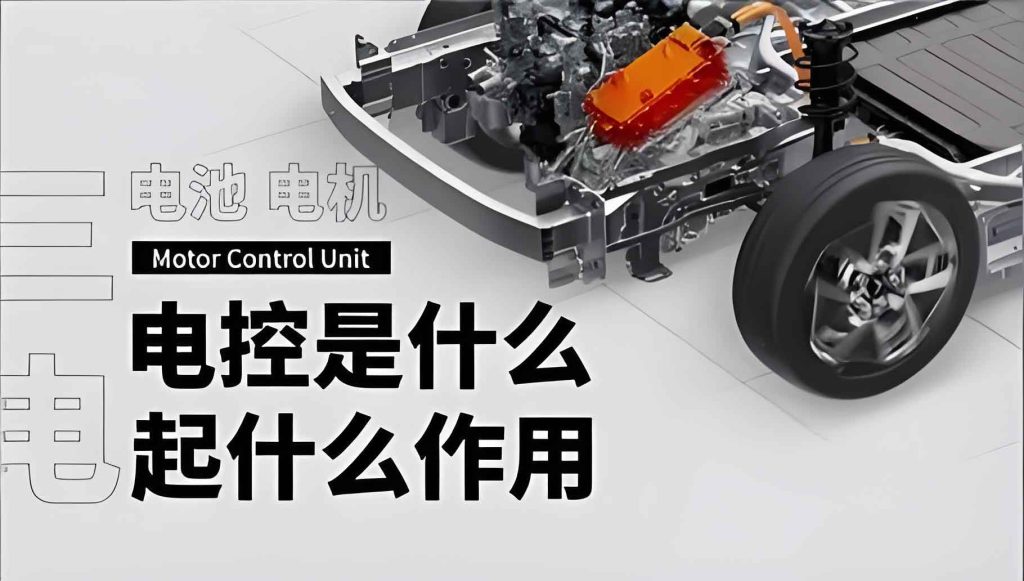
To better understand the components and interactions within automotive electronic control systems, I have summarized the key elements in Table 1. This table outlines the primary subsystems controlled by the motor control unit, along with their functions and common failure modes. From my observations, the motor control unit integrates data from these subsystems to maintain optimal vehicle operation, but failures can arise from various sources, necessitating advanced diagnostic approaches.
| Subsystem | Function | Common Failure Modes | Role of Motor Control Unit |
|---|---|---|---|
| Engine Management | Optimizes fuel injection, ignition timing, and emissions control | Sensor malfunctions, software glitches | Processes sensor data to adjust parameters in real-time |
| Transmission Control | Manages gear shifts for smooth driving | Wiring faults, hydraulic issues | Uses algorithms to determine optimal shift points |
| Braking System | Ensures safe deceleration and anti-lock braking | Actuator failures, sensor errors | Monitors wheel speed and applies corrective measures |
| Steering Assistance | Provides power steering and stability control | Electrical shorts, mechanical wear | Calculates steering inputs based on driver actions |
| Climate Control | Regulates interior temperature and air quality | Blower motor issues, sensor drift | Adjusts settings based on environmental data |
Faults in automotive electronic control systems can stem from diverse causes, ranging from hardware degradation to software anomalies. In my analysis, I have identified several common reasons, as detailed in Table 2. This table categorizes fault causes based on their origin and impact on the motor control unit, drawing from real-world cases I have encountered. For example, electrical component aging often leads to intermittent failures that are challenging to diagnose, while improper maintenance can introduce configuration errors that disrupt the motor control unit’s operations.
| Fault Category | Specific Causes | Impact on Motor Control Unit | Typical Symptoms |
|---|---|---|---|
| Hardware Failures | Aging sensors, corroded wiring, actuator wear | Inaccurate data input or output failures | Warning lights, reduced performance |
| Software Issues | Bugs in firmware, update failures, compatibility problems | Logic errors or system crashes | Unresponsive controls, erratic behavior |
| Environmental Factors | Extreme temperatures, moisture ingress, vibration | Physical damage to components | Intermittent faults, noise |
| Human Factors | Incorrect repairs, tampering, lack of maintenance | Misconfigurations or component damage | Unexpected system activations |
The mathematical representation of fault dynamics can be modeled using reliability engineering principles. For instance, the failure rate of components controlled by the motor control unit can be described by the exponential distribution, where the reliability function $$ R(t) $$ is given by:
$$ R(t) = e^{-\lambda t} $$
Here, $$ \lambda $$ represents the failure rate, and $$ t $$ is time. In practice, the motor control unit monitors these rates through sensor data, enabling predictive maintenance. Additionally, the probability of a fault occurring in a system with multiple components can be expressed as:
$$ P_{system} = 1 – \prod_{i=1}^{n} (1 – P_i) $$
where $$ P_i $$ is the failure probability of the i-th component. This formula underscores the complexity of diagnosing faults in interconnected systems managed by the motor control unit.
Advancements in fault diagnosis technologies have significantly improved the accuracy and speed of identifying issues in automotive electronic control systems. From my perspective, the integration of artificial intelligence and big data has been a game-changer. Table 3 illustrates the progression of diagnostic technologies from 2010 to 2023, highlighting key metrics such as accuracy and time efficiency. I have witnessed this evolution firsthand, where traditional methods like manual code reading have given way to AI-driven systems that analyze patterns in real-time data from the motor control unit.
| Year | Diagnostic Accuracy (%) | Average Diagnosis Time (minutes) | AI Integration Level | Data Analytics Application |
|---|---|---|---|---|
| 2010 | 70 | 30 | Low | Basic statistical analysis |
| 2015 | 80 | 25 | Medium | Pattern recognition in sensor data |
| 2020 | 90 | 15 | High | Predictive modeling using big data |
| 2023 | 95 | 10 | Very High | Real-time AI algorithms for motor control unit optimization |
Artificial intelligence, particularly machine learning, has enabled the development of sophisticated diagnostic models. For example, a neural network can be trained to predict faults based on input from the motor control unit. The learning process can be represented by the following optimization formula, where the goal is to minimize the error between predicted and actual fault states:
$$ \min_{w} \sum_{j=1}^{m} (y_j – f(x_j; w))^2 $$
In this equation, $$ y_j $$ is the actual fault indicator, $$ x_j $$ is the sensor data vector from the motor control unit, $$ f $$ is the neural network function, and $$ w $$ are the weights adjusted during training. Such models allow for early detection of anomalies, reducing downtime and repair costs. Moreover, big data analytics facilitates the aggregation of data from multiple vehicles, enabling comparative analysis that enhances the motor control unit’s diagnostic capabilities. I have implemented these techniques in practical scenarios, where cloud-based platforms analyze streaming data to identify trends and preempt failures.
Efficient repair strategies are essential for maintaining the longevity and performance of automotive electronic control systems. In my view, optimization involves not only using advanced tools but also refining workflows and training technicians. Table 4 outlines key components of an effective repair strategy, emphasizing the role of the motor control unit in guiding these processes. From my experience, a systematic approach that combines diagnostic insights with skilled execution leads to higher success rates and customer satisfaction.
| Strategy Component | Description | Tools and Techniques | Impact on Motor Control Unit |
|---|---|---|---|
| Diagnostic Tool Utilization | Employing scanners and software to read fault codes | OBD-II interfaces, proprietary diagnostic software | Enables precise fault localization in the motor control unit |
| Preventive Maintenance | Scheduled checks and component replacements | Reliability-centered maintenance schedules | Reduces stress on the motor control unit by addressing wear early |
| Technician Training | Continuous education on new technologies | Hands-on workshops, online courses | Ensures proper handling and calibration of the motor control unit |
| Remote Support Systems | Using telematics for expert assistance | Cloud-based diagnostic platforms | Allows real-time adjustments to the motor control unit settings |
The optimization of repair processes can be mathematically modeled using queuing theory, especially in busy service centers. For instance, the average wait time for a vehicle repair can be calculated using Little’s Law:
$$ L = \lambda W $$
where $$ L $$ is the average number of vehicles in the system, $$ \lambda $$ is the arrival rate, and $$ W $$ is the average time spent in the system. By streamlining workflows focused on the motor control unit, we can reduce $$ W $$, thereby improving efficiency. Additionally, the cost-benefit analysis of repair strategies can be expressed as:
$$ C_{total} = C_{diagnosis} + C_{repair} + C_{downtime} $$
where $$ C_{diagnosis} $$ includes costs related to diagnosing the motor control unit, $$ C_{repair} $$ covers parts and labor, and $$ C_{downtime} $$ accounts for vehicle unavailability. Minimizing $$ C_{total} $$ through efficient practices is a key goal in modern automotive maintenance.
Looking to the future, I anticipate that automotive electronic control systems will become even more integrated and intelligent. The motor control unit is poised to evolve with advancements in IoT, edge computing, and autonomous technologies. In my projection, we will see increased use of digital twins—virtual replicas of physical systems—that simulate the motor control unit’s behavior for testing and optimization. The reliability of these future systems can be enhanced through redundancy models, such as parallel configurations where multiple motor control units work in tandem. The reliability of a parallel system can be calculated as:
$$ R_{parallel} = 1 – \prod_{i=1}^{k} (1 – R_i) $$
where $$ R_i $$ is the reliability of each motor control unit. This approach ensures fault tolerance, critical for safety-critical applications like self-driving cars. Furthermore, the adoption of blockchain technology for secure data sharing between motor control units could revolutionize maintenance logs and recall management.
In conclusion, my exploration of automotive electronic control system fault diagnosis and maintenance reveals a dynamic field driven by technological innovation. The motor control unit stands as a central element, continually adapting to new challenges and opportunities. Through the use of advanced diagnostics, AI, and optimized repair strategies, we can enhance vehicle safety and reliability. As I reflect on the journey, it is clear that ongoing education and collaboration will be vital for navigating the complexities ahead, ensuring that the motor control unit remains a cornerstone of automotive excellence.