
The pursuit of higher energy density and enhanced safety in electrochemical energy storage has driven intensive research beyond conventional lithium-ion batteries with organic liquid electrolytes. Among the most promising alternatives, the oxide-based solid-state battery stands out due to its potential for exceptional energy density and intrinsic safety, stemming from the use of non-flammable, mechanically robust solid electrolytes with wide electrochemical stability windows. However, the widespread adoption of the oxide-based solid-state battery is critically hampered by a fundamental challenge: excessively high interfacial impedance at the electrode-electrolyte contacts.
Unlike liquid electrolytes that can permeate porous electrodes and form intimate interfacial contact, solid-solid interfaces in an oxide-based solid-state battery are prone to poor physical contact, interfacial reactions, and the formation of resistive interphases. This is particularly acute with oxide electrolytes like garnet-type Li7La3Zr2O12 (LLZO), which, despite their high bulk ionic conductivity, often exhibit severe interfacial resistance against both lithium metal anodes and high-voltage cathode materials. This high impedance leads to significant polarization, poor rate capability, rapid capacity fade, and premature cell failure, thereby negating the inherent advantages of the solid-state battery concept.
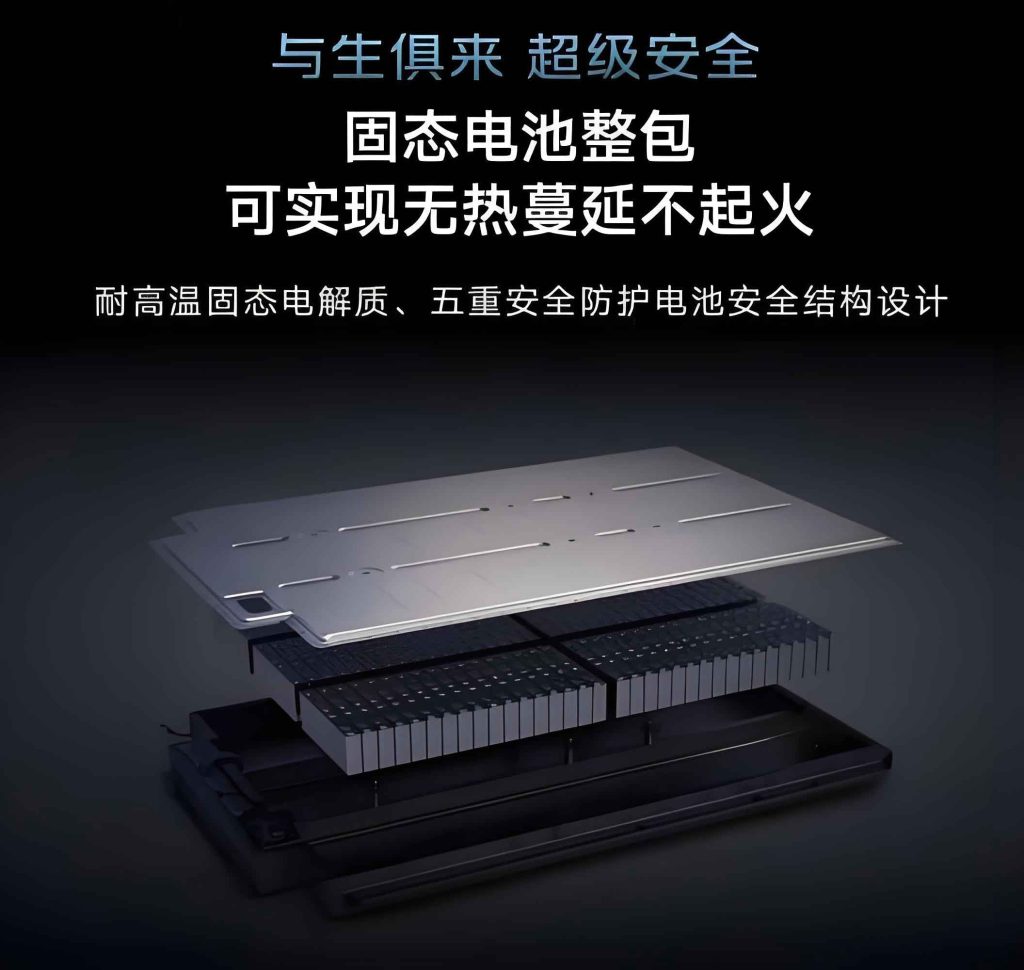
This article, from a first-person research perspective, delves into strategic approaches for mitigating these interfacial bottlenecks. The core of our investigation focuses on engineering dedicated interlayers at both the anode and cathode interfaces of a model LLZO-based solid-state battery. We demonstrate that by applying a metallic aluminum (Al) modification layer at the lithium anode side and a poly(ethylene oxide) (PEO)-based polymer buffer at the cathode side, the total interfacial impedance can be dramatically reduced. This reduction translates directly into markedly improved electrochemical performance, including stable lithium plating/stripping and significantly extended cycle life for full cells, paving the way for more viable oxide-based solid-state battery technologies.
Fundamental Interfacial Challenges in Oxide-Based Solid-State Batteries
The superior properties of oxide solid electrolytes are counterbalanced by their rigid and ceramic nature, which creates two distinct yet interconnected interfacial problems.
On the anode side, typically lithium metal, the primary issue is poor wettability and contact loss. The surface of sintered LLZO pellets is often contaminated with lithium carbonates (Li2CO3) and hydroxides (LiOH) formed by air exposure. This passivation layer is highly “lithiophobic,” meaning molten lithium does not spread well on it. Consequently, even when lithium is melted onto the LLZO surface, the contact remains incomplete, leaving voids and gaps. This insufficient contact area creates a high interfacial resistance for Li+ transfer. Furthermore, during cycling, the dynamic volume changes of the lithium anode can further detach it from the rigid electrolyte, exacerbating the problem and potentially leading to lithium dendrite penetration through local contact points.
The cathode side presents a more complex, three-dimensional interface. Composite cathodes (active material, conductive carbon, solid electrolyte) require intimate contact with the dense LLZO electrolyte separator. The common method to achieve this is high-temperature co-sintering. While this improves contact, it often induces interdiffusion and chemical reactions at the interface, forming lithium-ion insulating phases (e.g., La2Zr2O7, Li-deficient layers). These resistive interphales contribute significantly to the total cell impedance. Moreover, the volumetric changes of cathode active materials during (de)lithiation can cause micro-cracks and contact loss in this brittle sintered interface during long-term cycling.
The total area-specific impedance (ASI) of a solid-state battery ($R_{total}$) can be conceptually decomposed as follows:
$$ R_{total} = R_{bulk} + R_{gb} + R_{int}^{anode} + R_{int}^{cathode} $$
where $R_{bulk}$ is the bulk resistance of the solid electrolyte, $R_{gb}$ is the grain boundary resistance, $R_{int}^{anode}$ is the anode interfacial resistance, and $R_{int}^{cathode}$ is the cathode interfacial resistance. In a poorly engineered oxide-based solid-state battery, $R_{int}^{anode}$ and $R_{int}^{cathode}$ can dominate $R_{total}$, often exceeding hundreds or even thousands of Ω cm², while the bulk electrolyte resistance might only be tens of Ω cm². Therefore, targeted interface engineering is not merely beneficial but essential for the development of a functional oxide-based solid-state battery.
Anode Interface Engineering: Aluminum Alloying Layer
To address the lithiophobic nature of the LLZO surface and promote intimate lithium contact, we explored the use of a thin aluminum (Al) metal interlayer. The principle is based on the spontaneous and thermodynamically favorable alloying reaction between lithium and aluminum to form various Li-Al phases (e.g., LiAl, Li3Al2, Li9Al4). This alloy layer serves a dual purpose: it consumes the surface Li2CO3/LiOH layer, and more importantly, it creates an interface with a high surface energy for lithium, transforming it from lithiophobic to lithiophilic.
When molten lithium is applied, it readily wets and reacts with the Al layer, forming a continuous and mechanically anchored Li-Al alloy interface. This process significantly improves the adhesion and conformal contact between lithium and the LLZO substrate, effectively eliminating macroscopic voids. The reaction can be simplified as:
$$ xLi + Al \rightarrow Li_xAl \quad (\text{where } x \ge 1) $$
This in-situ formed LixAl interphase is ionically conductive and provides a seamless pathway for Li+ flux.
We investigated three physical vapor deposition techniques to apply the Al modification layer: thermal evaporation, magnetron sputtering, and atomic layer deposition (ALD). The quality, uniformity, and adhesion of the deposited film varied significantly with the technique, which in turn profoundly impacted the resulting interfacial properties in the solid-state battery.
| Deposition Method | Process Parameters | Film Characteristics | Impact on Wettability |
|---|---|---|---|
| Thermal Evaporation | High temperature, line-of-sight deposition. | Often island-like growth, less uniform, moderate adhesion. | Improves wettability but may lead to uneven Li-Al reaction. |
| Magnetron Sputtering | Plasma-assisted, moderate energy. | Denser and more uniform film than evaporation, good adhesion. | Provides consistent lithiophilic surface for good Li spreading. |
| Atomic Layer Deposition (ALD) | Sequential self-limiting surface reactions. | Extremely uniform, conformal, pinhole-free, excellent adhesion. | Creates an ideal, homogeneous lithiophilic layer for perfect wetting. |
Electrochemical impedance spectroscopy (EIS) of Li|LLZO|Li symmetric cells revealed the stark difference. The equivalent circuit for such an interface typically includes the electrolyte resistance ($R_e$), grain boundary resistance ($R_{gb}$) in a parallel R-CPE element, and the interfacial resistance ($R_{int}$) represented by another R-CPE element corresponding to the Li/LLZO interface.
$$ Z(\omega) = R_e + \frac{R_{gb}}{1 + (j\omega R_{gb}C_{gb})^{n_{gb}}} + \frac{R_{int}}{1 + (j\omega R_{int}C_{int})^{n_{int}}} $$
For the unmodified cell, $R_{int}^{anode}$ (per interface, area-normalized) was fitted to be as high as 632.5 Ω cm². Post-modification, this value plummeted. The ALD-Al layer yielded the most impressive result, reducing the anode interface resistance to a mere 31.2 Ω cm². Sputtered Al and evaporated Al followed with 78.8 Ω cm² and 146.3 Ω cm², respectively. This order of performance directly correlates with the film quality—the more uniform and adherent the Al layer, the more effective and homogeneous the lithiophilic transformation, leading to lower and more stable interfacial resistance in the solid-state battery.
Cathode Interface Engineering: Polymer Electrolyte Buffer Layer
While sintering creates a direct bond, its drawbacks necessitate an alternative for the cathode interface. Our strategy involved introducing a soft, compliant buffer layer between the rigid LLZO electrolyte and the composite cathode. A polymer solid electrolyte is an ideal candidate due to its good flexibility, adhesion, and processability. It can accommodate volume changes of cathode particles and maintain intimate contact throughout cycling.
We selected and compared two polymer matrices: poly(vinylidene fluoride) (PVDF) and poly(ethylene oxide) (PEO), each complexed with lithium bis(trifluoromethanesulfonyl)imide (LiTFSI) salt. The choice of polymer is critical. PEO, with its flexible ethylene oxide (EO) segments that solvate Li+ ions, generally offers higher ionic conductivity at moderate temperatures (60-80°C) and better elastic properties. PVDF is more mechanically robust and has a wider electrochemical window but typically exhibits lower ionic conductivity.
The buffer layer was prepared by solution casting, resulting in a freestanding membrane. This membrane was then sandwiched between the LLZO pellet and the LiCoO2 (LCO) composite cathode. This design replaces the rigid, sintered interface with a flexible, self-adhering polymer-ceramic-polymer composite interface within the solid-state battery assembly. The polymer fills micro-gaps and establishes continuous ionic pathways.
EIS analysis of LCO|LLZO|Li full cells (with a modified anode to isolate cathode effects) quantified the benefit. The unmodified cell, which relied on a high-temperature sintered cathode interface, exhibited a massive cathode interfacial resistance of 1,457.2 Ω cm². Introducing the PVDF-based buffer layer reduced this to 663.5 Ω cm²—a significant improvement but still substantial. In contrast, the PEO-based buffer layer dramatically lowered the cathode interfacial resistance to 60.3 Ω cm².
The superior performance of PEO can be attributed to its higher ionic conductivity at the operating temperature and, crucially, its better viscoelastic properties which enable more conformal contact with both the rough LLZO surface and the porous cathode. The lower modulus of PEO allows it to flow and adapt to micro-scale irregularities, minimizing contact loss. This result underscores that the mechanical compliance of the interlayer is as important as its ionic conductivity for optimizing the cathode interface in an oxide-based solid-state battery.
Electrochemical Performance of the Engineered Solid-State Battery
The ultimate validation of our interfacial engineering approach lies in the performance of the complete cell. We assembled LCO|PEO-buffer|LLZO|Al-modification|Li full cells and subjected them to a series of tests, comparing them against baseline cells without modifications.
Impedance Summary: The synergistic effect of modifying both interfaces is clear from the total cell impedance. The baseline solid-state battery suffered from a total area-specific impedance of approximately 1,638.1 Ω cm². By integrating the Al-modified anode and the PEO-buffered cathode, the total ASI was reduced to 298.7 Ω cm²—a reduction of over 80%.
| Cell Component | Baseline ASI (Ω cm²) | Engineered ASI (Ω cm²) | Reduction Factor |
|---|---|---|---|
| Anode Interface (Rintanode) | ~632.5 | ~31.2 (ALD-Al) | ~20x |
| Cathode Interface (Rintcathode) | ~1,457.2 | ~60.3 (PEO) | ~24x |
| Total Cell (Rtotal) | ~1,638.1 | ~298.7 | ~5.5x |
Voltage Polarization and Rate Performance: The reduced impedance directly translates to lower polarization. The initial charge-discharge curves at 0.1C showed a drastically reduced voltage gap between charge and discharge for the engineered cell. The discharge capacity increased from 106.8 mAh/g for the baseline to 127.1 mAh/g for the modified solid-state battery, closely approaching the theoretical capacity of LCO within the measured voltage window (e.g., 4.3V). Rate capability tests from 0.1C to 2C consistently showed a capacity advantage of 20-35 mAh/g for the engineered cell across all rates, demonstrating improved kinetics.
Cycling Stability: The most dramatic improvement was observed in long-term cycling, a key metric for any practical solid-state battery. At a 0.1C rate, the baseline cell suffered rapid degradation, retaining only 43.3% of its initial capacity after 100 cycles. The engineered solid-state battery, in stark contrast, exhibited excellent stability with a capacity retention of 95.1% over the same period.
The difference was even more pronounced under more demanding conditions. At a 1C rate, the baseline cell failed rapidly, with capacity fading to near zero after 300 cycles (~5.1% retention). The cell with engineered interfaces, however, demonstrated remarkable robustness, delivering a capacity retention of 72.3% after 500 cycles at 1C. This outstanding cyclability stems from the stable interfaces: the lithiophilic Al layer promotes uniform Li plating/stripping and suppresses dendrites, while the soft PEO buffer maintains constant cathode contact despite volume changes, preventing cyclic degradation of the interface.
The capacity retention ($R_c$) after N cycles can be related to the stability of the interfacial impedance. A simplified empirical relation highlighting the impact of initial interface resistance might be expressed as:
$$ R_c(N) \approx \frac{C_N}{C_0} = f\left(\frac{1}{R_{int}^0}, k, N\right) $$
where $C_N$ and $C_0$ are the capacities at cycle N and cycle 1, $R_{int}^0$ is the initial interfacial resistance, and $k$ is a degradation rate constant. A lower $R_{int}^0$ and a more stable interface (smaller $k$) lead to a higher $R_c(N)$, as demonstrated by our engineered solid-state battery.
| Test Condition | Baseline Solid-State Battery Performance | Engineered Solid-State Battery Performance | Key Improvement |
|---|---|---|---|
| Initial Discharge (0.1C) | 106.8 mAh/g, High Polarization | 127.1 mAh/g, Low Polarization | ~19% Higher Capacity |
| Cycle Life (0.1C, 100 cycles) | 43.3% Capacity Retention | 95.1% Capacity Retention | >2x Longer Stable Life |
| Cycle Life (1C, 500 cycles) | ~5.1% Retention (failed by 300 cycles) | 72.3% Capacity Retention | Order-of-magnitude Improvement |
| Total Area-Specific Impedance | ~1,638.1 Ω cm² | ~298.7 Ω cm² | ~80% Reduction |
Conclusion and Perspectives
This study systematically addresses the principal bottleneck in oxide-based solid-state batteries: high interfacial impedance. We have demonstrated that a dual-interface engineering approach is highly effective. At the lithium metal anode, a thin, uniform aluminum layer deposited via atomic layer deposition creates an in-situ lithiophilic Li-Al alloy interface. This transformation reduces the anode interfacial resistance from over 600 Ω cm² to about 30 Ω cm² by ensuring perfect wettability and contact. At the composite cathode, replacing the brittle sintered junction with a soft, ion-conducting poly(ethylene oxide) buffer layer adapts to volume changes and maintains intimate contact, slashing the cathode interfacial resistance from over 1,400 Ω cm² to about 60 Ω cm².
The synergistic integration of these two strategies results in a holistic improvement for the oxide-based solid-state battery. The total cell impedance is reduced by more than 80%, leading to significantly lower polarization, higher accessible capacity, and most importantly, dramatically enhanced cycling stability. The realization of a LiCoO2 | Li metal solid-state battery capable of retaining over 70% of its capacity after 500 cycles at a 1C rate is a testament to the effectiveness of this interface-focused design philosophy.
Looking forward, the principles established here—lithiophilic anode modification and compliant cathode buffering—are broadly applicable to other oxide electrolytes (e.g., perovskite, NASICON-type) and higher-energy cathode materials (e.g., Ni-rich NCM, lithium-rich oxides). Future work may explore the optimization of interlayer thickness, the use of composite or hybrid interlayers (e.g., polymer-in-ceramic), and the long-term chemical/electrochemical stability of these interfaces under high voltage and temperature. Nevertheless, this research provides a clear and promising pathway toward overcoming the interfacial challenges, thereby unlocking the full potential of high-energy, safe, and durable oxide-based solid-state batteries for next-generation applications.