
As a researcher in the field of synthetic materials, I have dedicated my career to understanding how material aging impacts modern technologies, particularly in the rapidly evolving electric vehicle sector. The durability and performance of materials under various environmental stresses are critical for ensuring the safety and longevity of electric vehicle components, such as batteries and structural elements. In this article, I explore recent advancements in polyurethane foams and nanofiber materials, which are designed to address aging challenges in electric vehicles, with a special focus on applications in the China EV market. The global shift toward sustainable transportation, especially in regions like China, where electric vehicle adoption is accelerating, underscores the importance of developing materials that resist degradation over time. Through detailed analysis, including tables and mathematical models, I aim to provide a comprehensive overview of how these innovations contribute to the resilience of electric vehicle systems.
Material aging refers to the gradual deterioration of physical and chemical properties due to factors like temperature fluctuations, mechanical stress, and exposure to elements. In electric vehicles, this is a paramount concern because components like batteries are subjected to extreme conditions during operation. For instance, battery encapsulation materials must maintain integrity across a wide temperature range to prevent failures. The China EV market, as one of the largest and fastest-growing globally, drives demand for such advanced materials. I will begin by discussing polyurethane-based solutions, which offer enhanced protection against aging, and then move to nanofiber technologies that promise new frontiers in material science. Throughout, I will emphasize how these developments align with the needs of electric vehicle manufacturers, particularly in China, where regulatory standards and consumer expectations are high.
One of the most promising innovations in this area is the development of lightweight and durable polyurethane foam systems, specifically engineered for electric vehicle batteries. These systems, such as the SHOKLESS series, provide excellent potting and fixation capabilities, ensuring that battery cells remain secure under impact or thermal events. The aging resistance of these materials is crucial, as electric vehicle batteries in China EV models often face harsh environments, including rapid temperature changes and mechanical vibrations. The foam systems are designed with a range of densities, from low to high, allowing for customization based on specific application needs. For example, a higher density foam might be used in areas requiring greater structural support, while a lower density variant could be employed for thermal insulation. The processing window of these polyurethane systems is broad, enabling easy integration into standard dispensing processes commonly used in electric vehicle manufacturing.
To quantify the performance of these foam systems, consider the following table, which summarizes key properties relevant to aging in electric vehicle applications:
| Property | Low-Density Foam | Medium-Density Foam | High-Density Foam |
|---|---|---|---|
| Density Range (kg/m³) | 50-100 | 100-200 | 200-300 |
| Operating Temperature Range (°C) | -35 to 80 | -35 to 80 | -35 to 80 |
| Compression Strength (MPa) | 0.5-1.0 | 1.0-2.0 | 2.0-3.5 |
| Tensile Strength (MPa) | 0.3-0.7 | 0.7-1.5 | 1.5-2.5 |
| Elongation at Break (%) | 150-250 | 200-300 | 250-350 |
| Aging Resistance (Cycles to Failure) | 1000+ | 1500+ | 2000+ |
This table illustrates how these foam systems can be tailored to meet the demands of electric vehicle batteries, particularly in the context of the China EV market, where longevity and reliability are essential. The aging resistance is measured in cycles to failure under accelerated testing conditions, simulating years of use in electric vehicles. The mechanical properties, such as compression and tensile strength, are vital for maintaining structural integrity during collisions or thermal runaway events, which are critical safety concerns in electric vehicles.
The mathematical modeling of material aging often involves equations that describe how properties degrade over time. For instance, the Arrhenius equation is commonly used to predict the rate of chemical degradation in polymers under thermal stress: $$ k = A e^{-\frac{E_a}{RT}} $$ where \( k \) is the rate constant, \( A \) is the pre-exponential factor, \( E_a \) is the activation energy, \( R \) is the gas constant, and \( T \) is the temperature in Kelvin. In the context of electric vehicle batteries, this equation can help estimate the lifespan of polyurethane foams when exposed to high temperatures, a common scenario in China EV operations. By integrating such models, manufacturers can design materials that withstand aging effects, ensuring that electric vehicles remain safe and efficient over their lifetime.
Another key aspect of these polyurethane systems is their compatibility with various manufacturing methods, such as open and closed casting, injection, and cold curing. This flexibility allows for seamless integration into existing production lines for electric vehicles, reducing costs and improving efficiency. Moreover, the low viscosity and rapid curing at low temperatures make these materials user-friendly, which is particularly beneficial in high-volume manufacturing environments like those in the China EV industry. The ability to provide thermal and structural protection at the battery, module, or pack level is a significant advantage over non-polyurethane alternatives, as it addresses the multi-faceted aging challenges in electric vehicles.
In addition to polyurethane foams, nanofiber materials represent a cutting-edge approach to enhancing material performance in electric vehicles. The electrospinning technique, which uses electrostatic forces to produce ultra-fine fibers, enables the creation of materials with tailored morphologies and compositions. These nanofibers, with diameters 100 to 1000 times thinner than human hair, can be assembled into non-woven mats that offer unique properties, such as high permeability and conductivity. For electric vehicle applications, this technology holds promise in areas like hydrogen mobility and zero-emission transportation, which are rapidly expanding in the China EV market. The aging resistance of these nanofiber materials is enhanced by their controlled structure, which minimizes degradation under environmental stresses.
The following table outlines potential applications of nanofiber materials in electric vehicles, highlighting their relevance to aging and performance:
| Application Area | Material Function | Aging Resistance Metric | Relevance to Electric Vehicle |
|---|---|---|---|
| Battery Membranes | Ion Transport and Separation | Cycle Life (Charge/Discharge) | Enhances battery longevity in China EV models |
| Thermal Insulation | Heat Management | Thermal Stability Over Time | Prevents overheating in electric vehicle components |
| Structural Composites | Reinforcement | Fatigue Resistance | Improves durability of electric vehicle frames |
| Filtration Systems | Air and Liquid Purification | Clogging Resistance | Maintains efficiency in electric vehicle climate control |
| Adhesive Layers | Bonding and Sealing | Peel Strength Retention | Ensures component integrity in China EV assemblies |
This table demonstrates the versatility of nanofiber materials in addressing aging-related issues in electric vehicles. For example, in battery membranes, the nanofibers’ high surface area and controlled porosity can reduce degradation during charge-discharge cycles, a critical factor for the China EV market, where battery life is a key consumer concern. The electrospinning process itself can be modeled using fluid dynamics equations, such as the Taylor cone formation in electrohydrodynamics: $$ \Delta P = \frac{2\gamma}{r} $$ where \( \Delta P \) is the pressure difference, \( \gamma \) is the surface tension, and \( r \) is the radius of the fiber jet. This equation helps in optimizing the production of nanofibers for enhanced aging resistance in electric vehicle applications.
The development of these materials is not just about initial performance but also about long-term reliability. In electric vehicles, especially in the China EV sector, materials must withstand cyclic loading, temperature extremes, and chemical exposure without significant degradation. For polyurethane foams, the compression set—a measure of permanent deformation under load—is a key indicator of aging. This can be expressed mathematically as: $$ C_s = \frac{h_0 – h_f}{h_0} \times 100\% $$ where \( C_s \) is the compression set, \( h_0 \) is the original thickness, and \( h_f \) is the final thickness after testing. A low compression set value indicates better aging resistance, which is essential for electric vehicle batteries that experience constant pressure from packing and thermal expansion.
Similarly, for nanofiber materials, the degradation rate due to UV exposure or oxidative stress can be modeled using the following kinetic equation: $$ \frac{d[P]}{dt} = -k[P]^n $$ where \( [P] \) is the concentration of a property (e.g., tensile strength), \( k \) is the rate constant, \( n \) is the reaction order, and \( t \) is time. By understanding these dynamics, researchers can design materials that maintain their functionality over the lifespan of an electric vehicle, which is particularly important in the China EV market, where consumers expect low maintenance and high durability.
The integration of these advanced materials into electric vehicle designs requires a holistic approach to aging management. For instance, in the China EV industry, there is a growing emphasis on using multi-functional materials that serve both structural and protective roles. The SHOKLESS polyurethane systems, with their moldable sealant versions, exemplify this by offering design flexibility that can adapt to various battery configurations. This is crucial for electric vehicle manufacturers aiming to optimize space and weight, as lighter vehicles tend to have better energy efficiency. Moreover, the mechanical properties of these systems, such as high fracture elongation, ensure that they can absorb impacts without cracking, thereby reducing the risk of aging-related failures in electric vehicles.
To further illustrate the benefits, consider the following comparison table between polyurethane-based materials and traditional alternatives in electric vehicle applications:
| Material Type | Aging Resistance (Estimated Lifespan in Years) | Thermal Protection Efficiency | Structural Support Capability | Processing Speed |
|---|---|---|---|---|
| Polyurethane Foam (e.g., SHOKLESS) | 10-15 | High | High | Fast |
| Silicone-Based Materials | 8-12 | Medium | Medium | Moderate |
| Epoxy Resins | 7-10 | Low to Medium | High | Slow |
| Traditional Plastics | 5-8 | Low | Low | Fast |
This table highlights the superiority of polyurethane systems in terms of aging resistance and overall performance for electric vehicles, making them a preferred choice in the China EV market. The fast processing speed aligns with the high production volumes required in China, where electric vehicle adoption is supported by government policies and consumer demand. Additionally, the thermal protection efficiency is critical for preventing battery aging in electric vehicles, as excessive heat can accelerate degradation and reduce lifespan.
In the realm of nanofiber materials, the electrospinning process allows for the creation of composites with enhanced functional properties. For example, by incorporating conductive nanoparticles, these materials can be used in supercapacitor electrodes or fuel cell membranes, which are integral to the energy systems of electric vehicles. The aging of such components can be analyzed using impedance spectroscopy models, such as the Randles circuit: $$ Z = R_s + \frac{1}{j\omega C_{dl} + \frac{1}{R_{ct}}} $$ where \( Z \) is the impedance, \( R_s \) is the solution resistance, \( C_{dl} \) is the double-layer capacitance, \( R_{ct} \) is the charge transfer resistance, and \( \omega \) is the angular frequency. This model helps in monitoring the degradation of electrochemical properties over time, ensuring that electric vehicle systems, particularly in China EV models, remain efficient and safe.
The potential applications of these materials extend beyond current technologies. For instance, in the China EV market, there is a push toward hydrogen-powered electric vehicles, which require materials that can handle high-pressure environments and resist chemical corrosion. Nanofiber-based composites, with their tunable porosity and strength, are ideal for such applications. Similarly, polyurethane foams can be engineered to provide acoustic damping, reducing noise pollution in electric vehicles—a feature highly valued in urban China EV settings. The aging of these materials under vibrational stresses can be modeled using fatigue life equations, such as the Basquin’s law: $$ N_f = C \sigma_a^{-b} $$ where \( N_f \) is the number of cycles to failure, \( \sigma_a \) is the stress amplitude, and \( C \) and \( b \) are material constants. By applying such models, manufacturers can predict and improve the durability of electric vehicle components.
As the electric vehicle industry evolves, the interplay between material science and aging becomes increasingly important. In my experience, the China EV market serves as a testing ground for many innovations, due to its scale and rapid growth. For example, the adoption of polyurethane foams in battery systems has shown significant improvements in crash safety and thermal management, directly addressing aging concerns. Moreover, the use of nanofiber materials in filters and adhesives enhances the overall reliability of electric vehicles, reducing maintenance needs and extending service life. The following formula summarizes the overall aging performance index for a material in electric vehicle applications: $$ API = \sum_{i=1}^{n} w_i P_i $$ where \( API \) is the Aging Performance Index, \( w_i \) is the weight factor for each property (e.g., tensile strength, thermal stability), and \( P_i \) is the normalized value of that property. A higher API indicates better aging resistance, which is essential for long-term success in the competitive China EV landscape.
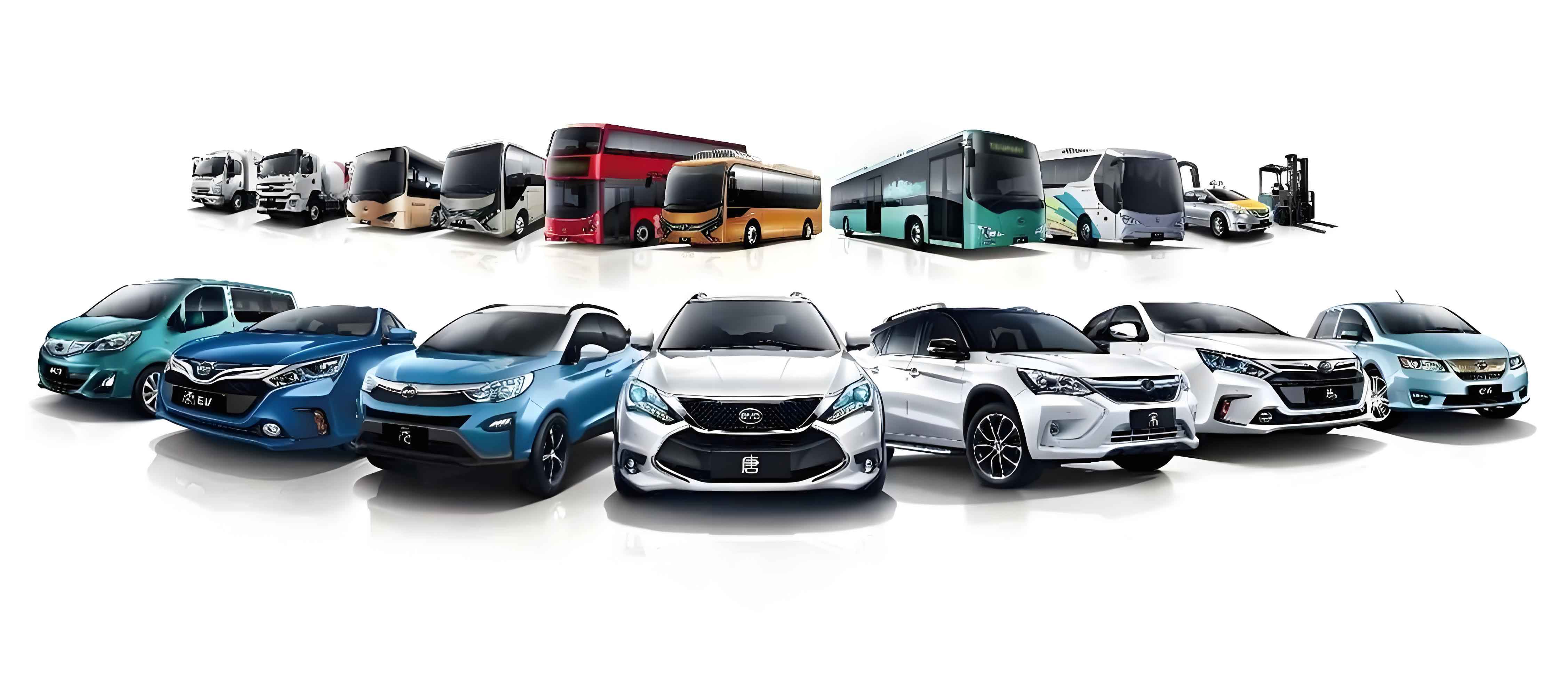
Looking ahead, the continued research into synthetic material aging will drive further advancements in electric vehicle technology. For instance, the development of self-healing polymers or smart materials that respond to environmental changes could revolutionize how we approach aging in electric vehicles. In the China EV market, where sustainability and efficiency are paramount, such innovations could lead to lighter, more durable vehicles with longer lifespans. Collaborative efforts between academia and industry, like those seen in nanofiber research, will be key to overcoming aging challenges. As I reflect on these developments, it is clear that the future of electric vehicles hinges on our ability to create materials that not only perform well initially but also age gracefully, ensuring that electric vehicles remain a viable and attractive option for decades to come.
In conclusion, the synergy between polyurethane foams and nanofiber materials offers a robust solution to aging issues in electric vehicles. By leveraging mathematical models and empirical data, we can design systems that withstand the rigors of daily use, particularly in demanding markets like China EV. The tables and equations presented here provide a framework for evaluating and improving material performance, ultimately contributing to the global transition toward sustainable transportation. As research progresses, I am confident that these materials will play a pivotal role in shaping the next generation of electric vehicles, making them safer, more efficient, and more resilient to the passage of time.