
As an engineer deeply involved in automotive electronic control system development, I have witnessed the rapid evolution of vehicle technologies toward electrification, connectivity, and autonomy. This shift has exponentially increased the complexity of electronic control systems, where reliability is paramount for safety and performance. In this context, systems engineering provides a structured methodology to manage complexity, while Failure Mode and Effects Analysis (FMEA) serves as a critical tool for risk assessment. This article explores the integration of systems engineering principles with FMEA to enhance the reliability of automotive electronic control systems, with particular emphasis on the motor control unit—a core component in modern vehicles. I will detail the methodological approach, illustrate its application through a case study, and underscore the importance of rigorous analysis in preventing failures.
The automotive industry has transitioned from purely mechanical systems to sophisticated electro-mechanical and software-defined architectures. Electronic control systems, encompassing sensors, actuators, and control units, are now integral to vehicle operations, managing everything from engine performance to advanced driver-assistance systems. However, this integration introduces new failure risks, especially in software and hardware interactions. Traditional reliability methods often fall short in addressing these complexities, necessitating a holistic approach. Systems engineering offers a framework to decompose complex systems, define functions, and manage interfaces, thereby facilitating comprehensive FMEA. By adopting this combined approach, we can proactively identify and mitigate potential failures, ensuring that electronic control systems, including the motor control unit, meet stringent reliability standards. This article aims to provide a detailed exposition of this methodology, supported by tables and formulas, to guide practitioners in implementing robust reliability practices.
Systems engineering is a disciplined, iterative process for developing complex systems that satisfy stakeholder requirements throughout their lifecycle. In automotive applications, it involves defining system boundaries, decomposing structures, allocating functions, and validating designs through systematic verification and validation. The essence of systems engineering lies in its ability to manage interdisciplinary interactions and optimize system performance against constraints such as cost, schedule, and safety. For electronic control systems, this means treating the system as an integrated whole rather than a collection of isolated components. The motor control unit, for instance, is not just a standalone device but part of a larger network involving power electronics, software algorithms, and mechanical interfaces. By applying systems engineering, we can ensure that the motor control unit functions seamlessly within this ecosystem, reducing interoperability issues and failure risks.
A key model in systems engineering is the V-model, which aligns development stages with corresponding testing phases. As illustrated in Table 1, the V-model for automotive electronic control systems spans from requirement analysis to system validation, ensuring that each design step is verified. This model is particularly effective for electronic control systems because it emphasizes early fault detection and traceability. For example, in developing a motor control unit, requirements such as torque accuracy or response time are defined at the system level, then decomposed to software and hardware specifications. Testing at each level—from unit testing of code to integration testing with sensors—ensures that failures are caught early, reducing costly rework. The V-model thus provides a scaffold for integrating FMEA, as risk analysis can be conducted at each stage of the V-process.
| V-Model Phase | Description | Activities for Motor Control Unit |
|---|---|---|
| Requirements Analysis | Define system functions and constraints | Specify torque control, efficiency targets |
| System Design | Decompose system into subsystems | Design software architecture, hardware interfaces |
| Software/Hardware Development | Implement components | Code algorithms, design PCB for motor control unit |
| Integration Testing | Combine components and verify interactions | Test motor control unit with inverter and sensors |
| System Validation | Validate against original requirements | Assess overall performance in vehicle environment |
FMEA is a proactive risk analysis technique used to identify potential failure modes, their causes, and effects, enabling the implementation of preventive measures. When applied within a systems engineering framework, FMEA becomes more systematic and comprehensive. The process involves seven steps: planning, structure analysis, function analysis, failure analysis, risk analysis, optimization, and documentation. For electronic control systems, this means analyzing not only hardware failures but also software bugs and interface mismatches. The motor control unit, being a critical element, requires meticulous FMEA to ensure that failures in control algorithms or power circuits do not lead to safety hazards. By embedding FMEA into the systems engineering lifecycle, we can align risk assessment with design iterations, enhancing reliability iteratively.
Structure analysis is the first technical step in FMEA, where the system is decomposed into hierarchical elements. This decomposition can be visualized using block diagrams and tree structures. For an automotive electronic control system, the top level might be the vehicle control system, with subsystems like the motor control unit, battery management system, and transmission control. Each subsystem is further broken down into components such as microcontrollers, sensors, and actuators. This modular approach clarifies interfaces and dependencies, making it easier to identify failure points. For instance, the motor control unit might include sub-elements like a processor, gate drivers, and current sensors. A block diagram helps in understanding how these elements interact with external systems like the motor or power supply. Table 2 summarizes a typical structure analysis for a motor control unit, highlighting key components and their interactions.
| System Level | Subsystem | Components | Interfaces |
|---|---|---|---|
| Vehicle Control | Motor Control Unit | Microcontroller, PWM drivers, ADC | CAN bus, power supply, motor phases |
| Power Management | Inverter | IGBTs, capacitors | Motor control unit signals, battery |
| Sensing | Current/Voltage Sensors | Hall effect sensors, shunt resistors | Analog inputs to motor control unit |
Function analysis follows structure analysis, where each element’s functions and requirements are defined. Functions describe what the system or component is intended to do, often expressed as transformations of inputs to outputs. For the motor control unit, key functions include regulating motor speed, managing torque output, and protecting against overcurrent. These functions can be formalized using mathematical models. For example, torque control might involve a proportional-integral (PI) controller represented as:
$$ u(t) = K_p e(t) + K_i \int e(t) dt $$
where \( u(t) \) is the control output, \( e(t) \) is the error between desired and actual torque, and \( K_p \), \( K_i \) are tuning parameters. By defining functions mathematically, we can later analyze failures in terms of deviations from expected behavior. A function network links higher-level functions to lower-level ones, ensuring traceability. For instance, the vehicle-level function of “providing smooth acceleration” depends on the motor control unit’s function of “accurate torque control,” which in turn relies on sensor data processing. This hierarchical linkage is crucial for comprehensive FMEA, as failures at lower levels propagate upward.
Failure analysis involves identifying potential failure modes for each function, along with their causes and effects. Failure modes can be categorized into types such as loss of function, erroneous output, or timing failures. For the motor control unit, a failure mode might be “incorrect torque output due to sensor drift,” with causes like “ADC calibration error” and effects like “vehicle jerk or safety risk.” The relationship between failure cause, mode, and effect forms a failure chain. To quantify this, we can use reliability metrics such as failure rate \( \lambda \), often modeled with the exponential distribution:
$$ R(t) = e^{-\lambda t} $$
where \( R(t) \) is reliability over time \( t \). In FMEA, however, qualitative assessments are first made before quantitative analysis. A systematic approach ensures that all possible failures are considered, including those arising from software defects in the motor control unit firmware, such as stack overflow or incorrect algorithm implementation.
Risk analysis evaluates the severity, occurrence, and detection of each failure chain to prioritize actions. Severity (S) measures the impact of failure on safety or performance, occurrence (O) estimates the likelihood, and detection (D) assesses the ability to detect the failure before it causes harm. The traditional Risk Priority Number (RPN) is calculated as:
$$ RPN = S \times O \times D $$
with values typically ranging from 1 to 10. However, modern standards like AIAG-VDA recommend using Action Priority (AP) based on thresholds for S, O, and D. For electronic control systems, detection measures might include software diagnostics, hardware tests, or simulation checks. For example, a failure in the motor control unit’s current sensing circuit could have high severity if it leads to motor stall, moderate occurrence if component quality varies, and low detection if diagnostics are robust. Table 3 illustrates a risk analysis for sample failure modes related to the motor control unit, showing how AP guides optimization efforts.
| Failure Mode | Cause | Effect | S | O | D | AP |
|---|---|---|---|---|---|---|
| Torque oscillation | PID tuning error in motor control unit | Vehicle vibration | 6 | 4 | 3 | Medium |
| Overcurrent shutdown | Sensor fault in motor control unit | Loss of propulsion | 8 | 3 | 2 | High |
| Communication timeout | CAN bus overload | Reduced functionality | 5 | 5 | 4 | Low |
Optimization involves defining actions to reduce risk for high-priority failures. Preventive actions aim to eliminate causes, while detective actions improve detection capabilities. For the motor control unit, preventive measures might include using redundant sensors or implementing robust software coding standards, whereas detective measures could involve adding self-test routines or enhancing fault diagnosis algorithms. The effectiveness of actions can be evaluated by recalculating RPN or AP after implementation. For instance, if we introduce a watchdog timer in the motor control unit software to detect algorithm hangs, the detection rating might improve from 4 to 2, lowering the AP. This iterative process ensures continuous improvement in reliability.
Documentation consolidates the FMEA results into reports that inform design decisions and verification plans. This includes updating specifications, test cases, and lessons learned for future projects. In systems engineering, documentation ensures traceability from requirements to validation, which is critical for certification standards like ISO 26262 for functional safety. For the motor control unit, detailed FMEA records help in auditing and maintaining reliability throughout the product lifecycle.
To illustrate the practical application, let’s consider a case study on a Diesel Particulate Filter (DPF) control system, which shares similarities with motor control units in terms of electronic complexity. The DPF system is part of the after-treatment system in diesel engines, tasked with reducing particulate emissions to meet regulatory standards. It comprises components like temperature sensors, pressure sensors, and a control unit that manages regeneration cycles. While this case focuses on emissions control, the methodology is directly applicable to the motor control unit, as both involve real-time control, sensor integration, and software algorithms. By applying systems engineering and FMEA, we can derive general insights for enhancing motor control unit reliability.
In the planning phase, we define the DPF control system’s boundaries and requirements, such as filtration efficiency and durability. For a motor control unit, analogous requirements include efficiency, torque accuracy, and thermal management. Structure analysis decomposes the DPF system into subsystems like the filter, sensors, and control logic. Similarly, a motor control unit can be decomposed into power stage, control processor, and communication interfaces. A block diagram aids in visualizing these elements. For instance, the DPF control unit interacts with engine sensors and actuators, much like how a motor control unit interfaces with motor sensors and inverters.
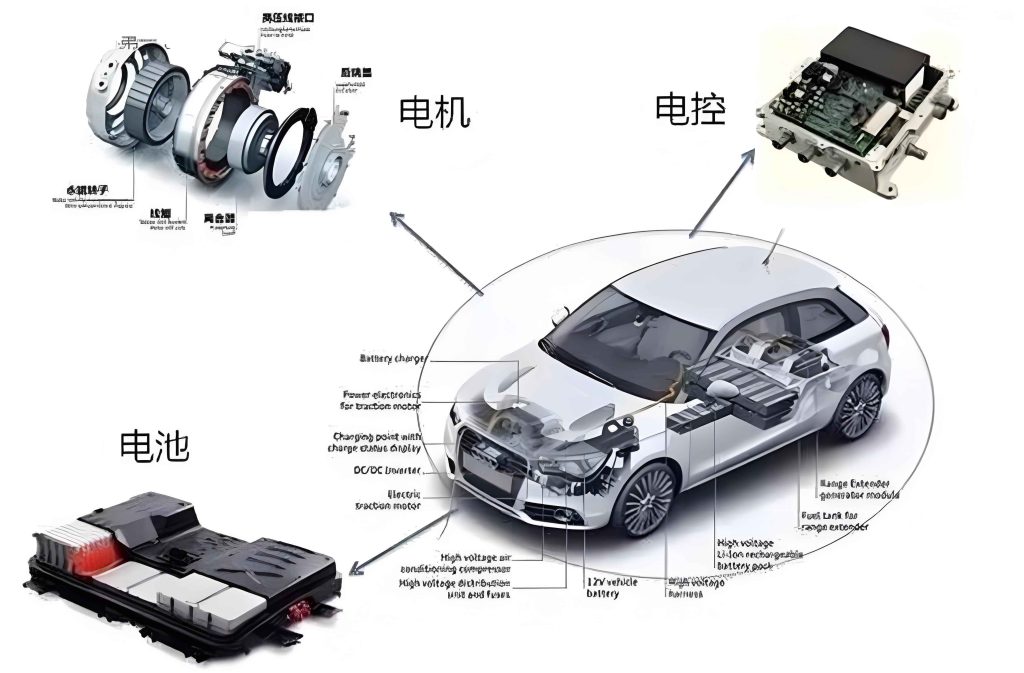
Function analysis identifies key functions such as “monitor particulate load” for the DPF system or “regulate phase currents” for the motor control unit. These functions can be expressed mathematically. For example, the DPF regeneration control might use a model-based algorithm to estimate soot load, akin to field-oriented control in motor control units. Failure analysis then explores potential failures, like “inaccurate soot estimation due to sensor bias” or “overheating during regeneration.” For a motor control unit, equivalent failures could be “incurrent current measurement leading to torque error” or “overvoltage spike damaging components.” Risk analysis assesses these failures using S, O, D ratings, and optimization defines actions such as adding sensor redundancy or improving thermal design.
Through this case, we see that the systems engineering framework enables a systematic FMEA process, which can be adapted to various electronic control systems, including the motor control unit. The integration of structure, function, and failure analysis ensures that no aspect is overlooked, while risk prioritization focuses resources on critical issues. This approach not only enhances reliability but also aligns with automotive development cycles, supporting timely delivery of robust systems.
In conclusion, the fusion of systems engineering and FMEA provides a powerful methodology for addressing the reliability challenges in automotive electronic control systems. By decomposing complex systems, defining clear functions, and analyzing failures iteratively, we can proactively mitigate risks and improve design robustness. The motor control unit, as a pivotal component, benefits greatly from this approach, as it involves intricate hardware-software interactions and safety-critical functions. The use of tables and formulas, as demonstrated, aids in summarizing and quantifying analysis, making it accessible to engineers. Moving forward, as vehicles become more electrified and autonomous, such reliability methods will be indispensable. I recommend further research into automated FMEA tools and integration with model-based systems engineering to streamline processes and enhance accuracy.
To delve deeper, let’s expand on the mathematical aspects of reliability analysis for electronic control systems. Reliability engineering often employs probability distributions to model failure behaviors. For components within a motor control unit, such as microcontrollers or power semiconductors, the Weibull distribution is commonly used to represent time-dependent failures:
$$ F(t) = 1 – e^{-(t/\eta)^\beta} $$
where \( F(t) \) is the cumulative failure probability, \( \eta \) is the scale parameter, and \( \beta \) is the shape parameter. This allows for more nuanced analysis than the exponential model, accommodating infant mortality or wear-out phases. In FMEA, such models can inform occurrence ratings by providing data-driven estimates. For instance, if historical data shows a high \( \beta \) for IGBTs in motor control units, indicating wear-out, preventive maintenance or derating strategies can be planned.
Moreover, system reliability can be analyzed using reliability block diagrams (RBDs) or fault trees. For a motor control unit configured with redundant processors, the reliability might be modeled as a parallel system:
$$ R_{system}(t) = 1 – (1 – R_{MCU}(t))^2 $$
where \( R_{MCU}(t) \) is the reliability of a single motor control unit. This quantitative approach complements the qualitative FMEA, enabling a holistic view. Integrating these models into the systems engineering framework ensures that reliability targets are met through design choices, such as selecting components with lower failure rates or implementing fault-tolerant architectures.
Another critical aspect is software reliability, which is increasingly significant for electronic control systems. The motor control unit’s software, responsible for control algorithms and diagnostics, can be analyzed using metrics like code complexity or testing coverage. For example, the failure rate of software might be estimated based on historical defect density:
$$ \lambda_{sw} = \frac{N_{defects}}{KLOC \times T_{operation}} $$
where \( KLOC \) is thousands of lines of code, and \( T_{operation} \) is operational time. In FMEA, software failure modes, such as “incorrect PWM generation due to arithmetic overflow,” can be assessed with severity linked to safety goals. Preventive actions might include static code analysis or model-in-the-loop testing, while detective actions could involve runtime assertions. By treating software as an integral part of the system, the combined approach addresses both hardware and software failures.
Table 4 summarizes key reliability formulas and their applications in motor control unit analysis, illustrating how quantitative methods enhance FMEA.
| Formula | Description | Application in Motor Control Unit |
|---|---|---|
| $$ R(t) = e^{-\lambda t} $$ | Exponential reliability model | Estimate failure probability of components |
| $$ MTBF = \frac{1}{\lambda} $$ | Mean Time Between Failures | Assess durability of motor control unit |
| $$ R_{series} = \prod R_i $$ | Series system reliability | Calculate overall reliability if components are串联 |
| $$ R_{parallel} = 1 – \prod (1 – R_i) $$ | Parallel system reliability | Model redundant motor control unit designs |
In practice, implementing systems engineering and FMEA requires cross-functional collaboration. For a motor control unit development project, teams might include hardware engineers, software developers, and systems architects. Regular reviews ensure that FMEA findings are integrated into design iterations. Tools like SysML (Systems Modeling Language) can support this by providing graphical representations of system structures and functions, which can be linked to FMEA databases. This integration streamlines the analysis and maintains consistency across documents.
Furthermore, the motor control unit often operates in harsh environments with temperature variations, vibrations, and electromagnetic interference. These environmental factors introduce additional failure modes that must be considered in FMEA. For example, thermal cycling can cause solder joint fatigue in the motor control unit’s PCB, leading to intermittent connections. In structure analysis, we might add environmental interfaces as external elements, and in function analysis, include thermal management as a key function. Risk analysis would then assess the severity of overheating effects, possibly leading to design changes like improved heat sinks or thermal monitoring software.
The optimization phase for such failures might involve both preventive and detective measures. Preventive actions could include using conformal coating or selecting components with wider temperature ranges, while detective actions might incorporate temperature sensors that trigger shutdowns if thresholds are exceeded. By systematically addressing these aspects, the motor control unit’s reliability in real-world conditions is enhanced.
To conclude, the systems engineering framework, when combined with FMEA, offers a robust approach to ensuring the reliability of automotive electronic control systems. This methodology is particularly vital for critical components like the motor control unit, where failures can impact vehicle safety and performance. Through detailed structure and function analysis, comprehensive failure identification, and risk-based optimization, we can design systems that not only meet regulatory standards but also exceed customer expectations. As the automotive industry continues to evolve, embracing such integrated methods will be key to delivering innovative and reliable technologies.