
In today’s automotive landscape, dominated by fervent discussions around battery electric vehicles (BEVs), a quiet yet powerful revolution is underway. As an observer deeply entrenched in the evolution of automotive propulsion, I have witnessed a significant pivot: the re-emergence of hybrid cars as a critical pathway toward sustainable mobility. While many pure electric models now boast ranges exceeding 400 kilometers, their widespread adoption faces persistent hurdles—charging infrastructure gaps, battery cost and safety concerns, and range anxiety in diverse conditions. This reality has prompted a fundamental reassessment. Hybrid cars, far from being a mere transitional technology, are proving indispensable in the global quest to achieve carbon neutrality. The evidence is clear: a singular focus on pure electrification is insufficient; a dual strategy embracing both battery electric and hybrid cars is essential for meaningful, near-term decarbonization of the transport sector.
The momentum behind hybrid cars is not accidental. It stems from a confluence of technological maturity, policy recalibration, and market readiness. Major automotive manufacturers, particularly in Japan and Europe, never abandoned their hybrid programs. Now, Chinese automakers are leading a new charge, unveiling sophisticated hybrid systems that challenge conventional wisdom. This resurgence signifies that hybrid cars are reclaiming their position on the main stage of automotive innovation. The rationale is compelling: with the pure electric vehicle fleet still nascent, the immediate burden of reducing emissions falls heavily on improving the efficiency of the vast existing fleet of internal combustion engine vehicles. Hybrid cars offer the most effective technological lever to pull for this purpose.
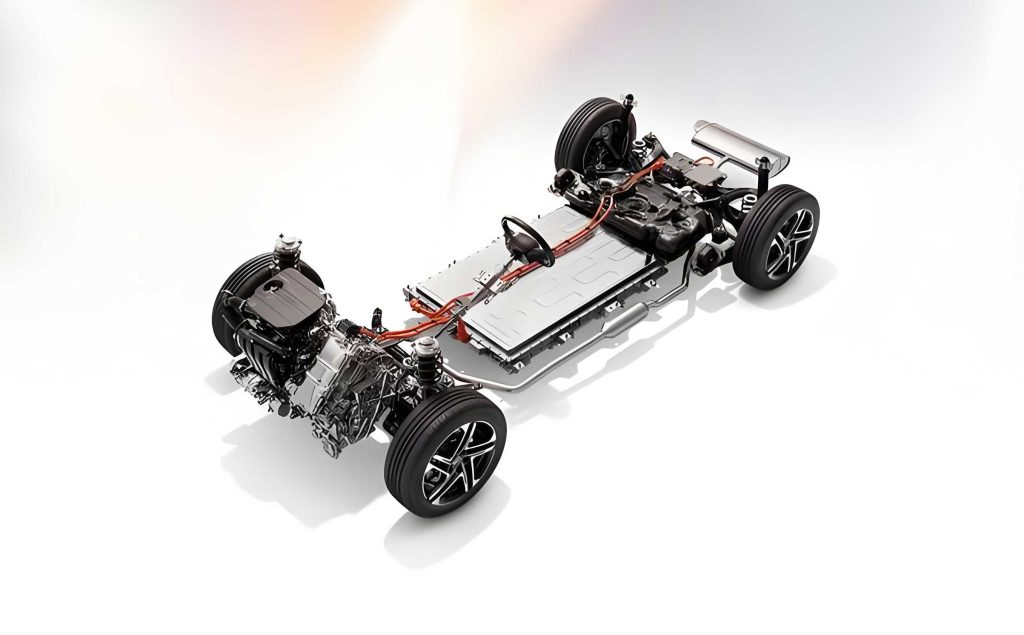
My analysis of the current technological wave reveals a vibrant ecosystem. Companies like Changan, Geely, Great Wall Motors (GWM), BYD, and Chery have launched dedicated hybrid platforms. Changan’s Blue Core iDD is a full-domain hybrid solution applicable from A- to C-segment vehicles. Geely’s Thor Power and its LeiShen ZhiQing Hi·X modular intelligent hybrid platform represent significant leaps in system integration. GWM’s Lemon DHT and Chery’s Kunpeng Power architecture exemplify the industry’s shift toward dedicated, high-efficiency hybrid systems. These platforms typically combine a high thermal efficiency Atkinson-cycle engine with multi-motor transmissions and intelligent energy management systems, enabling various serial, parallel, and series-parallel driving modes. The performance metrics are striking. For instance, the NEDC comprehensive fuel consumption for some of these new hybrid cars can be as low as 0.8 L/100km, with charge-sustaining mode consumption around 5 L/100km—a dramatic improvement over conventional powertrains.
To better understand the landscape of these new hybrid car technologies from key Chinese automakers, the following table provides a comparative overview:
| Automaker | Hybrid System/Brand | Key Components | Notable Features/Technologies | Example Model & Claimed Efficiency (NEDC) |
|---|---|---|---|---|
| Changan | Blue Core iDD | High-performance Blue Whale engine, e-drive transmission, PHEV battery, smart control | Full-domain solution, variable valve lift | UNI-K iDD: 0.8 L/100km composite, 5 L/100km charge-sustaining |
| Geely | LeiShen ZhiQing Hi·X | Dedicated high-eff. engine (DHE), multi-motor e-drive transmission (DHT), battery, control unit | Modular platform, engine thermal eff. >43%, global power prediction algorithm | To be launched; targets superior fuel economy across scenarios |
| Great Wall Motors | Lemon DHT | Hybrid-specific engine, dual-motor hybrid transmission, battery | Multi-mode operation (EV, series, parallel, engine direct drive) | Wey Macchiato DHT-PHEV: low composite fuel consumption |
| BYD | DM-i Super Hybrid | Xiaoyun plug-in hybrid-specific 1.5L engine, EHS electro-hybrid system, blade battery | Primarily operates as an EV; engine acts as efficient generator | Qin Plus DM-i: 3.8 L/100km charge-sustaining fuel consumption |
| Chery | Kunpeng Power (Hybrid) | Dedicated hybrid engine, DHT, battery management | Part of a broader power solution covering fuel, hybrid, BEV, hydrogen | Various models under development; emphasizes multi-energy compatibility |
This technological blossoming is not merely an engineering exercise. It is a direct response to a pivotal shift in China’s national policy framework. The 2020 revision of the “Technology Roadmap for Energy-Saving and New Energy Vehicles” (2.0) marked a profound strategic correction. It officially recognized hybrid cars—especially plug-in hybrids (PHEVs)—as a core component of the new energy vehicle (NEV) family, alongside BEVs. The roadmap sets ambitious targets: by 2025, hybrid cars should constitute over 50% of new traditional energy passenger vehicle sales; by 2035, this should reach 100%, with energy-saving cars (including HEVs) and NEVs each holding a 50% market share. This policy endorsement has unlocked immense investment and R&D focus toward hybrid cars. The “dual-credit” policy (CAFC & NEV credits) further incentivizes automakers to lower fleet average fuel consumption, for which hybrid cars are a potent tool. The credit advantage of a hybrid car compared to a conventional ICE vehicle can be conceptually modeled. The CAFC credit is tied to the actual fuel consumption. The improvement factor for a hybrid car can be expressed as a reduction in the equivalent fuel consumption per 100 km:
$$ C_{hybrid} = C_{ICE} \times (1 – \eta_{hybrid}) $$
where \( C_{hybrid} \) is the equivalent fuel consumption of the hybrid car, \( C_{ICE} \) is the baseline ICE vehicle consumption, and \( \eta_{hybrid} \) is the effective efficiency gain from hybridization, a function of the electric motor power, battery capacity, and energy management strategy.
The market response has been decisive. In 2021, sales of plug-in hybrid passenger cars in China surged by 143% year-on-year to 600,000 units. This explosive growth underscores a rising consumer appreciation for the balanced value proposition of a hybrid car: it delivers electric driving for daily commutes, eliminates range anxiety for long trips through its ICE backup, and offers superior fuel economy and lower emissions compared to conventional cars. The demand is particularly strong in the SUV segment, which remains hugely popular in China. A hybrid car in this category allows consumers to retain their preferred vehicle type while significantly reducing its environmental footprint and operating cost. The following table projects the growth trajectory for hybrid cars globally, highlighting their expanding role:
| Year | Global Hybrid Car Stock (Millions, Estimate) | Projected Annual Sales (Millions) | Key Growth Drivers |
|---|---|---|---|
| 2021 | ~15-20 | ~3-4 | Policy support in EU/China, new model launches |
| 2023 | ~25-30 | ~5-6 | Maturation of PHEV technology, cost reduction |
| 2025 | ~40-50 | ~8-10 | Alignment with 2025 roadmap targets, infrastructure development |
| 2030 | ~80-120 | ~15-20 | Widespread adoption as a mainstream powertrain, potential battery tech plateaus |
From a technical standpoint, the development of a hybrid car is a complex optimization problem. The core challenge lies in the synergistic integration of the internal combustion engine (ICE), electric motor(s), battery, and control system. The overall system efficiency \( \eta_{sys} \) is not simply additive; it depends on the operational strategy that minimizes total energy loss across diverse driving cycles. A fundamental energy flow equation for a parallel hybrid car during acceleration can be simplified as:
$$ P_{req} = P_{ice} + P_{motor} = \tau_{ice} \cdot \omega_{ice} \cdot \eta_{t,ice} + (V_{bat} \cdot I_{bat} \cdot \eta_{inv} \cdot \eta_{motor}) $$
where \( P_{req} \) is the power demanded at the wheels, \( P_{ice} \) and \( P_{motor} \) are the power contributions from the engine and motor respectively, \( \tau \) and \( \omega \) are torque and speed, \( V_{bat} \) and \( I_{bat} \) are battery voltage and current, and \( \eta \) terms represent efficiencies of transmission, inverter, and motor. The energy management controller must solve for the optimal split between \( P_{ice} \) and \( P_{motor} \) in real-time to minimize a cost function \( J \), often related to fuel consumption and battery state-of-charge (SOC):
$$ J = \int_{t_0}^{t_f} \dot{m}_{fuel}(P_{ice}(t)) dt + \alpha \cdot (SOC(t_f) – SOC_{target})^2 $$
This optimization is what makes modern hybrid cars so efficient, allowing the ICE to operate predominantly within its highest efficiency region.
Two macro technical paths for developing hybrid cars have emerged globally. The first, exemplified by Japanese OEMs like Toyota, evolves upward from refined internal combustion engine platforms, leading to supremely efficient non-plug-in hybrid cars (HEVs). The second, prominently adopted in China, extends downward from pure electric vehicle platforms, resulting primarily in plug-in hybrid cars (PHEVs) with substantial all-electric range. The Chinese approach leverages strengths in battery and electric drive technology. This path often leads to what is termed a “pure electric-type” plug-in hybrid car, where the vehicle primarily drives on electric power, with the engine acting mainly as a range extender or supplemental power source. This architecture closely mirrors the user experience of a BEV, fostering familiarity and acceptance. The modularity of this approach is key. A dedicated electric vehicle platform can be adapted into a series hybrid car (range-extended EV) by adding an engine-generator set, and further into a fuel cell hybrid car by swapping the generator set for a fuel cell system. This platform strategy ensures scalability and reduces development costs.
However, the development of a competitive hybrid car is not without its challenges, especially for latecomers. One cannot overlook the core role of the internal combustion engine in a hybrid system. Despite the narrowed operational window in a hybrid application, developing a dedicated, ultra-high-efficiency hybrid engine remains a significant hurdle. The incremental improvements—through technologies like high compression ratios, exhaust gas recirculation (EGR), and Atkinson/Miller cycles—are crucial but require deep expertise. The formula for indicated thermal efficiency of an Atkinson-cycle engine, often used in hybrid cars, highlights the trade-offs:
$$ \eta_{th,atkinson} = 1 – \frac{1}{r^{\gamma-1}} \left[ \frac{r_c^{\gamma} – 1}{\gamma (r_c – 1)} \right] $$
where \( r \) is the geometric compression ratio, \( r_c \) is the effective compression ratio (lower than expansion ratio), and \( \gamma \) is the specific heat ratio. Maximizing this requires precise control over valve timing and combustion.
Furthermore, the market for hybrid cars in China must overcome historical perceptions. Initially, policy and media narratives were overwhelmingly skewed toward pure electric vehicles, leading many consumers to view plug-in hybrid cars as a temporary compromise. In some cities, PHEVs did not enjoy the same privileges as BEVs (like unrestricted license plates or toll exemptions), dampening demand. Early-generation plug-in hybrid cars also suffered from inconsistent quality and disappointing real-world fuel economy in charge-sustaining mode, tarnishing the reputation of the hybrid car. Today, the landscape is different. The new generation of hybrid cars from Chinese brands demonstrates world-class performance and reliability. The policy framework is now inclusive. The consumer is increasingly pragmatic, seeking a vehicle that is eco-friendly without compromising convenience—a need perfectly met by a modern hybrid car.
To solidify the position of hybrid cars in the automotive ecosystem, a strategic, multi-pronged approach is necessary. First, continuous R&D into core components is non-negotiable. This includes not just the engine and electric drive, but also power electronics and the energy management system software. Second, standardization and modularity across platforms will drive down costs and accelerate innovation. Third, clear and stable policy signals beyond 2025 are needed to assure long-term investment. Fourth, consumer education is vital to highlight the tangible benefits—both economic and environmental—of choosing a hybrid car over a conventional vehicle. The total cost of ownership (TCO) for a hybrid car often proves superior, especially with volatile fuel prices. A simplified TCO model over a period of N years can be expressed as:
$$ TCO_{hybrid} = P_{purchase} + \sum_{i=1}^{N} \left( \frac{D \cdot C_{fuel}}{FE_{hybrid}} + M_{i} + I_{i} \right) – R_{N} $$
where \( P_{purchase} \) is purchase price, \( D \) is annual distance, \( C_{fuel} \) is fuel cost per liter, \( FE_{hybrid} \) is fuel economy (km/L), \( M \) and \( I \) are maintenance and insurance costs, and \( R_N \) is residual value. For a modern hybrid car, the higher \( FE_{hybrid} \) and often higher \( R_N \) can offset a potentially higher \( P_{purchase} \).
The global context cannot be ignored. The refusal of major automotive nations, including Japan, the United States, Germany, and China, to sign a strict declaration on phasing out fossil-fuel vehicles at the 2021 COP26 climate summit speaks volumes. It reflects a pragmatic consensus that multiple technological pathways, including hybrid cars, are essential for an inclusive and secure energy transition. Japan’s decades-long leadership in HEV technology, with over 15 million electrified vehicles sold globally by Toyota alone, provides a formidable benchmark. However, this also presents an opportunity. The intense competition in the hybrid car segment, now joined by formidable Chinese players, will drive rapid technological advancement and cost reduction, benefiting consumers worldwide. The race is no longer about a single technology winner; it is about which ecosystem can deliver the most efficient, affordable, and desirable low-emission vehicles across all segments. In this race, the hybrid car is a pivotal contender.
In conclusion, the narrative of a zero-sum battle between pure electric and hybrid cars is a false dichotomy. My perspective, shaped by following these trends, is that they are complementary forces in the broader mobility energy transition. The hybrid car plays a critical dual role: as a bridge technology that delivers substantial emissions reductions here and now from the massive existing vehicle base, and as an enabler that familiarizes consumers with electrified driving and supports grid stability through manageable charging loads. For nations like China, with a diverse energy mix still reliant on coal and a vast geography, a diversified strategy is a matter of energy security and economic pragmatism. The future envisioned by China’s technology roadmap—a 50/50 split between energy-saving cars (largely hybrids) and new energy vehicles by 2035—is a rational and achievable target. It acknowledges the enduring value of the internal combustion engine when synergized with electric drive, and the time required for pure electric technology and infrastructure to mature fully. Therefore, the strategic imperative is clear: vigorously develop and deploy both advanced battery electric vehicles and increasingly sophisticated hybrid cars. This parallel development path will maximize the speed and scale of decarbonization, ensuring that the goal of a sustainable transportation future is not just a vision but an attainable reality. The hybrid car, therefore, is not a relic of the past but a cornerstone of the future automotive landscape.