
In the development and deployment of electric vehicles (EVs), the safety and longevity of the EV battery pack are paramount. As an integral component, the EV battery pack is subjected to various environmental conditions during vehicle operation and storage. Among these, hot-humid marine climates pose a significant challenge due to their characteristic high temperature, high relative humidity, and high salt fog. These factors can accelerate material degradation, induce corrosion, and compromise the thermal and moisture safety of the EV battery pack. In this study, I investigate the coupled heat and moisture transfer mechanisms between the interior and exterior of an EV battery pack under such conditions. Utilizing experimental data collected from a field exposure test and employing finite element analysis via COMSOL Multiphysics, I aim to elucidate the spatial and temporal distribution of temperature and relative humidity within the EV battery pack. The findings provide critical insights for designing robust battery thermal management systems and mitigating moisture-related failures in EV battery packs operating in harsh environments.
The EV battery pack, typically enclosed in a protective casing, functions as a semi-sealed system. External environmental factors such as solar radiation, ambient temperature, relative humidity, and wind speed continuously interact with the pack. In hot-humid regions, the ambient air can maintain relative humidity levels above 80% for extended periods, often exceeding 90% during night and early morning hours. Simultaneously, daytime temperatures can soar, creating a cyclic thermal load. For the EV battery pack, this external forcing drives complex internal processes: conductive heat transfer through the pack casing, convective heat exchange between internal air and battery cell surfaces, and mass transfer of water vapor through vents or permeable membranes. A primary concern is the potential for condensation inside the EV battery pack when warm, moisture-laden air cools upon contact with cooler internal surfaces. This condensate can lead to electrical short circuits, corrosion of connectors, and accelerated aging of battery cells, ultimately threatening the safety and performance of the entire EV battery pack.
To analyze these phenomena, I first establish a theoretical framework describing the coupled heat and moisture transfer. The physical model treats the EV battery pack as a control volume with an opening (e.g., a waterproof breathable valve) that allows gas exchange with the environment. The key processes include heat conduction in solid components (casing, battery cells), convective heat transfer at solid-fluid interfaces, and the transport of water vapor via diffusion and advection. The moisture field is intrinsically linked to the temperature field through several mechanisms, primarily the dependence of saturated vapor pressure on temperature and the latent heat effects associated with phase change.
The relative humidity ($\varphi$) is defined as the ratio of the partial pressure of water vapor ($p_v$) to the saturation pressure ($p_{sat}$) at the same temperature:
$$\varphi = \frac{p_v}{p_{sat}}$$
The saturation pressure is a function of temperature ($T$) given by the Clausius-Clapeyron equation, often approximated for the range of interest (e.g., 0°C to 50°C):
$$p_{sat}(T) = 610.7 \cdot 10^{\frac{7.5(T – 273.15)}{T – 35.85}} \quad \text{(Pa)}$$
where $T$ is in Kelvin. This equation couples the humidity and temperature fields, as $p_{sat}$ increases exponentially with $T$.
Within the humid air inside the EV battery pack, the transport of water vapor is governed by a convection-diffusion equation. Assuming the air is a mixture of dry air and water vapor (with no liquid water present in the bulk), the conservation equation for water vapor mass fraction ($\omega_v$) is:
$$\rho_g \frac{\partial \omega_v}{\partial t} + \rho_g \mathbf{u} \cdot \nabla \omega_v + \nabla \cdot \mathbf{G}_w = G$$
Here, $\rho_g$ is the density of the humid air mixture, $\mathbf{u}$ is the velocity field (m/s), $t$ is time (s), $\mathbf{G}_w$ is the diffusive flux of water vapor, and $G$ represents any source term. The water vapor mass fraction is related to its molar concentration ($c_v$) by $\omega_v = M_v c_v / \rho_g$, where $M_v$ is the molar mass of water vapor. The concentration is linked to relative humidity and the saturation concentration ($c_{sat}$) via $c_v = \varphi c_{sat}$. The diffusive flux typically follows Fick’s law: $\mathbf{G}_w = -\rho_g D \nabla \omega_v$, where $D$ is the diffusion coefficient of water vapor in air.
The energy equation for the humid air must account for the enthalpy change due to water vapor transport. Using mixture-averaged properties, the heat transfer equation is:
$$\rho C_p \left( \frac{\partial T}{\partial t} + \mathbf{u} \cdot \nabla T \right) + \nabla \cdot (\mathbf{q} + \mathbf{q}_r) = \frac{\partial p}{\partial t} + \mathbf{u} \cdot \nabla p + \tau : \nabla \mathbf{u} + Q_H + Q$$
For low-speed flows typical inside a stationary EV battery pack, the pressure work and viscous dissipation terms (involving $p$ and $\tau$) are often negligible. The heat flux $\mathbf{q}$ is due to conduction ($-k \nabla T$), and $\mathbf{q}_r$ represents radiative heat transfer, which may be minor inside the pack. The source term $Q_H$ arises from the enthalpy carried by water vapor diffusion:
$$Q_H = -(C_{p,v} – C_{p,a}) \mathbf{G}_w \cdot \nabla T$$
where $C_{p,v}$ and $C_{p,a}$ are the specific heat capacities of water vapor and dry air, respectively. $Q$ encompasses other heat sources, such as Joule heating from battery cells during operation. However, for the static (non-operating) condition studied here, $Q$ is zero unless external heating is present.
The equivalent density ($\rho_m$) and specific heat ($C_{p,m}$) of the humid air mixture are calculated as:
$$\rho_m = \frac{p}{RT} (M_a X_a + M_v X_v)$$
$$C_{p,m} = \frac{M_a}{M_m} X_a C_{p,a} + \frac{M_v}{M_m} X_v C_{p,v}$$
with $M_m = X_a M_a + X_v M_v$, where $X_a$ and $X_v$ are the mass fractions of dry air and water vapor, $M_a$ and $M_v$ their molar masses, $R$ the universal gas constant, and $p$ the total pressure.
At boundaries where evaporation or condensation may occur (e.g., on cold surfaces), the latent heat effect is crucial. The evaporation flux $g_{evap}$ (kg/m²·s) from a liquid surface can be modeled as:
$$g_{evap} = M_v K (c_{sat} – c_v)$$
where $K$ is an evaporation rate coefficient. The corresponding latent heat source in the energy equation is:
$$Q_{evap} = -L_v g_{evap}$$
with $L_v$ being the latent heat of vaporization. This coupling is vital for predicting condensation risks inside the EV battery pack.
For the opening (waterproof breathable valve), boundary conditions typically specify the external ambient temperature and relative humidity. The open boundary condition for fluid flow often sets a pressure or stress condition, such as:
$$(-p\mathbf{I} + \mathbf{\tau})\mathbf{N} = -F_0 \mathbf{N}$$
where $\mathbf{N}$ is the unit normal vector and $F_0$ is the prescribed normal stress (often atmospheric pressure).
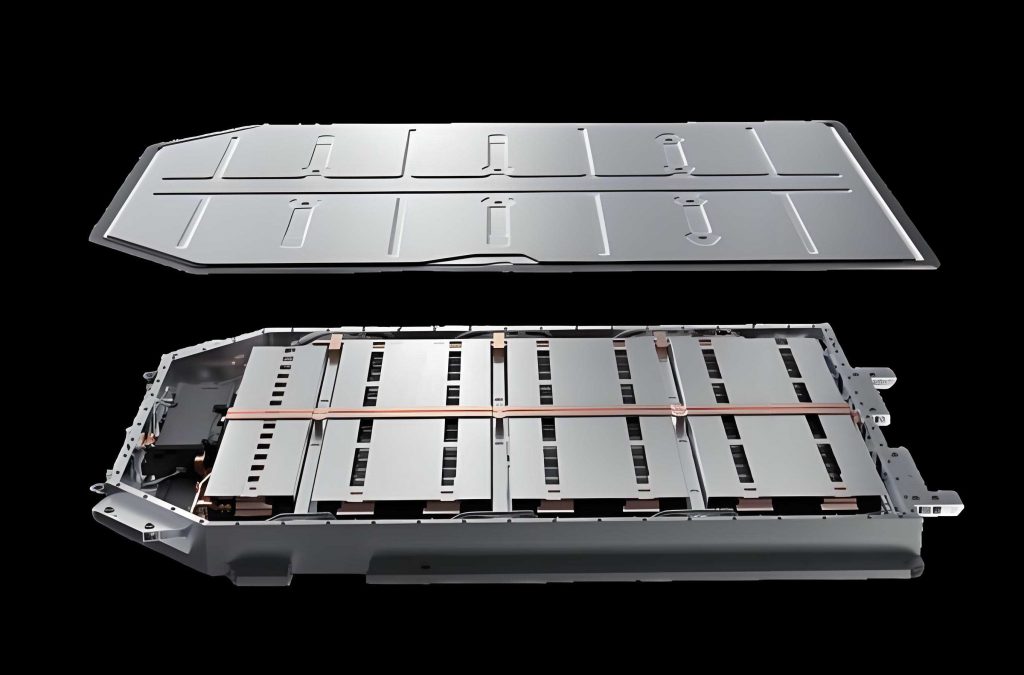
To validate the theoretical model and obtain realistic environmental loads, I conducted a field exposure experiment on an EV battery pack in a hot-humid marine climate. The test site was selected for its representative conditions: high annual average temperature and relative humidity, frequent rainfall, and saline atmosphere. The EV battery pack used was a commercial PACK_HDF_61.3kWh_177Ah_IP96S type, containing 24 modules with 96 prismatic cells in total. The pack dimensions were approximately 2.1 m in length, 1.4 m in width, and 0.2 m in height. To simulate a vehicle parked outdoors but shielded from direct solar radiation—a common scenario—the EV battery pack was placed under a shade canopy. This setup focuses the study on the effects of ambient temperature and humidity without the complicating factor of direct solar irradiance, which would introduce significant radiative heating on the pack surface.
Data acquisition involved monitoring both the external environment and the internal state of the EV battery pack. External ambient temperature and relative humidity were measured using T-type thermocouples (accuracy ±0.1°C) and TH10S-B humidity sensors (accuracy ±2%), respectively. These sensors were positioned at key locations around the EV battery pack: on the top surface and on the rear side panel near the waterproof breathable valve. Wind speed and solar radiation were also logged to provide full context, though their direct influence on the sealed pack interior is limited. Inside the EV battery pack, T-type thermocouples were strategically placed at various points among the battery modules and within the free air space to capture temperature distribution. Due to the complexity of installing humidity sensors inside without affecting the seal, internal relative humidity was not directly measured but will be inferred from simulation. All sensors were connected to a 34970A multi-channel data logger, recording values at 5-minute intervals. The experiment ran continuously for one month during August, capturing diurnal cycles and weather variations. For detailed analysis, a representative 24-hour period (August 19) was selected, showcasing typical hot-humid conditions.
The collected environmental data serves as the boundary condition input for the simulation. A summary of the monthly extremes and averages for the external measurements is presented in Table 1.
| Measurement Location | Parameter | Maximum Value | Minimum Value | Average Value |
|---|---|---|---|---|
| Top of EV Battery Pack | Temperature (°C) | 39.8 | 24.1 | 30.3 |
| Top of EV Battery Pack | Relative Humidity (%) | 94.1 | 25.3 | 71.4 |
| Rear Side of EV Battery Pack | Temperature (°C) | 40.4 | 21.8 | 30.1 |
| Rear Side of EV Battery Pack | Relative Humidity (%) | 94.9 | 44.8 | 77.2 |
The data reveals that the rear side, positioned closer to the ground and potentially more sheltered, experienced slightly higher average relative humidity. The diurnal cycle on August 19, plotted in Figure 1 (conceptual description), shows ambient temperature peaking around noon (approximately 12:00) at nearly 40°C and reaching a minimum near dawn (around 07:00) at about 22°C. Relative humidity exhibits an inverse trend, maximizing at night (often above 90%) and minimizing in the afternoon (dipping below 50% at the top location). This anti-correlation is expected, as warmer air can hold more moisture vapor, thus lowering relative humidity for a given absolute humidity. The internal temperature measurements from the EV battery pack indicated a time lag compared to the external environment, a classic response of a thermal mass to changing boundary conditions.
With the experimental data as a foundation, I developed finite element models in COMSOL Multiphysics to simulate the coupled heat and moisture transfer. Two model geometries were created: a simplified 2D cross-section and a more representative 3D model of the EV battery pack enclosure. The physics interfaces employed were: “Heat Transfer in Solids and Fluids” for conductive and convective heat transfer, “Moisture Transport in Air” for water vapor transport (using the concentrated species formulation with convection), and “Laminar Flow” for the natural convection air currents inside the pack. These were coupled through the “Non-Isothermal Flow” and “Heat and Moisture” multiphysics nodes. The external ambient temperature and relative humidity from the August 19 dataset were applied as time-dependent boundary conditions at the opening representing the waterproof breathable valve. The initial conditions inside the EV battery pack were set to match the measured internal temperature at the start of the period and an estimated relative humidity based on the external value, assuming initial equilibrium.
The material properties assigned are critical for accurate simulation. For the EV battery pack casing (typically aluminum or steel), standard thermal conductivity, density, and heat capacity values were used. The battery cells were modeled as solid blocks with properties representative of lithium-ion cells (e.g., thermal conductivity ~1 W/m·K, density ~2000 kg/m³). The internal air was treated as an ideal gas mixture of dry air and water vapor. Key transport properties for the moisture field are summarized in Table 2.
| Property | Symbol | Value | Unit |
|---|---|---|---|
| Diffusion coefficient of H₂O in air | $D$ | $2.6 \times 10^{-5}$ | m²/s |
| Latent heat of vaporization | $L_v$ | $2.45 \times 10^6$ | J/kg |
| Specific heat of dry air | $C_{p,a}$ | 1005 | J/(kg·K) |
| Specific heat of water vapor | $C_{p,v}$ | 1870 | J/(kg·K) |
| Molar mass of dry air | $M_a$ | 0.029 | kg/mol |
| Molar mass of water vapor | $M_v$ | 0.018 | kg/mol |
The 2D model, while a simplification, provides clear visualization of the gradients near the vent. The mesh consisted of triangular elements refined near boundaries. The 3D model geometry included the main enclosure cavity and the battery modules arranged inside. A physics-controlled mesh was generated, resulting in approximately 300,000 domain elements. The simulation was transient, run for 24 hours with a time step of 10 minutes, ensuring convergence for both flow and transport equations. The governing equations solved are those previously outlined, implemented by COMSOL in their weak form.
The simulation results for the 2D model clearly show the spatial variation of temperature and relative humidity at key times (07:00 and 12:00). At 07:00, when external relative humidity is highest (often >90%), the interior of the EV battery pack near the vent also shows high humidity levels. The temperature gradient is relatively mild because the ambient temperature is low. By 12:00, external temperature peaks and humidity drops. The interior temperature rises, but with a noticeable lag. Interestingly, the relative humidity inside the EV battery pack near certain cooler surfaces can remain high or even increase temporarily in the morning hours due to continued vapor ingress and slower temperature rise of the solid mass. In one simulation, the internal relative humidity reached a maximum of 95% around 10:00, exceeding the external value at that time. This indicates a potential for local saturation and condensation risk within the EV battery pack, even as the outside air becomes drier.
The 3D simulation offers a more comprehensive view. The temporal evolution of volume-averaged relative humidity inside the EV battery pack cavity is plotted in a conceptual Figure 2. It confirms that the interior remains above 80% relative humidity for most of the night and early morning, surpassing 90% for several hours. This prolonged exposure to high humidity is a critical finding for the durability of the EV battery pack components. The temperature at specific internal points, particularly those near the vent, closely follows the external temperature trend but with a phase shift of about 1-2 hours. The maximum internal temperature recorded in the simulation was 37°C, slightly higher than the simultaneous ambient temperature at some points due to heat retention and reduced convective cooling inside the enclosed space.
The velocity field of moist air inside the EV battery pack, driven by natural convection and vapor concentration differences, reveals how moisture penetrates and distributes. At night, with high external humidity, moist air enters the vent and, due to its initial momentum and density differences, flows along certain paths before diffusing. During the day, the internal air motion is weaker, and heat transfer becomes more conduction-dominated. This explains the observed patterns where temperature isotherms become parallel to the cavity walls during peak heating.
The anti-correlation between temperature and relative humidity is mathematically explained by the governing equations. As temperature ($T$) increases, the saturation pressure $p_{sat}(T)$ rises exponentially according to Equation (2). Unless the partial pressure of water vapor ($p_v$) increases at the same rate—which it generally does not due to limited vapor sources—the relative humidity $\varphi = p_v / p_{sat}$ must decrease. Furthermore, the evaporation flux $g_{evap}$ is proportional to $(c_{sat} – c_v)$. Since $c_{sat}$ increases with $T$, the driving potential for evaporation from any wetted surface increases, potentially removing moisture from the air if a liquid source exists. Conversely, on cooling surfaces, $c_{sat}$ decreases, making condensation more likely. The latent heat term $Q_{evap}$ also modulates the temperature field. These interactions are succinctly captured in the coupled differential equations solved by COMSOL for the EV battery pack system.
A deeper analysis of the results can be framed using key dimensionless numbers. The Lewis number ($Le$), which compares thermal and mass diffusivity, is relevant for coupled heat and mass transfer:
$$Le = \frac{\alpha}{D}$$
where $\alpha$ is the thermal diffusivity of air. For air-water vapor systems, $Le \approx 0.85$, indicating that heat and mass transfer occur at comparable rates. This supports the observed strong coupling. Another useful parameter is the buoyancy ratio, which compares density differences due to temperature and concentration gradients in natural convection within the EV battery pack.
The risk of condensation can be assessed by tracking the dew point temperature inside the EV battery pack. The dew point ($T_{dp}$) is the temperature at which air becomes saturated given its water vapor content. It can be approximated from relative humidity and ambient temperature ($T_a$) by the Magnus formula:
$$T_{dp} = \frac{243.04 \cdot [\ln(\varphi/100) + \frac{17.625 T_a}{243.04 + T_a}]}{17.625 – [\ln(\varphi/100) + \frac{17.625 T_a}{243.04 + T_a}]}$$
where $T_a$ and $T_{dp}$ are in °C. Condensation occurs on any surface whose temperature is at or below $T_{dp}$. Simulation results allow mapping of surface temperatures and local dew points within the EV battery pack. I found that during the late night and early morning, parts of the inner casing and possibly cooler battery module surfaces could fall below the dew point, creating a thin film of condensate. This is a serious concern for the electrical insulation and corrosion resistance of the EV battery pack internals.
To quantify the moisture load, the total mass of water vapor entering the EV battery pack over a diurnal cycle can be estimated by integrating the vapor flux at the vent. Assuming a simplified model where the vent is the sole passage, the net mass flow rate $\dot{m}$ is driven by the concentration difference and any pressure-driven flow. For diffusion-dominated exchange (low wind, small vent area), Fick’s law gives:
$$\dot{m} \approx -A \cdot D \cdot \frac{\Delta c}{L}$$
where $A$ is the vent area, $\Delta c$ is the vapor concentration difference between inside and outside, and $L$ is an effective diffusion length. Using simulation data, the daily net ingress can be on the order of several grams for a typical EV battery pack vent. While this seems small, repeated cycles and accumulation in porous materials (e.g., insulation, dust) can lead to significant moisture retention.
The implications for EV battery pack design are substantial. The study underscores the need for careful placement and specification of waterproof breathable membranes. These valves must allow pressure equalization but restrict liquid water and salt fog ingress. However, as shown, water vapor freely passes through. Therefore, supplemental desiccant packs or active humidity control within the EV battery pack might be necessary for vehicles operating in persistently humid climates. Moreover, thermal management systems should consider not only cooling during operation but also preventing sub-dew point temperatures on internal surfaces during standby in humid conditions. This might involve controlled heating or insulation strategies for the EV battery pack casing.
Table 3 summarizes the key findings from the simulation regarding internal conditions of the EV battery pack during the 24-hour cycle.
| Time of Day | External Temp. (°C) | External RH (%) | Internal Max Temp. (°C) | Internal Avg. RH (%) | Dew Point Inside (°C) | Condensation Risk |
|---|---|---|---|---|---|---|
| 04:00 | 23.5 | 93 | 24.8 | 92 | 22.1 | High |
| 10:00 | 32.0 | 65 | 30.5 | 95 | 29.4 | Moderate |
| 14:00 | 39.5 | 45 | 37.0 | 68 | 30.2 | Low |
| 20:00 | 28.0 | 85 | 29.2 | 88 | 25.5 | Moderate |
The data indicates that the highest internal relative humidity does not necessarily coincide with the highest external humidity due to thermal inertia. The peak condensation risk often occurs in the early morning when internal surfaces are coolest after the night, and vapor concentration inside remains high. For the EV battery pack, this is a critical vulnerability period.
In conclusion, through a combination of field experimentation and multiphysics simulation using COMSOL, I have analyzed the coupled heat and moisture transfer in an EV battery pack under hot-humid marine climate conditions. The EV battery pack, when stationary, exhibits a delayed thermal response relative to the ambient environment. More importantly, its internal relative humidity can remain elevated for extended periods, often exceeding 90% during night-time, creating a persistent high-humidity micro-environment. The spatial analysis reveals that regions near the waterproof breathable valve are particularly susceptible to both high temperature and high humidity. The simulation successfully captures the inverse relationship between temperature and relative humidity, driven by the exponential dependence of saturation vapor pressure on temperature and the associated latent heat effects. These findings highlight a significant moisture safety concern for EV battery packs in such climates, potentially leading to condensation, corrosion, and electrical failures. Therefore, future design of EV battery packs must incorporate robust humidity management strategies alongside thermal management to ensure long-term reliability and safety. This study provides a validated modeling framework that can be extended to analyze dynamic operating conditions, including battery heat generation during charge/discharge cycles, and to evaluate the effectiveness of various mitigation measures for the EV battery pack.