
The pursuit of higher energy density and enhanced safety in electrochemical energy storage has propelled the development of solid-state batteries (SSBs). Replacing flammable organic liquid electrolytes with inorganic solid electrolytes (SEs) addresses critical safety concerns while enabling the use of high-capacity electrode materials. Among anode candidates, silicon stands out due to its exceptionally high theoretical capacity (3590 mAh/g based on Li3.75Si), low operating potential (~0.4 V vs. Li+/Li), and natural abundance. Consequently, silicon-based anodes are considered one of the most promising avenues for achieving high-energy-density solid-state batteries.
However, the integration of silicon anodes into solid-state batteries introduces formidable challenges, primarily centered on interface instability and failure. The substantial volume changes (~300%) inherent to silicon’s alloying/dealloying reactions with lithium, coupled with the rigid, non-flowing nature of solid electrolytes, creates a mismatch that leads to severe chemo-mechanical degradation at the electrode/electrolyte interface. This manifests as contact loss, increased interfacial impedance, electrolyte decomposition, and particle fracture, ultimately causing rapid capacity fade and limited cycle life. This article delves into the fundamental origins of these interface failures in silicon-based solid-state batteries and systematically reviews the emerging strategies designed to mitigate them, encompassing material design, electrode engineering, and cell operation protocols.
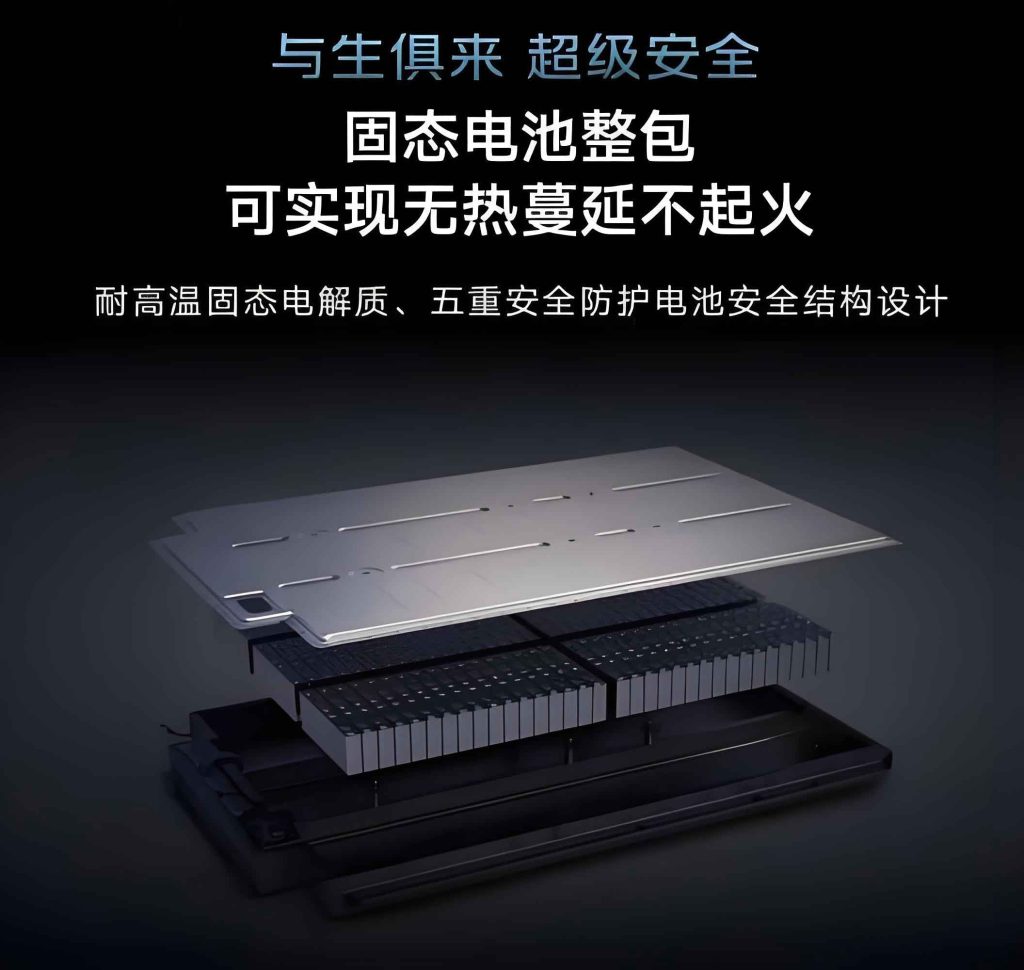
1. Fundamental Mechanisms of Interface Failure
The failure mechanisms at the silicon/solid electrolyte interface are deeply rooted in the intrinsic properties of silicon and the operational principles of a solid-state battery. Unlike liquid systems where the electrolyte can permeate and maintain contact, solid-solid interfaces are static and vulnerable to stress.
1.1 Crystalline vs. Amorphous Silicon: A Structural Dictation of Failure
The initial crystal structure of silicon critically influences its degradation pathway. Crystalline silicon (c-Si) has an anisotropic lattice. During lithiation, the phase boundary movement and associated volumetric strain vary significantly along different crystallographic directions (e.g., <110>, <111>). This anisotropic expansion induces severe localized stress, leading to particle cracking and pulverization once the particle size exceeds a critical diameter (~150 nm). The fracture creates fresh surfaces, continuously consuming lithium and electrolyte to form unstable interphases, and disrupts electronic pathways.
In contrast, amorphous silicon (a-Si) lacks long-range order. Its lithiation proceeds isotropically, distributing strain more uniformly. This allows a-Si to accommodate larger volume changes without fracture, raising its critical diameter to ~870 nm. The lower energy barrier for lithium insertion in a-Si also reduces lithiation overpotential. It is noted that both c-Si and a-Si transform into an amorphous LixSi phase upon the first cycle, but the initial structural anisotropy of c-Si often seeds irreversible mechanical damage early on.
1.2 Electrochemical Sintering and Irreversible Expansion
Beyond one-time fracture, continuous capacity fade arises from cumulative damage mechanisms. Electrochemical sintering describes the phenomenon where neighboring silicon particles merge during repeated lithiation/delithiation cycles through the breaking and reforming of Si-Si bonds. This process transforms a porous electrode comprised of discrete nanoparticles into a dense, monolithic bulk with reduced ionic transport paths and exacerbated local stress.
Furthermore, silicon electrodes experience two types of expansion: reversible expansion due to the LixSi phase change, and an irreversible expansion attributed to defect generation and accumulation. This irreversible swelling, not directly linked to capacity, gradually degrades electrode integrity and worsens contact with the solid electrolyte. The volumetric strain $\epsilon_v$ during lithiation can be related to the degree of lithiation (x in LixSi):
$$
\epsilon_v(x) \approx \frac{V_{Li_xSi} – V_{Si}}{V_{Si}}
$$
where $V_{Li_xSi}$ and $V_{Si}$ are the molar volumes of the lithiated phase and pristine silicon, respectively. For full lithiation to Li3.75Si, $\epsilon_v$ ≈ 280%.
1.3 Evolution of Material Properties with Lithiation
The properties of the silicon anode are not static but evolve dynamically during operation, impacting interface stability. Recent studies have clarified these changes:
- Electronic Conductivity ($\sigma_e$): Pristine silicon is a semiconductor with low conductivity (~10-4 S/cm). Remarkably, upon lithiation, the electronic conductivity of LixSi increases dramatically, reaching values as high as ~10 S/cm for x > 2. This “self-wiring” effect reduces the need for excess conductive carbon additives, which are often detrimental to sulfide-based solid electrolytes.
- Ionic Diffusivity ($D_{Li^+}$): The lithium-ion diffusion coefficient within the LixSi alloy also improves with higher lithium content, enhancing the rate capability of the electrode. This leads to a decreasing overpotential as lithiation proceeds.
- Mechanical Modulus (E): The Young’s modulus of silicon decreases significantly upon initial lithiation. For amorphous silicon thin films, the modulus drops sharply in the early stage of lithiation (x=0 to ~0.37) and then decreases more gradually. During delithiation, the modulus increases almost linearly with decreasing lithium content. This softening during lithiation can, to some extent, help accommodate strain, while the re-stiffening during delithiation under pressure can contribute to contact loss.
The interplay of these evolving properties—volumetric strain, conductivity, and modulus—creates a complex, state-dependent interface environment in a silicon-based solid-state battery.
| Property | Pristine Si (or Li0Si) | Highly Lithiated Si (e.g., Li~3Si) | Impact on Solid-State Battery Interface |
|---|---|---|---|
| Electronic Conductivity ($\sigma_e$) | ~10-4 S/cm | ~101 S/cm | Reduces reliance on carbon additives; lowers interfacial charge transfer resistance. |
| Li+ Diffusion Coefficient ($D_{Li^+}$) | ~10-14 – 10-13 cm2/s (est. for c-Si) | ~10-8 cm2/s (for a-LixSi) | Improves rate performance; more homogeneous lithiation reduces local stress gradients. |
| Young’s Modulus (E) | ~90-130 GPa (c-Si) | ~10-30 GPa (a-LixSi) | Softer electrode may alleviate stress on SE but can lead to creep and contact loss during delithiation. |
| Volume | V0 | ~3.8 V0 (for Li3.75Si) | Primary driver of contact loss, SE cracking, and increased impedance. |
2. Mitigation Strategies for Stable Interfaces
Addressing interface failure requires a multi-faceted approach that manages volume change, enhances mechanical integrity, and ensures electrochemical compatibility. The following strategies are at the forefront of research for silicon-based solid-state batteries.
2.1 Advanced Binders and Electrode Processing
Polymeric binders play a more crucial role in solid-state batteries than in liquid systems, as they must maintain adhesion despite large volume changes and often participate in ion transport. The choice between wet-slurry and dry-powder processing is critical, especially with sulfide SEs that are sensitive to polar solvents.
Innovative binder design focuses on multifunctionality. For instance, composite binders incorporating ionic conductive phases (e.g., polymer electrolytes) and electronically conductive nano-fillers (e.g., Ag nanoparticles) can create dual-conducting networks. This eliminates the need for separate carbon additives that degrade sulfide electrolytes, while simultaneously ensuring robust mechanical linkage between silicon particles and the solid electrolyte matrix. An effective binder must satisfy: $G_{binder} > \sigma_{interface} \cdot \Delta A$, where $G_{binder}$ is the adhesion energy, $\sigma_{interface}$ is the interfacial stress, and $\Delta A$ is the change in contact area.
2.2 Electrode Architecture and Material Design
Engineering the silicon material itself is a direct route to mitigating volume change.
- Nanostructuring and Porous Designs: While nanoparticles (<150 nm) resist fracture, they suffer from low tap density and severe side reactions. Micro-sized silicon particles offer higher volumetric capacity and practical viability. Designing porous micron-Si, such as ant-nest or closed-pore structures, provides internal void space to accommodate expansion, confining the volume swell to as low as ~18%. The capacity retention can be modeled relative to porosity ($\phi$) and volume expansion: $C_{ret} \propto \frac{1}{(1-\phi)\cdot \epsilon_v}$.
- Thin Films and Patterned Electrodes: Depositing silicon as a thin film or in columnar patterns directly on current collectors can control the direction of expansion, preferentially allowing it to occur in the direction away from the solid electrolyte interface. This maintains contact and enables very high areal capacities (>3 mAh/cm²).
- Embracing Electrochemical Sintering: A counter-intuitive strategy involves deliberately leveraging the electrochemical sintering process. By formulating electrodes that sinter into a continuous, ductile Li15Si4 / carbon composite network, a mechanically robust and ionically/electronically percolated structure is formed in situ, leading to exceptional long-term cycling stability in solid-state batteries.
2.3 Particle Size Matching and Composite Electrode Optimization
The microstructure of the composite anode, comprising Si, SE, and conductive additives, dictates local current density and stress distribution. Optimizing the size ratio of silicon to solid electrolyte particles is crucial for achieving high packing density, short ion transport pathways, and uniform electrochemical activity.
Smaller SE particles can fill voids between larger Si particles more effectively, increasing the contact area and lowering interfacial resistance. However, excessively small SE particles may have higher surface reactivity. Computational modeling shows that the effective ionic conductivity ($\sigma_{eff, ion}$) of the composite electrode depends on the volume fraction ($\phi_{SE}$) and tortuosity ($\tau$) of the SE phase: $\sigma_{eff, ion} = \sigma_{SE} \cdot \frac{\phi_{SE}}{\tau}$. Optimal particle packing maximizes $\phi_{SE}$ and minimizes $\tau$. Poor matching leads to localized current hotspots, expressed as $j_{local} = \frac{j_{app}}{\theta_{contact}}$, where $j_{app}$ is the applied current density and $\theta_{contact}$ is the local active contact area fraction, accelerating localized degradation.
2.4 Interfacial Buffer Layers and Coatings
Applying a functional coating on the silicon particle surface or at the Si/SE interface serves multiple purposes: it can act as a mechanical buffer to absorb strain, form a stable SEI to prevent continuous electrolyte reduction, and improve interfacial Li+ transport.
Examples include:
– Conformal Ionic Conductors: Coatings like Li3N, Li3PO4, or Li2O–LiF composites provide a stable, Li+-conductive layer that shields the sulfide SE from direct contact with Si.
– Soft Polymer Layers: Elastic polymers or gel electrolytes coated on silicon can accommodate volume change while maintaining contact.
– Artificial SEI Layers: Pre-formed layers rich in stable components (e.g., LiF, Li2O) using pre-lithiation strategies can eliminate irreversible initial capacity loss and create a protective interface from the first cycle.
The buffer layer’s effectiveness requires its strain energy release rate to exceed the crack driving force at the interface: $G_{buffer} > \frac{K_{I}^2}{E’}$, where $K_{I}$ is the stress intensity factor and $E’$ is the composite modulus.
2.5 The Critical Role of Stack Pressure
Applying external stack pressure is a quintessential requirement for most inorganic solid-state batteries to maintain intimate solid-solid contact. For silicon anodes, pressure management is doubly critical due to volume changes.
- Optimal Pressure Window: Too low a pressure (<1-2 MPa) results in contact loss and rapid failure. Excessively high pressure (>100 MPa) can restrict volume expansion, limiting capacity, and may induce mechanical degradation of the SE. An optimal, moderate pressure (e.g., 5-50 MPa) helps maintain contact without fully constraining silicon.
- Pressure Uniformity and Constancy: Traditional rigid cell fixtures apply non-uniform pressure that varies during cycling as the anode thickness changes. Advanced fixtures using hydraulic systems or springs provide isostatic (uniform) and constant pressure, leading to significantly improved and more reproducible electrochemical performance. This highlights that the pressure *history* is as important as its magnitude.
- Elastic Solid Electrolytes: An emerging solution is to develop SEs with inherent elastic or viscoelastic properties. These materials can self-adapt to volume changes, potentially enabling the operation of silicon-based solid-state batteries without any external stack pressure, a major step towards practical form factors.
| Strategy Category | Typical Approach | Key Mechanism for Interface Stabilization | Challenge/Consideration |
|---|---|---|---|
| Binders | Dual-conducting (ion/electron) polymers | Maintains adhesion & electrical contact; replaces degradable carbon additives. | Compatibility with dry/wet processing; long-term stability. |
| Electrode Design | Porous micron-Si, thin films, in-situ sintered networks | Provides internal void space; directs expansion; creates robust 3D structure. | Balancing porosity with energy density; process scalability. |
| Particle Engineering | Optimizing Si/SE size ratio | Maximizes ionic contact area; ensures uniform current distribution. | Finding universal optimum; impact on electrode manufacturing. |
| Interfacial Layers | LiF-rich coatings, polymer buffers, artificial SEI | Physically decouples Si/SE; provides stable, conductive interphase. | Adding processing steps; ensuring layer uniformity and Li+ transport. |
| Stack Pressure | Isostatic constant-pressure fixtures; elastic SEs | Maintains intimate contact throughout volume changes. | System-level energy density penalty (fixtures); developing highly conductive elastic SEs. |
| Stack Pressure Condition | Effect on Silicon Anode | Consequence for Solid-State Battery Performance |
|---|---|---|
| Too Low (< 2 MPa) | Contact loss, porosity formation at interface. | Rapid increase in impedance; poor cycle life. |
| Optimal (e.g., 5-30 MPa) | Maintained contact, some accommodation of expansion. | Stable cycling, high capacity retention. |
| Too High (> 100 MPa) | Constrained expansion, possible Si/SE fracture. | Reduced accessible capacity; mechanical failure. |
| Non-Uniform (Rigid Fixture) | Gradient in lithiation, localized stress. | Inconsistent performance, accelerated local failure. |
| Zero Pressure (with Elastic SE) | Expansion absorbed by SE deformation. | Potential for simple cell stacking, stable cycling if SE property criteria met. |
3. Summary and Future Perspectives
The development of high-performance silicon-based solid-state batteries hinges on conquering interface failure. Strategies focusing on managing volume change (through material and electrode design), enhancing interfacial compatibility (via coatings and buffers), and controlling the mechanical environment (with optimal stack pressure) are showing significant promise. The evolution of silicon’s properties during cycling must be actively managed rather than merely accommodated.
Looking forward, several key avenues require intensified research to transition silicon-based solid-state batteries from promising prototypes to commercial realities:
- Fundamental Understanding: Operando and multi-scale characterization techniques are needed to fully unravel the coupled chemo-mechanical-electrical evolution at the buried Si/SE interface. This includes understanding the formation and stability of the solid-state interphase (SSI) under strain.
- High-Areal-Capacity Electrodes: Moving beyond nanoscale films to achieve stable cycling of high-loading (>4 mAh/cm²), thick silicon electrodes is essential for meeting practical energy density targets. This likely requires hierarchical designs combining porous structures, intelligent binders, and stable interfaces.
- Rational Design via Modeling and AI: Multi-physics models coupling electrochemistry, mechanics, and heat transfer are crucial for predicting failure. Furthermore, machine learning can accelerate the optimization of complex parameters like particle size distributions, porosity gradients, and composite formulations.
- Pressure-Management Solutions: The development of truly elastic, high-conductivity solid electrolytes or innovative cell designs that internally manage stress could eliminate the need for bulky external fixtures, dramatically improving the energy density at the pack level for solid-state batteries.
In conclusion, while challenges remain significant, the integrated application of materials science, electrochemistry, and mechanical engineering is paving a clear path toward overcoming interface failures. Silicon, with its unparalleled capacity, continues to hold the key to unlocking the full potential of the next generation of solid-state batteries, promising a future of safer, denser, and longer-lasting energy storage.