
In recent years, solid-state batteries have emerged as a focal point in energy storage research due to their high energy density, enhanced safety, and long cycle life. The electrolyte, a critical component in solid-state batteries, not only facilitates ion conduction but also directly impacts charging-discharging efficiency, cycling stability, and overall safety. Traditional liquid electrolytes, while offering high ionic conductivity, suffer from risks such as leakage and flammability, limiting their application in advanced solid-state battery systems. Solid electrolytes address these issues, but single-component solid electrolytes often exhibit drawbacks in ionic conductivity, mechanical properties, and interfacial compatibility. Therefore, developing composite electrolytes that combine high ionic conductivity, robust mechanical performance, and stable interfacial characteristics is key to advancing solid-state battery technology. Polyvinyl alcohol (PVA), a polymer with excellent film-forming ability, chemical stability, and biocompatibility, shows significant potential in battery electrolytes. By incorporating lithium salts into PVA matrices to form composite electrolytes, the advantages of both materials can be harnessed for performance optimization. Different lithium salts, owing to their unique anion structures and physicochemical properties, impart varied effects on the composite electrolyte’s performance. Although progress has been made in studying PVA/lithium salt composite electrolytes for solid-state batteries, several challenges remain, such as unclear mechanisms of lithium salt content on performance and lack of systematic comparisons among different systems. In this study, I investigate the effects of various lithium salts and their concentrations on PVA-based composite electrolytes, evaluate their comprehensive performance in solid-state batteries, including charge-discharge behavior, rate capability, and impedance, and provide insights for designing and optimizing electrolytes in solid-state batteries.
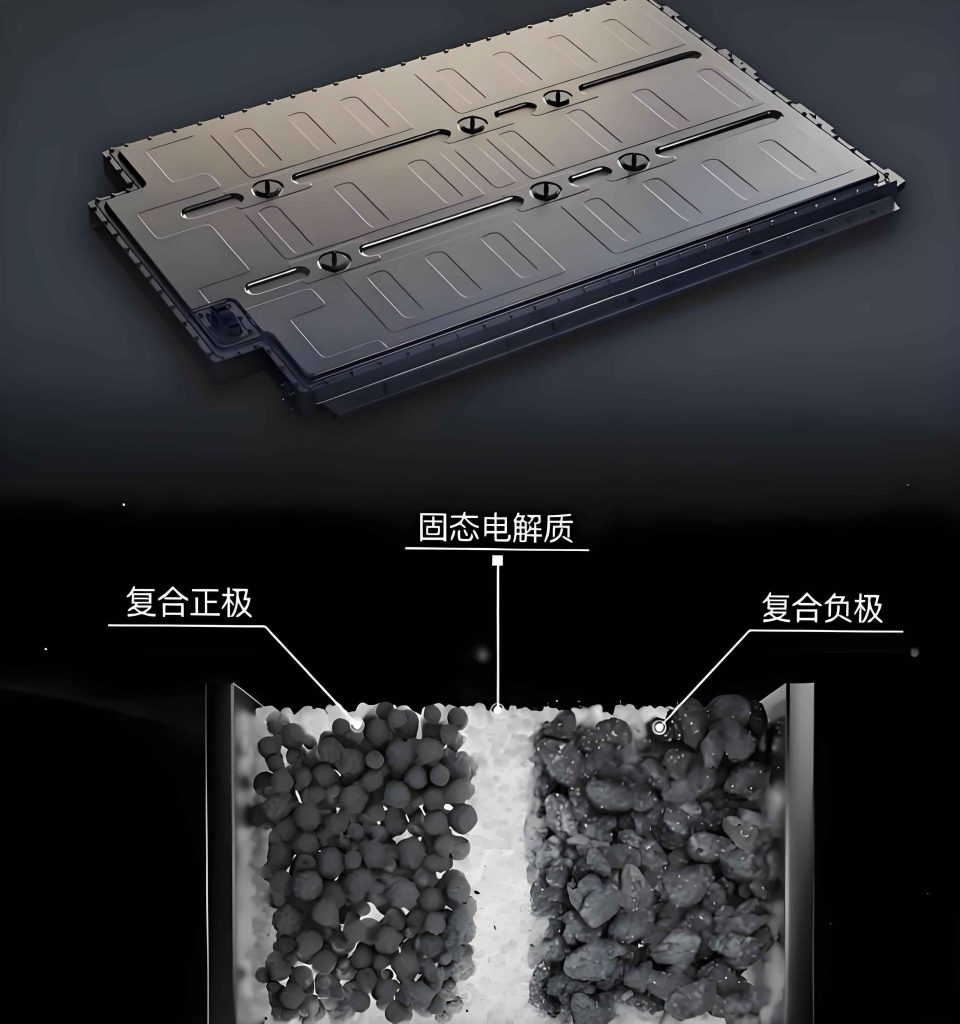
To systematically explore the performance of PVA/lithium salt composite electrolytes in solid-state batteries, I prepared electrolytes with varying molar ratios of PVA to lithium salts—lithium perchlorate (LiClO4), lithium hexafluorophosphate (LiPF6), and lithium bis(trifluoromethanesulfonyl)imide (LiTFSI). The PVA was dissolved in deionized water at 90°C with stirring, followed by the addition of lithium salts at molar ratios of 5:1, 10:1, 15:1, and 20:1 (PVA:lithium salt). The mixture was stirred at 60°C for 2 hours to form a homogeneous solution, which was then cast onto glass plates using a doctor blade and dried at 60°C for 12 hours to obtain electrolyte membranes. These membranes were stored in an argon-filled glovebox with water and oxygen levels below 1×10⁻⁷ mol/mol for further use. For solid-state battery assembly, I prepared positive electrodes using LiCoO2, acetylene black, and polyvinylidene fluoride (PVDF) in a mass ratio of 8:1:1, coated onto aluminum foil, and dried at 80°C. Graphite was used as the negative electrode. The optimized electrolyte membrane was punched into discs and assembled with electrodes in a coin-cell configuration under 20 MPa pressure. Performance characterization included ionic conductivity via electrochemical impedance spectroscopy (EIS) over a frequency range of 10−2 to 106 Hz, thermal stability through Vicat softening temperature measurements, mechanical properties via tensile testing, interfacial stability assessed by EIS and microscopic observation after storage with lithium metal, and battery performance evaluated using galvanostatic charge-discharge cycling, rate capability tests, and EIS at different temperatures.
The ionic conductivity of the composite electrolytes was a primary focus, as it directly influences the efficiency of solid-state batteries. The conductivity (\(\sigma\)) was calculated from EIS data using the formula: $$ \sigma = \frac{L}{R \times A} $$ where \(L\) is the membrane thickness, \(R\) is the bulk resistance obtained from the impedance spectrum, and \(A\) is the electrode area. The results for different lithium salt systems are summarized in the table below.
| Lithium Salt Type | Molar Ratio (PVA:Lithium Salt) | Ionic Conductivity (S/cm) |
|---|---|---|
| LiClO4 | 5:1 | 1.3 × 10⁻⁵ |
| LiClO4 | 10:1 | 1.9 × 10⁻⁵ |
| LiClO4 | 15:1 | 2.3 × 10⁻⁵ |
| LiClO4 | 20:1 | 1.6 × 10⁻⁵ |
| LiPF6 | 5:1 | 0.9 × 10⁻⁵ |
| LiPF6 | 10:1 | 1.5 × 10⁻⁵ |
| LiPF6 | 15:1 | 2.4 × 10⁻⁵ |
| LiPF6 | 20:1 | 1.2 × 10⁻⁵ |
| LiTFSI | 5:1 | 1.4 × 10⁻⁵ |
| LiTFSI | 10:1 | 2.1 × 10⁻⁵ |
| LiTFSI | 15:1 | 2.9 × 10⁻⁵ |
| LiTFSI | 20:1 | 2.0 × 10⁻⁵ |
The data indicate that the LiTFSI system exhibits superior ionic conductivity, peaking at a molar ratio of 15:1 with \(2.9 \times 10^{-5}\) S/cm. This enhancement is attributed to the unique anion structure of LiTFSI, which promotes ion dissociation and facilitates efficient ion transport networks within the PVA matrix. In contrast, LiClO4 and LiPF6 systems show lower conductivities, with conductivity decreasing at higher salt concentrations due to ion aggregation hindering migration. The temperature dependence of ionic conductivity was further analyzed using the Arrhenius equation: $$ \sigma = \sigma_0 \exp\left(-\frac{E_a}{k_B T}\right) $$ where \(\sigma_0\) is the pre-exponential factor, \(E_a\) is the activation energy for ion conduction, \(k_B\) is Boltzmann’s constant, and \(T\) is the absolute temperature. For the LiTFSI-based composite electrolyte at the optimal ratio, the activation energy was calculated to be approximately 0.35 eV, indicating favorable ion mobility in solid-state batteries.
Thermal stability is crucial for the safe operation of solid-state batteries, especially under varying temperature conditions. I assessed this property through Vicat softening temperature measurements, which reflect the electrolyte’s resistance to deformation under heat. The results are presented in the following table.
| Lithium Salt Type | Molar Ratio (PVA:Lithium Salt) | Vicat Softening Temperature (°C) |
|---|---|---|
| LiClO4 | 5:1 | 159 |
| LiClO4 | 10:1 | 152 |
| LiClO4 | 15:1 | 148 |
| LiClO4 | 20:1 | 142 |
| LiPF6 | 5:1 | 156 |
| LiPF6 | 10:1 | 149 |
| LiPF6 | 15:1 | 144 |
| LiPF6 | 20:1 | 140 |
| LiTFSI | 5:1 | 164 |
| LiTFSI | 10:1 | 157 |
| LiTFSI | 15:1 | 151 |
| LiTFSI | 20:1 | 146 |
The LiTFSI system demonstrates better thermal stability across all ratios, with a Vicat softening temperature of 164°C at a 5:1 molar ratio, compared to 159°C for LiClO4 and 156°C for LiPF6 at the same ratio. This suggests that LiTFSI interacts favorably with PVA chains, possibly through coordination bonds that stabilize the composite structure against thermal degradation. The decrease in softening temperature with increasing lithium salt content is likely due to the plasticizing effect of the salts, which reduces polymer chain interactions. For solid-state batteries operating at elevated temperatures, such thermal properties are essential to prevent electrolyte softening and maintain structural integrity.
Mechanical performance, including tensile strength, elongation at break, and elastic modulus, is vital for electrolyte membranes in solid-state batteries to withstand processing stresses and volume changes during cycling. I conducted tensile tests on the composite electrolytes, and the results are summarized below.
| Lithium Salt Type | Molar Ratio (PVA:Lithium Salt) | Tensile Strength (MPa) | Elongation at Break (%) | Elastic Modulus (GPa) |
|---|---|---|---|---|
| LiClO4 | 5:1 | 18.2 | 13.4 | 0.68 |
| LiClO4 | 10:1 | 16.9 | 11.3 | 0.63 |
| LiClO4 | 15:1 | 15.7 | 9.8 | 0.59 |
| LiClO4 | 20:1 | 13.0 | 7.2 | 0.48 |
| LiPF6 | 5:1 | 17.9 | 12.6 | 0.71 |
| LiPF6 | 10:1 | 16.4 | 10.9 | 0.62 |
| LiPF6 | 15:1 | 14.9 | 9.2 | 0.57 |
| LiPF6 | 20:1 | 12.3 | 6.8 | 0.45 |
| LiTFSI | 5:1 | 19.2 | 13.9 | 0.76 |
| LiTFSI | 10:1 | 17.7 | 12.2 | 0.73 |
| LiTFSI | 15:1 | 16.8 | 11.5 | 0.69 |
| LiTFSI | 20:1 | 13.5 | 7.5 | 0.51 |
The LiTFSI system consistently shows superior mechanical properties, with a tensile strength of 19.2 MPa, elongation at break of 13.9%, and elastic modulus of 0.76 GPa at a 5:1 molar ratio. At the optimal 15:1 ratio, it maintains a tensile strength of 16.8 MPa and elongation of 11.5%, balancing mechanical robustness with ionic conductivity. The decline in mechanical performance at higher salt concentrations is attributed to the disruption of polymer chain entanglements and increased free volume. The elastic modulus (\(E\)) can be related to the composite’s stiffness through the equation: $$ E = \frac{\sigma}{\epsilon} $$ where \(\sigma\) is stress and \(\epsilon\) is strain. For solid-state batteries, such mechanical properties help mitigate dendrite growth and ensure stable electrode-electrolyte interfaces.
Interfacial stability between the electrolyte and electrodes is a critical factor influencing the longevity and safety of solid-state batteries. I evaluated this by measuring interfacial impedance and observing morphological changes after storage with lithium metal. The interfacial resistance (\(R_{int}\)) was derived from EIS data, and the observations are compiled in the table below.
| Lithium Salt Type | Molar Ratio (PVA:Lithium Salt) | Interfacial Impedance (Ω·cm²) | Observations After 7 Days on Li Metal |
|---|---|---|---|
| LiClO4 | 5:1 | 118 | Scattered tiny lithium dendrites, slight separation at interface |
| LiClO4 | 10:1 | 147 | Increased dendrite aggregation, minor decomposition products |
| LiClO4 | 15:1 | 182 | Extensive dendrite growth, severe separation, significant decomposition |
| LiClO4 | 20:1 | 228 | Dendrite penetration, interface collapse, abundant decomposition |
| LiPF6 | 5:1 | 97 | Minimal corrosion spots, tight electrode-electrolyte adhesion |
| LiPF6 | 10:1 | 132 | Short dendrite formation, beginning of gaps at interface |
| LiPF6 | 15:1 | 165 | Interlaced dendrite growth, white decomposition products on surface |
| LiPF6 | 20:1 | 205 | Severe interface damage, rampant dendrite growth, loss of membrane integrity |
| LiTFSI | 5:1 | 78 | Negligible lithium deposits, excellent adhesion |
| LiTFSI | 10:1 | 109 | Few dendrite buds, no significant changes at interface |
| LiTFSI | 15:1 | 138 | Slow dendrite growth, no apparent electrolyte decomposition |
| LiTFSI | 20:1 | 173 | Increased dendrite count, slight decomposition signs |
The LiTFSI system exhibits the lowest interfacial impedance and best stability, with only 78 Ω·cm² at a 5:1 ratio and 138 Ω·cm² at the optimal 15:1 ratio. This suggests that LiTFSI promotes a stable solid-electrolyte interphase (SEI) layer, reducing side reactions and dendrite formation. The impedance can be modeled using an equivalent circuit for solid-state batteries: $$ Z = R_b + \frac{R_{ct}}{1 + (j\omega R_{ct} C_{dl})^\alpha} $$ where \(R_b\) is bulk resistance, \(R_{ct}\) is charge-transfer resistance, \(C_{dl}\) is double-layer capacitance, \(\omega\) is angular frequency, and \(\alpha\) is a constant. The low \(R_{ct}\) values for LiTFSI-based electrolytes indicate efficient charge transfer at interfaces, crucial for high-performance solid-state batteries.
To assess the practical application of these composite electrolytes, I assembled solid-state batteries with the optimal molar ratio of 15:1 for each lithium salt system and evaluated their electrochemical performance. The charge-discharge behavior was tested at a 0.1 C rate, with results shown in the following table.
| Composite Electrolyte Type | Initial Capacity at 0.1 C (mAh/g) | Initial Coulombic Efficiency (%) | Capacity Retention After 50 Cycles (%) |
|---|---|---|---|
| PVA-LiClO4 | 110 | 82 | 55 |
| PVA-LiPF6 | 120 | 85 | 60 |
| PVA-LiTFSI | 130 | 88 | 70 |
The PVA-LiTFSI solid-state battery demonstrates superior performance, with an initial capacity of 130 mAh/g, Coulombic efficiency of 88%, and capacity retention of 70% after 50 cycles. This outperforms the LiClO4 and LiPF6 systems, which show lower capacities and faster degradation. The enhanced performance is likely due to the high ionic conductivity and stable interface of LiTFSI, minimizing polarization and irreversible reactions. The capacity fading can be described by the equation: $$ C_n = C_0 \times (1 – \beta)^n $$ where \(C_n\) is capacity at cycle \(n\), \(C_0\) is initial capacity, and \(\beta\) is the decay rate per cycle. For PVA-LiTFSI, \(\beta\) is approximately 0.006, indicating slow degradation and suitability for long-life solid-state batteries.
Rate capability is another key metric for solid-state batteries, especially for applications requiring high power output. I tested the batteries at different current rates, and the discharge capacities are summarized below.
| Composite Electrolyte Type | Discharge Capacity at 0.1 C (mAh/g) | Discharge Capacity at 1.0 C (mAh/g) | Discharge Capacity at 5.0 C (mAh/g) |
|---|---|---|---|
| PVA-LiClO4 | 110 | 70 | 35 |
| PVA-LiPF6 | 120 | 80 | 40 |
| PVA-LiTFSI | 130 | 90 | 50 |
The PVA-LiTFSI system maintains the highest discharge capacities across all rates, with 90 mAh/g at 1.0 C and 50 mAh/g at 5.0 C, showcasing excellent rate performance. This is attributed to its low ionic resistance and efficient ion transport kinetics. In contrast, the LiClO4 and LiPF6 systems exhibit significant capacity drops at higher rates, indicating limitations in ion diffusion. The rate-dependent capacity can be expressed using a power-law model: $$ C_{rate} = C_0 \times \left(\frac{I_0}{I}\right)^\gamma $$ where \(C_{rate}\) is capacity at current \(I\), \(C_0\) is capacity at reference current \(I_0\), and \(\gamma\) is an exponent related to diffusion limitations. For PVA-LiTFSI, \(\gamma\) is around 0.15, suggesting minimal diffusion constraints in solid-state batteries.
Impedance spectroscopy at various temperatures provided insights into the temperature-dependent behavior of the solid-state batteries. The AC impedance values at room temperature, 50°C, and 80°C are listed in the table.
| Composite Electrolyte Type | AC Impedance at Room Temperature (Ω) | AC Impedance at 50°C (Ω) | AC Impedance at 80°C (Ω) |
|---|---|---|---|
| PVA-LiClO4 | 600 | 350 | 180 |
| PVA-LiPF6 | 500 | 300 | 150 |
| PVA-LiTFSI | 400 | 200 | 100 |
The PVA-LiTFSI system consistently shows the lowest impedance, decreasing from 400 Ω at room temperature to 100 Ω at 80°C. This reduction follows the Arrhenius relationship, indicating thermally activated ion conduction. The low impedance values contribute to reduced polarization and improved energy efficiency in solid-state batteries. The total impedance (\(Z_{total}\)) in a solid-state battery can be decomposed into contributions from bulk electrolyte, interfaces, and electrodes: $$ Z_{total} = Z_{bulk} + Z_{SEI} + Z_{ct} $$ where \(Z_{bulk}\) is bulk resistance, \(Z_{SEI}\) is SEI layer resistance, and \(Z_{ct}\) is charge-transfer resistance. For LiTFSI-based electrolytes, all components are minimized, enhancing overall battery performance.
In summary, this study systematically investigates PVA/lithium salt composite electrolytes for solid-state batteries, focusing on ionic conductivity, thermal stability, mechanical properties, interfacial stability, and electrochemical performance. The LiTFSI system outperforms LiClO4 and LiPF6 systems, with an optimal molar ratio of 15:1 (PVA:LiTFSI) achieving an ionic conductivity of \(2.9 \times 10^{-5}\) S/cm, Vicat softening temperature of 151°C, tensile strength of 16.8 MPa, elongation at break of 11.5%, interfacial impedance of 138 Ω·cm², and excellent battery performance including 130 mAh/g initial capacity, 88% Coulombic efficiency, 70% capacity retention after 50 cycles, and superior rate capability. These findings highlight the potential of PVA-LiTFSI composite electrolytes in advancing solid-state battery technology, offering a balance of high ion transport, mechanical robustness, and interfacial stability. Future work could explore further optimization through additives, cross-linking, or nano-composite approaches to enhance performance for next-generation solid-state batteries.