
In recent years, the rapid development of the hybrid car industry has significantly contributed to energy structure transformation and environmental protection. As the adoption of hybrid cars increases globally, the demand for advanced components like dedicated hybrid transmissions (DHT) has surged. However, a critical gap remains in accurately testing the system efficiency of these transmissions during research and development, hindering optimization efforts. To address this, I believe it is essential to develop a comprehensive testing framework that covers all operating conditions and scenarios, tailored to the structural and functional characteristics of hybrid car dedicated transmissions. This will standardize testing methodologies, shorten development cycles, and enhance overall vehicle quality for hybrid cars.
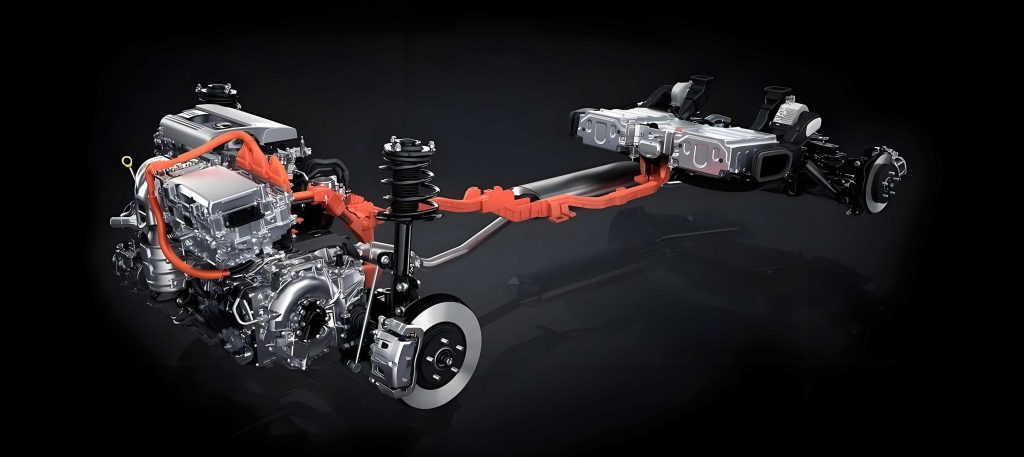
From my perspective, understanding hybrid car dedicated transmissions begins with their architecture. Early designs primarily utilized single-motor or dual-motor configurations, depending on the hybrid car’s positioning and technical roadmap. The single-motor architecture integrates a motor, such as an ISG (Integrated Starter Generator) or BSG (Belt-Driven Starter Generator), between the engine and transmission. This motor assists in engine starting and acceleration, while switching to generation mode during high-speed cruising to convert mechanical energy into electrical energy stored in the battery. While simple and cost-effective, this approach limits pure electric range and creates strong coupling between the motor and engine. In contrast, the dual-motor architecture deploys one motor at the engine end and another at the transmission output shaft, separating generation and drive functions. This enables series and parallel operating modes, significantly improving system performance and adaptability for hybrid cars across diverse driving conditions. To summarize these schemes, I have compiled a comparison table below.
| Architecture Type | Key Components | Advantages | Limitations | Typical Use in Hybrid Cars |
|---|---|---|---|---|
| Single-Motor | ISG/BSG motor, engine, battery | Simple structure, low cost | Short electric range, strong coupling | Mild hybrid cars |
| Dual-Motor | Two motors, engine, power split device | High efficiency, flexible modes | Complex design, higher cost | Full hybrid and plug-in hybrid cars |
Regarding performance, hybrid car dedicated transmissions outperform conventional ones in several aspects. First, they offer smoother power delivery due to deep motor integration, minimizing shift shock. Second, they provide comprehensive power coverage, adapting to complex terrains like snow or hills through multi-speed DHT designs. Third, flexible mode switching—such as pure electric, series, and parallel modes—enhances driving experience and system efficiency for hybrid cars. Fourth, improved noise control, seen in E-CVT types, reduces engine noise by eliminating clutches and torque converters. These characteristics directly influence system efficiency, which I define as the ratio of useful output power to input power. For a hybrid car transmission, the overall system efficiency $$ \eta_{\text{system}} $$ can be expressed as a product of subsystem efficiencies:
$$ \eta_{\text{system}} = \eta_{\text{mech}} \times \eta_{\text{motor}} \times \eta_{\text{control}} \times \eta_{\text{hydraulic}} $$
where $$ \eta_{\text{mech}} $$ is mechanical efficiency, $$ \eta_{\text{motor}} $$ is motor-electronic efficiency, $$ \eta_{\text{control}} $$ is control system efficiency, and $$ \eta_{\text{hydraulic}} $$ is hydraulic efficiency. In practice, efficiency varies with driving scenarios. For instance, in urban conditions, conventional transmissions suffer from frequent shifting and low efficiency, whereas single or multi-speed DHTs maintain high efficiency by optimizing gear ratios. On highways, multi-speed DHTs keep the engine in its optimal efficiency range, boosting fuel economy for hybrid cars. To quantify this, consider the efficiency gain $$ \Delta \eta $$ in different scenarios:
$$ \Delta \eta = \eta_{\text{DHT}} – \eta_{\text{conventional}} $$
where $$ \eta_{\text{DHT}} $$ and $$ \eta_{\text{conventional}} $$ represent efficiencies of hybrid car dedicated and conventional transmissions, respectively. Studies show that $$ \Delta \eta $$ is notably higher in city and high-speed driving for hybrid cars.
To ensure accurate data for hybrid car development, I focus on system efficiency testing methods. These are categorized into static, dynamic, and extreme scenario tests. Static efficiency testing, or bench testing, evaluates the transmission in a controlled lab environment to measure intrinsic losses without external influences. It includes mechanical transmission efficiency, motor-electronic system efficiency, and hydraulic system efficiency. For mechanical efficiency, I use a power闭环 test setup with input and output dynamometers, torque sensors, and parameter controls. The efficiency at each operating point is calculated as:
$$ \eta_{\text{mech}} = \frac{T_{\text{out}} \times \omega_{\text{out}}}{T_{\text{in}} \times \omega_{\text{in}}} $$
where $$ T $$ is torque and $$ \omega $$ is angular velocity. Testing under step and continuous conditions yields an efficiency MAP, as summarized in the table below for a typical hybrid car transmission.
| Operating Point | Input Torque (Nm) | Input Speed (rpm) | Output Torque (Nm) | Output Speed (rpm) | Mechanical Efficiency (%) |
|---|---|---|---|---|---|
| Low load | 50 | 1000 | 48 | 980 | 94.1 |
| Medium load | 150 | 2000 | 144 | 1980 | 95.2 |
| High load | 300 | 3000 | 288 | 2970 | 96.0 |
For motor-electronic efficiency, I set up a power analysis system to measure losses during drive and generation modes. In drive mode, efficiency is:
$$ \eta_{\text{drive}} = \frac{P_{\text{mech, out}}}{P_{\text{elec, in}}} $$
where $$ P_{\text{mech, out}} $$ is mechanical output power and $$ P_{\text{elec, in}} $$ is electrical input power. In generation mode, for energy recovery:
$$ \eta_{\text{gen}} = \frac{P_{\text{elec, out}}}{P_{\text{mech, in}}} $$
Hydraulic efficiency testing involves simulating clutch actuation and measuring input hydraulic power versus effective output power, with efficiency given by:
$$ \eta_{\text{hyd}} = \frac{P_{\text{hyd, out}}}{P_{\text{hyd, in}}} $$
These static tests provide baseline data for hybrid car transmissions but must be complemented by dynamic assessments.
Dynamic efficiency testing validates hybrid car transmission performance under real-world driving conditions. It includes typical duty cycle efficiency, power mode switching efficiency, and energy recovery efficiency. For duty cycles like WLTC (Worldwide Harmonized Light Vehicles Test Cycle), I simulate urban, highway, and combined scenarios on a test bench with real vehicle components. The system efficiency over a segment is calculated as:
$$ \eta_{\text{cycle}} = \frac{\int P_{\text{out}}(t) , dt}{\int P_{\text{in}}(t) , dt} $$
where $$ P_{\text{in}}(t) $$ and $$ P_{\text{out}}(t) $$ are time-varying input and output powers. Results for a hybrid car transmission under WLTC segments are shown below.
| WLTC Segment | Average Input Power (kW) | Average Output Power (kW) | Efficiency (%) |
|---|---|---|---|
| Low speed (0-50 km/h) | 25.3 | 23.8 | 94.1 |
| Medium speed (50-80 km/h) | 40.5 | 38.6 | 95.3 |
| High speed (80-120 km/h) | 60.2 | 57.8 | 96.0 |
| Extra high speed (>120 km/h) | 75.1 | 71.8 | 95.6 |
Power mode switching efficiency tests measure energy losses during transitions, such as from electric to hybrid mode. Using a dynamometer model with feedforward compensation, I quantify the loss fraction $$ L_{\text{switch}} $$:
$$ L_{\text{switch}} = 1 – \frac{E_{\text{useful}}}{E_{\text{total}}} $$
where $$ E_{\text{useful}} $$ is energy delivered during switching and $$ E_{\text{total}} $$ is total energy input. For energy recovery efficiency, crucial in hybrid cars, I simulate braking events and compute:
$$ \eta_{\text{recovery}} = \frac{E_{\text{recovered}}}{E_{\text{kinetic, loss}}} $$
with $$ E_{\text{recovered}} $$ as reclaimed electrical energy and $$ E_{\text{kinetic, loss}} $$ as reduction in vehicle kinetic energy. Typical values range from 70% to 85% for advanced hybrid car systems.
Extreme scenario testing ensures hybrid car transmissions perform reliably under harsh conditions. This includes high-temperature (40–60°C) and low-temperature (-30 to -10°C) environments, simulating summer heat and winter cold. In high-temperature tests, efficiency degradation $$ \Delta \eta_{\text{high}} $$ is measured as:
$$ \Delta \eta_{\text{high}} = \eta_{\text{normal}} – \eta_{\text{high}} $$
where $$ \eta_{\text{normal}} $$ is efficiency at 25°C and $$ \eta_{\text{high}} $$ at elevated temperatures. Issues like lubricant thinning and motor overheating increase losses. In low-temperature tests, cold-start efficiency is critical for hybrid cars; I measure the time to normal operation and efficiency after startup:
$$ \eta_{\text{cold}} = \frac{P_{\text{out, cold}}}{P_{\text{in, cold}}} $$
Data from these tests highlight the robustness of hybrid car transmissions, as summarized below.
| Extreme Scenario | Temperature Range | Key Challenges | Efficiency Drop (%) | Impact on Hybrid Car Performance |
|---|---|---|---|---|
| High temperature | 40–60°C | Lubricant degradation, cooling load | 2–5 | Reduced fuel economy |
| Low temperature | -30 to -10°C | High oil viscosity, slow response | 3–7 | Longer warm-up, lower efficiency |
Additionally, I consider altitude effects, where reduced air density impacts cooling and combustion, further testing hybrid car transmission adaptability.
Looking ahead, I envision several directions for improving hybrid car transmission testing. First, enhancing test precision by decomposing total losses into individual components. For a hybrid car transmission, the power loss $$ P_{\text{loss}} $$ can be expressed as:
$$ P_{\text{loss}} = P_{\text{mech, loss}} + P_{\text{motor, loss}} + P_{\text{hyd, loss}} + P_{\text{control, loss}} $$
By measuring each term separately, such as using calorimetry for thermal losses, we can pinpoint inefficiencies. Second, boosting test efficiency through automation and machine learning. Automated systems can execute test sequences based on historical data, reducing human error and time. For instance, an AI model could optimize test parameters for hybrid car transmissions by minimizing the objective function:
$$ J = \alpha \cdot \text{Time} + \beta \cdot \text{Error} $$
where $$ \alpha $$ and $$ \beta $$ are weights. Third, recreating real-world driving conditions more accurately. Instead of lab benches, using chassis dynamometers in controlled tracks allows testing hybrid car transmissions under actual road loads, wind resistance, and terrain variations. This approach yields efficiency maps that better reflect hybrid car usage, with efficiency $$ \eta_{\text{real}} $$ calculated from on-road data.
In conclusion, hybrid car dedicated transmissions are pivotal for advancing sustainable mobility, and their system efficiency directly impacts vehicle range and performance. Through comprehensive testing—covering static, dynamic, and extreme scenarios—we can gather precise data to refine designs. As hybrid car technologies evolve, continued innovation in testing methodologies will be essential to accelerate development and ensure high-quality hybrid cars for the future. By integrating advanced formulas, automated systems, and real-world simulations, we can overcome current limitations and drive progress in the hybrid car industry.