
The rapid global adoption of electric vehicles (EVs), with a fleet now exceeding hundreds of millions, has precipitated a critical challenge for the industry’s sustainability: the safe, efficient, and scalable recycling of end-of-life (EOL) power battery packs. The core of this challenge lies in the disassembly process, which traditionally relies heavily on manual labor. Manual disassembly is plagued by low efficiency (often requiring over 120 minutes per pack), high component damage rates (exceeding 20% for corroded screws), and significant safety hazards due to residual high voltage, toxic electrolytes, and the physical strain of handling heavy modules.
This article presents the design and engineering of a dedicated, self-contained robotic workstation for the automated disassembly of retired EV battery packs. The system is engineered to execute the complete workflow from pack feeding to module separation. A primary and persistent obstacle in this process is the reliable removal of external hexagonal stainless steel screws, which are ubiquitous in pack construction but highly susceptible to seizing and thread galling due to corrosion and previous over-torquing. Our solution integrates advanced machine vision for precise guidance, a dynamically controlled servo electric screwdriver with auxiliary vibration, and intelligent tool-changing mechanisms. The goal is to transition from a labor-intensive, variable-outcome process to a repeatable, efficient, and data-driven industrial operation, forming a foundational module for larger-scale battery recycling facilities.
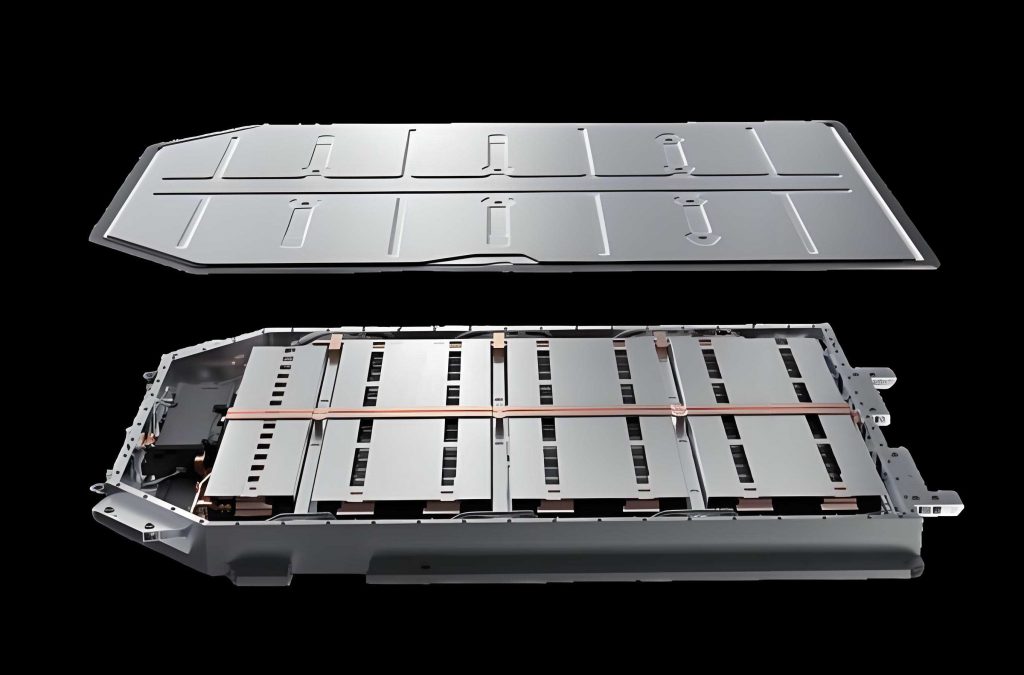
1. System Architecture of the Single Workstation
The workstation is designed as a compact, cell-like unit capable of handling the complete disassembly sequence for a single EV battery pack at a time. Its layout emphasizes workflow logic, safety, and minimal footprint, approximately 36 m².
1.1 Workstation Layout and Components
The system employs a “single robot, multi-station” configuration centered around a high-payload industrial robot. The key stations are arranged ergonomically around the robot’s working envelope:
- Loading & Fixturing Station: Equipped with adjustable pneumatic clamps that accommodate common EV battery pack dimensional variations (Length: 1600-1900 mm, Width: 1300-1500 mm). Integrated laser sensors perform an initial scan to verify pack placement and orientation.
- Core Robotic Manipulator: A 6-axis industrial robot with a 210 kg payload and a repeatability of ±0.1 mm. Its end-effector features an automatic tool changer (changing time < 12 seconds) for switching between various specialized grippers and tools.
- Tool Magazine: A linear rack storing up to five dedicated end-effectors, including two types of screwdriving tools (for different screw sizes), a vacuum gripper for cover panels, a cutting tool for cables, and a module-gripping tool. Each tool is identified via RFID.
- Module Output Conveyor: A belt conveyor that transports disassembled battery modules away from the workstation at 0.5 m/s, equipped with counters for production tracking.
- Component Sorting Bins: Designated containers for sorted disassembly by-products like screws, busbars, and wiring harnesses, monitored by a vision-based counting system.
1.2 Hardware System Configuration
The performance of the automated EV battery pack disassembly system hinges on the selection and integration of key hardware components. Their specifications are summarized below:
| Component | Model/Specification | Key Function |
|---|---|---|
| Industrial Robot | 6-axis, 210 kg payload, ±0.1 mm repeatability | Executes all pick, place, and tool manipulation tasks. |
| Machine Vision System | 12 MP global shutter camera with ring light | Precise localization of screws, components, and detection of adhesive/sealant. |
| Servo Electric Screwdriver | Servo motor + Planetary Gearbox (15:1), 20 N·m torque | High-precision, programmable fastening/loosening of screws, especially stainless steel. |
| Vacuum Gripper | Multi-suction cup system with vacuum generator | Handles large, flat panels like the upper cover of the EV battery pack. |
| Force-Torque Sensor | 6-axis F/T sensor, 0.01 N force resolution | Provides feedback for compliant insertion, separation, and contact force control. |
| Tool Changer | Automatic, pneumatic, with RFID reader | Enables rapid switching between different disassembly tools. |
2. Detailed Automated Disassembly Process
The disassembly sequence is a structured, state-machine-driven process. For this study, we focus on a representative prismatic-cell EV battery pack, targeting all mechanically fastened, non-destructive disassembly steps.
2.1 EV Battery Pack Loading and Pre-Processing
The process initiates with the manual placement of the retired EV battery pack onto the loading station. Safety is paramount. The station’s programmable logic controller (PLC) first triggers a residual voltage check. If voltage exceeds a safe threshold (e.g., > 2V), a constant-current discharge module is activated. Concurrently, gas sensors scan for electrolyte vapor leaks.
Once deemed safe, the adjustable clamps secure the pack. The vision system locates reference holes or features on the pack casing. The robot’s world coordinate system is then calibrated based on the measured deviation between the pack’s actual and nominal position, typically with an accuracy better than ±0.5 mm. The transformation is given by:
$$ T_{robot}^{pack} = (T_{camera}^{robot})^{-1} \cdot H \cdot T_{feature}^{camera} $$
where \( T_{robot}^{pack} \) is the transformation from pack to robot coordinates, \( T_{camera}^{robot} \) is the known camera-to-robot hand-eye calibration, \( H \) is the homography matrix from image processing, and \( T_{feature}^{camera} \) is the feature pose in camera coordinates.
2.2 Adhesive-Bonded Cover Removal
The upper cover of an EV battery pack is often sealed with polyurethane or silicone-based adhesive, presenting a significant challenge for non-destructive removal. Our strategy combines localized heating and force-controlled prying.
- Adhesive Mapping: The vision system, often using structured light projection, scans the seam between the cover and the tray to create a 2D map of adhesive bead presence and thickness.
- Localized Heating: The robot attaches a tool with integrated heating elements (e.g., ceramic heaters). It follows a pre-defined path along the mapped adhesive line, applying controlled heat (80-120°C) for a dwell time (e.g., 30 seconds) to soften the polymer.
- Force-Controlled Separation: The robot switches to the vacuum gripper, attaches to the cover, and begins a controlled lift. The 6-axis F/T sensor monitors the separation force in the Z-direction. The robot adjusts its trajectory to maintain the force within a safe window (e.g., 50-80 N) while gradually breaking the adhesive bond at a low speed (20 mm/s).
2.3 Key Technology: Disassembly of External Hexagonal Stainless Steel Screws
This is the most technically demanding aspect of EV battery pack disassembly. Stainless steel screws are prone to galling (cold welding) and corrosion, leading to high breakage or head-stripping rates during manual removal.
2.3.1 Vision-Based Precision Positioning
Accurate screw head localization is critical before any tool engagement. Our system uses a multi-stage image processing pipeline:
- Pre-processing & ROI Extraction: The image is corrected for uneven illumination. A region of interest (ROI) is defined based on the known CAD model of the EV battery pack sub-component.
- Feature Detection: A combination of edge detection (e.g., Canny operator) and Hough Transform is used to identify candidate circles/hexagons. For more challenging scenarios, a machine learning classifier (like a Support Vector Machine or a small Convolutional Neural Network) trained on HOG (Histogram of Oriented Gradients) features distinguishes M6 from M8 screw heads and filters out false positives like dirt or scratches. The confidence score \( C_{screw} \) for classification can be expressed as:
$$ C_{screw} = SVM(\vec{HOG}(I_{ROI}), w) + b $$
- Pose Estimation: For each detected screw, the pixel coordinates of the hexagon vertices are extracted. Using the previously calculated homography matrix \( H \), these 2D points are projected into the 3D robot coordinate system. The central coordinate \( (x_{robot}, y_{robot}, z_{robot}) \) and the screw axis orientation vector \( \vec{n}_{screw} \) are computed, enabling the robot to approach perpendicular to the screw head.
2.3.2 Servo Electric Screwdriver System with Dynamic Control
The hardware core is a servo-driven spindle with a planetary gearbox, providing high torque at low speed. A key innovation is the integration of a high-resolution torque sensor in-line and an axial vibration mechanism.
- Dynamic Torque-Angle Control: Instead of a simple torque-limit cutoff, the system runs a real-time control loop monitoring both torque \( \tau \) and rotation angle \( \theta \). For a free-running screw, the relationship is linear. For a seized screw, the torque rises sharply with minimal angular displacement.
- Vibration-Assisted Loosening Strategy: Upon detecting a seized condition (\( d\tau/d\theta \) exceeds threshold \( \alpha \)), the system engages a “vibration mode.” The screwdriver applies a high-frequency, low-amplitude oscillatory torque superimposed on the steady loosening torque:
$$ \tau_{total}(t) = \tau_{steady} + A \cdot \sin(2\pi f t) $$
Simultaneously, a constant axial force \( F_z \) (e.g., 20 N) is maintained to keep the tool bit engaged. This combination helps to break static friction and fracture corrosion bonds (tribological fretting). - Anti-Slip Tool Bit: The socket bit is engineered with internal micro-serrations or a non-circular profile (e.g., spline) that bites into the screw head material under high axial load, mitigating cam-out.
- Vacuum Extraction: The screwdriver shaft is hollow, connected to a vacuum source. Once a screw is fully unthreaded, the vacuum securely retains it within the socket, preventing it from falling into the EV battery pack cavity.
2.3.3 Adaptive Disassembly Strategy Based on Corrosion State
The system categorizes screws based on visual corrosion analysis (mean grayscale value \( G \) within the screw head ROI) and adapts the disassembly parameters accordingly.
| Corrosion State | Visual Indicator (Grayscale G) | Initial Target Torque Multiplier (k) | Vibration Assist | Expected Time (s) | Action on Failure |
|---|---|---|---|---|---|
| No/Light Corrosion | G > 200 | 1.1 × Nominal Torque | Off | 5-8 | Proceed to next |
| Moderate Corrosion | 150 ≤ G ≤ 200 | 1.3 × Nominal Torque | On (f=2 Hz, A=30% τ_steady) | 10-15 | Flag for inspection |
| Severe Corrosion | G < 150 | 1.5 × Nominal Torque | On (f=5 Hz, A=50% τ_steady) | 15-20 | Switch to cutting tool |
The nominal torque \( \tau_{nom} \) is derived from the screw specification (e.g., M8 stainless steel typically has a removal torque of 20-35 N·m). The adaptive target is \( \tau_{target} = k \cdot \tau_{nom} \).
2.4 Disassembly of Cables and Busbars
After internal components are accessible, the robot switches to a cutting tool to sever low-voltage wiring harnesses. Busbars are removed by unscrewing their mounting points. A specific sequence is programmed to prevent a busbar from rotating and shorting adjacent terminals if one screw is stuck. The robot unscrews in an order that counteracts this tendency.
2.5 Battery Module Extraction
The final major step is removing individual or groups of battery modules. The vision system locates the (typically aluminum) module retention screws. The robot switches to the appropriate screwdriver tool and removes them. It then switches to a custom module gripper, often using a combination of mechanical clamping and vacuum, to carefully lift the heavy module out of the tray and place it on the output conveyor. Drop-prevention sensors provide a final safety check throughout all handling steps.
3. Critical Experiments and Performance Analysis
To validate the workstation’s performance, a comprehensive test was conducted using 20 decommissioned ternary lithium EV battery packs from a commercial vehicle model.
3.1 Experimental Setup
- Test Objects: 20 EV battery packs, containing a total of 880 target external hexagonal stainless steel screws. The screw population was pre-classified: 620 screws with no/light corrosion, 200 with moderate corrosion, and 60 with severe corrosion.
- Evaluation Metrics:
- Screw Disassembly Success Rate: Percentage of screws removed without head damage (stripping) or breakage.
- Total Disassembly Time: Cycle time from pack lock-down to last module placed on conveyor.
- Component Damage Rate: Incidence of damage to non-target components (modules, busbars, casing).
- Comparison Baselines: Performance was compared against two conventional methods:
- Skilled Manual Disassembly: Performed by experienced technicians using hand tools.
- Traditional Pneumatic Tool Disassembly: Using a fixed-torque pneumatic screwdriver (set to 25 N·m).
3.2 Results and Discussion
The experimental results demonstrate the clear advantages of the automated, sensor-driven approach for EV battery pack disassembly.
| Performance Metric | Robotic Workstation (This System) | Skilled Manual | Pneumatic Tool (Fixed Torque) |
|---|---|---|---|
| Overall Screw Success Rate | 95.9% (844/880) | 82.0% | 89.0% |
| – No/Light Corrosion | 99.7% (618/620) | 95% | 98% |
| – Moderate Corrosion | 98.5% (197/200) | 75% | 85% |
| – Severe Corrosion | 93.3% (56/60) | 40% | 55% |
| Screw Head Stripping Rate | 3.1% | 12.0% | 8.5% |
| Avg. Disassembly Time per Pack | 58 minutes | 110 minutes | N/A (Typically similar to manual) |
| Module/Casing Damage Rate | < 0.5% | ~2-5% (estimated) | ~3-7% (estimated) |
Analysis: The robotic workstation achieved a superior overall success rate of 95.9%, with its most significant advantage manifesting on corroded screws (98.5% for moderate, 93.3% for severe). The adaptive torque-vibration strategy was crucial here. The high stripping rate reduction to 3.1% highlights the effectiveness of the anti-camout tool bit and precise axial force control. The process time was nearly halved compared to manual labor, primarily due to the robot’s consistent speed, elimination of operator fatigue, and rapid tool changes (<12s vs. ~60s manual). The integrated safety systems resulted in zero hazardous incidents and minimal collateral damage to the valuable battery modules.
The screw disassembly phase accounted for approximately 35% (20 minutes) of the total cycle time, identifying it as the primary bottleneck and the most valuable target for further optimization.
4. Conclusion and Future Perspectives
This work details the successful development and validation of a robotic single workstation for the automated disassembly of EV battery packs. By integrating machine vision, force control, and an intelligent, adaptive servo fastening system, the workstation addresses the core challenge of corroded stainless steel screw removal, achieving a 95.9% success rate and reducing average disassembly time to under 60 minutes per pack. The system provides a standardized, safe, and efficient building block that can be replicated or scaled within a battery recycling plant.
Future work will focus on enhancing autonomy and intelligence:
1. Advanced Perception: Implementing deep learning models for more robust screw and component recognition under extreme occlusion, paint overspray, or deformation, further reducing pre-sorting requirements.
2. Process Optimization & Digital Twin: Using historical disassembly data (torque profiles, time, images) to train predictive models that can pre-classify screw condition and optimize parameters in real-time, creating a digital twin of the disassembly process.
3. Automated Sorting: Developing downstream robotic systems that automatically sort disassembled screws, busbars, and plastics by type and material using vision and spectroscopy, closing the loop on material recovery.
4. Multi-Station Integration: Orchestrating multiple such workstations in a production line, each specializing in a specific pack model or disassembly stage, to achieve true high-throughput industrial-scale recycling of EV battery packs.
This research demonstrates a significant step toward making the recycling of electric vehicle batteries a technologically mature and economically viable pillar of the circular economy.