
In the advancement of hybrid car technologies, dedicated hybrid transmissions (DHT) have emerged as a pivotal solution for enhancing efficiency and performance. However, the integration of multiple power sources and complex driveline paths in such hybrid car systems often introduces unique noise, vibration, and harshness (NVH) challenges, particularly gear rattle noise. This issue, characterized by broadband acoustic emissions due to intermittent impacts within gear backlash under torsional excitations, significantly compromises driving comfort, especially in low-load conditions common in hybrid car operations. Our study focuses on addressing driveline rattle in a novel two-speed DHT hybrid car powertrain, combining experimental analysis, dynamic modeling, and optimization to propose effective mitigation strategies. We emphasize the importance of understanding the interplay between mechanical and electric drive sides in a hybrid car to suppress rattle, which is critical for the widespread adoption of hybrid car technologies.
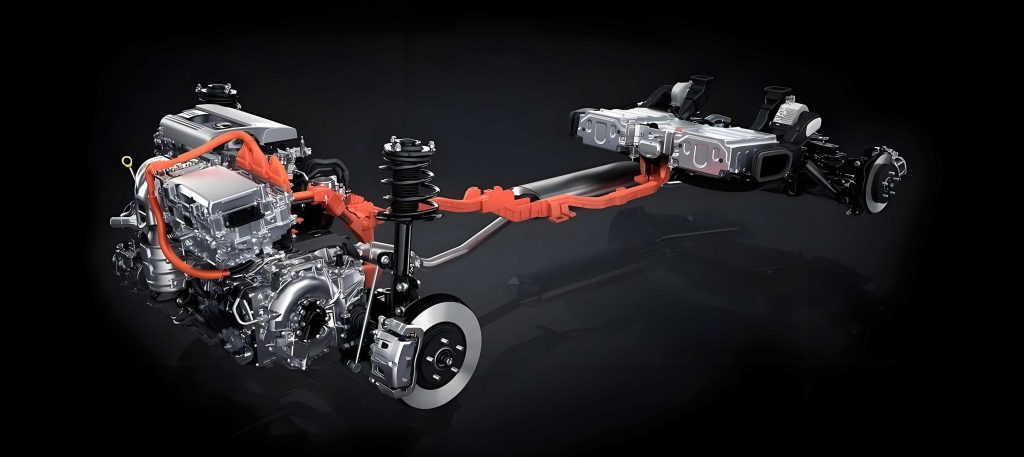
As hybrid car designs evolve, the DHT architecture typically incorporates an internal combustion engine, dual electric motors (often denoted as P1 and P3), a dual-mass flywheel (DMF), and multi-speed gear sets, enabling various operating modes such as series, parallel, and engine direct drive. This complexity in a hybrid car can amplify sensitivity to engine torsional vibrations, leading to rattle in unloaded or lightly loaded gears. The rattle phenomenon not only generates audible noise but also may accelerate component wear, impacting the longevity of the hybrid car powertrain. In this work, we investigate a specific case where a hybrid car exhibited pronounced rattle during parallel second-gear operation, identifying key contributors through rigorous testing and developing simulation-based solutions. The goal is to enhance the NVH performance of hybrid car systems without compromising their efficiency or drivability, a balance essential for consumer acceptance of hybrid car models.
System Description and Problem Identification
The hybrid car powertrain under study features a 1.5L engine, a P1 motor-generator, a P3 traction motor, a DMF, and a two-speed transmission with a bidirectional clutch for mode selection. This configuration allows the hybrid car to operate in series mode (engine drives P1 for generation, P3 drives wheels), parallel first gear (engine and P3 coupled via clutch C1), and parallel second gear (engine and P3 coupled via clutch C2), among others. The driveline layout is critical in a hybrid car as it dictates power flow and potential rattle sites. Based on field reports, the hybrid car experienced distinct abnormal noises during steady-state cruising at around 80 km/h in parallel second gear, where the P3 motor often operates at low or negative torque (generating), leaving gears on the electric drive side lightly loaded. This scenario in a hybrid car increases the risk of gear impacts due to engine torsional fluctuations transmitted through the mechanical path.
To quantify the issue, we define the rattle mechanism: when torsional excitations cause angular velocity variations across gear pairs with backlash, the relative motion leads to periodic impacts, generating broadband noise. The severity in a hybrid car depends on factors like inertia, stiffness, damping, and operating conditions. We hypothesize that in this hybrid car, rattle may occur not only in traditionally unloaded gears (e.g., idle gears on the mechanical side) but also in lightly loaded gears on the electric side, a nuance specific to hybrid car architectures. The following sections detail our approach to diagnose and resolve this hybrid car-specific NVH problem.
Experimental Testing and Data Analysis
We conducted on-vehicle vibration and noise tests on the hybrid car to capture rattle characteristics. Sensors were placed at key locations: interior noise microphones, DMF speed sensors, transmission housing accelerometers, and seat rail vibration pickups. CAN bus data, including P3 motor torque and vehicle speed, were synchronized. The hybrid car was driven under small and large throttle openings from 0 to 90 km/h, covering all operational modes. Subjectively, rattle was most noticeable upon entering parallel second gear at 80 km/h, diminishing at higher speeds. Objectively, the data revealed elevated transmission housing vibrations coinciding with low P3 motor torque outputs in parallel mode, as illustrated in time-domain signals. This correlation in the hybrid car suggests that engine torsional inputs, when combined with light loading on electric drive gears, excite rattle.
We performed frequency-domain analysis using Fast Fourier Transform (FFT) on the DMF speed signals to identify engine order contributions. The dominant engine orders (e.g., half-order and full-order harmonics) were prominent, confirming torsional excitation as the source. However, pinpointing exact rattle locations within the hybrid car transmission required more advanced techniques, prompting the development of a dynamic model. The test data served as validation inputs, ensuring the model accurately represents the hybrid car’s behavior. Table 1 summarizes key parameters from the hybrid car powertrain, essential for subsequent modeling.
| Component | Parameter | Value |
|---|---|---|
| Engine | Displacement | 1.5 L |
| Max Power | 128 kW | |
| Max Torque | 240 Nm | |
| – | – | |
| P1 Motor | Max Power | 98 kW |
| Max Torque | ±115 Nm | |
| Constant Power Range | ≥6500 rpm | |
| P3 Motor | Max Power | 165 kW |
| Max Torque | 280 Nm | |
| Constant Power Range | ≥5300 rpm | |
| Dual-Mass Flywheel | Primary Inertia | 0.095 kg·m² |
| Secondary Inertia | 0.01 kg·m² | |
| Primary Stiffness | 7.1 Nm/° | |
| Secondary Stiffness | 11.3 Nm/° | |
| Vehicle | Curb Weight | 1600 kg |
Dynamic Modeling of the Hybrid Car Driveline
To analyze rattle in the hybrid car quantitatively, we developed a multi-body dynamic model using Simcenter Amesim, incorporating lumped inertias, torsional stiffnesses, damping, and backlash nonlinearities. The model includes the engine cylinder pressure effects (simulated via measured firing data), DMF, gear sets, shafts, and electric motors. Backlash values were obtained from design tolerances, representing gear meshes and spline connections. The hybrid car’s control strategies, such as torque distribution between engine and motors, were integrated via PID controllers to replicate real-world operation. The model’s equations of motion for a generic driveline segment can be expressed as:
$$ I_i \ddot{\theta}_i + c_i (\dot{\theta}_i – \dot{\theta}_{i-1}) + k_i (\theta_i – \theta_{i-1}) + T_{backlash,i} = T_{input,i} – T_{output,i} $$
where \( I_i \) is inertia, \( \theta_i \) angular displacement, \( c_i \) damping, \( k_i \) stiffness, and \( T_{backlash,i} \) the nonlinear torque due to backlash. For the hybrid car, we modeled both mechanical and electric paths, allowing simulation of parallel second-gear conditions. The engine torque input was derived from test data, with cylinder pressure coefficients adjusted to match actual throttle openings. Validation against test data showed good agreement in DMF speed fluctuations and order content, confirming the model’s fidelity for this hybrid car application.
A critical aspect for the hybrid car is the rattle evaluation metric. We adopted an average rattle energy algorithm, calculating the kinetic energy from relative velocity across backlash zones. For any gear pair, the relative linear velocity \( v_r \) is:
$$ v_r = \frac{d}{dt} (c) $$
where \( c \) is the backlash function. The angular velocities of driving and driven gears, \( \omega_{rl} \) and \( \omega_{rr} \), relate to \( v_r \) via pitch radii \( R_l \) and \( R_r \):
$$ \omega_{rl} = \frac{v_r}{R_l}, \quad \omega_{rr} = \frac{v_r}{R_r} $$
The instantaneous rattle energy \( E_c \) is then:
$$ E_c = \frac{1}{2} I_l \omega_{rl}^2 + \frac{1}{2} I_r \omega_{rr}^2 $$
where \( I_l \) and \( I_r \) are gear inertias. To obtain a scalar indicator, we compute the average rattle energy (Rattle Index, RI) over a time interval \([t_0, t_e]\):
$$ RI = \frac{1}{t_e – t_0} \int_{t_0}^{t_e} E_c \, dt $$
This RI metric allows comparing rattle severity across different gear locations in the hybrid car. Applying it to simulation outputs at 80 km/h, we identified that gears on the electric drive side (P3 motor gear and differential input gear) exhibited higher RI values than those on the mechanical side (P1 gear and first-gear idler), as summarized in Table 2. This insight is pivotal for targeting optimizations in a hybrid car.
| Gear Location | Description | RI (Joules) | Note |
|---|---|---|---|
| G_P1 | P1 Motor Gear Pair | 45.2 | Mechanical side, unloaded |
| G1 | First Gear Idler Pair | 38.7 | Mechanical side, unloaded |
| G_D | Differential Input Gear Pair | 210.5 | Electric side, lightly loaded |
| G_P3 | P3 Motor Gear Pair | 215.8 | Electric side, lightly loaded |
| Total | Sum of All Locations | 510.2 | Baseline for optimization |
Parameter Influence Analysis for Hybrid Car Rattle Mitigation
We systematically varied key parameters in the hybrid car model to assess their impact on the total RI. This analysis informs feasible optimization routes, considering engineering constraints. Parameters included DMF inertias and stiffnesses, gear backlash, shaft inertias and stiffnesses, motor rotor inertias, and P3 motor torque. The effects are quantified via sensitivity coefficients, defined as the percentage change in RI per unit change in parameter. For a parameter \( p \), the sensitivity \( S_p \) is:
$$ S_p = \frac{\Delta RI / RI_0}{\Delta p / p_0} \times 100\% $$
where \( RI_0 \) and \( p_0 \) are baseline values. Table 3 summarizes findings for the hybrid car, highlighting parameters with significant influence.
| Parameter | Baseline Value | Change | ΔRI (%) | Remarks for Hybrid Car |
|---|---|---|---|---|
| DMF Secondary Inertia | 0.01 kg·m² | +300% | -38.5% | High impact, feasible adjustment |
| Gear Backlash | Design nominal | -20% | -25.2% | Effective but manufacturing challenge |
| P3 Motor Torque | -5 Nm (generating) | +5 Nm (less generating) | -30.8% | Control-strategy adjustment |
| Electric Shaft Inertia | As designed | +50% | -18.3% | Moderate impact, space-limited |
| DMF Primary Stiffness | 7.1 Nm/° | +20% | +5.1% | Small increase in RI |
| Motor Rotor Inertia | As designed | +30% | -12.7% | Costly to modify |
The analysis reveals that increasing DMF secondary inertia and adjusting P3 motor torque are particularly effective and implementable for this hybrid car. DMF inertia enhancement absorbs torsional energy, reducing input fluctuations, while P3 torque adjustment increases load on electric-side gears, minimizing backlash impacts. These strategies align with hybrid car design priorities, avoiding major hardware changes. We derived mathematical relationships to guide optimization; for instance, the RI reduction with DMF secondary inertia \( I_s \) follows an approximate trend:
$$ RI \propto \frac{1}{\sqrt{I_s}} $$
Similarly, for P3 motor torque \( T_{P3} \), when increased from a generating to a less generating state, the RI decrease correlates with:
$$ \Delta RI \approx -k_T \cdot \Delta T_{P3} $$
where \( k_T \) is a constant dependent on driveline geometry. These formulations assist in tuning the hybrid car for optimal NVH.
Optimization Strategies and Validation for the Hybrid Car
Based on the parameter study, we proposed two optimization schemes for the hybrid car: (1) increasing DMF secondary inertia from 0.01 kg·m² to 0.04 kg·m², and (2) adjusting P3 motor torque by +5 Nm (i.e., reducing generation load) during parallel second-gear operation at 80 km/h. Both aim to lower RI without compromising hybrid car performance. We simulated these changes in the Amesim model, comparing RI values and dynamic responses.
For Scheme 1, the DMF modification reduced secondary speed oscillations, thereby decreasing excitations transmitted to the gearbox. The RI dropped from 510.2 J to 313.4 J, a 38.5% improvement. For Scheme 2, the torque adjustment increased load on electric-side gears, shifting their meshing from impact-prone to continuous contact. The RI fell to 353.1 J, a 30.8% reduction. The equations governing these changes can be summarized as:
$$ RI_{new} = RI_{baseline} \times \left(1 – \eta\right) $$
where \( \eta \) is the improvement factor (0.385 or 0.308). Table 4 details the simulation outcomes for the hybrid car.
| Scheme | Description | RI (J) | Reduction | Key Effect |
|---|---|---|---|---|
| Baseline | Original hybrid car setup | 510.2 | – | High rattle energy |
| 1 | DMF secondary inertia ×4 | 313.4 | 38.5% | Lower input fluctuations |
| 2 | P3 torque +5 Nm | 353.1 | 30.8% | Increased gear loading |
We further validated these schemes through real-world tests on the hybrid car. For Scheme 1, a prototype DMF with added inertia was installed; for Scheme 2, the hybrid car’s powertrain control unit software was updated to modify torque distribution. Vibration measurements on the transmission housing showed significant attenuation in both cases, with subjective noise assessments confirming rattle suppression. The hybrid car exhibited smoother operation in parallel second gear, meeting NVH targets. This practical validation underscores the effectiveness of our model-based approach for hybrid car development.
Discussion and Implications for Hybrid Car Design
The findings from this hybrid car study highlight that rattle management requires a holistic view of both mechanical and electrical subsystems. In a hybrid car, the interplay between engine torsional inputs and motor torque outputs creates unique conditions where gears may be lightly loaded, increasing rattle susceptibility. Our average rattle energy algorithm provides a quantitative tool to rank rattle sources, enabling targeted interventions. For hybrid car engineers, we recommend considering DMF tuning and motor torque calibration as primary levers for NVH refinement, as they offer a balance between performance, cost, and feasibility. Additionally, the model can be extended to other hybrid car operating modes, such as series or regenerative braking, to ensure comprehensive rattle control.
Future work on hybrid car rattle could explore advanced materials for gear damping, active control strategies using electric motors to cancel vibrations, or machine learning-based real-time adjustment of parameters. As hybrid car technologies advance toward higher integration and electrification, proactive rattle mitigation will remain crucial for enhancing user experience and ensuring the reliability of hybrid car powertrains.
Conclusion
In this study, we addressed driveline rattle in a novel DHT hybrid car through a combined experimental and simulation methodology. Testing identified parallel second-gear operation as a critical rattle condition, with lightly loaded gears on the electric drive side being major contributors. We developed a multi-body dynamic model of the hybrid car powertrain, incorporating backlash nonlinearities, and employed an average rattle energy index to quantify severity. Parameter sensitivity analysis revealed that increasing dual-mass flywheel secondary inertia and adjusting P3 motor torque are effective optimization strategies for the hybrid car. Simulation results showed rattle energy reductions of 38.5% and 30.8%, respectively, which were confirmed via real-vehicle tests. These outcomes demonstrate practical pathways to enhance NVH performance in hybrid car applications, contributing to the broader adoption of hybrid car technologies by improving comfort and durability. Our work underscores the importance of tailored dynamics analysis in hybrid car development to tackle complex noise issues inherent in multi-power-source systems.