
In this article, we explore the remarkable journey of China’s electric vehicle industry, tracing its evolution from early scientific research to global industrial leadership. The development of new energy vehicles represents a strategic pivot for China to seize technological dominance and revitalize its automotive sector. We begin by examining the historical context that spurred initial research efforts, followed by an analysis of state-led scientific programs, technological breakthroughs, and policy-driven market expansion. Throughout, we emphasize the role of national strategies, innovation chains, and international trends in shaping the trajectory of China EV development. Key milestones, performance metrics, and comparative analyses are presented using tables and mathematical models to elucidate progress and challenges.
The global emphasis on environmental sustainability and energy security in the early 1990s set the stage for China’s entry into electric vehicle research. International events, such as the 1992 United Nations Conference on Environment and Development, highlighted the urgency of transitioning to cleaner technologies. At that time, China’s automotive industry lagged behind developed nations in traditional internal combustion engine vehicles, with limited production capacity and technological reliance on foreign partnerships. For instance, in 1990, China’s total vehicle output was around 509,000 units, with passenger cars constituting less than 8%, while the United States produced over 6 million cars annually. This disparity underscored the difficulty of catching up in conventional automotive sectors, making electric vehicles an attractive alternative for leapfrogging technological gaps.
China’s initial foray into electric vehicle development was catalyzed by strategic recommendations that aligned with national policies on sustainable development. In 1992, a prominent proposal urged the government to bypass traditional gasoline and diesel phases and directly invest in new energy vehicles, emphasizing the potential of battery technology. This led to the inclusion of electric vehicle research in the Eighth Five-Year Plan (1991–1995) under the “Electric Vehicle Key Technology Research” project, funded with 15 million yuan and coordinated by state-owned enterprises and academic institutions. Early efforts focused on modifying existing vehicle platforms to integrate electric drivetrains, with universities like Tsinghua University pioneering prototypes. For example, a 16-seat electric light van developed in 1994 achieved a top speed of 80 km/h and a range of over 120 km on lead-acid batteries, though it remained confined to laboratory testing. The challenges of this period are summarized in Table 1, which compares key parameters of early Chinese prototypes with international models.
| Parameter | Chinese Prototype (1994) | International Model (e.g., GM EV1, 1996) |
|---|---|---|
| Top Speed (km/h) | 80 | 120 |
| Range (km) | 120 | 122–144 |
| Battery Type | Lead-Acid | Lead-Acid |
| Energy Density (Wh/kg) | 40 | 30–40 |
| Charging Time (hours) | 8–10 | 2 |
Mathematically, the energy efficiency of these early electric vehicles can be expressed using the formula for specific energy: $$ E_s = \frac{C}{m} $$ where \( E_s \) is the specific energy in Wh/kg, \( C \) is the battery capacity in Wh, and \( m \) is the mass in kg. For lead-acid batteries, \( E_s \) typically ranged from 30 to 40 Wh/kg, limiting range and performance. This period also saw collaborative projects, such as the development of the “Yuanwang” electric bus in 1995, which utilized imported components but faced setbacks due to cost escalations and technology dependency. These experiences highlighted the necessity of indigenous innovation and laid the groundwork for subsequent national programs.
The turn of the century marked a pivotal shift with the launch of the “Electric Vehicle Major Science and Technology Project” under the 863 Program in 2001. This initiative introduced the “three verticals and three horizontals” framework, which structured research around three vehicle types (fuel cell, hybrid, and pure electric vehicles) and three core technologies (power systems, drive motors, and batteries). With an investment of 8.8 billion yuan from the central government, supplemented by local and enterprise funds, the program fostered a collaborative ecosystem involving academia, industry, and government. For instance, partnerships between Tsinghua University, Beijing Institute of Technology, and automotive companies like SAIC and Dongfeng accelerated the development of prototypes such as fuel cell buses and hybrid electric vehicles. The organizational model is encapsulated in the equation for innovation synergy: $$ I = \sum (R_i \times P_i) $$ where \( I \) represents innovation output, \( R_i \) denotes research inputs, and \( P_i \) symbolizes policy support factors. This phase achieved significant milestones, including the export of pure electric cars to the United States and the establishment of demonstration zones in cities like Beijing and Wuhan.
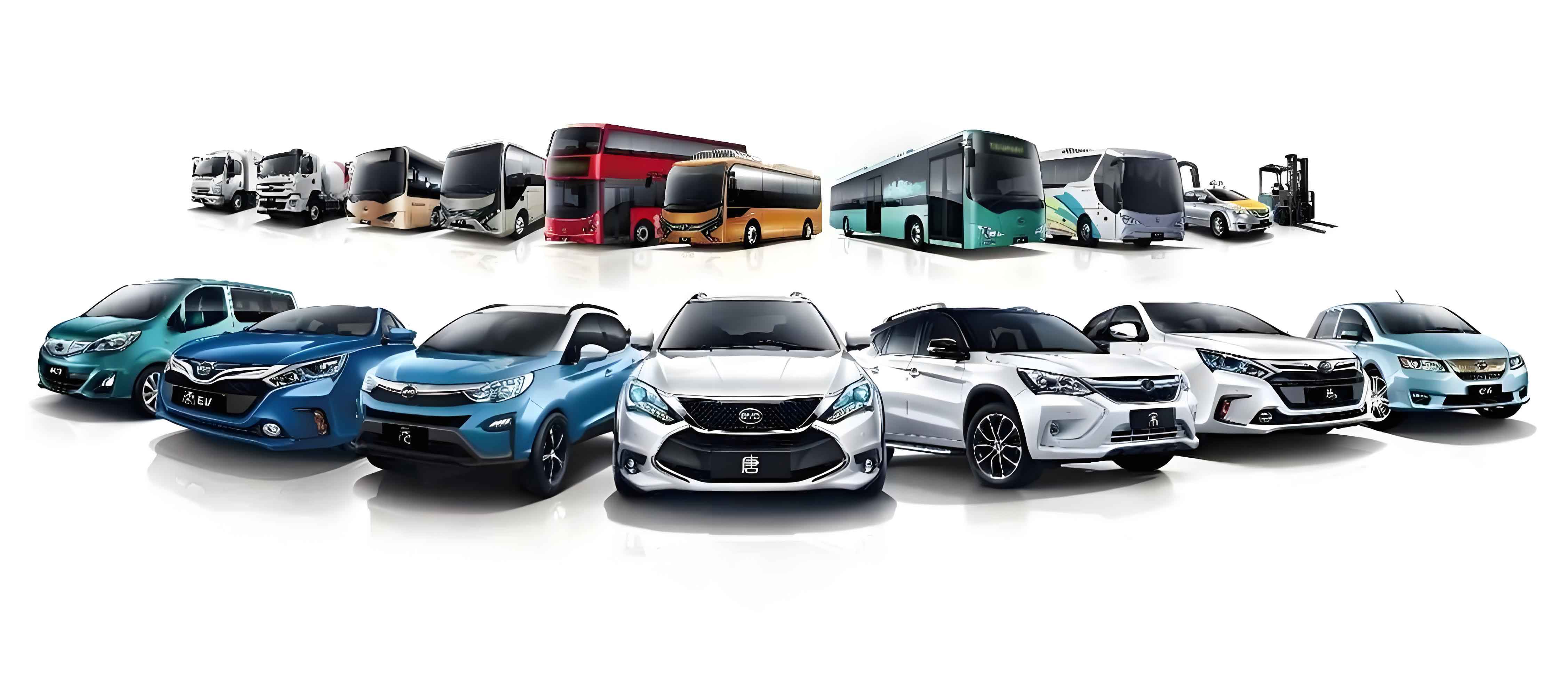
International events, particularly the 2008 Beijing Olympics, served as catalysts for scaling up electric vehicle applications. During the games, 595 new energy vehicles, including pure electric buses and fuel cell cars, were deployed, accumulating over 3.7 million kilometers of operation and transporting 4.4 million passengers. This demonstration not only showcased technological advancements but also stimulated market confidence. Performance metrics from this era can be modeled using the efficiency equation for electric drivetrains: $$ \eta = \frac{P_{\text{out}}}{P_{\text{in}}} \times 100\% $$ where \( \eta \) is the overall efficiency, \( P_{\text{out}} \) is the output power, and \( P_{\text{in}} \) is the input power. For example, hybrid buses demonstrated fuel savings exceeding 30%, with corresponding reductions in emissions. The progression of battery technology is illustrated in Table 2, which tracks improvements in energy density and cycle life across different battery chemistries.
| Battery Type | Energy Density (Wh/kg) | Cycle Life (Cycles) | Adoption Period |
|---|---|---|---|
| Lead-Acid | 30–40 | 300–500 | 1990s |
| Nickel-Metal Hydride | 60–80 | 500–1000 | Early 2000s |
| Lithium-Ion | 100–200 | 1000–2000 | Mid-2000s onward |
| Solid-State (R&D) | 300–400 | 2000+ | Future |
Policy interventions played a crucial role in transitioning electric vehicles from research prototypes to mass-market products. Initiatives like the “Ten Cities, Thousand Vehicles” program in 2009 provided subsidies for public and private adoption, coupled with infrastructure development for charging stations. The cumulative effect of these policies can be quantified using a growth model: $$ N(t) = N_0 e^{rt} $$ where \( N(t) \) is the number of electric vehicles at time \( t \), \( N_0 \) is the initial number, and \( r \) is the growth rate driven by policy incentives. By 2015, China’s electric vehicle sales surpassed those of the United States, reaching global leadership with over 500,000 units sold annually. This surge was supported by advancements in core components, such as lithium-ion batteries produced by companies like CATL, which achieved cost reductions through economies of scale. The interplay between technology and policy is further reflected in patent filings, which grew from zero in 1992 to over 5,000 annually by 2015, underscoring the rise of indigenous innovation.
In the subsequent years, China’s electric vehicle industry matured into a comprehensive ecosystem encompassing manufacturing, supply chains, and digital integration. The “New Energy Vehicle Industry Development Plan (2012–2020)” solidified the strategic focus on pure electric and plug-in hybrid vehicles, while fostering smart and connected features. The industry’s expansion can be analyzed through a production function: $$ Y = A \cdot K^\alpha \cdot L^\beta $$ where \( Y \) is output, \( A \) represents total factor productivity, \( K \) denotes capital investment, and \( L \) labor inputs. For instance, investments in gigafactories and R&D centers boosted production capacity to over 1.3 million units annually by 2024. Comparative data on market penetration is presented in Table 3, highlighting China’s dominance in the global electric vehicle landscape.
| Region | Annual Sales (Millions) | Market Share (%) | Key Drivers |
|---|---|---|---|
| China | 1.29 | >50 | Policy subsidies, infrastructure |
| Europe | 0.8 | ~30 | Emission regulations |
| United States | 0.6 | ~20 | Corporate investments |
Reflecting on this journey, we observe that China’s success in electric vehicles stems from a synergistic approach combining state-led initiatives, technological learning, and market mechanisms. The evolution from imitation to innovation is captured by the technology readiness level (TRL) framework: $$ \text{TRL} = \sum_{i=1}^9 w_i \cdot I_i $$ where \( w_i \) are weights for development stages, and \( I_i \) indicate milestone achievements. Early focus on basic research under the Five-Year Plans gradually shifted to applied projects in the 863 Program, culminating in commercial products like BYD’s plug-in hybrids and NIO’s smart electric vehicles. Challenges such as battery longevity and charging infrastructure were addressed through iterative policy adjustments, including subsidy phase-outs and standardization efforts. The future trajectory points towards advancements in solid-state batteries and autonomous driving, with China poised to influence global standards. This case exemplifies how strategic foresight and systemic coordination can transform a nascent technology into a world-leading industry, offering lessons for other nations pursuing sustainable mobility solutions.
In conclusion, the rise of China’s electric vehicle sector demonstrates the effectiveness of integrating scientific research, industrial policy, and global market dynamics. From initial prototypes to mass adoption, the continuous emphasis on core technologies like batteries and drive systems has enabled China EV to achieve parity with and even surpass international competitors. As the industry evolves, further innovations in energy storage and digitalization will likely sustain this momentum, reinforcing China’s role in shaping the future of transportation. The mathematical models and comparative tables provided herein offer a structured understanding of this complex, multi-decade transformation, highlighting the critical factors behind one of the most significant technological shifts in the automotive world.