
In the rapidly evolving automotive industry, the shift toward electrification has positioned hybrid cars as a critical transitional technology, blending internal combustion engines with electric propulsion to achieve superior fuel efficiency and reduced emissions. As a researcher deeply involved in hybrid car development, I have observed that the reliability of the hybrid powertrain system is a decisive factor in determining vehicle quality, customer satisfaction, and market competitiveness. This article, based on extensive long-distance road adaptation tests, provides a comprehensive analysis of hybrid car powertrain system reliability. We explore the main influencing factors, typical failure modes, evaluation methodologies, and optimization strategies, aiming to offer valuable insights and data for future hybrid car system development and enhancement.
The hybrid car market has experienced significant growth globally, driven by stringent emissions regulations and consumer demand for eco-friendly vehicles. In many regions, hybrid cars have become mainstream, with manufacturers continuously innovating to improve performance and reliability. However, despite technological advancements, reliability remains a persistent challenge for hybrid cars. The complexity of hybrid powertrain systems, which integrate components like engines, transmissions, electric motors, power batteries, and sophisticated control units, introduces multiple potential failure points. Factors such as varying geographical environments, road conditions, and user driving habits further exacerbate reliability concerns. In this context, our study leverages long-distance road adaptation tests to simulate real-world usage, providing a holistic assessment of hybrid car powertrain reliability.
Hybrid car powertrain systems are categorized based on the placement of electric motors, commonly referred to as P0, P1, P2, P3, and P4 configurations. In P0 and P1 layouts, the motor is attached to the engine, typically serving as a starter-generator. P2 and P3 configurations place the motor on the transmission input or output shaft, respectively, enabling more direct torque application. P4 systems involve a motor driving the wheels independently, often used in all-wheel-drive hybrid cars. A notable evolution is the PS (or P2.5) mode, which integrates the motor closely with the transmission, achieving a compact design that supports multiple operating modes such as pure electric, range extension, direct drive, and dual-drive. This PS architecture, exemplified in systems like Toyota THS and others, offers high efficiency and flexibility but poses significant reliability challenges due to its intricate design and control complexity.
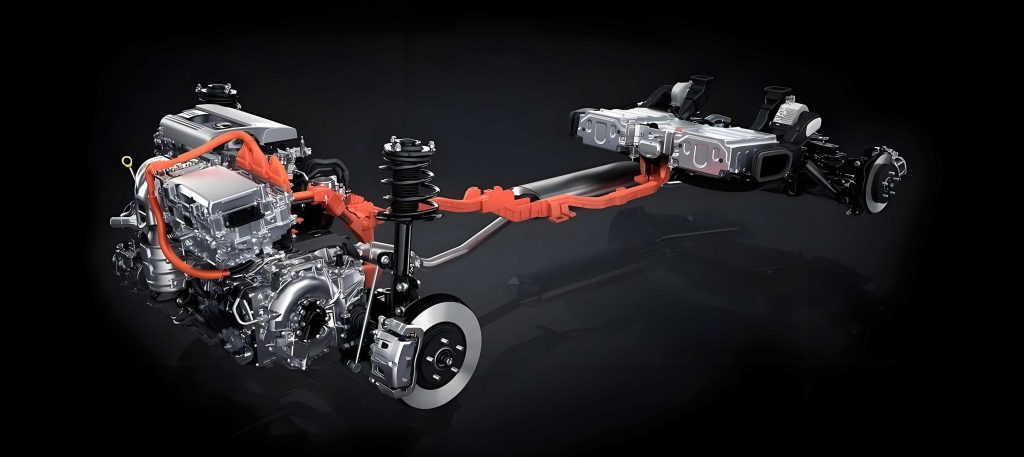
The core components of a typical hybrid car powertrain system include the engine, electromechanical coupling unit (comprising drive motor, generator, damper, clutch, and gear mechanisms), power battery pack, and control systems (such as Vehicle Control Unit (VCU), Motor Controller (IPU), and Coupling Control Unit (CCU)). A schematic diagram illustrates the interconnection of these elements, highlighting the integrated nature of hybrid car systems. This integration, while beneficial for performance, necessitates rigorous reliability testing to ensure durability under diverse conditions.
Reliability performance in hybrid cars is multifaceted, encompassing various failure modes across core components. Based on our long-distance tests, we identified several typical failures:
- Engine: Oil leaks, abnormal fluid consumption, internal component fractures, and performance degradation leading to abnormal noises.
- Electromechanical Coupler: Fluid leaks, internal mechanical failures, valve or sensor malfunctions, and noise due to wear.
- Power Battery: Overheating from poor cooling or software issues, severe capacity degradation, mechanical bracket failures, bulging, internal short circuits, and thermal runaway.
- Control Systems: Faults from inadequate software calibration or hardware defects, overheating in controllers or motors, insulation failures, wiring issues, and abnormal sounds.
These failures stem primarily from design flaws and manufacturing deficiencies. Design-related issues may arise from insufficient experience, human error, or lack of technical standards, such as inadequate component strength or ambiguous specifications. Manufacturing problems include defects in production processes, poor quality control, and assembly errors, like deformed sensor pins or casting porosity in housings. For hybrid cars, ensuring reliability requires addressing both aspects comprehensively.
To evaluate hybrid car powertrain reliability, we employ Failure Mode and Effects Analysis (FMEA), a systematic tool for identifying potential failures and their impacts. The Risk Priority Number (RPN) is calculated to prioritize issues:
$$RPN = S \times O \times D_1 \times D_2 \times A$$
Here, \(S\) represents severity, \(O\) occurrence, \(D_1\) detectability, \(D_2\) durability, and \(A\) customer acceptability. Each failure is assigned a grade from 1 to 5 (5 being most severe), with corresponding penalty points \(P_j\) for \(j = \{1,2,3,4,5\}\). The overall reliability score \(Q\) is computed based on test results:
$$Q = \frac{1}{n} \sum_{i=1}^{n} Q_i = \sum_{\substack{0 \leq i \leq n \\ 1 \leq j \leq 5}} P(j) \cdot A(i,j)$$
where \(n\) is the number of test vehicles, \(A(i,j)\) denotes the count of grade \(j\) problems in vehicle \(i\), and \(Q_i\) is the penalty score for vehicle \(i\). A target value \(Q_p\) is set based on reliability goals; if \(Q > Q_p\), the test fails, indicating inadequate hybrid car reliability.
Long-distance road adaptation tests are crucial for hybrid cars, as they simulate real-world usage without acceleration factors common in lab or proving ground tests. These tests cover diverse scenarios, as summarized in Table 1, ensuring comprehensive evaluation of hybrid car powertrain systems under actual conditions.
| Scenario | Elements | Purpose |
|---|---|---|
| Road Condition Adaptation | Urban, highway, general roads, rough roads, mountainous roads; typical road conditions (e.g., long slopes, steep hills) | Verify hybrid car performance across different road types and speed ranges over long distances. |
| User Behavior Adaptation | Driving styles (aggressive, normal, gentle); usage habits; abuse/misuse cases | Expose potential faults by simulating varied user behaviors and extreme actions. |
| Geographical Environment Adaptation | Climate/environment (high temperature, cold, high altitude); special conditions (EMI zones, dusty areas); fuel types (ethanol blends, low-quality gasoline); terrain variations | Assess hybrid car reliability under extreme weather, special environments, and diverse terrains. |
Our tests involved multiple hybrid car units subjected to extended driving across regions with varying climates and topographies. The results, analyzed through FMEA, revealed key insights into hybrid car powertrain reliability. As shown in Table 2, we cataloged failures by component and root cause, highlighting areas for improvement.
| Core Component | Failure Mode | Test Outcome (√: None; ×: Present) | Root Cause (A: Manufacturing; B: Design) |
|---|---|---|---|
| Engine | Oil leaks | × | A |
| Internal component fractures | √ | – | |
| Abnormal fluid consumption | √ | – | |
| Abnormal noise | × | A | |
| Electromechanical Coupler | Fluid leaks | × | A |
| Internal mechanical failures | × | B | |
| Valve/sensor faults | × | A | |
| Abnormal noise | × | B | |
| Power Battery | Overheating | √ | – |
| Capacity degradation | √ | – | |
| Mechanical failures | × | A | |
| Bulging | √ | – | |
| Thermal runaway | √ | – | |
| Control Systems | Software/hardware faults | × | B |
| Overheating | √ | – | |
| Insulation/wiring issues | × | A | |
| Abnormal noise | √ | – |
From the data, manufacturing-related issues accounted for approximately 60% of problems, while design flaws constituted 40%. In terms of component distribution, the electromechanical coupler and control systems were most problematic, representing 35% and 29% of failures, respectively. The overall penalty score \(Q\) was calculated using the formula above. For instance, with \(n=10\) test vehicles and penalty points \(P(1)=1\), \(P(2)=2\), \(P(3)=3\), \(P(4)=4\), \(P(5)=5\), we derived:
$$Q = \sum_{i=1}^{10} \sum_{j=1}^{5} P(j) \cdot A(i,j)$$
Assuming hypothetical data where grade 3 failures were most common, \(Q\) might be computed as follows: if each vehicle had an average of 2 grade 3 failures, then \(Q_i = 2 \times 3 = 6\) per vehicle, and \(Q = (1/10) \times 10 \times 6 = 6\). Compared to a target \(Q_p = 8\), this indicates acceptable reliability for the hybrid car powertrain system, though improvements are needed to reduce failures.
To enhance hybrid car powertrain reliability, we propose optimization directions focusing on design, manufacturing, and validation. In design, engineers must bolster their expertise, adhere to rigorous standards, and incorporate lessons from past failures. For example, using advanced simulation tools like finite element analysis (FEA) can predict component stresses and prevent fractures. The reliability function for a hybrid car component can be modeled as:
$$R(t) = e^{-\int_0^t \lambda(\tau) d\tau}$$
where \(R(t)\) is reliability over time \(t\), and \(\lambda(\tau)\) is the failure rate function. By minimizing \(\lambda\) through robust design, hybrid car systems can achieve longer lifespans.
In manufacturing, quality control must be stringent across suppliers and assembly lines. Statistical process control (SPC) techniques can monitor production variability, ensuring consistency. For hybrid cars, critical parameters like torque specifications or seal integrity should be tightly regulated. We recommend implementing Six Sigma methodologies to reduce defects, aiming for a failure rate below 3.4 per million opportunities. Additionally, accelerated life testing (ALT) can simulate long-term wear in shorter periods, using models like the Arrhenius equation for temperature effects:
$$AF = \exp\left[\frac{E_a}{k}\left(\frac{1}{T_{\text{use}}} – \frac{1}{T_{\text{test}}}\right)\right]$$
where \(AF\) is acceleration factor, \(E_a\) is activation energy, \(k\) is Boltzmann’s constant, and \(T\) denotes temperature. This helps validate hybrid car components under extreme conditions.
Validation through long-distance tests remains indispensable for hybrid cars. Expanding test coverage to include more user scenarios—such as frequent start-stop cycles in urban hybrid car usage or high-load mountain driving—can uncover latent issues. Moreover, integrating real-time monitoring systems during tests allows continuous data collection on parameters like temperature, vibration, and energy efficiency. For instance, we can model the cumulative damage in a hybrid car battery using Miner’s rule:
$$D = \sum_{i=1}^{k} \frac{n_i}{N_i}$$
where \(D\) is total damage, \(n_i\) is number of cycles at stress level \(i\), and \(N_i\) is cycles to failure at that level. By analyzing \(D\) from test data, we can predict battery lifespan and optimize cooling strategies.
Furthermore, reliability engineering for hybrid cars should embrace predictive maintenance technologies. Using machine learning algorithms on vehicle sensor data, we can forecast failures before they occur, enhancing hybrid car uptime. The probability of failure for a hybrid car system can be expressed via the Weibull distribution:
$$F(t) = 1 – \exp\left[-\left(\frac{t}{\eta}\right)^\beta\right]$$
where \(F(t)\) is cumulative failure probability, \(\eta\) is scale parameter, and \(\beta\) is shape parameter. Fitting this to test data helps estimate failure trends and plan interventions.
In conclusion, the reliability of hybrid car powertrain systems is paramount for market success and customer trust. Our analysis, grounded in long-distance road adaptation tests, underscores that hybrid car reliability hinges on meticulous design, flawless manufacturing, and exhaustive validation. By addressing failures in components like electromechanical couplers and control systems, and leveraging tools like FMEA and statistical models, manufacturers can significantly improve hybrid car durability. As hybrid cars continue to evolve, ongoing research and testing will be vital to achieving the robustness expected by consumers. Ultimately, a reliable hybrid car not only meets regulatory demands but also delivers a satisfying ownership experience, paving the way for broader adoption of electrified vehicles.
This study contributes to the growing body of knowledge on hybrid car reliability, offering practical insights for engineers and stakeholders. Future work should explore advanced materials, AI-driven control systems, and standardized test protocols to further elevate hybrid car performance. With concerted efforts, the hybrid car industry can overcome reliability challenges and lead the transition to sustainable mobility.