
In the rapidly evolving automotive industry, the complexity of vehicle systems has increased significantly, driven by advancements in intelligence and connectivity. As a result, the development of automotive motor control units, which are critical for managing functions such as engine control, braking, and cruise control, faces numerous challenges. Traditional development methods, often based on textual documentation within the V-model framework, lead to issues like inconsistencies between design and original requirements, poor visualization for change management and risk assessment, and difficulties in modular reuse for product variants. To address these challenges, we propose a model-based systems engineering approach that leverages visual analysis models for the development of automotive motor control units. This method refines and decomposes system requirements and architecture design through graphical representations, including demand models, functional models, and logical and physical architecture models. By employing a multi-view perspective, it provides a comprehensive and intuitive description of motor control unit systems, enhancing traceability, consistency, and efficiency throughout the development lifecycle.
The foundation of our approach lies in systems engineering principles, which offer a structured way to handle complex systems comprising multiple subsystems and components. Traditional systems engineering relies on natural language and text-based formats, which suffer from ambiguities, static information representation, and passive responses to requirement changes. In contrast, model-based systems engineering integrates systems thinking with digital modeling techniques, enabling formalized expression of system interactions through visual models. This shift from document-centric to model-centric engineering reduces communication costs, improves clarity, and supports dynamic behavior analysis. In the context of automotive motor control unit development, this is particularly valuable for managing the intricate dependencies and real-time constraints inherent in vehicle control systems.
To illustrate the advantages of visual analysis models, consider the following comparison between traditional and model-based approaches:
| Aspect | Traditional Text-Based Methods | Model-Based Visual Analysis |
|---|---|---|
| Requirement Representation | Natural language with potential ambiguities | Graphical models (e.g., use case diagrams) for clarity |
| Traceability | Manual links between documents, prone to errors | Automated traceability across models |
| Change Management | Reactive, with delayed impact analysis | Visual impact analysis for proactive adjustments |
| Reusability | Limited due to context-specific documentation | Modular models stored in libraries for reuse |
| System Behavior | Static descriptions, lacking dynamic insights | Dynamic models (e.g., state charts) for behavior simulation |
Our development methodology is anchored in the V-process model, which is widely adopted in automotive motor control unit engineering. We enhance this model by incorporating visual analysis stages: requirement definition, functional analysis, logical design, and physical design. Each stage produces specific models that collectively form a formalized modeling framework for motor control unit development. This framework ensures that every aspect of the motor control unit, from high-level requirements to low-level implementation details, is captured visually, facilitating better decision-making and validation.
In the requirement definition phase, we focus on capturing and analyzing stakeholder needs for the motor control unit. Requirements are decomposed hierarchically, as shown in the following formula for requirement mapping:
$$R_{total} = \sum_{i=1}^{n} R_{i} \quad \text{where } R_{i} \text{ represents sub-requirement at level i}$$
This decomposition helps in understanding the system context and boundaries. For instance, a top-level requirement for a motor control unit might be “maintain vehicle speed automatically,” which is then broken down into sub-requirements like “acquire speed sensor data” and “control throttle output.” We use use case diagrams to visualize interactions between the motor control unit and external actors, such as drivers or other vehicle systems, ensuring that all operational scenarios are considered. The visual nature of these models reduces misinterpretation and aligns development efforts with source needs.
The functional analysis phase translates requirements into system functions. Here, we define the motor control unit’s functionalities as black-box models, specifying inputs, outputs, and interactions. Functions are allocated or decomposed based on their relationships, and traceability links are established to requirements. For example, the cruise control function in a motor control unit can be decomposed into sub-functions like speed sensing, set-point adjustment, and actuator control. We represent these using activity diagrams and state charts to depict dynamic behaviors, such as mode transitions in cruise control. The functional model serves as a bridge between requirements and technical design, ensuring that the motor control unit’s capabilities are fully specified before implementation.
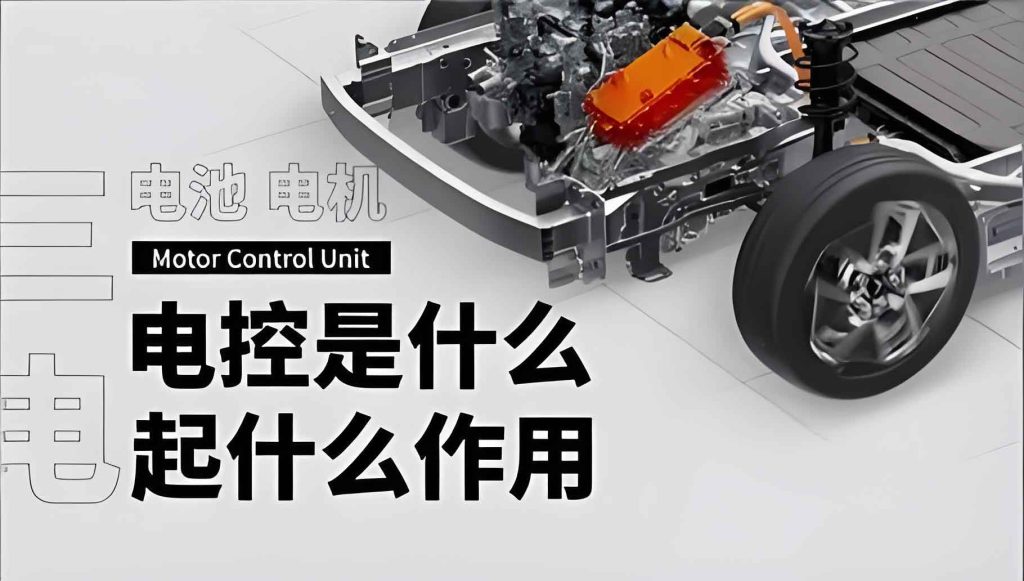
Logical architecture design involves structuring the motor control unit’s functions into logical modules without considering physical constraints. This step transforms functional models into a white-box view, where similar functions are grouped into logical components. For instance, in a cruise control motor control unit, signal processing functions might be grouped into a “Sensor Interface Module,” while control algorithms reside in a “Speed Control Module.” The interactions between modules are defined through information flows, which can be summarized in tables for clarity. Consider the following table outlining logical modules for a typical motor control unit:
| Logical Module | Functions Allocated | Interactions with Other Modules |
|---|---|---|
| Sensor Interface | Acquire throttle, brake, speed signals | Sends data to Control Core |
| Control Core | Compute speed error, apply control law | Receives sensor data, outputs to Actuator Interface |
| Actuator Interface | Convert control signals to actuator commands | Receives commands from Control Core |
| Human-Machine Interface | Process driver inputs, display status | Interacts with Control Core for mode changes |
The logical architecture enables trade-off studies and alternative design evaluations, focusing on achieving functional goals efficiently. It also supports non-functional requirements, such as reliability or performance, by allocating them to appropriate modules within the motor control unit.
Physical architecture design maps logical modules to tangible components, such as hardware, software, and data elements. This phase considers implementation technologies and cost constraints, leading to the final motor control unit architecture. For example, the logical “Control Core” might be implemented as software running on a microcontroller within the motor control unit, while the “Sensor Interface” could involve analog-to-digital converters and signal conditioning circuits. The allocation process is iterative, often involving collaboration with domain experts to optimize resource usage. We use deployment diagrams to visualize how software components are distributed across hardware nodes in the motor control unit. A key aspect is the reuse of physical components across different motor control unit variants, which is facilitated by modular visual models stored in libraries.
To demonstrate the practical application of our visual analysis method, we present a case study on the development of a cruise control system for an automotive motor control unit. Cruise control is a common feature that requires precise speed regulation, involving multiple subsystems and real-time interactions. Starting from requirement definition, we captured user needs such as “maintain set speed without driver intervention” and “allow speed adjustments via buttons.” These were decomposed hierarchically and modeled using use case diagrams, showing interactions between the driver, motor control unit, and vehicle. The functional analysis identified key functions like speed acquisition, set-point management, and throttle control, represented through state charts to illustrate mode transitions (e.g., active, suspended, off).
In the logical design, we grouped functions into modules: a “Speed Processing Module” for handling sensor data, a “Cruise Logic Module” for state arbitration, and a “Torque Conversion Module” for generating control outputs. The information flow between these modules was defined using sequence diagrams, ensuring clear interfaces. For physical design, we allocated these logical modules to components: the motor control unit’s microcontroller executes the cruise logic software, while dedicated hardware interfaces manage sensor and actuator signals. The entire process was supported by visual models, enabling traceability from requirements to implementation. For instance, the control algorithm for speed regulation can be expressed mathematically to highlight the motor control unit’s role:
$$u(t) = K_p \cdot e(t) + K_i \cdot \int e(t) dt + K_d \cdot \frac{de(t)}{dt} \quad \text{where } e(t) = v_{set} – v_{actual}(t)$$
Here, \(u(t)\) is the control output from the motor control unit, \(e(t)\) is the speed error, and \(K_p\), \(K_i\), \(K_d\) are tuning parameters. This formula underscores how the motor control unit computes adjustments to maintain set speed.
Validation of the cruise control motor control unit was conducted through vehicle testing, where the system’s performance was measured against requirements. Results showed that the actual vehicle speed closely tracked the set speed, with minimal deviations, confirming the effectiveness of the visual analysis approach. The use of models allowed for early detection of issues, such as incorrect signal mappings, reducing rework during later stages. Moreover, the modular nature of the models facilitated reuse in other motor control unit projects, such as adaptive cruise control or speed limiter systems, demonstrating the scalability of our method.
In conclusion, the adoption of model-based visual analysis for automotive motor control unit development addresses critical gaps in traditional text-based methods. By leveraging graphical representations across requirement, functional, logical, and physical design stages, we enhance clarity, traceability, and reuse in motor control unit engineering. The case study on cruise control illustrates how this approach leads to more consistent designs, better risk management, and faster development cycles. As automotive systems grow in complexity, visual analysis models will become increasingly vital for efficient motor control unit development, paving the way for innovative features and higher reliability. Future work could extend this method to integrate with simulation tools for real-time validation of motor control unit behavior, further solidifying its role in the automotive industry.
To summarize the key benefits of our approach for motor control unit development, the following table highlights improvements across various dimensions:
| Development Aspect | Improvement with Visual Analysis Models |
|---|---|
| Requirement Consistency | Reduced ambiguities through graphical decomposition |
| Design Traceability | Automated links between models and requirements |
| Change Visualization | Impact analysis via model dependencies |
| Modular Reuse | Library-based models for variant motor control units |
| Validation Efficiency | Early testing using simulated model behavior |
| Team Collaboration | Shared visual understanding across disciplines |
Overall, our methodology not only streamlines the development of individual motor control units but also contributes to a more robust ecosystem for automotive electronics. By embedding visual analysis into every phase, we ensure that motor control units meet evolving demands while maintaining high standards of safety and performance. As we continue to refine these models, they will undoubtedly play a central role in shaping the future of intelligent vehicle systems.