
The pursuit of higher energy density storage systems is an imperative driven by the global transition to clean energy. For years, my research focus, and that of my colleagues worldwide, has been laser-targeted on unlocking the potential of lithium metal anodes. Their staggering theoretical capacity of 3860 mAh g⁻¹ and low electrochemical potential make them the holy grail for next-generation batteries. Yet, the path has been fraught with a persistent and dangerous foe: lithium dendrites. In conventional liquid electrolyte systems, these needle-like growths lead to short circuits, capacity fade, and catastrophic thermal runaway. The community’s collective hope pivoted towards solid-state batteries. By replacing the flammable organic liquid with a solid electrolyte, we theorized a dual victory: enhanced safety and, crucially, the mechanical suppression of dendrite growth. The Monroe-Newman criterion offered a clear, attractive theory—a solid electrolyte with a shear modulus roughly double that of lithium should be able to resist its penetration. This principle became a guiding light for the development of solid-state batteries.
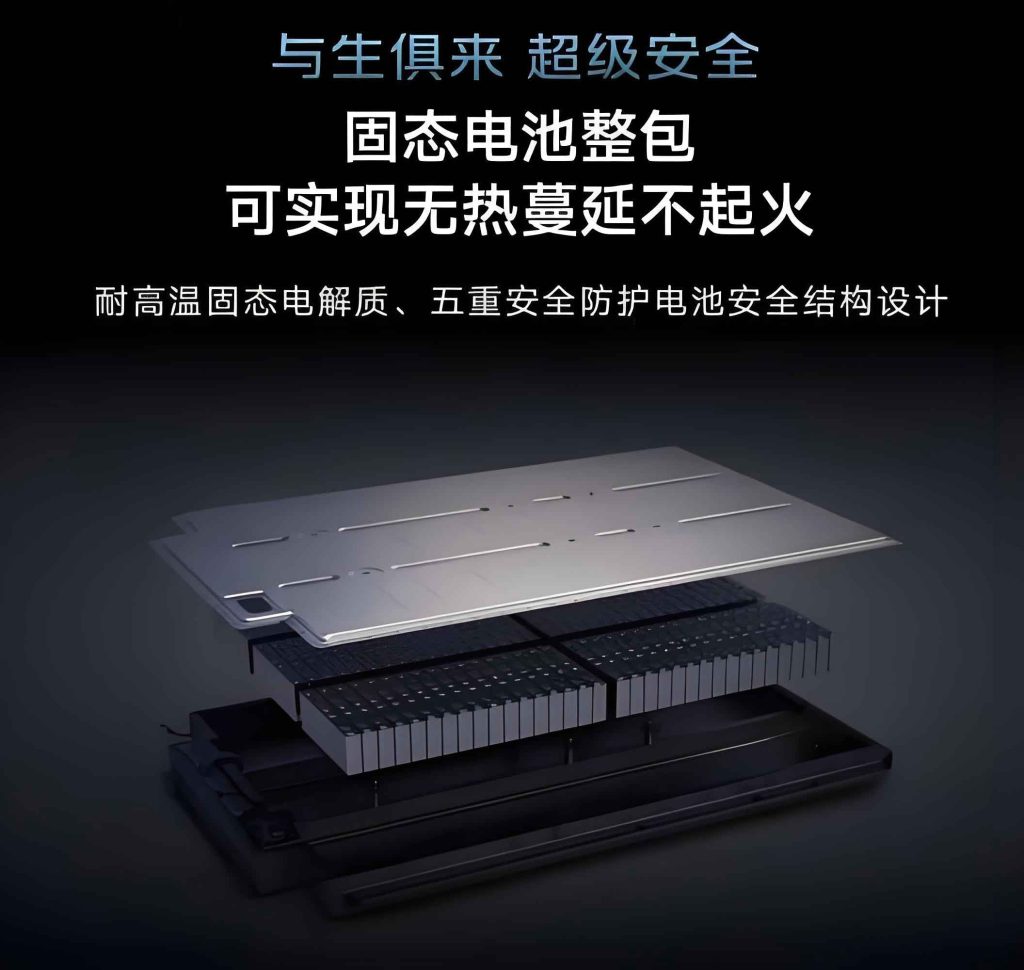
However, as my lab and others began building and testing practical solid-state battery cells, a disheartening discrepancy emerged. While the theory was elegant, the experimental reality was sobering. Our solid-state batteries consistently short-circuited at critical current densities (CCD) barely reaching 1-2 mA cm⁻², a performance far inferior to advanced liquid systems and woefully inadequate for real-world applications like fast charging or powering electric vehicles. This stark gap between theoretical promise and practical failure signaled a profound misunderstanding. It became clear that the dendrite growth mechanism within the constrained, solid-solid interfaces of a solid-state battery was fundamentally different from the well-studied electrodeposition in liquids. We were not dealing with simple electrochemical plating anymore; we were confronting a complex interplay of electrochemistry, mechanics, and materials science. To advance the field of solid-state batteries, we had to see the unseen. We needed to move beyond post-mortem analysis and observe, in real time, how these destructive dendrites nucleate and propagate deep within the opaque solid electrolyte separator.
This quest led to a pivotal shift in our experimental approach. We embraced and pushed the boundaries of operando and in situ characterization techniques. Tools like phase-contrast X-ray computed tomography (XCT) became our eyes. For the first time, we could non-destructively peer inside an operating solid-state battery cell. The choice of electrolyte was critical; we often used Li₆PS₅Cl due to its high ionic conductivity and relatively stable interface with lithium. What we observed was startling and overturned simpler models. Lithium deposition did not simply push its way through a pristine solid electrolyte like a nail through wood. Instead, the process was one of fracture and infiltration. The initial failure point was rarely at the visible surface. We observed that lithium metal would preferentially deposit into pre-existing, subsurface flaws—voids, pores, or grain boundaries—connected to the anode interface via microcracks. This discovery was crucial: the solid electrolyte in a practical solid-state battery is not a perfect, monolithic single crystal; it contains microstructural defects inherited from synthesis and processing. These defects are the Achilles’ heel of the solid-state battery.
The imaging revealed a clear, two-stage process. First, an Initiation Phase. Lithium fills these subsurface pore-crack structures. Once filled, continued lithium plating generates immense pressure within the confined pore. Lithium is not a rigid solid; it is a viscoplastic material that creeps and flows under stress. This pressurized lithium is then extruded back along the microcrack, akin to a viscous fluid in a pipe. Here, the core insight from modeling emerged: the plating current density directly relates to the hydrodynamic pressure ($P_{hyd}$) generated in this micro-scale flow. We can model this using a power-law creep relation for lithium:
$$ \dot{\epsilon} = A \sigma^n $$
where $\dot{\epsilon}$ is the strain rate, $\sigma$ is the stress, and $A$ and $n$ are material constants. The pressure buildup during this extrusion process can be derived, considering the geometry of the pore and crack. Crack initiation occurs when this internally generated hydrodynamic pressure exceeds the local fracture strength ($\sigma_f$) of the solid electrolyte material surrounding the defect:
$$ P_{hyd}(i, r_{pore}) \geq \sigma_f $$
where $i$ is the local current density and $r_{pore}$ is the pore radius. This inequality immediately suggests the key factors governing the Critical Current Density for Initiation (CCDinit):
| Factor | Effect on CCDinit | Physical Reason |
|---|---|---|
| Local Fracture Strength ($\sigma_f$) | Increases CCDinit | Harder for internal pressure to cause fracture. |
| Pore Size ($r_{pore}$) | Smaller pores increase CCDinit | Smaller volume leads to higher stress for a given amount of deposited Li. |
| Lithium Creep Resistance (higher $A$, $n$) | Decreases CCDinit | Softer Li flows more easily, reducing pressure buildup. |
Our models, calibrated with nanoindentation data for electrolyte strength and published lithium creep parameters, predicted a CCDinit around 1.0 mA cm⁻² for Li₆PS₅Cl with typical defect sizes—a prediction that aligned eerily well with our experimental measurements. This phase explains why the practical CCD of a solid-state battery is so low: microscopic defects act as pre-stressed failure points.
Once a crack is initiated, the process enters the Propagation Phase. This is where the dendrite, now a lithium-filled crack, extends toward the cathode. Our operando imaging showed the crack often propagated ahead of the lithium metal itself. This suggested a wedge-opening mechanism: lithium plating inside the crack exerts pressure on the crack walls, and the stress concentration at the crack tip drives further fracture of the solid electrolyte. To model this, we turned to linear elastic fracture mechanics. The driving force for crack propagation is characterized by the J-integral or the strain energy release rate ($G$). For a wedge-loaded crack of length $l_d$ filled with a uniform pressure $p$ (related to plating current and stack pressure), $G$ can be approximated. The criterion for propagation is:
$$ G(i, l_d, p_{stack}) \geq G_{c} $$
where $G_{c}$ is the critical strain energy release rate, or fracture toughness, of the solid electrolyte. The pressure inside the crack is a complex function of the plating current (which adds lithium), the viscous flow of lithium back out of the crack, and any externally applied stack pressure ($p_{stack}$). Modeling this interplay revealed another set of critical dependencies for the propagation-controlled CCD:
| Factor | Effect on Propagation Driving Force ($G$) | Practical Implication for Solid-State Battery |
|---|---|---|
| Crack Length ($l_d$) | Increases $G$ (positive feedback) | Once a crack starts, it becomes easier to grow—a “runaway” failure. |
| Current Density ($i$) | Increases internal pressure, raising $G$ | Higher currents lead to faster short circuits. |
| Stack Pressure ($p_{stack}$) | Increases crack-filling pressure, raising $G$ | Counterintuitively, high pressure can accelerate failure. |
| Electrolyte Fracture Toughness ($G_c$) | Increases the propagation threshold | A tougher solid electrolyte is more resistant to crack growth. |
The most controversial and impactful finding here was the role of stack pressure. Conventional wisdom in solid-state battery assembly held that high stack pressure (often 10s of MPa) was essential to maintain intimate interfacial contact and reduce interfacial resistance. However, our propagation model, confirmed by cycling experiments, showed that this same pressure, when applied globally, also acts to forcefully pump lithium into any incipient crack, dramatically increasing the strain energy release rate $G$ and driving rapid crack propagation. Cells cycled at near-atmospheric pressure could survive many more cycles before shorting compared to those under several MPa of pressure. This creates a profound dilemma in solid-state battery engineering: pressure is needed for good contact but can promote catastrophic failure.
The integration of high-resolution operando imaging with these mechanics-based models was transformative. It moved the field from phenomenological observation to quantitative, predictive understanding. The model is not a static entity; it is refined through an iterative dialogue with experiment. For instance, we can now simulate the net change in dendrite length over a full charge-discharge cycle. During plating (charge), the crack may extend. During stripping (discharge), lithium is removed from the crack, potentially relieving pressure and allowing the crack to close slightly if the electrolyte is elastic. The net growth per cycle determines the cycle life of the solid-state battery before a short occurs. This net growth ($\Delta l_d$) is a function of the plated/stripped capacity ($Q$), the current density, the stack pressure, and the electrolyte’s toughness and elastic properties:
$$ \Delta l_{d, cycle} = f(Q, i, p_{stack}, G_c, E_{SE}) $$
Simulations using this framework clearly show that smaller cycling capacities (shallower depth-of-discharge) and lower stack pressures can drastically extend the cycle life of a solid-state battery by minimizing $\Delta l_{d, cycle}$, even if the individual plating step exceeds CCDinit. This provides a strategic pathway for managing, if not completely eliminating, dendrite-related failure in solid-state batteries.
Armed with this mechanistic breakdown, the roadmap for designing more robust solid-state batteries becomes clear and multi-faceted. The strategies bifurcate according to the failure phase they target.
To Suppress Initiation: The goal is to raise CCDinit. This demands a focus on the solid electrolyte’s microstructural perfection and local strength.
- Eliminate Subsurface Flaws: This is a materials synthesis and processing challenge. We need to develop densification techniques that produce solid electrolytes with near-theoretical density and minimal isolated pores. Methods like Spark Plasma Sintering (SPS) or hot isostatic pressing show promise for oxide and sulfide solid electrolytes, as they can achieve high density at lower temperatures and shorter times, reducing grain growth and pore coalescence. The ideal solid electrolyte for a solid-state battery would be a fully dense, fine-grained ceramic or glass-ceramic.
- Enhance Local Mechanical Properties: The fracture strength $\sigma_f$ at grain boundaries and in bulk phases must be increased. This can involve compositional engineering to strengthen grain boundaries, or developing new classes of solid electrolytes with intrinsically higher hardness and fracture strength. For example, some halide-based solid electrolytes have shown promising compressibility, allowing them to be cold-pressed into highly dense pellets, thereby reducing flaw size and increasing local strength.
To Arrest Propagation: The goal is to increase $G_c$ and manage internal crack pressure.
- Improve Macroscopic Fracture Toughness ($G_c$): A tough solid electrolyte can blunt a propagating crack. Strategies include creating composite electrolytes where a ductile polymer phase bridges cracks in a ceramic matrix, or designing laminated structures where hard, crack-deflecting layers impede straight-line propagation. The development of inherently tough solid electrolyte materials is a key research frontier for durable solid-state batteries.
- Manage Internal and External Stresses: This is a system-level engineering challenge. Our work suggests that the optimal stack pressure for a solid-state battery is a delicate balance—high enough to maintain contact but low enough to not drive crack propagation. Furthermore, we must consider dynamically varying internal stresses. During cycling, the lithium anode expands and contracts, and cathode materials (especially high-capacity conversion types) undergo large volume changes. These generate local, cyclical stress concentrations at interfaces that can far exceed any externally applied stack pressure. Future solid-state battery designs must incorporate compliant interlayers, engineered porosity, or anode host structures to accommodate these volume changes and isolate the solid electrolyte from cyclic fatigue stresses.
The implications of this research extend beyond just lithium metal solid-state batteries. The fundamental coupling between electrodeposition stress, material flaws, and fracture mechanics is a general principle applicable to other metal-anode solid-state systems (e.g., sodium metal, magnesium metal). Furthermore, the critical importance of operando characterization cannot be overstated. The field of solid-state batteries has been revolutionized by techniques like operando XCT, transmission X-ray microscopy (TXM), and even advanced electron microscopy setups. They provide the ground truth that validates or refutes our models. This symbiotic cycle—observation inspiring model building, which in turn guides new experiments and suggests new materials—is the engine of progress in complex electrochemical systems like the solid-state battery.
Looking forward, the challenges for realizing commercial solid-state batteries remain significant but are now better defined. It is not merely about finding a superionic conductor. It is about designing and manufacturing a mechanically robust, electrochemically stable, and flaw-tolerant solid-state battery system. This requires a deeply interdisciplinary effort spanning synthetic chemists, ceramists, mechanicians, electrochemists, and battery engineers. We must develop scalable processes to produce large-area, thin, and flawless solid electrolyte films. We must design cell architectures that intelligently manage stress. We must discover interfaces that remain stable not just chemically, but also mechanically, during thousands of cycles of lithium flux.
In my view, the journey to understand dendrites in solid-state batteries has been a humbling lesson in materials complexity. It took us from a simple, static mechanical rule to a dynamic picture of fluid-driven fracture. This nuanced understanding, born from the marriage of operando imaging and theoretical modeling, is our most powerful tool. It transforms the solid-state battery from a promising concept into an engineerable system. While the perfect, dendrite-proof solid-state battery may not yet exist, we now have a detailed map of the terrain and a compass pointing toward the necessary solutions. The path forward is one of meticulous materials design, intelligent stress management, and relentless innovation at the intersection of electrochemistry and solid mechanics.