
In this article, I explore the dynamic relationship between new quality productivity and the development of electric vehicle (EV) education in China, focusing on how this evolving concept drives innovation and shapes professional training. As new quality productivity emerges as a transformative force in industries, it emphasizes technological advancement, intelligence, and sustainability, which are critical to the rapid growth of the China EV sector. I analyze the core characteristics of new quality productivity, its impact on industrial upgrades, and the resulting demands on educational systems. Through this lens, I identify key challenges in current EV education, such as outdated curricula, inadequate practical training, superficial industry collaborations, and insufficient teaching resources. To address these issues, I propose actionable pathways, including curriculum optimization, deeper industry partnerships, enhanced teacher development, intelligent teaching methods, and comprehensive student skill cultivation. By integrating these strategies, I aim to foster a more responsive and innovative educational framework that aligns with the needs of new quality productivity, ultimately supporting the sustainable development of the China EV industry and society at large.
New quality productivity represents a shift from traditional production methods to a system driven by innovation, digitalization, and eco-friendliness. In the context of China’s electric vehicle industry, this translates to accelerated technological breakthroughs, such as advancements in battery efficiency and autonomous driving systems. The China EV market has seen exponential growth, fueled by government policies and consumer demand for sustainable transportation. For instance, the adoption of smart manufacturing and IoT in EV production lines exemplifies how new quality productivity enhances efficiency and reduces costs. As an educator, I believe that understanding this interplay is essential for designing educational programs that prepare students for real-world challenges. One way to model this relationship is through a simple formula that captures the essence of new quality productivity: $$ NPQ = \alpha \cdot Tech + \beta \cdot Smart + \gamma \cdot Green $$ where \( NPQ \) denotes new quality productivity, \( Tech \) represents technological innovation, \( Smart \) symbolizes智能化 levels, and \( Green \) stands for sustainability factors, with \( \alpha, \beta, \gamma \) as weighting coefficients that vary across industries like the China EV sector.
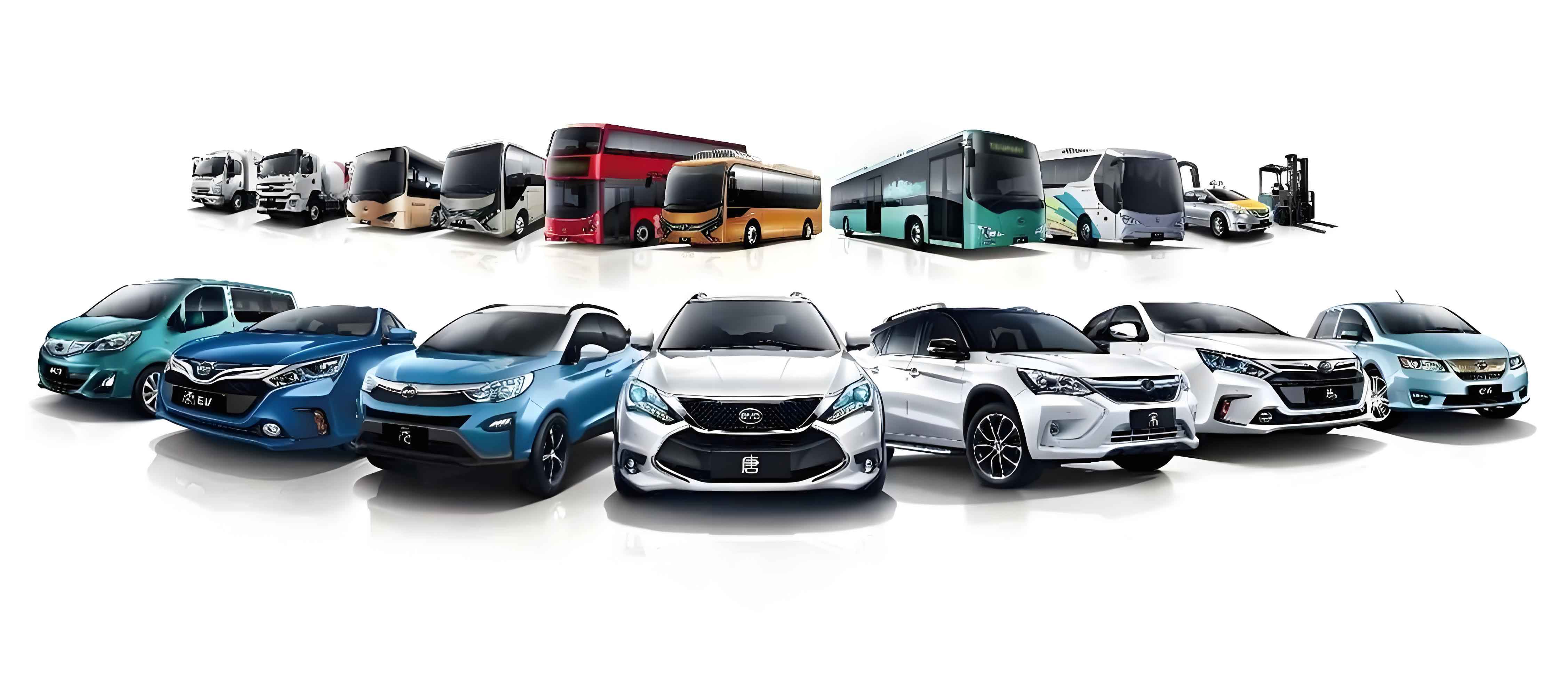
The logic connecting new quality productivity and professional education is multifaceted, involving mutual reinforcement and adaptation. From my perspective, new quality productivity acts as a catalyst for educational reform by introducing demands for cross-disciplinary knowledge and hands-on skills. In the China EV industry, this means that curricula must evolve to include topics like electric vehicle powertrain design, battery management systems, and smart grid integration. Conversely, a well-structured educational system can fuel new quality productivity by supplying a skilled workforce capable of driving innovation. For example, graduates with expertise in electric vehicle technologies can contribute to R&D in areas such as fast-charging solutions or lightweight materials, thereby enhancing productivity. This symbiotic relationship can be summarized in a table that highlights key interactions:
| Aspect of New Quality Productivity | Impact on EV Education | Reverse Influence from Education |
|---|---|---|
| Technological Innovation | Demands updated courses on EV components like motors and controllers | Graduates introduce novel ideas, boosting industry R&D |
| Intelligent Systems | Requires integration of AI and data analytics into teaching | Research outputs from academia inform smart EV designs |
| Sustainability Focus | Encourages emphasis on green technologies and circular economy | Educational projects lead to eco-friendly EV solutions |
Moreover, the characteristics of new quality productivity—innovation, intelligence, and sustainability—directly shape how educational institutions approach electric vehicle programs. Innovation, for instance, necessitates a curriculum that fosters creativity and problem-solving, which I have observed in pilot projects where students design electric vehicle prototypes. Intelligence involves leveraging digital tools, such as simulations for autonomous driving, to enhance learning experiences. Sustainability pushes for content on energy efficiency and emission reduction, aligning with global trends in the China EV market. A mathematical representation of this alignment can be expressed as: $$ E_{adapt} = \int_{0}^{T} (I(t) + S(t) + G(t)) \, dt $$ where \( E_{adapt} \) is the educational adaptation level over time \( T \), and \( I(t) \), \( S(t) \), and \( G(t) \) are functions for innovation, smart integration, and green focus, respectively. This formula illustrates how cumulative efforts in these areas enable education to keep pace with new quality productivity.
However, the current state of electric vehicle education in China reveals significant disconnects with the demands of new quality productivity. As I analyze these issues, I note that technology updates in curricula often lag behind industry advancements. For example, while the China EV sector rapidly adopts solid-state batteries and V2X communication, many programs still emphasize outdated topics, leaving graduates unprepared. Practical training is another area of concern; students frequently lack access to modern equipment like battery testers or EV diagnostic tools, resulting in a gap between theoretical knowledge and real-world application. The table below outlines these challenges in detail, based on my observations and research:
| Problem Area | Description | Impact on EV Education |
|---|---|---|
| Technology Update Lag | Curricula slow to incorporate advancements in electric vehicle tech | Students miss critical skills, hindering innovation in China EV |
| Practical Training Gaps | Insufficient hands-on experience with EV systems and tools | Graduates struggle in jobs, increasing employer training costs |
| Superficial Industry Ties | Collaborations with electric vehicle firms lack depth and resource sharing | Limited exposure to real industry challenges for students |
| Inadequate Teacher Resources | Faculty lack recent industry experience in electric vehicle domains | Teaching fails to reflect current China EV trends and practices |
| Student Skill Shortfalls | Deficiencies in innovation, interdisciplinary knowledge, and teamwork | Reduced ability to contribute to new quality productivity in EV sector |
These disconnects are exacerbated by the fast-paced evolution of the electric vehicle industry in China, where new quality productivity drives continuous change. For instance, the shift toward connected and autonomous electric vehicles requires competencies in software and hardware integration, which are often overlooked in traditional programs. From my experience, this misalignment not only affects graduate employability but also slows down the overall progress of the China EV market. To quantify this, consider a model where the efficiency of education-industry alignment \( A \) affects productivity growth: $$ \Delta P = k \cdot A \cdot NPQ $$ where \( \Delta P \) is the change in productivity, \( k \) is a constant, and \( A \) ranges from 0 (no alignment) to 1 (perfect alignment). When \( A \) is low, as in current scenarios, it dampens the positive effects of new quality productivity on the electric vehicle sector.
To bridge these gaps, I propose several pathways rooted in the principles of new quality productivity. First, optimizing the curriculum is essential to keep pace with technological advancements in electric vehicles. This involves integrating core topics such as battery management, electric drivetrains, and smart charging infrastructure, while reducing emphasis on obsolete content. In my view, a modular approach can allow for flexibility, with courses updated regularly based on industry feedback from the China EV landscape. For example, a course on “Electric Vehicle Energy Systems” could include hands-on labs using real battery packs, fostering deeper understanding. The relationship between curriculum relevance and educational outcomes can be modeled as: $$ L_{outcome} = R_{curr} \cdot \sum_{i=1}^{n} C_i $$ where \( L_{outcome} \) is the learning outcome, \( R_{curr} \) is the relevance factor of the curriculum, and \( C_i \) represents individual course components focused on electric vehicle technologies.
Second, deepening校企合作 is crucial for aligning education with the practical demands of new quality productivity. I advocate for partnerships that go beyond internships to include joint research projects, shared facilities, and co-developed curricula. For instance, collaborations with leading China EV companies could involve setting up on-campus innovation hubs where students work on real-world problems, such as optimizing electric vehicle range or developing smart grid interfaces. This not only enhances learning but also accelerates the adoption of new quality productivity in the industry. The benefits of such collaborations can be summarized in a table:
| Collaboration Type | Benefits for EV Education | Benefits for Industry |
|---|---|---|
| Joint Curriculum Design | Courses reflect current electric vehicle trends and skills needs | Access to a pipeline of job-ready graduates for China EV firms |
| Shared R&D Platforms | Students gain exposure to cutting-edge EV research and tools | Innovation inputs from academic insights, boosting productivity |
| Internship and Apprenticeships | Practical experience in electric vehicle manufacturing and maintenance | Reduced training costs and fresh perspectives on EV challenges |
Third, strengthening teacher capacity is vital to ensure that educators can impart up-to-date knowledge on electric vehicle systems. I recommend initiatives such as industry secondments, where teachers spend time in China EV companies to gain firsthand experience, and regular training workshops on emerging technologies like AI in electric vehicles. This not only improves teaching quality but also fosters a culture of continuous learning, which is central to new quality productivity. A formula to gauge teacher effectiveness could be: $$ T_{eff} = \frac{E_{exp} + K_{update}}{t} $$ where \( T_{eff} \) is teacher effectiveness, \( E_{exp} \) represents industry experience, \( K_{update} \) denotes knowledge update frequency, and \( t \) is time, emphasizing the need for ongoing development in the fast-evolving electric vehicle field.
Fourth, advancing intelligent teaching methods can revolutionize how electric vehicle education is delivered. By incorporating virtual simulations, adaptive learning platforms, and data analytics, institutions can personalize education and enhance engagement. For example, using VR to simulate electric vehicle assembly lines allows students to practice in a risk-free environment, building skills that align with the smart manufacturing aspects of new quality productivity. Additionally, AI-driven tools can analyze student performance to identify areas for improvement, such as in understanding electric vehicle battery chemistry or control systems. The impact of such technologies on learning efficiency can be expressed as: $$ E_{learn} = \eta \cdot \int (Tech_{edu} \cdot Student_{engage}) \, dt $$ where \( E_{learn} \) is the learning efficiency, \( \eta \) is an efficiency factor, \( Tech_{edu} \) represents educational technology integration, and \( Student_{engage} \) measures student engagement levels, particularly in contexts involving China EV applications.
Fifth, focusing on comprehensive student ability development is key to cultivating innovators who can thrive in the electric vehicle industry. This involves fostering soft skills like critical thinking, collaboration, and adaptability through interdisciplinary projects—for instance, having teams work on designing an electric vehicle with enhanced sustainability features. Competitions and innovation challenges related to China EV technologies can also motivate students and provide practical experience. From my perspective, this holistic approach ensures that graduates not only possess technical expertise but also the creativity to drive new quality productivity forward. The overall effectiveness of these pathways can be evaluated using a composite index: $$ EI = w_1 \cdot C_{opt} + w_2 \cdot P_{deep} + w_3 \cdot T_{str} + w_4 \cdot I_{teach} + w_5 \cdot S_{dev} $$ where \( EI \) is the educational improvement index, \( C_{opt} \) is curriculum optimization, \( P_{deep} \) is partnership depth, \( T_{str} \) is teacher strength, \( I_{teach} \) is intelligent teaching, \( S_{dev} \) is student development, and \( w_i \) are weights reflecting the relative importance of each factor in the context of electric vehicle education.
In conclusion, the integration of new quality productivity into electric vehicle education in China offers a promising path toward sustainable industrial growth and social progress. By embracing the strategies I have outlined—curriculum updates, deeper collaborations, teacher enhancements, smart teaching tools, and student-centered learning—we can create an educational ecosystem that not only meets the demands of the evolving China EV market but also actively contributes to its innovation. As new quality productivity continues to reshape industries, it is imperative that education systems remain agile and forward-looking, fostering a generation of professionals who can leverage electric vehicle technologies to address global challenges. Ultimately, this synergy between education and productivity will drive long-term benefits, ensuring that the China EV sector remains competitive and environmentally responsible in the global arena.