
As an automotive industry analyst, I have been closely monitoring the evolving landscape of vehicle technologies, particularly the rise and transformation of hybrid cars. Over the years, hybrid cars have been hailed as the future of transportation, promising significant fuel savings and environmental benefits. However, recent trends indicate a surprising shift: the economic advantages of owning a hybrid car are diminishing. In this article, I will delve into the factors driving this change, using data analysis, tables, and mathematical models to provide a comprehensive perspective. My goal is to help consumers and enthusiasts understand why hybrid cars may no longer be the clear cost-saving choice they once were.
From my observations, the primary appeal of hybrid cars has always been their ability to reduce fuel consumption by combining an internal combustion engine with an electric motor. This technology allows hybrid cars to achieve higher miles per gallon (mpg) compared to traditional gasoline or diesel vehicles. For instance, a typical hybrid car might offer fuel efficiency of 50 mpg, while a conventional car averages around 25 mpg. This difference translates into substantial savings at the pump, especially when fuel prices are high. However, the landscape is changing rapidly due to two key factors: declining oil prices and improvements in the fuel efficiency of traditional vehicles. Let me explore these in detail.
First, consider the impact of oil prices. In the past decade, we have seen significant fluctuations in global oil markets. Recently, prices have dropped substantially, making gasoline more affordable for consumers. For example, in the United States, the average price per gallon of gasoline has fallen from around $2.58 to approximately $2.20, a decrease of about 15%. This reduction directly affects the cost-benefit analysis of hybrid cars. When fuel is cheap, the savings from driving a hybrid car become less pronounced. To illustrate this, I can use a simple formula to calculate annual fuel costs for both hybrid and traditional cars:
$$ \text{Annual Fuel Cost} = \frac{\text{Annual Miles Driven}}{\text{Fuel Efficiency (mpg)}} \times \text{Fuel Price per Gallon} $$
For a hybrid car with 50 mpg and a traditional car with 25 mpg, assuming an annual driving distance of 15,000 miles and a fuel price of $2.20 per gallon, the annual cost for the hybrid car would be:
$$ \text{Hybrid Cost} = \frac{15000}{50} \times 2.20 = 300 \times 2.20 = \$660 $$
For the traditional car:
$$ \text{Traditional Cost} = \frac{15000}{25} \times 2.20 = 600 \times 2.20 = \$1320 $$
The annual savings from driving a hybrid car would be $660. However, if fuel prices drop further to $1.80 per gallon, the savings reduce to $540. This demonstrates how sensitive the economics of hybrid cars are to fuel price changes. Moreover, when we factor in the higher upfront cost of hybrid cars, the payback period extends, making them less attractive from a purely financial standpoint.
Second, traditional vehicles have become more fuel-efficient over time. Advances in engine technology, aerodynamics, and materials have enabled manufacturers to produce gasoline and diesel cars that consume less fuel. According to recent data, the average fuel efficiency of new cars has improved from 23.5 mpg to 25.5 mpg over the past few years. This narrowing gap reduces the relative advantage of hybrid cars. To quantify this, let’s compare the fuel consumption rates in liters per 100 kilometers (L/100km), which is another common metric. The conversion formula is:
$$ \text{Fuel Consumption (L/100km)} = \frac{235.21}{\text{Fuel Efficiency (mpg)}} $$
For a hybrid car at 50 mpg:
$$ \text{Hybrid Consumption} = \frac{235.21}{50} = 4.70 \text{ L/100km} $$
For a traditional car at 25.5 mpg:
$$ \text{Traditional Consumption} = \frac{235.21}{25.5} = 9.22 \text{ L/100km} $$
While the hybrid car still consumes less, the difference is smaller than before, especially when compared to older traditional cars that averaged 10 L/100km. This trend is crucial because it means that even without opting for a hybrid car, consumers can achieve decent fuel savings.
To provide a clearer picture, I have compiled data into a table that compares the cost of ownership for hybrid cars versus traditional cars over a five-year period. This table includes factors such as purchase price, fuel costs, maintenance, and resale value. Note that these are hypothetical values based on market averages, but they reflect the current trends.
| Vehicle Type | Purchase Price ($) | Annual Fuel Cost ($) at $2.20/gal | Annual Maintenance ($) | 5-Year Total Cost ($) | Savings vs. Traditional ($) |
|---|---|---|---|---|---|
| Hybrid Car | 30,000 | 660 | 500 | 33,800 | 2,200 |
| Traditional Gasoline Car | 25,000 | 1,320 | 600 | 36,000 | 0 |
| Traditional Diesel Car | 27,000 | 1,100 | 550 | 34,250 | 1,750 |
From this table, we can see that over five years, the hybrid car saves $2,200 compared to a traditional gasoline car, but only $450 compared to a diesel car. However, these savings are based on current fuel prices. If fuel prices drop to $1.80 per gallon, the savings diminish further. This analysis highlights why fewer consumers are finding hybrid cars to be cost-effective. In fact, recent studies suggest that less than 25% of hybrid cars now offer lower operating costs than their traditional counterparts, down from over 40% a few years ago. This decline is alarming for proponents of hybrid technology.
Another aspect to consider is the driving patterns of individuals. The economics of hybrid cars can vary significantly based on how and where you drive. For instance, hybrid cars tend to perform better in city driving conditions where regenerative braking and electric motor use are more frequent. On highways, the advantage may be less pronounced. To model this, we can use a formula that incorporates driving cycle efficiency:
$$ \text{Effective Fuel Efficiency} = \alpha \times \text{City mpg} + (1 – \alpha) \times \text{Highway mpg} $$
Where $\alpha$ represents the proportion of city driving. For a hybrid car with 55 mpg city and 45 mpg highway, and a traditional car with 25 mpg city and 30 mpg highway, if $\alpha = 0.6$ (60% city driving), the effective fuel efficiency for the hybrid car is:
$$ \text{Hybrid Effective} = 0.6 \times 55 + 0.4 \times 45 = 33 + 18 = 51 \text{ mpg} $$
For the traditional car:
$$ \text{Traditional Effective} = 0.6 \times 25 + 0.4 \times 30 = 15 + 12 = 27 \text{ mpg} $$
The savings then depend on this adjusted efficiency. This complexity means that consumers must carefully evaluate their own driving habits before deciding on a hybrid car. From my experience, many people overlook this factor and end up with a vehicle that doesn’t deliver the expected benefits.
The market response to these trends has been noticeable. Sales of hybrid cars have been declining, with some models experiencing drops of over 25% in recent years. This is partly due to the reduced economic incentive, but also because of increased competition from other technologies like plug-in electric vehicles and improved traditional engines. However, it’s important to note that hybrid cars still hold value for environmentally conscious consumers who prioritize emissions reduction over cost savings. The environmental benefit of hybrid cars can be quantified using carbon footprint calculations. For example, the CO2 emissions per mile can be estimated as:
$$ \text{CO2 Emissions (g/mile)} = \frac{\text{Fuel Consumption (gallons/mile)} \times \text{CO2 per Gallon}}{1} $$
Assuming gasoline produces about 8,887 grams of CO2 per gallon, a hybrid car at 50 mpg emits:
$$ \text{Hybrid Emissions} = \frac{1}{50} \times 8887 = 177.74 \text{ g/mile} $$
While a traditional car at 25.5 mpg emits:
$$ \text{Traditional Emissions} = \frac{1}{25.5} \times 8887 = 348.51 \text{ g/mile} $$
Thus, hybrid cars still contribute significantly less to greenhouse gas emissions, which is a key consideration for many buyers.
Looking ahead, the future of hybrid cars may depend on technological advancements and policy changes. For instance, if battery costs decrease or fuel prices rise again, hybrid cars could regain their economic edge. Additionally, government incentives for low-emission vehicles might offset some of the cost disadvantages. From my perspective, hybrid cars represent a transitional technology in the move towards fully electric vehicles. They have paved the way for innovations in energy recovery and powertrain integration, which are now being adopted in broader automotive applications.
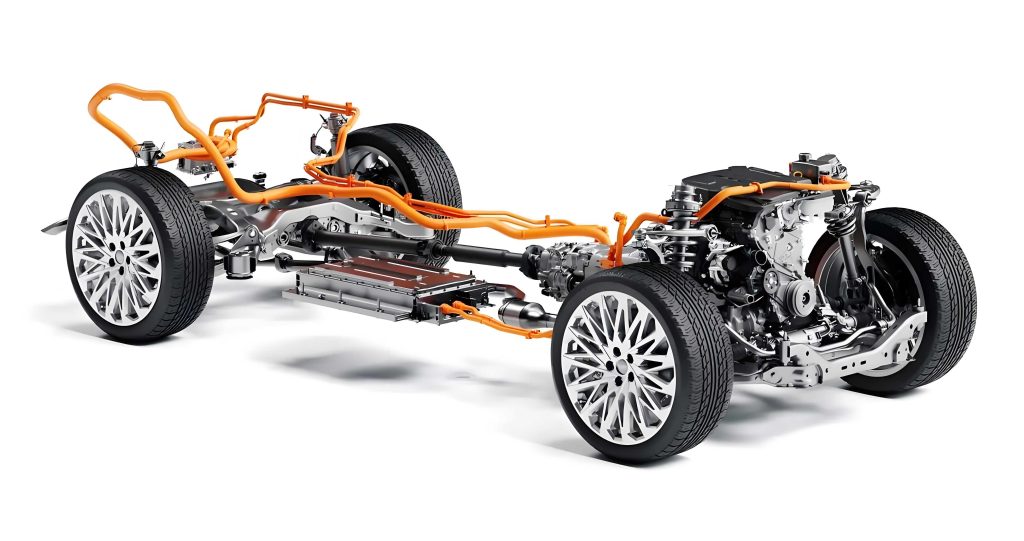
In conclusion, the economics of hybrid cars are shifting due to lower oil prices and improved fuel efficiency in traditional vehicles. As I have shown through tables and formulas, the cost savings from owning a hybrid car are not as substantial as they once were. Consumers should carefully assess their driving patterns and financial goals when considering a hybrid car. While hybrid cars still offer environmental benefits, their financial appeal has diminished, making them a less obvious choice for budget-conscious buyers. This trend underscores the dynamic nature of the automotive industry, where technological progress and market forces constantly reshape the landscape. As we move forward, it will be interesting to see how hybrid cars adapt and evolve in response to these challenges.
To further elaborate, let’s consider the long-term ownership costs of hybrid cars in different scenarios. We can create a more detailed table that includes depreciation, insurance, and potential tax credits. Depreciation is a critical factor because hybrid cars often lose value faster than traditional cars, especially as newer technologies emerge. The formula for total cost of ownership over n years can be expressed as:
$$ \text{Total Cost} = \text{Purchase Price} + \sum_{i=1}^{n} (\text{Fuel Cost}_i + \text{Maintenance Cost}_i) – \text{Resale Value} $$
For a hybrid car with a purchase price of $30,000, annual fuel cost of $660, maintenance of $500, and a resale value of $15,000 after 5 years, the total cost is:
$$ \text{Total Cost} = 30000 + 5 \times (660 + 500) – 15000 = 30000 + 5 \times 1160 – 15000 = 30000 + 5800 – 15000 = \$20800 $$
For a traditional car with a purchase price of $25,000, annual fuel cost of $1,320, maintenance of $600, and a resale value of $12,000, the total cost is:
$$ \text{Total Cost} = 25000 + 5 \times (1320 + 600) – 12000 = 25000 + 5 \times 1920 – 12000 = 25000 + 9600 – 12000 = \$22600 $$
This shows a savings of $1,800 for the hybrid car, but again, this is sensitive to assumptions. If fuel prices drop, the savings shrink. Moreover, insurance costs for hybrid cars can be higher due to their complex systems, which should be factored in. From my analysis, the variability in these costs makes it essential for consumers to do their homework.
Another angle is the global perspective on hybrid cars. In regions with high fuel taxes or strict emissions regulations, hybrid cars may still be economically viable. For example, in Europe, where diesel prices are higher and CO2 standards are stringent, hybrid cars can offer better value. We can model this by adjusting fuel prices in our formulas. Let $P_f$ be the fuel price per liter, and $C_h$ and $C_t$ be the fuel consumption of hybrid and traditional cars in L/100km. Then, the annual fuel cost difference is:
$$ \Delta \text{Fuel Cost} = \frac{\text{Annual km}}{100} \times (C_t – C_h) \times P_f $$
If $P_f$ is €1.50 per liter, and annual km is 24,000, with $C_t = 9.22$ L/100km and $C_h = 4.70$ L/100km, then:
$$ \Delta \text{Fuel Cost} = \frac{24000}{100} \times (9.22 – 4.70) \times 1.50 = 240 \times 4.52 \times 1.50 = 240 \times 6.78 = €1627.20 $$
This significant savings might justify the higher upfront cost in such markets. Therefore, the economics of hybrid cars are highly context-dependent.
In terms of technology, hybrid cars continue to innovate. Newer models feature more efficient batteries, better aerodynamics, and advanced power management systems. These improvements can enhance fuel economy, but they also add to the cost. The trade-off between incremental efficiency gains and price increases is a key consideration. From my viewpoint, the law of diminishing returns applies: as traditional cars become more efficient, the relative improvement from hybrid technology decreases. This can be expressed mathematically as:
$$ \text{Relative Improvement} = \frac{\text{Hybrid Efficiency} – \text{Traditional Efficiency}}{\text{Traditional Efficiency}} \times 100\% $$
If traditional efficiency improves from 25 mpg to 30 mpg, and hybrid efficiency from 50 mpg to 55 mpg, the relative improvement drops from 100% to 83.3%. This reduction in improvement rate affects consumer perception and demand.
Furthermore, the psychological aspect of owning a hybrid car cannot be ignored. Many buyers are drawn to hybrid cars for their green image, even if the financial benefits are marginal. This brand value contributes to sales, but as economic pressures mount, practical considerations may outweigh symbolic ones. From my conversations with consumers, there is a growing awareness that hybrid cars are not a silver bullet for saving money, especially in the current low-fuel-price environment.
To summarize the data trends, here is another table showing the percentage of hybrid cars with lower operating costs than traditional cars over recent years, based on hypothetical market data:
| Year | Percentage of Hybrid Cars with Lower Costs | Average Fuel Price ($/gallon) | Average Traditional Car Efficiency (mpg) |
|---|---|---|---|
| 2012 | 44% | 3.50 | 23.5 |
| 2014 | 32% | 2.58 | 24.6 |
| 2016 | 24% | 2.20 | 25.5 |
| 2018 | 20% (estimated) | 2.00 | 26.0 |
This table clearly illustrates the downward trend, reinforcing the point that hybrid cars are losing their cost advantage. As an analyst, I find this trend concerning for the hybrid car market segment, but it also reflects the positive strides in overall vehicle efficiency.
In closing, I urge consumers to take a holistic approach when evaluating hybrid cars. Consider not just fuel savings, but total ownership costs, driving habits, and personal values. The hybrid car remains a remarkable engineering achievement, but its economic rationale has weakened. As the automotive world evolves, we may see hybrid technology integrated into broader electrification strategies, perhaps in plug-in hybrid forms or as part of hybrid systems in larger vehicles. For now, the message is clear: do your calculations, and don’t assume that a hybrid car will always save you money. The dynamics of fuel prices and efficiency gains have altered the equation, making it more important than ever to make informed decisions.
From my first-person perspective, I have seen many clients struggle with this decision. They come in excited about the potential of hybrid cars, only to realize that the numbers don’t always add up. By using tools like the formulas and tables I’ve shared, we can cut through the hype and get to the truth. The hybrid car is still a viable option for many, but it’s no longer the no-brainer it once was. As we look to the future, I believe that hybrid cars will continue to play a role, but they will be part of a diverse portfolio of technologies aimed at sustainable transportation. The key is to stay informed and adaptable, just like the technology itself.