
As a researcher deeply immersed in the field of energy storage, I have witnessed the rapid evolution of solid-state battery technology over the past decade. The quest for safer, higher-energy-density batteries has driven intensive global research into solid-state batteries, which promise to overcome the limitations of conventional liquid electrolyte lithium-ion batteries. In this article, I will share my perspective on the current state, key challenges, and future directions of solid-state battery development, drawing from extensive scientific literature and experimental insights. The term ‘solid-state battery’ will be frequently discussed, as it represents a paradigm shift in battery technology.
The classification of lithium battery systems based on electrolyte type is fundamental. We generally categorize them into three groups: liquid electrolyte lithium batteries, hybrid solid-liquid electrolyte lithium batteries, and all-solid-state electrolyte lithium batteries. The latter two are often collectively referred to as solid-state batteries. The primary motivation for developing solid-state batteries is to enhance energy density, safety, cycle life, calendar life, and environmental adaptability. This involves research on solid electrolyte materials, compatible electrode materials, interfacial reactions, ion-electron transport, structural evolution, and cell design.
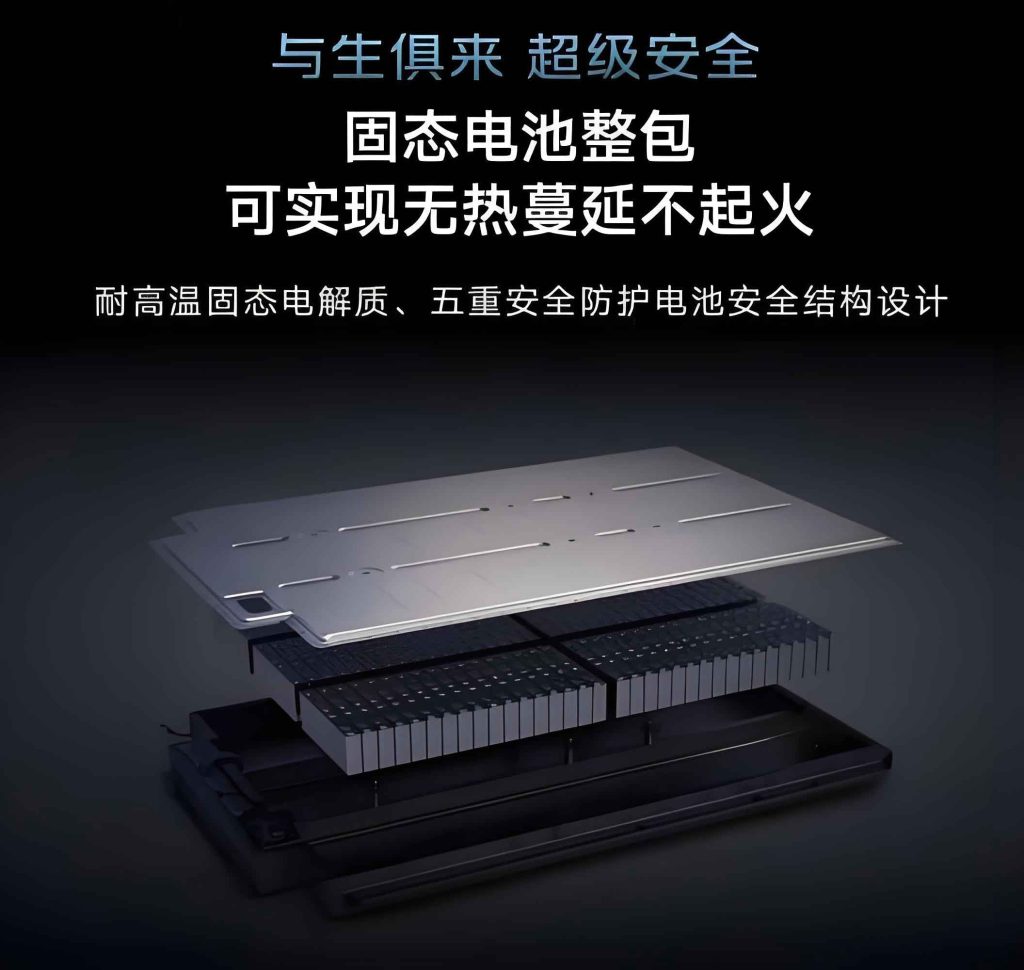
Solid electrolytes are the core components of a solid-state battery. They can be broadly classified into oxide, sulfide, and polymer solid electrolytes. Each type has distinct properties that influence the performance of the solid-state battery.
| Type | Examples | Room-Temperature Ionic Conductivity (S/cm) | Key Advantages | Major Challenges |
|---|---|---|---|---|
| Oxide Solid Electrolytes | LATP (Li1+xAlxTi2-x(PO4)3), LLZO (Li7La3Zr2O12) | ~10-4 to 10-3 | High stability, wide electrochemical window | Brittleness, poor interfacial contact |
| Sulfide Solid Electrolytes | LGPS (Li10GeP2S12), Li9.54Si1.74P1.44S11.7Cl0.3 | ~10-3 to 25×10-3 | Very high ionic conductivity, soft mechanical properties | Instability with moisture, generates H2S |
| Polymer Solid Electrolytes | PEO (Polyethylene oxide) with LiTFSI | ~10-3 at 60°C | Flexibility, ease of processing | Low oxidation potential (~3.8 V), dendrite growth |
The ionic conductivity of solid electrolytes is a critical parameter, often described by the Arrhenius equation for ion transport: $$\sigma = \sigma_0 \exp\left(-\frac{E_a}{k_B T}\right)$$ where $\sigma$ is the ionic conductivity, $\sigma_0$ is the pre-exponential factor, $E_a$ is the activation energy, $k_B$ is Boltzmann’s constant, and $T$ is the temperature. For instance, the high conductivity of sulfide electrolytes can be attributed to their low activation energy and unique crystal structures that provide facile lithium-ion pathways.
In a solid-state battery, the choice of electrode materials is equally important. High-capacity anodes like lithium metal, silicon, and composite lithium-carbon, along with high-voltage cathodes such as high-nickel NCM, lithium cobalt oxide, and lithium-rich manganese-based materials, are under intense investigation. The compatibility of these electrodes with solid electrolytes is a major focus. For example, the volumetric changes in silicon anodes during cycling, which can exceed 300%, pose significant challenges for maintaining good interfacial contact in a solid-state battery. The stress generated can be approximated by: $$\Delta V = \frac{\Delta L}{L_0} \times 100\%$$ where $\Delta V$ is the volume change percentage, and $\Delta L/L_0$ is the linear strain. This necessitates innovative electrode designs and interface engineering.
The solid-solid interface is perhaps the most formidable challenge in solid-state battery technology. Unlike liquid electrolytes, solid electrolytes cannot flow to wet the electrode surfaces, leading to poor physical contact and high interfacial resistance. The interfacial impedance ($R_{int}$) can dominate the total cell resistance, severely limiting rate capability. This impedance arises from factors such as space-charge layers, chemical reactions forming interphases, and mechanical detachment. Research efforts are directed towards interface modification techniques, including coating electrode particles with thin solid electrolyte layers, using soft polymer interlayers, and applying external pressure. The relationship between contact area and resistance can be expressed as: $$R_{int} \propto \frac{1}{A_{contact}}$$ where $A_{contact}$ is the effective contact area between the solid electrolyte and electrode.
All-solid-state batteries, which contain no liquid components, are the ultimate goal. They can be further divided based on the electrolyte type: polymer-based, oxide-based, and sulfide-based. Each has its own development status.
| Type | Current Status | Key Achievements | Remaining Challenges |
|---|---|---|---|
| Polymer All-Solid-State Battery | Small-scale production for niche applications | Good flexibility, easy manufacturing | Low oxidation stability, dendrite penetration, requires elevated temperature |
| Oxide All-Solid-State Battery | Thin-film batteries (e.g., LiPON) in small batches | High voltage stability, good safety | Brittle ceramic electrolytes, high cost of fabrication, poor interfacial contact in bulk cells |
| Sulfide All-Solid-State Battery | Lab-scale pouch cells up to 10 Ah demonstrated | High energy density (~400 Wh/kg), good cycle life under pressure | Moisture sensitivity, safety concerns under abuse, need for external pressure |
The development of a viable all-solid-state battery requires solving the interfacial issues and achieving stable cycling with high-voltage cathodes and lithium metal anodes. For example, the electrochemical window of the electrolyte must withstand the operating potentials. The stability window can be estimated from the HOMO-LUMO gap in polymers or the band gap in inorganic materials, often calculated using density functional theory (DFT): $$E_{gap} = E_{LUMO} – E_{HOMO}$$
Given the hurdles in all-solid-state batteries, hybrid solid-liquid electrolyte batteries have emerged as a pragmatic intermediate solution. These batteries contain a small amount of liquid electrolyte (typically 1-10 wt%) alongside solid electrolytes. They offer a balance between performance and manufacturability. One promising approach is “in-situ solidification,” where a liquid electrolyte is injected into the cell and then chemically or electrochemically converted into a solid-state electrolyte during operation. This method ensures good initial contact and addresses interface evolution. The reaction kinetics for in-situ solidification can be modeled using: $$\frac{d\alpha}{dt} = k(T) f(\alpha)$$ where $\alpha$ is the conversion degree, $k(T)$ is the rate constant, and $f(\alpha)$ is the reaction model function. Hybrid solid-liquid electrolyte batteries have already achieved energy densities of 360 Wh/kg at the cell level with cycle lives exceeding 800, passing safety tests like nail penetration.
The global research landscape for solid-state batteries is highly competitive. Analyzing scientific output provides insights into the focus and impact of different regions. The following table summarizes the publication metrics for the top countries/regions in the field of solid-state battery research over two five-year periods.
| Country/Region | Number of Papers (Web of Science) | Total Citations | Number of Highly Cited Papers | |||
|---|---|---|---|---|---|---|
| 2010-2014 | 2015-2019 | 2010-2014 | 2015-2019 | 2010-2014 | 2015-2019 | |
| World Total | 2,626 | 9,018 | 37,544 | 239,679 | 41 | 91 |
| China | 794 (1st) | 3,369 (1st) | 8,093 (2nd) | 82,879 (1st) | 5 (3rd) | 52 (1st) |
| United States | 538 (2nd) | 2,026 (2nd) | 13,836 (1st) | 72,101 (2nd) | 15 (1st) | 42 (2nd) |
| Japan | 321 (3rd) | 832 (3rd) | 7,603 (3rd) | 12,264 (5th) | 4 (4th) | 4 (4th) |
| Germany | 232 (4th) | 807 (4th) | 4,611 (4th) | 18,736 (3rd) | 3 (7th) | 3 (7th) |
| South Korea | 187 (5th) | 769 (5th) | 2,972 (5th) | 13,915 (4th) | 1 (10th) | 4 (4th) |
| India | 118 (6th) | 513 (6th) | 808 (11th) | 5,172 (11th) | 0 | 1 (10th) |
| France | 186 (7th) | 295 (7th) | 3,645 (6th) | 5,324 (10th) | 2 (8th) | 1 (10th) |
| Canada | 111 (8th) | 287 (8th) | 2,275 (7th) | 10,705 (6th) | 1 (10th) | 10 (3rd) |
| Australia | 116 (9th) | 247 (9th) | 1,506 (9th) | 5,829 (8th) | 0 | 16 (2nd) |
| Spain | 87 (10th) | 244 (10th) | 1,426 (10th) | 6,271 (7th) | 1 (10th) | 1 (10th) |
The data clearly shows China’s leading position in terms of publication volume and, more recently, citation impact in the solid-state battery domain. The growth in high-impact research from China indicates significant contributions to fundamental understanding and technological innovations. For instance, novel solid electrolytes like water-stable sulfides and high-conductivity oxides have been reported, alongside advanced cell designs using in-situ solidification. The research output correlates with the substantial investments and strategic focus on next-generation battery technologies.
Looking ahead, the solid-state battery field is poised for even more intense research and development. Future work will delve deeper into new materials discovery, advanced interface engineering, and comprehensive understanding of multiphysics phenomena. The use of cutting-edge experimental tools such as synchrotron X-ray imaging, neutron diffraction, cryo-electron microscopy, and in-situ spectroscopic techniques will provide unprecedented insights into the dynamic processes within a solid-state battery. Similarly, computational methods like first-principles calculations, molecular dynamics simulations, high-throughput screening, and artificial intelligence will accelerate materials design and optimization. The integration of these approaches can be formalized in a materials discovery pipeline: $$ \text{Design} \rightarrow \text{Synthesis} \rightarrow \text{Characterization} \rightarrow \text{Testing} \rightarrow \text{Feedback} $$
Key future directions for solid-state battery technology include:
- New Electrolyte Materials: Beyond conventional oxides, sulfides, and polymers, materials like anti-perovskites, halides, and composite electrolytes are being explored. The search for electrolytes with high ionic conductivity (>10 mS/cm at room temperature), wide electrochemical window (>5 V vs. Li/Li+), and excellent stability is ongoing. The ionic conductivity can be tailored by doping, as described by: $$\sigma_{Li} = \frac{N_{Li} q^2 D_{Li}}{k_B T}$$ where $N_{Li}$ is the lithium ion concentration, $q$ is the charge, and $D_{Li}$ is the diffusion coefficient.
- Advanced Electrode Materials: Development of high-capacity, low-strain electrodes specifically designed for solid-state configurations. This includes stabilized lithium metal anodes (e.g., using 3D hosts), silicon-carbon composites with minimal expansion, and high-voltage cathodes with protective coatings.
- Interface Engineering: Creating resilient interfaces that maintain adhesion and low resistance during cycling. Techniques like atomic layer deposition (ALD), mechanical pressing, and self-healing materials are promising.
- Cell Architecture and Manufacturing: Designing scalable fabrication processes for solid-state batteries. This involves powder processing, thin-film technologies, and roll-to-roll manufacturing for hybrid systems. The cost model for production must be competitive: $$C_{cell} = C_{materials} + C_{processing} + C_{assembly}$$
- Safety and Reliability: Comprehensive study of thermal runaway mechanisms, dendrite suppression, and failure modes under abuse conditions. Safety is a paramount advantage targeted for solid-state batteries.
- Standardization and Testing: Establishing universal protocols for evaluating performance metrics like ionic conductivity, interfacial resistance, cycle life, and safety of solid-state battery cells.
In the near term (2-3 years), I anticipate that hybrid solid-liquid electrolyte batteries will enter the market, particularly for electric vehicles and high-end consumer electronics. These systems offer a practical path to higher energy densities (>400 Wh/kg at the pack level) and improved safety. In the longer term (6-8 years), true all-solid-state batteries are expected to mature, potentially revolutionizing energy storage with even greater performance and safety margins.
Global competition is fierce, with major research initiatives like Battery2030+ in Europe, RISING and Solid-EV in Japan, and Battery 500 in the United States. To maintain and advance leadership in solid-state battery technology, concerted efforts are needed. This includes fostering national innovation centers, strengthening academia-industry collaborations, and investing in fundamental research on materials genomics, multi-scale modeling, and advanced characterization. The synergy between computational prediction and experimental validation will be crucial, as summarized by the closed-loop approach: $$ \text{Theory} \xrightarrow{\text{Predict}} \text{Material} \xrightarrow{\text{Validate}} \text{Data} \xrightarrow{\text{Learn}} \text{Theory} $$
In conclusion, the journey towards commercializing solid-state batteries is challenging but full of promise. As a community, we have made remarkable progress in understanding the materials science and electrochemistry underlying solid-state battery operation. The transition from liquid to solid electrolytes represents a monumental shift, requiring innovations across the entire battery value chain. With continued research and collaboration, solid-state batteries have the potential to power a more sustainable and energy-secure future, enabling longer-range electric vehicles, safer portable electronics, and more efficient grid storage. The evolution of the solid-state battery is not just a technological upgrade; it is a fundamental step forward in energy storage technology.