
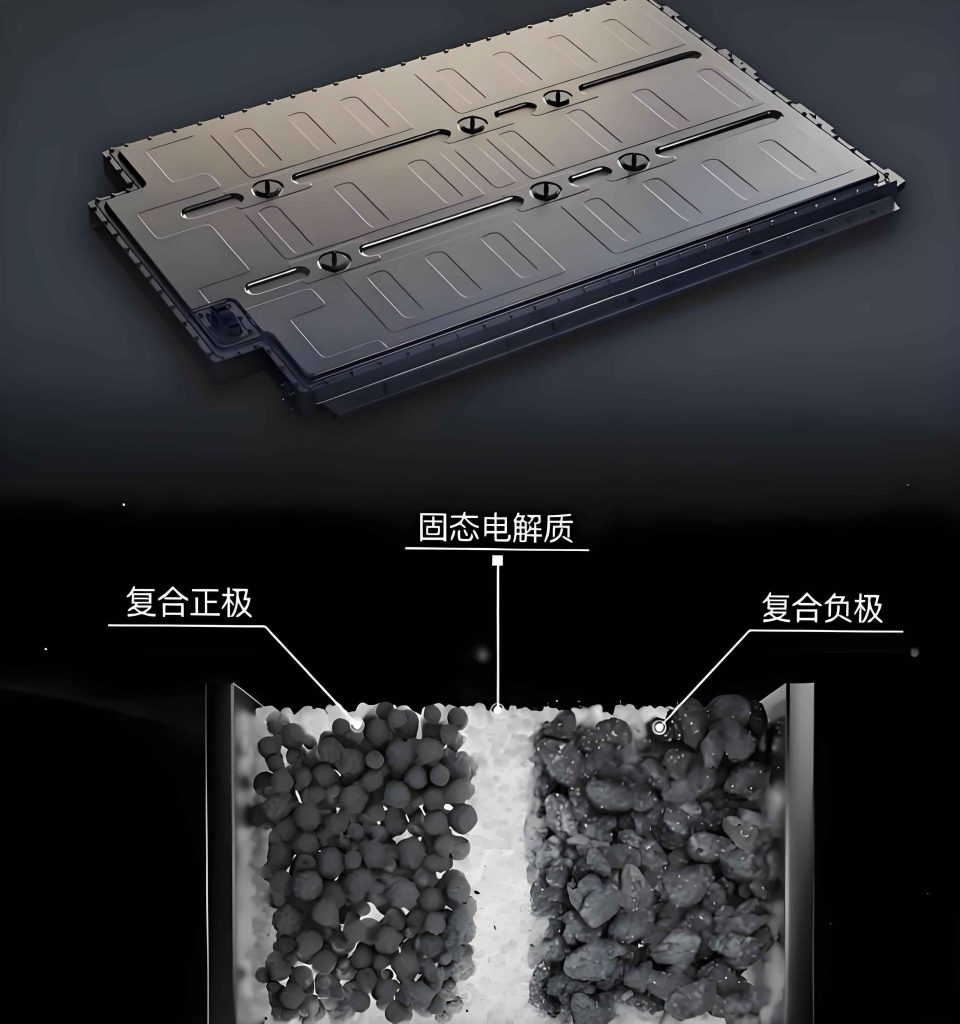
The transition to new energy electric vehicles represents a pivotal national strategy, with the power battery serving as its most critical component. Among the various options, lithium-based batteries are paramount. To meet the ever-increasing demands for extended driving range and enhanced safety, solid-state lithium batteries (SSBs), which promise significantly higher energy density and improved safety, have emerged as a primary candidate for next-generation power supply and energy storage systems. The core of their appeal lies in the replacement of flammable liquid organic electrolytes with non-flammable, mechanically robust solid electrolytes (SEs). This fundamental shift is expected to unlock the use of high-capacity lithium-metal anodes, thereby dramatically boosting energy density while mitigating thermal runaway risks.
However, the practical application and industrialization of SSBs are severely hampered by formidable challenges at the solid-solid interface. Unlike liquid electrolytes that can readily wet electrode particles, solid electrolytes form rigid, point-contact interfaces with active materials. This leads to several critical issues: significantly high ion/electron migration resistance, insufficient interfacial stability leading to detrimental side reactions, and mechanical delamination during cycling due to volume changes of active materials. These factors collectively contribute to rapid capacity fade, poor rate capability, and limited cycle life. To systematically address these bottlenecks and engineer high-performance SSBs, a profound, quantitative understanding of the charge (ion and electron) conduction mechanisms within the composite electrode—spanning the active material, the solid electrolyte, and their intricate interfaces—is imperative.
Gaining this understanding relies on a synergistic triad: obtaining high-quality experimental data, developing accurate theoretical models, and employing robust data analysis algorithms. Experimental techniques provide the foundational observations. Theoretical models, particularly transmission line models (TLMs), bridge the gap between internal physicochemical processes and externally measurable signals like impedance, allowing for the deconvolution of intertwined ionic and electronic contributions. Finally, advanced algorithms are essential for parameter estimation and interpreting complex datasets. While experimental methods and analytical algorithms have seen considerable advancement, theoretical modeling, especially for the dynamic and spatially heterogeneous environment of SSBs, often lags behind. This review synthesizes the current state of knowledge across these three pillars. We begin by cataloging and comparing experimental methods for probing ion/electron transport. We then trace the historical evolution and recent advancements in TLMs for porous and composite electrodes. Finally, we analyze persisting fundamental challenges and outline future research directions essential for unlocking the full potential of solid-state batteries.
Experimental Techniques for Probing Ion/Electron Conduction
Investigating the mixed conduction of ions and electrons in battery electrodes necessitates a suite of experimental tools, each with distinct principles, capabilities, and limitations. The spatial resolution of these techniques is a key differentiator, determining the scale at which transport phenomena can be resolved. The following section reviews seven prominent methods.
1. Potentiostatic/Galvanostatic Intermittent Titration Techniques (PITT/GITT): These are classical, macroscale electrochemical methods used primarily to extract kinetic parameters such as chemical diffusion coefficients of ions within insertion electrodes. They involve applying potential or current steps and monitoring the transient response. While invaluable for determining bulk transport properties, they offer no intrinsic spatial resolution and provide averaged values over the entire electrode.
2. Current-Carrying Electrode Method: This technique is designed to separately quantify ionic and electronic transference numbers in composite materials, such as films containing a polymeric electrolyte and carbon black. By controlling the contact configuration between the composite film and the current-carrying electrodes, one can isolate the contributions of each charge carrier. Similar to PITT/GITT, it is a macroscopic measurement without spatial resolution.
3. Micro-Reference Electrode (Micro-RE) Method: This approach introduces a miniature reference electrode at a specific location within or near the electrode stack. By combining this with impedance spectroscopy and an appropriate TLM, it becomes possible to probe the distribution of ionic potential and local reaction rates across the electrode thickness. The spatial resolution is constrained by the physical size and placement accuracy of the micro-RE.
4. Four-Line Probe Measurement: A well-established technique for measuring electronic conductivity. Four collinear probes are placed on the surface of a material; a current is passed through the outer probes, and the voltage is measured between the inner probes. This configuration minimizes contact resistance errors. It has been adapted to study the effective electronic conductivity of composite cathodes and the influence of microstructure, achieving spatial resolution on the sub-millimeter scale.
5. Local Electrochemical Impedance Spectroscopy (LEIS): LEIS maps impedance across a surface using a scanning micro-probe, allowing for the characterization of heterogeneous electrochemical activity. It is highly effective for identifying localized corrosion or reaction sites. Its spatial resolution is typically in the micrometer range and depends critically on the probe diameter and measurement configuration.
6. Atomic Force Microscopy (AFM) Impedance: This technique combines the topographical imaging capability of AFM with local electrical measurements. By using a conductive AFM tip as a movable nano-electrode, it can perform impedance measurements with nanoscale resolution (down to ~100 nm). It is particularly powerful for investigating local electronic and ionic conductivities in thin films and at grain boundaries.
7. Electrochemical Strain Microscopy (ESM): A unique scanning probe technique that exploits the strong coupling between ionic concentration and mechanical strain in ionically active materials. By applying an AC voltage to the AFM tip and detecting the resulting local surface vibrations (strain), ESM can visualize ionic flux and movement with exceptionally high spatial resolution (down to ~10 nm). It is a premier tool for separating ionic and electronic currents at the nanoscale.
The characteristics of these methods are summarized in the table below, highlighting their evolution towards higher spatial resolution.
| Method | Spatial Resolution | Key Application / Limitation |
|---|---|---|
| PITT/GITT | Macroscopic (None) | Bulk diffusion coefficient; No spatial information. |
| Current-Carrying Electrode | Macroscopic (None) | Transference numbers in composites. |
| Micro-Reference Electrode | Defined by electrode size (~µm-mm) | Potential distribution across electrode; Invasive. |
| Four-Line Probe | Sub-millimeter | Electronic conductivity of surfaces/composites. |
| Local EIS (LEIS) | Micrometer | Mapping surface reactivity and heterogeneity. |
| AFM Impedance | ~100 nm | Local electronic/ionic conductivity at nanoscale. |
| Electrochemical Strain Microscopy (ESM) | ~10 nm | Visualizing ionic flux; Nanoscale resolution. |
Transmission Line Models (TLMs) for Charge Conduction
While experiments provide data, physical interpretation relies heavily on models. For porous and composite electrodes, the Transmission Line Model (TLM) has been the cornerstone for interpreting impedance data related to charge transport and interfacial reactions. Its development over decades reflects the growing complexity of systems under study, particularly relevant for the composite electrodes in solid-state batteries. The evolution can be categorized along several key dimensions.
1. Charge Conduction Mode: From Single to Mixed Conduction. The original TLM proposed by de Levie for a porous electrode immersed in electrolyte considered only ionic conduction through the electrolyte-filled pore, treating the pore wall as an equipotential electronic conductor. The impedance for a single pore of length \(l\) was:
$$Z_p = \sqrt{r_i z_i} \coth\left(l \sqrt{\frac{r_i}{z_i}}\right)$$
where \(r_i\) is the ionic resistance per unit pore length and \(z_i\) is the interfacial impedance per unit length. Later models incorporated the electronic resistance of the pore wall itself, leading to a more general expression for mixed conduction:
$$Z = \frac{\rho_1 \rho_2}{\rho_1 + \rho_2}\left[ L + \frac{2\lambda}{\sinh(L/\lambda)} \right] + \lambda \frac{\rho_1^2 \rho_2^2}{(\rho_1 + \rho_2)^2} \coth(L/\lambda), \quad \lambda = \frac{1}{k} \sqrt{\frac{\rho_1 \rho_2}{\rho_1 + \rho_2}}$$
where \(\rho_1, \rho_2\) are the electronic and ionic resistivities, \(L\) is the electrode thickness, and \(k\) is a kinetic parameter.
2. Interfacial Impedance Attribute: From Ideal Capacitance to Generalized Element. Early models often used a simple double-layer capacitor to represent the interface. Bisquert et al. generalized this by representing the electrolyte, electrode, and interface as generic complex impedances per unit length (\(z_1\), \(z_2\), and \(z_f\)), leading to a universal form:
$$Z = \frac{z_1 z_2}{z_1 + z_2} \left( L + \frac{2\lambda}{\sinh(L/\lambda)} \right) + \lambda \frac{z_1^2 z_2^2}{(z_1 + z_2)^2} \coth(L/\lambda), \quad \lambda = \sqrt{ \frac{z_f}{z_1 + z_2} }$$
In practice, a Constant Phase Element (CPE) is often used for \(z_f\) to account for the non-ideal, distributed nature of real interfaces, which is especially important in solid-state battery electrodes.
3. Boundary Conditions: Governing Current Pathways. The form of the TLM impedance response is critically dependent on boundary conditions, which define how ionic (\(i_1\)) and electronic (\(i_2\)) currents enter and leave the electrode. Gomadam et al. systematically analyzed three common configurations (blocking ionics, blocking electronics, symmetric), showing they produce distinctly different Nyquist plot shapes. This highlights that the electrode architecture (e.g., current collector placement, electrolyte contact) must be correctly represented in the model for accurate parameter extraction.
4. Multi-Scale Integration: From Single Particle to Full Electrode. A significant advancement was the integration of particle-level kinetics into the porous electrode model. Meyers et al. developed an impedance model for a single intercalation particle, including solid-state diffusion and interfacial film resistance. This “single particle model” was then upscaled to a full porous electrode TLM by considering a distribution of particle sizes, creating a multi-scale framework that connects local chemistry to macroscopic electrode behavior.
5. Charge Transport Driving Force: From Potential to Electrochemical Potential. In concentrated solutions and mixed conductors, the correct driving force for charge transport is the gradient of the electrochemical potential, not just the electrostatic potential. Advanced TLMs for solid-state battery electrodes incorporate this by using electrochemical potentials for ions and electrons, providing a more thermodynamically consistent description of charge transfer and space-charge layer effects at interfaces.
6. Modeling Framework: From Volume Averaging to Non-Equilibrium Thermodynamics. Traditional porous electrode theory relies on volume-averaged conservation equations. More recent approaches employ non-equilibrium thermodynamics, providing a rigorous foundation that naturally extends the Butler-Volmer equation and accounts for coupled phenomena. This framework is particularly suited for describing the complex interplay of forces in insertion electrodes.
7. Optimal Transport Pathways in Composites. A critical concept for composite electrodes in solid-state batteries is the characteristic conduction path length. Zhu et al. defined parameters \(L^*_{eon}\) and \(L^*_{ion}\) representing the optimal distance an electron or ion must travel through its respective conducting phase (active material or solid electrolyte) to reach a reaction site. The relationship between these lengths dictates the electrode’s rate-limiting process and guides microstructure design, as illustrated in the following conceptual table.
| Condition | Limiting Factor | Design Implication for Solid-State Battery |
|---|---|---|
| \(L^*_{eon} \gg L^*_{ion}\) | Electronic transport | Requires percolating electronic network (e.g., carbon coating). |
| \(L^*_{eon} \approx L^*_{ion}\) | Balanced transport | Ideal microstructure with intertwined ionic/electronic pathways. |
| \(L^*_{eon} \ll L^*_{ion}\) | Ionic transport | Requires dense, percolating solid electrolyte matrix; electronic conductivity may be intrinsic to active material. |
8. Dynamic and 4D Models. Conventional TLMs are often quasi-static. Truly predictive models for solid-state battery operation must account for time-dependent changes in microstructure (e.g., contact loss, crack propagation) and composition. The concept of a “4D impedance model”—incorporating 3D microstructure evolution over time (the 4th dimension)—represents the frontier of dynamic TLM development.
9. Derivation from First Principles. A recent elegant development shows that a complete, physically mapped TLM can be rigorously derived from concentrated solution theory (porous electrode theory). This work by Zelič et al. demonstrates that the complex network of resistances and capacitances in a TLM directly corresponds to the discrete numerical formulation of the governing continuum equations, validating its use as a physically representative circuit.
The progression of TLMs is summarized below.
| Evolution Dimension | Early/Simple Model | Advanced/Complex Model for Solid-State Batteries |
|---|---|---|
| Conduction Mode | Pure ionic conduction | Coupled ionic-electronic mixed conduction |
| Interface Element | Ideal capacitor (C) | Generalized CPE or complex Faradaic impedance |
| Scale | Macroscopic electrode | Multi-scale (Particle + Electrode) integration |
| Driving Force | Electrostatic potential | Electrochemical potential gradient |
| Framework | Empirical/Volume-averaged | Non-equilibrium thermodynamics |
| Dynamics | Steady-state/Quasi-static | Transient, 4D (3D + time) evolving microstructure |
Persisting Challenges and Future Outlook for Solid-State Batteries
Despite significant progress, fundamental gaps in understanding charge conduction in solid-state batteries remain, hindering the rational design of stable, high-power devices. The core challenges are deeply intertwined with the unique solid-solid interfaces.
1. The Spatial-Temporal Resolution Limit and Model-Experiment Fusion. While advanced techniques like ESM offer nm-scale resolution, the physical limits of what can be measured (e.g., at an atomically sharp interface under operating conditions) are often unclear. Furthermore, there is a critical need for dynamic TLMs that can predict impedance evolution over time (e.g., due to cycling-induced degradation) and be directly validated against time-resolved experimental data. Establishing a consistent feedback loop between transient model predictions and operando measurements is essential for diagnosing failure mechanisms in solid-state batteries.
2. Interfacial Electrochemistry and Space-Charge Effects. In solid-state batteries, the chemical potential difference between electrode and electrolyte can drive interfacial decomposition, forming resistive interphases. Furthermore, space-charge layers (depletion or accumulation of charge carriers) at these interfaces can drastically alter local electric fields and ionic transport resistance. Current TLMs often simplify or omit these effects. Future models must integrate thermodynamic stability windows of electrolytes and quantitative descriptions of space-charge layers to predict and mitigate interfacial resistance growth.
3. Effective Conductivity in Composite Electrodes. The effective ionic (\(\sigma_{ion}^{eff}\)) and electronic (\(\sigma_{eon}^{eff}\)) conductivities of a composite cathode are not merely volume averages but depend critically on percolation, tortuosity, and interfacial contact. These parameters evolve during cycling due to volume changes, crack formation, and interfacial reactions. Developing TLMs that can account for this dynamic microstructure and its impact on effective conductivity is a major challenge. Linking ex-situ or operando tomography data to TLM parameters is a promising direction.
4. Separation of Overlapping Phenomena in Impedance Spectra. The impedance response of a solid-state battery cell is a convolution of anode interface, cathode interface, bulk electrolyte resistance, and composite electrode polarization. These contributions often overlap in the frequency domain, making their deconvolution difficult. Coupling physics-based TLMs with distribution of relaxation times (DRT) analysis or other advanced regression algorithms will be key to uniquely identifying parameter sets and attributing degradation to specific components.
Conclusion
Understanding and optimizing ion/electron conduction is central to overcoming the performance barriers of solid-state batteries. This review has outlined the essential toolkit for this endeavor: a range of experimental methods progressing towards nanoscale spatial resolution; a rich landscape of transmission line models that have evolved from simple porous electrodes to sophisticated frameworks capable of describing mixed conduction, multi-scale phenomena, and non-equilibrium thermodynamics; and the analytical algorithms needed to connect the two.
The path forward requires a concerted effort to tightly integrate these three pillars. Future research must focus on developing and validating transient, multi-physics TLMs that explicitly account for solid-state interface electrochemistry, space-charge effects, and dynamically evolving microstructures. These models must be challenged and refined using operando measurements with high spatial and temporal resolution. By fostering this synergistic approach, we can transition from phenomenological observation to predictive design, ultimately enabling the development of solid-state batteries with the long cycle life, high energy density, and robust safety required for widespread electrification. The continued refinement of ion/electron conduction models is not merely an academic exercise but a critical engineering pathway towards realizing the transformative potential of solid-state battery technology.