
In recent years, the increasing depletion of petroleum resources and the escalating emissions from traditional agricultural machinery and vehicles have prompted a global shift towards新能源 vehicles. As part of this transition, electric tractors have emerged as a核心 component of新能源 agricultural machinery, offering advantages such as environmental friendliness, energy efficiency, high performance, and flexible control. These tractors are particularly suitable for applications in greenhouse environments and生态农业. The electric drive system serves as the sole propulsion source for electric tractors, typically comprising a permanent magnet synchronous motor, a减速器, and a control unit. Ensuring the reliability and operational quality of this electric drive system is critical for maintaining tractor performance in field conditions. Therefore, developing an efficient and accurate fault prediction model for the electric drive system is of paramount importance to enhance operational stability and prevent downtime that could disrupt agricultural activities.
Traditional fault detection methods often rely on periodic inspections and post-failure maintenance, which can lead to inefficiencies and increased customer dissatisfaction. These approaches are typically基于数学模型 and expert systems, which suffer from limitations such as dependency on diagnostic rules and lack of autonomous learning capabilities. Consequently, they struggle with fault classification and识别, and exhibit poor泛化性能. To address these issues, this study proposes a fault prediction model based on deep learning, specifically integrating经验模态分解 (Empirical Mode Decomposition, EMD) and卷积神经网络 (Convolutional Neural Networks, CNN). This model aims to improve prediction accuracy and enable real-time monitoring of the electric drive system.
The electric drive system in electric tractors is a complex assembly that includes multiple key components. For instance, in a dual-motor drive configuration, the system consists of motors, a transmission, a differential, drive shafts, and controllers. These components operate under varying conditions during tractor启动, speed changes, and braking, generating振动 signals that can indicate潜在 faults. To capture these signals, a vibration signal acquisition device is established, with sensors placed at strategic points on the electric drive system. The acquired signals are then processed using EMD to decompose them into intrinsic mode functions (IMFs), which represent potential fault components. These IMFs serve as input variables for training a neural network-based prediction model.
This article delves into the methodology, data processing, model construction, and evaluation of the proposed fault prediction model. Key aspects include the application of Hilbert-Huang Transform for signal decomposition, the architecture of the CNN model, and the comparative analysis with traditional methods. The goal is to demonstrate the efficacy of deep learning in enhancing fault prediction for electric tractor electric drive systems, thereby contributing to smarter and more reliable agricultural machinery.
Introduction to Electric Tractor Electric Drive Systems
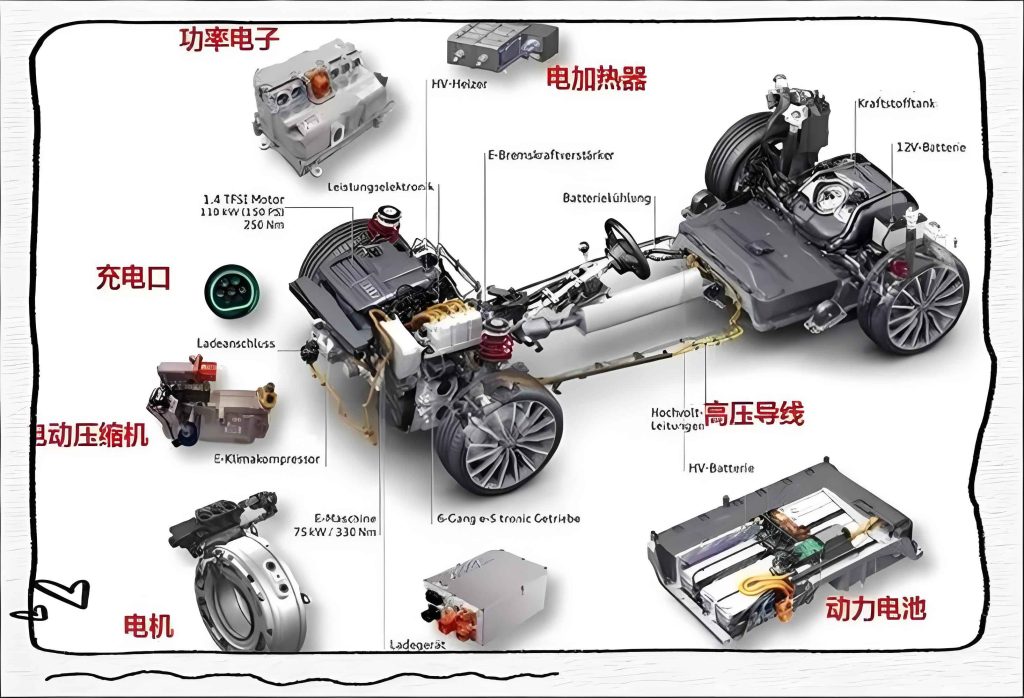
The electric drive system is the heart of an electric tractor, converting electrical energy into mechanical power to drive the vehicle. It typically includes components such as electric motors, power electronics, gearboxes, and control units. In the context of agricultural applications, these systems must withstand harsh operating conditions, including variable loads, vibrations, and environmental factors. The reliability of the electric drive system directly impacts tractor uptime and productivity, making fault prediction a critical area of research.
Common faults in electric drive systems can arise from various sources, including motor winding failures, bearing wear, gear tooth damage, and electronic control issues. Early detection of these faults can prevent catastrophic failures and reduce maintenance costs. However, the complexity of the system and the non-stationary nature of vibration signals pose challenges for traditional fault diagnosis methods. This has led to the exploration of data-driven approaches, such as deep learning, which can automatically extract features from raw sensor data and learn patterns associated with different fault types.
In this study, we focus on the electric drive system of a dual-motor electric tractor, which offers multiple drive modes, such as independent motor operation, coupled motor operation, and coupled tillage mode. The interaction between components generates distinct vibration signatures, which can be analyzed for fault prediction. The following sections detail the technical approach, starting with signal acquisition and processing.
Signal Acquisition and Processing via Empirical Mode Decomposition
Vibration signals are collected from key points on the electric drive system, denoted as \(X_n\), where \(n\) represents the sensor location. These signals are non-linear and non-stationary, making them suitable for processing using the Hilbert-Huang Transform (HHT), which combines Empirical Mode Decomposition (EMD) and Hilbert Transform. EMD decomposes a signal into a set of IMFs, each representing oscillatory modes embedded in the data. The process is as follows:
- Identify all local extrema (maxima and minima) of the signal \(x(t)\).
- Interpolate between maxima and minima to form upper and lower envelopes, denoted as \(e_{\text{max}}(t)\) and \(e_{\text{min}}(t)\).
- Compute the mean envelope: \(m_1(t) = \frac{e_{\text{max}}(t) + e_{\text{min}}(t)}{2}\).
- Subtract the mean from the signal to obtain the first component: \(h_1(t) = x(t) – m_1(t)\).
- Check if \(h_1(t)\) satisfies the IMF conditions: (a) the number of extrema and zero crossings must differ by at most one, and (b) the mean of the envelopes must be zero. If not, repeat steps 1-4 on \(h_1(t)\) until an IMF is obtained, denoted as \(c_1(t)\).
- Subtract \(c_1(t)\) from the signal to get the residue: \(r_1(t) = x(t) – c_1(t)\).
- Treat \(r_1(t)\) as the new signal and repeat the process to extract subsequent IMFs until the residue becomes monotonic or常数.
The original signal can then be expressed as:
$$
x(t) = \sum_{i=1}^{n} c_i(t) + r_n(t)
$$
where \(c_i(t)\) are the IMFs and \(r_n(t)\) is the final residue. For fault prediction, the IMFs capture潜在故障分量 that are indicative of specific component issues. For example, vibrations from the motor (component A), transmission (B), differential (C), and drive shaft (D) can be decomposed, and their interactions analyzed. The干涉关系 between components is summarized in Table 1, where \(t_{ab}\) represents the interaction between components A and B.
| Component | A | B | C | D |
|---|---|---|---|---|
| A | \(t_{aa}\) | \(t_{ba}\) | \(t_{ca}\) | \(t_{da}\) |
| B | \(t_{ab}\) | \(t_{bb}\) | \(t_{cb}\) | \(t_{db}\) |
| C | \(t_{ac}\) | \(t_{bc}\) | \(t_{cc}\) | \(t_{dc}\) |
| D | \(t_{ad}\) | \(t_{bd}\) | \(t_{cd}\) | \(t_{dd}\) |
After EMD, the Hilbert Transform is applied to each IMF to obtain the analytic signal:
$$
d_i(t) = \frac{1}{\pi} \int_{-\infty}^{\infty} \frac{c_i(\tau)}{t – \tau} d\tau
$$
The instantaneous amplitude \(a_i(t)\) and instantaneous frequency \(\omega_i(t)\) are then calculated as:
$$
a_i(t) = \sqrt{c_i(t)^2 + d_i(t)^2}, \quad \omega_i(t) = \frac{d\theta_i(t)}{dt}
$$
where \(\theta_i(t)\) is the instantaneous phase. These features enhance the discriminative power of the信号 for fault classification.
Convolutional Neural Network Architecture for Fault Prediction
Convolutional Neural Networks (CNNs) are a class of deep learning models particularly effective for processing structured data, such as time-series signals. In this study, a CNN is employed to learn patterns from the IMFs of vibration signals and predict faults in the electric drive system. The network architecture consists of the following layers:
- Input Layer: Accepts the IMFs as input features. For instance, if we have \(m\) IMFs per signal, the input shape might be \(m \times L\), where \(L\) is the signal length.
- Convolutional Layers: Apply convolutional filters to extract local features. The operation for a 1D convolution is given by:
$$
y_j = \sigma \left( \sum_{i} w_{ij} * x_i + b_j \right)
$$
where \(x_i\) is the input, \(w_{ij}\) are the filters, \(b_j\) is the bias, \(*\) denotes convolution, and \(\sigma\) is an activation function such as ReLU. - Pooling Layers: Reduce dimensionality through operations like max-pooling, which helps in achieving translation invariance.
- Fully Connected Layers: Integrate extracted features for final classification. The output layer uses a softmax function for multi-class fault prediction.
The overall model, termed EDM-CNN (Empirical Decomposition Mode-CNN), is trained to map input IMFs to fault labels. The training process involves minimizing a loss function, such as categorical cross-entropy, using optimization algorithms like Adam. The model is implemented using frameworks such as TensorFlow, with careful tuning of hyperparameters like learning rate and batch size.
Model Training and Fault Prediction Workflow
The fault prediction workflow begins with data collection from the electric tractor electric drive system under various operating conditions. Vibration signals are sampled at a high frequency to capture dynamic behaviors. These raw signals are preprocessed to remove noise and then decomposed via EMD into IMFs. The IMFs are normalized and formatted as input tensors for the CNN.
The training dataset includes labeled samples corresponding to different fault types, such as motor imbalance, gear wear, or bearing defects. The model learns to associate specific IMF patterns with these faults. During training, the dataset is split into training, validation, and test sets to evaluate performance and prevent overfitting. The input-output relationship can be expressed as:
$$
I = \begin{bmatrix} A_i \\ B_j \\ C_k \\ \vdots \end{bmatrix} \xrightarrow{f} Y_n
$$
where \(I\) represents the matrix of IMFs from components A, B, C, etc., \(f\) denotes the CNN function, and \(Y_n\) is the predicted fault output.
To enhance the robustness of the electric drive system fault prediction, data augmentation techniques such as time-warping or adding Gaussian noise may be applied. This helps the model generalize to unseen conditions commonly encountered in agricultural settings.
Experimental Evaluation and Results
The proposed EDM-CNN model is evaluated against traditional methods, including multilayer perceptron (MLP) and deep belief networks (DBN), to assess its fault prediction accuracy. Experiments are conducted using vibration data collected from a prototype electric tractor electric drive system. The dataset encompasses multiple fault scenarios and normal operating conditions.
The performance metrics include prediction accuracy, precision, recall, and F1-score. The results are summarized in Table 2, which compares the average accuracy across different fault types for each model.
| Model | Average Accuracy (%) | Precision | Recall | F1-Score |
|---|---|---|---|---|
| Multilayer Perceptron (MLP) | ≤65 | 0.62 | 0.60 | 0.61 |
| Deep Belief Network (DBN) | >80 | 0.82 | 0.81 | 0.815 |
| Proposed EDM-CNN | >93 | 0.94 | 0.93 | 0.935 |
As shown, the EDM-CNN model achieves an accuracy above 93%, significantly outperforming MLP and DBN. This improvement is attributed to the effective feature extraction via EMD and the powerful pattern recognition capabilities of CNN. The model demonstrates strong泛化性能 when tested on new data, indicating its suitability for real-world applications in monitoring the electric drive system of electric tractors.
Furthermore, the confusion matrix for the EDM-CNN model reveals high diagonal values, indicating correct classifications for most fault classes. The model also shows low false positive rates, which is crucial for avoiding unnecessary maintenance interventions. These results validate the efficacy of integrating deep learning with signal processing techniques for fault prediction in complex systems like the electric drive system.
Mathematical Formulation of the Fault Prediction Model
To provide a deeper understanding, the fault prediction process can be formalized mathematically. Let the vibration signal from the electric drive system be represented as a time-series \(S(t)\). After EMD, we obtain a set of IMFs: \(\{c_1(t), c_2(t), \dots, c_m(t)\}\). Each IMF is then transformed into a feature vector \(\mathbf{f}_i\) using statistical measures such as mean, variance, and energy:
$$
\mathbf{f}_i = \left[ \mu_i, \sigma_i^2, E_i \right], \quad \text{where } E_i = \int |c_i(t)|^2 dt
$$
These features are concatenated into a composite vector \(\mathbf{F} = [\mathbf{f}_1, \mathbf{f}_2, \dots, \mathbf{f}_m]\).
The CNN model processes \(\mathbf{F}\) through a series of layers. The convolutional operation for layer \(l\) is:
$$
\mathbf{h}_l = \sigma(\mathbf{W}_l * \mathbf{h}_{l-1} + \mathbf{b}_l)
$$
where \(\mathbf{h}_{l-1}\) is the input from the previous layer, \(\mathbf{W}_l\) are the convolutional kernels, and \(\mathbf{b}_l\) are biases. After several convolutional and pooling layers, the features are flattened and passed to fully connected layers:
$$
\mathbf{z} = \sigma(\mathbf{W}_f \mathbf{h}_f + \mathbf{b}_f)
$$
The output layer produces probabilities for each fault class via softmax:
$$
P(y = k | \mathbf{z}) = \frac{e^{\mathbf{w}_k^T \mathbf{z}}}{\sum_{j} e^{\mathbf{w}_j^T \mathbf{z}}}
$$
where \(k\) indexes the fault classes. The model is trained by minimizing the cross-entropy loss:
$$
\mathcal{L} = -\sum_{i} \sum_{k} y_{ik} \log P(y = k | \mathbf{z}_i)
$$
where \(y_{ik}\) is the true label.
Discussion on Electric Drive System Fault Dynamics
The electric drive system in electric tractors is subjected to dynamic loads and environmental stresses that can accelerate fault development. Common fault modes include:
- Motor Faults: These may involve stator winding shorts, rotor eccentricity, or bearing degradation. Vibration signals often exhibit characteristic frequencies, such as the ball pass frequency in bearings, which can be isolated via EMD.
- Gearbox Faults: Gear tooth wear or breakage produces modulation in vibration signals, visible in IMFs related to meshing frequencies.
- Electrical Faults: Issues in power electronics, such as inverter failures, can cause harmonics in current and vibration data.
The EDM-CNN model leverages these dynamics by decomposing signals into IMFs that capture frequency-specific information. For instance, the instantaneous frequency \(\omega_i(t)\) from the Hilbert Transform can reveal shifts associated with faults. By training on diverse data, the model learns to associate these shifts with specific component failures in the electric drive system.
Moreover, the interoperability of components means that faults in one part can affect others. The interference relations in Table 1 help in understanding these interactions. For example, a fault in the motor (component A) might manifest as abnormal vibrations in the transmission (component B), captured by \(t_{ab}\). The model accounts for such cross-component effects through the integrated learning of IMFs from multiple sensors.
Implementation Considerations for Real-World Deployment
Deploying the fault prediction model in实际 agricultural settings requires addressing several practical aspects. First, the vibration sensors must be robust to withstand dust, moisture, and mechanical shocks common in tractor operations. Wireless data transmission can facilitate real-time monitoring without interfering with tractor mobility.
Second, the computational demands of EMD and CNN must be balanced with resource constraints. Edge computing devices can be used to perform signal processing and inference locally, reducing latency and dependency on cloud connectivity. Optimization techniques, such as model pruning and quantization, can further reduce the model size for deployment on embedded systems.
Third, continuous learning is essential to adapt the model to new fault patterns or tractor models. Online learning algorithms can update the CNN weights incrementally as new data becomes available, ensuring the electric drive system fault prediction remains accurate over time.
Finally, integrating the model with tractor control systems can enable predictive maintenance strategies. For example, if a fault is predicted, the system could alert the operator or automatically adjust operating parameters to prevent damage. This proactive approach enhances the reliability and lifespan of the electric drive system.
Comparative Analysis with Other Deep Learning Approaches
Beyond MLP and DBN, other deep learning models have been explored for fault prediction. For instance, recurrent neural networks (RNNs) and long short-term memory (LSTM) networks are effective for sequential data. However, CNNs offer advantages in computational efficiency and feature extraction for vibration signals, which have local correlations in time.
Another approach is using autoencoders for unsupervised feature learning. While autoencoders can reduce dimensionality, they may not capture discriminative features as effectively as supervised CNNs. The EDM-CNN model combines the strengths of both signal decomposition and supervised learning, resulting in superior performance for the electric drive system application.
Table 3 extends the comparison to include these additional models, highlighting the trade-offs in accuracy and complexity.
| Model Type | Accuracy (%) | Training Time (relative) | Interpretability |
|---|---|---|---|
| MLP | 65 | Low | Medium |
| DBN | 80 | Medium | Low |
| LSTM | 85 | High | Medium |
| Autoencoder | 75 | Medium | Low |
| Proposed EDM-CNN | 93 | Medium | High |
The EDM-CNN model strikes a balance between accuracy and practical deployability, making it a compelling choice for monitoring the electric drive system in electric tractors.
Future Directions and Conclusion
This study presents a fault prediction model for electric tractor electric drive systems based on deep learning. By integrating Empirical Mode Decomposition and Convolutional Neural Networks, the model achieves high accuracy in classifying and predicting faults from vibration signals. Experimental results demonstrate its superiority over traditional methods, with an accuracy exceeding 93%. This approach enables proactive maintenance, reducing downtime and enhancing the reliability of agricultural operations.
Future work could explore several avenues to further improve the electric drive system fault prediction. First, incorporating additional sensor modalities, such as thermal or acoustic data, could provide complementary information for fault detection. Second, advanced deep learning architectures, like attention mechanisms or graph neural networks, might better model the interactions between components. Third, developing transfer learning techniques could allow the model to adapt to different tractor models or operating conditions with minimal retraining.
In conclusion, the integration of deep learning with signal processing offers a powerful framework for intelligent fault prediction in complex systems like the electric drive system of electric tractors. As agriculture continues to embrace automation and precision technologies, such models will play a crucial role in ensuring the efficiency and sustainability of farming practices. The proposed EDM-CNN model represents a step forward in this direction, providing a scalable and accurate solution for real-time monitoring and maintenance of electric drive systems.