
In the context of global carbon neutrality goals, the transition from internal combustion engine vehicles to electric vehicles plays a pivotal role in mitigating air pollution and reducing energy consumption. Among various advanced energy storage technologies, solid-state batteries have emerged as a key focus for major new energy enterprises and research institutions due to their enhanced functionality and safety, which are critical for the widespread adoption of electric vehicles. This shift has led to the rapid development and construction of numerous power battery manufacturing facilities. However, the production processes of solid-state batteries, particularly those involving sulfide-based electrolytes, generate significant amounts of wastewater, primarily from cleaning operations, along with potential emissions of exhaust gases and solid waste. As an engineer involved in the design of such facilities, I have encountered the challenges associated with wastewater management in solid-state battery production. This article, based on a practical project experience, analyzes and compares three wastewater treatment design schemes, aiming to summarize design insights for similar solid-state battery manufacturing plants. The discussion will emphasize the importance of tailored wastewater collection and treatment systems to handle the unique contaminants from solid-state battery production, ensuring environmental compliance and operational efficiency.
The manufacturing process of solid-state batteries, especially sulfide-based solid-state batteries, involves several stages where wastewater is generated. A typical production flowchart includes electrode preparation, electrolyte processing, cell assembly, and formation. The primary source of wastewater is the cleaning of equipment used in the positive and negative electrode slurry mixing areas, such as tanks and mixers. These cleaning activities produce wastewater containing residues like binders, graphite carbon powders, and sulfide electrolytes. For instance, in sulfide-based solid-state battery production, the electrolyte materials are chemically unstable and can react with air to form hazardous gases like hydrogen sulfide. Therefore, any leakage of this wastewater could severely impact groundwater and soil, necessitating robust containment and treatment strategies. The wastewater volume is relatively small but highly concentrated; in the project under consideration, the total daily discharge was approximately 3 m³/d, split between positive and negative electrode wastewater streams. Proper classification and separate collection are essential to prevent cross-contamination and facilitate effective treatment.
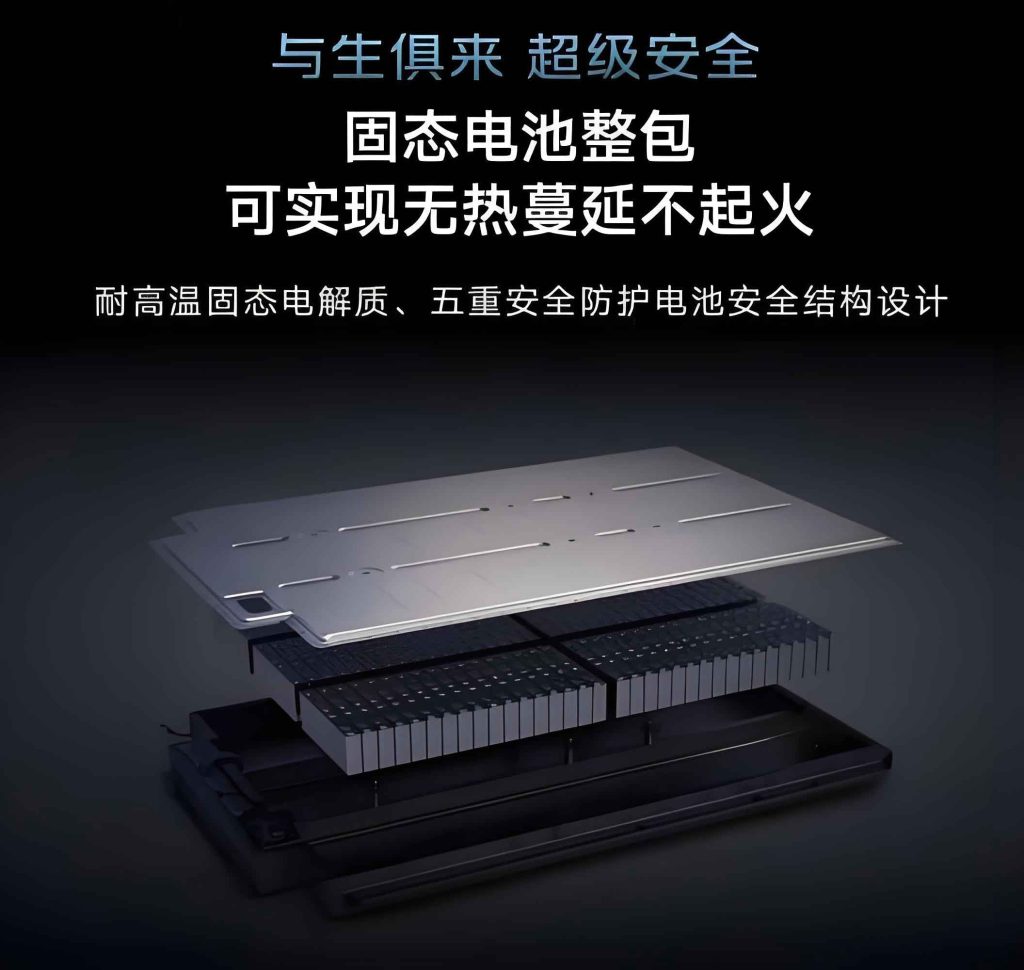
To design an effective wastewater system for solid-state battery plants, it is crucial to understand the pollutant characteristics and regulatory standards. The wastewater from solid-state battery production typically contains organic compounds, suspended solids, and specific heavy metals depending on the electrode materials. For example, in lithium-ion or solid-state battery manufacturing, pollutants such as total zinc, total manganese, chemical oxygen demand (COD), ammonia nitrogen, total phosphorus, and total organic carbon (TOC) are of concern. Regulatory frameworks like the “Battery Industrial Pollutant Emission Standards” (GB30484-2013) set stringent limits for these pollutants. For solid-state battery facilities, similar standards apply, with emissions monitored at the total wastewater outlet. The following table summarizes key pollutant limits for battery industries, which can be adapted for solid-state battery wastewater design:
| Pollutant | Emission Limit (mg/L) for Direct Discharge | Emission Limit (mg/L) for Indirect Discharge | Monitoring Location |
|---|---|---|---|
| Chemical Oxygen Demand (COD) | 100 | 150 | Total wastewater outlet |
| Suspended Solids (SS) | 70 | 140 | Total wastewater outlet |
| Total Phosphorus (TP) | 1.0 | 2.0 | Total wastewater outlet |
| Total Nitrogen (TN) | 20 | 40 | Total wastewater outlet |
| Ammonia Nitrogen (NH₃-N) | 15 | 30 | Total wastewater outlet |
| Total Zinc (Zn) | 2.0 | 2.0 | Total wastewater outlet |
| Total Manganese (Mn) | 2.0 | 2.0 | Total wastewater outlet |
| Total Organic Carbon (TOC) | 20 | 30 | Total wastewater outlet |
Additionally, the wastewater discharge volume can be estimated based on production capacity. For solid-state battery plants, reference can be made to benchmarks such as the unit product baseline drainage for lithium-ion batteries, which is approximately 1.0 m³ per 10,000 cells. This can be expressed mathematically as: $$ Q_b = k \times P $$ where \( Q_b \) is the baseline wastewater discharge (m³/d), \( k \) is the drainage coefficient (e.g., 1.0 m³/10,000 cells for lithium-ion batteries), and \( P \) is the daily production capacity (in units of 10,000 cells). For solid-state battery production, similar coefficients may apply, but adjustments are needed based on specific process water usage. In our project, the daily wastewater generation was 3 m³/d, aligning with small-scale pilot lines typical for emerging solid-state battery technologies.
Given the hazardous nature of solid-state battery wastewater, especially from sulfide-based processes, the design must prioritize safety, functionality, and cost-effectiveness. I evaluated three primary collection and treatment schemes for the cleaning wastewater. Each scheme has its advantages and limitations, which I will analyze in detail, incorporating formulas and tables to summarize key aspects. The goal is to provide a comprehensive guide for engineers designing wastewater systems for solid-state battery manufacturing facilities.
The first scheme involves a “trench + collection pit + submersible pump pressure discharge” system. This is a conventional approach for industrial wastewater, where cleaning wastewater from solid-state battery production is collected in floor trenches within the cleaning rooms. The wastewater flows by gravity into a collection pit equipped with a pre-settlement zone to separate solid residues like binders and carbon powders. The pit includes a ladder for manual cleaning, and two submersible pumps are installed in the clear water zone to pump the supernatant via pressure pipelines to outdoor storage tanks. This scheme aims to prevent pipeline clogging by avoiding the direct pumping of slurry. The hydraulic design can be modeled using the Manning formula for open channel flow in trenches: $$ v = \frac{1}{n} R^{2/3} S^{1/2} $$ where \( v \) is the flow velocity (m/s), \( n \) is the Manning roughness coefficient (typically 0.013 for concrete trenches), \( R \) is the hydraulic radius (m), and \( S \) is the slope gradient. For a trench with width \( w \) and depth \( h \), the hydraulic radius is \( R = \frac{A}{P} \), with \( A = w \times h \) as the cross-sectional area and \( P = w + 2h \) as the wetted perimeter. In solid-state battery facilities, the trench dimensions must accommodate peak flow rates during cleaning cycles. However, this scheme has drawbacks: the collection pit indoors may pose risks of hydrogen sulfide gas release from sulfide electrolytes, and the pressure pipelines require regular maintenance to prevent gelation-related blockages. Additionally, the initial investment and operational costs are relatively high due to pump installations and energy consumption.
The second scheme utilizes an integrated solid-liquid separation and lifting equipment. This system is fully enclosed, automated, and designed to handle wastewater with high solid content, making it suitable for solid-state battery cleaning wastewater. It combines a solid-liquid separation unit and a wastewater lifting unit, allowing for continuous separation of residues and odor control. The equipment operates based on gravity separation and mechanical filtration principles. The separation efficiency can be estimated using Stokes’ law for particle settling: $$ v_s = \frac{g (\rho_p – \rho_f) d^2}{18 \mu} $$ where \( v_s \) is the settling velocity (m/s), \( g \) is gravitational acceleration (9.81 m/s²), \( \rho_p \) is the particle density (kg/m³), \( \rho_f \) is the fluid density (kg/m³), \( d \) is the particle diameter (m), and \( \mu \) is the dynamic viscosity of the fluid (Pa·s). For solid-state battery wastewater, particles like graphite carbon powders have densities around 2200 kg/m³, and binders may form larger agglomerates. The integrated system automatically collects separated solids and pumps treated wastewater to outdoor storage, minimizing manual intervention. Despite its advantages, this scheme is less common in solid-state battery applications and may require customization from manufacturers. The cost is higher than conventional systems, but it offers improved safety by preventing gas emissions and reducing clogging risks. A comparison of key parameters for this scheme is shown in the table below:
| Parameter | Value for Solid-State Battery Wastewater | Unit |
|---|---|---|
| Treatment Capacity | 0.5 – 5 m³/h | m³ per hour |
| Solid Removal Efficiency | > 90% for particles > 50 μm | Percentage |
| Power Consumption | 1.5 – 3 kW | Kilowatts |
| Footprint | 2 – 5 m² | Square meters |
| Automation Level | Fully automated with PLC control | – |
The third scheme, which was ultimately adopted in our project, is a “gravity flow collection via trenches” system. This approach prioritizes economic and safety considerations by leveraging gravity flow to minimize mechanical components. In this design, new wastewater trenches were installed in the cleaning rooms of the solid-state battery production area, connected to existing outdoor collection pits. The trenches are covered to prevent odor dispersion and gas release, which is critical for sulfide-based solid-state battery electrolytes. Wastewater flows by gravity through the trenches to outdoor collection tanks, where it is stored in intermediate bulk containers (IBCs) or ton barrels for off-site treatment by specialized agencies. The storage volume is sized based on daily wastewater generation and regulatory requirements. For our project, the outdoor collection pit had an effective volume of at least 3 m³, calculated as: $$ V_{storage} = Q_{daily} \times t_{retention} $$ where \( V_{storage} \) is the storage volume (m³), \( Q_{daily} \) is the daily wastewater flow rate (3 m³/d), and \( t_{retention} \) is the retention time (typically 1 day for daily off-site removal). To prevent leakage, the pit lining was upgraded with corrosion-resistant materials like epoxy coatings, addressing the organic and potentially corrosive nature of solid-state battery wastewater. This scheme is cost-effective, as it utilizes existing infrastructure and avoids pumps, but it requires careful design of trench slopes and regular inspection for blockages. The gravity flow velocity must ensure self-cleansing to prevent sediment accumulation, which can be verified using the following criterion: $$ v \geq v_c $$ where \( v_c \) is the critical velocity for self-cleansing, often taken as 0.6 m/s for wastewater with moderate solids. For a trench with slope \( S \), the velocity can be derived from the Manning equation as earlier.
Beyond the main cleaning wastewater, solid-state battery plants also generate auxiliary wastewater streams that must be incorporated into the overall design. These include wastewater from pure water preparation systems, condensate drainage from air compression and dehumidification rooms, and scrubber wastewater from exhaust gas treatment. Each stream has distinct characteristics and treatment needs. For pure water systems, the wastewater is primarily concentrate from reverse osmosis units, with a daily volume of about 4 m³/d in our project. This water is relatively clean and can be discharged directly to municipal sewers after pH adjustment, if necessary. The discharge rate can be expressed as: $$ Q_{pure} = Q_{feed} \times (1 – R) $$ where \( Q_{pure} \) is the pure water wastewater flow (m³/d), \( Q_{feed} \) is the feed water flow rate, and \( R \) is the recovery rate of the pure water system (typically 70-80%). For condensate drainage, the volume is intermittent and low, but it must be discharged indirectly to prevent backflow and insect ingress. In solid-state battery facilities, this drainage is often routed to outdoor stormwater outlets with air gaps and mesh screens. Scrubber wastewater from exhaust gas treatment, particularly for organic volatiles in solid-state battery production, requires careful handling. In our project, the scrubber system generated about 1.8 m³/d of wastewater, with evaporation losses of 0.4 m³/d, necessitating daily makeup water of 2.2 m³/d. This wastewater may contain absorbed pollutants and should be combined with the main cleaning wastewater for collective treatment. The mass balance for scrubber wastewater can be modeled as: $$ M_{in} = M_{out} + M_{evap} $$ where \( M_{in} \) is the mass of water entering the scrubber, \( M_{out} \) is the mass discharged as wastewater, and \( M_{evap} \) is the mass lost to evaporation.
To optimize the wastewater system design for solid-state battery plants, a comparative analysis of the three schemes is essential. The table below summarizes their key attributes, focusing on aspects relevant to solid-state battery production:
| Design Scheme | Advantages | Disadvantages | Suitability for Solid-State Battery Wastewater | Estimated Cost (Relative) |
|---|---|---|---|---|
| Trench + Pit + Pump | Proven technology, effective solid separation | Risk of gas emission, high maintenance, clogging issues | Moderate; requires gas containment measures | High |
| Integrated Solid-Liquid Separation | Automated, enclosed, odor control, high efficiency | High initial cost, limited application history | High; ideal for hazardous wastewater from solid-state batteries | Very High |
| Gravity Flow Trench Collection | Low cost, simple, safe for gas-prone electrolytes | Requires slope precision, manual off-site handling | High; suitable for small-scale solid-state battery projects | Low |
From this analysis, the gravity flow scheme was selected for our project due to its alignment with safety priorities for sulfide-based solid-state battery wastewater and cost constraints. However, for larger-scale solid-state battery manufacturing, the integrated system might be preferable despite higher costs, as it offers better automation and environmental control. In all cases, regulatory compliance is paramount. The pollutant concentrations in the final wastewater must meet standards such as COD ≤ 100 mg/L, total zinc ≤ 2.0 mg/L, and total manganese ≤ 2.0 mg/L for direct discharge, or slightly relaxed limits for indirect discharge. Regular monitoring and sampling are necessary, with concentrations calculated as: $$ C = \frac{m}{V} $$ where \( C \) is the pollutant concentration (mg/L), \( m \) is the mass of pollutant (mg), and \( V \) is the wastewater volume (L). For solid-state battery facilities, advanced treatment methods like chemical precipitation, adsorption, or membrane filtration may be required if on-site treatment is implemented, but in our project, off-site disposal was chosen to simplify operations.
In conclusion, designing wastewater systems for solid-state battery manufacturing plants requires a nuanced understanding of process-specific contaminants, especially from sulfide electrolytes used in advanced solid-state battery technologies. The three schemes discussed—trench and pump, integrated separation, and gravity flow collection—each offer distinct trade-offs in safety, functionality, and economics. Based on my experience, the gravity flow approach is effective for small to medium-scale solid-state battery projects with limited wastewater volumes, while integrated systems may suit larger facilities with higher automation needs. Key design considerations include proper trench sizing, corrosion protection for storage pits, and adherence to emission standards. As solid-state battery technology evolves, wastewater management will continue to be a critical aspect of sustainable production. By leveraging formulas for flow dynamics and pollutant calculations, and by using comparative tables for scheme evaluation, engineers can develop robust designs that mitigate environmental risks while supporting the growth of the solid-state battery industry. Future advancements may introduce more efficient on-site treatment technologies tailored for solid-state battery wastewater, further enhancing the sustainability of this promising energy storage solution.
Throughout this analysis, the term “solid-state battery” has been emphasized to underscore the unique challenges and opportunities in wastewater management for this technology. Whether dealing with sulfide-based or other types of solid-state batteries, the principles of segregation, collection, and safe disposal remain vital. I hope this detailed exploration provides valuable insights for professionals engaged in the design and operation of solid-state battery manufacturing facilities, contributing to the broader goal of cleaner energy production.